Tremors in Senior Dogs: When to See the Vet
Old dogs do get tremors, and a new tremor in a senior dog is a reason to see a vet. This page covers the emergency signs, what can cause a tremor, what your vet may do and what to tell your vet.
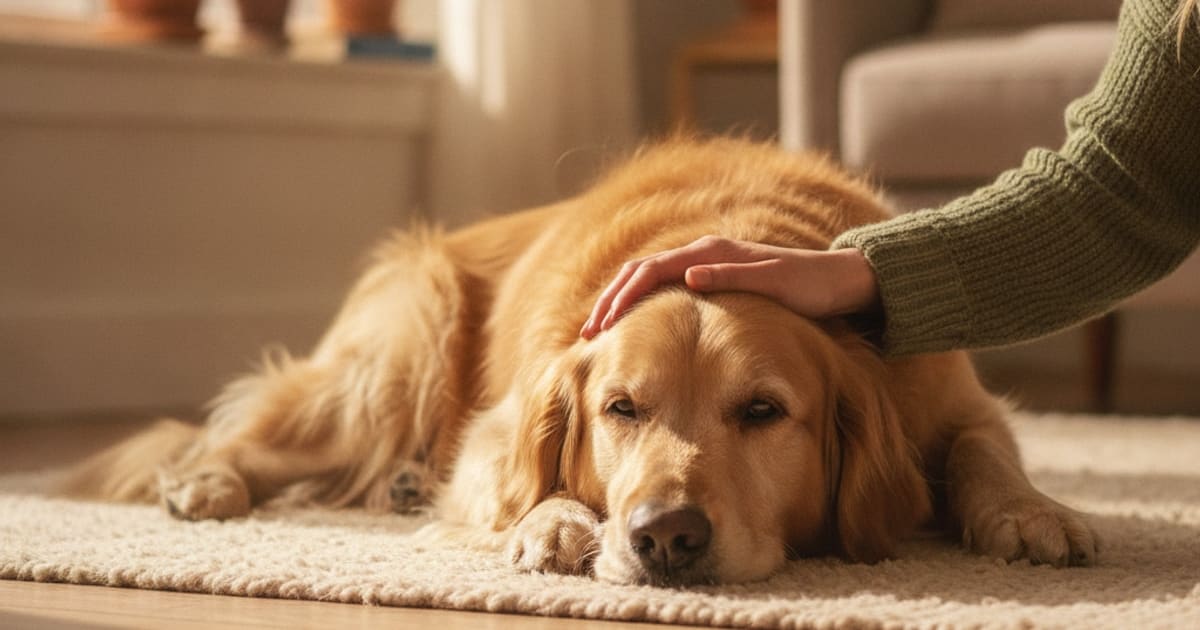
Old dogs do get tremors, and a tremor in a senior dog is a reason to see a vet. Go to an emergency vet now if the shaking will not stop, your dog collapses or cannot stand, has a seizure, or is struggling to breathe; otherwise book a same-day appointment. If your dog may have got into a medicine, a plant, a food or a chemical before the shaking started, call your vet or an animal poison control service now. Tremors in senior dogs can come from pain, weak muscles, a nerve or brain problem, changes in body chemistry or a toxin. Shaking in an older dog is not something to put down to age without a vet check. A vet exam may help find the cause and decide what comes next.
When to go to the vet now
Go to an emergency vet now if your older dog is shaking and you see any of these:
- Shaking that will not stop, or one episode running straight into the next.
- Collapse, falling over, or not being able to stand or get up.
- A seizure: stiffening, paddling legs, jaw chomping, drooling, loss of bladder control or not responding to you.
- Struggling to breathe, or loud, fast or open-mouthed breathing while resting.
- A sudden head tilt, falling to one side, walking in circles or eyes flicking from side to side.
- A swollen, tight belly, or retching without bringing anything up.
- Any chance your dog got into a medicine, a plant, a food or a chemical: call your vet or an animal poison control service now.
For any other shaking in an older dog, book a same-day appointment. For a wider guide to urgent signs, see Dog emergency signs.
What can cause a tremor
A tremor is shaking or trembling that your dog does not control. In an older dog it can affect the whole body, the head, or one part such as the back legs, and it can come and go or be there for long stretches. There are many possible reasons, and several of them can look alike from the outside. That is why the causes below are possibilities your vet checks, one by one, rather than answers to reach from how the shaking looks.
Pain is one of the first things your vet will think about. Sore joints, arthritis, a painful back or neck, mouth pain or pain inside the belly can all make an older dog tremble. Some dogs hide pain well, so a dog can be shaking from pain without limping, crying out or flinching. Pain in the neck or back can also make a dog hold its head low, move stiffly or refuse to jump or use stairs, and your vet will want to hear about any of that.
Loss of muscle is another possibility. Older dogs can lose muscle over time, particularly over the back legs and hips, and weak muscles can shake while they work to hold the body up. This can show when your dog stands still, gets up from lying down or climbs. Age-related tremors can happen in senior dogs in this way, but weakness from age is something your vet names only after checking for pain, nerve disease and other illness, because each of these can cause the same trembling legs. Putting a tremor down to weakness without that check can mean a painful or medical cause is missed.
The nerves and spinal cord carry the signals that let muscles work smoothly. A disc in the back or neck that bulges or slips, slow changes in the spinal cord, and damage to the nerves running to the legs can all cause shaking, weakness, wobbling, scuffing of the feet or legs that give way. These are possibilities your vet looks into when the back legs are involved, or when your dog seems unsteady as well as shaky.
Conditions that affect the brain or the balance system can show up as a head tremor, whole-body shaking, a head tilt, a wobbly walk or confusion. In an older dog, your vet may consider problems with the inner ear and balance organs, inflammation in the brain, a growth, or changes in thinking and memory that can come later in life. Some of these need tests beyond a standard exam, which is why your vet may suggest a referral.
Body chemistry plays a part too. The kidneys and liver clear waste from the blood, and when either is not working well, that waste can build up and make a dog tremble, weak or dull. Low blood sugar, low calcium or an imbalance of salts such as sodium and potassium in the blood can cause muscle tremors, twitching or weakness. Hormone conditions, including problems with the adrenal glands or the thyroid gland, are also on the list your vet works through. None of these can be seen from the outside, and blood and urine tests are how your vet looks for them.
Heart disease, problems in the chest and infections that cause a fever can leave an older dog weak or shivery, and that weakness or shivering can look like a tremor. Nausea can also make a dog tremble, drool or lick its lips. Your vet listens to the heart and lungs and takes your dog's temperature as part of the exam for this reason.
Toxins can cause tremors at any age. Human medicines, some plants, mouldy food, garden and household chemicals and some foods that are toxic to dogs can all lead to shaking, twitching or seizures. If there is any chance your dog got into something like this, call your vet or an animal poison control service now. A medicine your dog already takes can also cause trembling as a side effect, particularly after a new prescription or a change in the amount given. Do not stop or change any medicine yourself; talk to your vet first, and tell them about everything your dog takes.
Feeling cold, fear, stress and anxiety can all make a dog shake. An older dog may feel the cold more as it loses muscle and body fat, and may become more still developing as eyesight, hearing or memory change. These are still possibilities for your vet to check rather than explanations to settle on at home, because a dog that seems scared or chilly can also be in pain or unwell, and the two can happen together.
Sometimes the exam and tests do not point to one cause, and your vet may describe a tremor with no clear reason. That is a conclusion reached after the other causes have been looked for, not a starting point, and your vet will explain what it means for your dog.
So, why do senior dogs tremble? There is no single reason, and the reason for your dog matters because it shapes what your vet does next. When an old dog has tremors, it means something is affecting the muscles, nerves, brain, joints or body chemistry. A vet exam may help find which one, and that starts with a same-day appointment.
What your vet may do
Your vet will start with questions about your dog's history: when the shaking started, how it has changed, what your dog was doing when it happened, whether it affects the whole body or one part, every medicine your dog takes and whether your dog could have got into anything. They will want to see your dog stand and walk, if your dog can, and a short phone video of an episode can help if the shaking has stopped by the time you arrive.
A full physical exam comes next. Your vet takes your dog's temperature, listens to the heart and lungs, looks in the mouth, feels the belly and gently checks the joints, back and neck for pain. They also feel the muscle over the legs, hips and back, since loss of muscle is one of the things they are weighing up.
If a nerve, spinal or brain problem is possible, your vet may do a neurological exam. This looks at reflexes, how your dog places its feet, balance, eye movements, head position and how alert your dog is. It helps show whether the problem sits in the brain, the spinal cord or the nerves to the legs.
Blood tests are one of the first steps when the cause is not clear. A blood count and a chemistry panel can show how the kidneys and liver are working, along with blood sugar, calcium and salts. Your vet may also test a urine sample, measure blood pressure, or run hormone tests if a gland problem is possible.
Imaging can come next. X-rays can show the joints, the spine and the chest, and an ultrasound scan can look at organs in the belly, such as the liver, kidneys and adrenal glands. Some dogs need light sedation for X-rays or for a proper look at a painful area.
If the signs point to the brain or spinal cord, your vet may refer your dog to a veterinary neurologist for an MRI scan or a sample of the fluid around the brain and spine. These are done under anaesthetic. When pain is one of the possibilities, your vet may also prescribe pain relief and ask you to report back on any change in the shaking.
What happens after that depends on the cause your vet finds. Talk to your vet about anything you are unsure of, including what each test is for and what the options are for your dog.
What to tell your vet
Before or during the visit, tell your vet:
- When you first noticed the shaking, and whether it started suddenly or built up slowly.
- Any change since then: whether it is happening more, lasting longer or spreading to more of the body.
- What your dog was doing when it happened: resting, standing, walking, after exercise, in the cold or during a stressful moment.
- Any bleeding, and any licking or chewing at one spot, such as a paw, a leg or the belly.
- Other signs: a limp, weakness, stumbling, a head tilt, drinking or peeing more, eating less, vomiting, diarrhoea or changes in behaviour.
- Every medicine your dog takes and any recent change to them. If there is any chance your dog got into a medicine, plant, food or chemical, call your vet or an animal poison control service now.
You can read more about conditions that affect older dogs in our conditions library.
Frequently asked questions
- Is a tremor an emergency in dogs?
- A tremor is an emergency when the shaking will not stop, your dog collapses, has a seizure or is struggling to breathe: go to an emergency vet now. If your dog may have got into a medicine, plant or chemical, call your vet or an animal poison control service now. For any other tremor, book a same-day vet appointment.
- What should I do if my dog has a tremor?
- Call your vet today and book a same-day appointment, even if the shaking has stopped. Go to an emergency vet now instead if the shaking will not stop, your dog collapses, has a seizure or is struggling to breathe. Note when it started and what your dog was doing, and tell your vet.
- Can I treat a tremor at home?
- No, because only a vet exam can find the cause of a tremor. Do not give any medicine, food or remedy, and do not put anything on your dog or remove anything before the vet sees it. If there is any bleeding, use gentle pressure with a clean cloth on the way to the vet only.
- Do old dogs get tremors?
- Yes, old dogs can get tremors, and a new tremor in a senior dog is a reason to see a vet the same day. Pain, weak muscles, nerve problems, kidney or liver disease, changes in body chemistry and toxins are among the possibilities your vet checks. Go to an emergency vet now for collapse, a seizure or trouble breathing.
- Why do senior dogs tremble?
- Senior dogs can tremble because of pain in the joints, back or neck, loss of muscle, nerve or spinal problems, brain or balance conditions, organ disease, low blood sugar or calcium, a medicine side effect, cold, fear or feeling sick. There is no single reason, so a same-day vet check is the way to find the cause.
- What does it mean when an old dog has tremors?
- It means something is affecting your dog's muscles, nerves, brain, joints or body chemistry, and it needs a vet check. A tremor is a sign, not a diagnosis. Your vet uses an exam and tests to find what is behind it, so book a same-day appointment, or go to an emergency vet now for collapse or a seizure.
- What causes tremors in senior dogs?
- Tremors in senior dogs can come from medical causes such as pain, nerve or spinal disease, kidney or liver disease, hormone problems or a toxin, or from muscle weakness that can come with age. Your vet looks for the medical causes first, because weakness can only be named once those have been checked. Book a same-day appointment.
- What causes tremors in elderly dogs?
- In elderly dogs, your vet may look at changes in body chemistry, such as low blood sugar, low calcium or waste building up from kidney or liver disease, along with pain, nerve problems and side effects of a medicine your dog takes. Do not change any medicine yourself; talk to your vet and book a same-day appointment.
- Why does my old dog shake in the back legs?
- Shaking in the back legs of an older dog can come from pain in the hips or back, a disc or spinal problem, nerve changes or loss of muscle. These can look alike, so your vet checks the joints, spine, reflexes and muscle. Book a same-day appointment, or go to an emergency vet now if your dog cannot stand.
Educational content, not veterinary advice. Ask your vet about your dog.