Why Is My Dog Stiff in Cold Weather? (Causes Explained)
Dogs get stiff in cold weather because low temperatures thicken joint fluid, reduce blood flow to working muscles and increase protective muscle tension. Arthritis, old injuries and healed surgical sites feel it first, and shorter winter walks allow soft tissue to tighten further. Most dogs loosen up once they start moving.
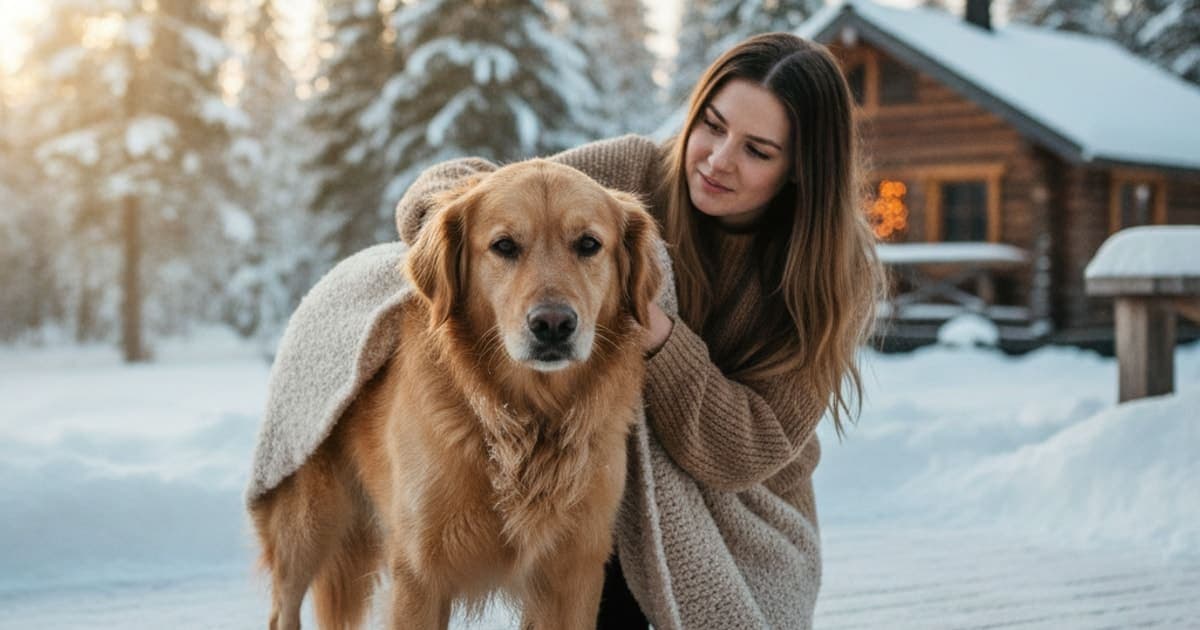
Why is my dog stiff in cold weather?
Cold weather makes dogs stiff because falling temperatures thicken the synovial fluid that lubricates joints, narrow the blood vessels feeding limb muscles, and trigger protective muscle tension. Dogs with arthritis, old injuries or previous surgical sites feel it first, and winter's shorter, slower walks let soft tissue tighten further.
If your dog is slow to stand on a frosty morning, moves like a plank for the first block, then loosens up after ten minutes, that pattern is textbook cold-weather stiffness. It is common. It is manageable. It is also worth paying attention to, because cold does not manufacture joint problems out of nothing — it reveals the ones that were already quietly there.
The physiology behind a cold-morning limp
Four separate things happen to a dog's body when the temperature drops, and they stack on top of each other.
Joint fluid gets thicker. Every synovial joint — hips, stifles, elbows, shoulders, the small joints of the spine — is lubricated by synovial fluid. Like most viscous fluids, it flows more freely when warm and more sluggishly when cold. A cold joint simply has more internal resistance for the first few minutes of movement, which is exactly why so many dogs visibly warm out of their stiffness rather than staying stiff all day.
Blood flow shifts inward. In cold conditions the body prioritises core temperature by constricting peripheral blood vessels. Less blood reaches the muscles of the hindlimbs, shoulders and lower back, which means less oxygen delivery and slower clearance of metabolic waste in exactly the tissues that have to do the work of standing your dog up.
Muscles guard. Shivering, bracing against slick footing, and the natural tendency to tense against cold all raise resting muscle tone. Tight hamstrings, tight iliopsoas and tight lumbar muscles change how a dog loads a sore joint, and that altered loading produces its own soreness.
Movement drops off. Winter walks get shorter and slower. Muscle mass that supports a compromised joint declines quickly when the workload falls, and a joint with less muscular support takes more direct load through cartilage and ligament. This is often the biggest factor of all, and the one owners have the most control over.
Owners also frequently report that their dogs seem worse before a weather front arrives. Barometric pressure is the usual explanation offered, though the mechanism in dogs is not well characterised, so treat it as an observation rather than a diagnosis.
Cold weather does not create joint disease — it exposes joint disease that was already there.
Reading the difference between stiffness and pain
Stiffness that resolves within a few minutes of easy movement and does not come back later in the day is usually mechanical. Pain looks different, and dogs are careful about showing it.
Things worth writing down before you speak to your vet:
- Slow, deliberate rising from a down position, often with the front end first and a pause before the back end follows
- A shortened stride, a bunny-hopping gait behind, or reluctance to sit squarely
- Hesitation at stairs, car jumps or slippery floors that did not exist last summer
- Licking repeatedly at one joint, or a lump of coat that always looks damp
- Sleeping more, or choosing a different, harder-to-reach sleeping spot
- Irritability when handled — a flinch, a freeze, a lip curl or a head turn when a hand goes near the hips, shoulders or lower back
That last one matters more than most owners realise. A dog who has never minded being lifted and now stiffens when you reach under the chest is telling you something specific about where it hurts. Note which limb, which direction of movement, and what time of day, and bring that to your veterinarian — a pattern described accurately is worth more than a vague report of slowing down.
What winter tends to unmask
Cold-weather stiffness is rarely its own diagnosis. It is usually the visible edge of something structural:
- Osteoarthritis, the most common reason older dogs stiffen seasonally
- Hip and elbow dysplasia, which often become symptomatic in middle age rather than puppyhood
- Partial cranial cruciate ligament tears, which produce intermittent hindlimb lameness that worsens after rest
- Shoulder instability and biceps tendinopathy, common in active and sporting dogs and easy to mistake for general slowing down
- Lumbosacral disease and spondylosis, which cause reluctance to jump and irritability when the lower back is touched
- Old fracture repairs and previous orthopaedic surgery sites, where remodelled tissue and altered mechanics tend to complain in cold weather
There are also non-orthopaedic mimics. Hypothyroidism, tick-borne infections and immune-mediated joint disease can all present as a stiff, sore, reluctant dog. Intervertebral disc disease can look like stiffness right up until it does not. This is precisely why a dog whose winter stiffness is new, worsening or asymmetric needs a physical examination rather than a guess — your veterinarian can separate a joint problem from a spinal or systemic one in a way no article can.
Building a winter routine around a stiff dog
The goal in cold months is not rest. It is warm, consistent, low-impact movement, with the joint protected from impact and slip.
- Warm up before you go. Five minutes of easy indoor walking before the door opens gets synovial fluid moving and muscles perfused before your dog has to negotiate frozen ground.
- Fix the footing. Runners and rugs across polished floors, and toenails kept short, do more for a wobbly senior than almost anything you can buy.
- Raise the bed off the cold floor. A supportive orthopaedic bed away from draughts changes how a dog wakes up. Heated beds can help but should always be thermostat-controlled and easy for the dog to leave.
- Coat the thin-coated and the old. Short-coated, lean and senior dogs lose heat fast; a coat that covers the lumbar spine and hips is not a fashion decision.
- Manage weight ruthlessly. Winter is when dogs quietly gain. Every extra kilogram is load through an already sore joint.
- Keep exercise little and often. Three short daily walks beat one long weekend hike that leaves your dog wrecked for two days.
- Use professional rehab. Veterinary physiotherapy, underwater treadmill work in warm water, and targeted strengthening are the highest-value interventions available for a stiff dog, and they are underused.
Here is how the common options compare:
| Approach | What it does | Where it fits |
|---|---|---|
| Warm-up and traction | Reduces slip, prepares tissue before load | Every stiff dog, every cold day |
| Weight management | Lowers mechanical load through the joint | Foundational, no exceptions |
| Vet-prescribed medication | Controls inflammation and pain under supervision | Your veterinarian owns this decision entirely |
| Rehab and hydrotherapy | Rebuilds the muscle that supports the joint | Best-value structured intervention |
| Kitchen-sink joint chews | Twenty ingredients, often at token amounts, no COA | Where most owners waste money |
| K9-REPAIR (BPC-157 + TB-500) | Peptides owners use through recovery and winter maintenance, dosed by body weight | Alongside vet care, not instead of it |
Where peptides fit in a stiff dog's winter
This is the part of the shelf that has changed most in the last few years. Rather than piling more marginal ingredients into a chew, owners have moved toward two specific peptides.
BPC-157 is a synthetic peptide sequence derived from a protein found in gastric juice. Published laboratory research, largely in rodent models, suggests it influences angiogenesis — the formation of new blood vessels — and the migration of fibroblasts, the cells that lay down collagen in tendon and ligament. Since blood supply is the rate-limiting factor in tendon and ligament repair, that is a mechanistically interesting place to be working.
TB-500 is a synthetic fragment related to thymosin beta-4, a naturally occurring peptide involved in actin regulation and cell migration. Research suggests it plays a role in how cells move into an area of tissue that needs remodelling, which is why owners often pair it with BPC-157 rather than choosing between them.
Neither is an FDA-approved veterinary drug, and neither treats, cures or reverses any condition. The honest framing is mechanism and adoption: this is emerging science that owners are actively choosing as part of their recovery and maintenance routine, and what they report is a dog who moves more comfortably through the seasons when it is combined with proper veterinary care and real rehab work.
pawgen makes K9-REPAIR, a BPC-157 and TB-500 formulation for dogs. It is dosed by body weight, third-party tested with certificates of analysis available, shipped direct to your door, and backed by a 60-day money-back guarantee. Dosing questions — especially for puppies, pregnant or nursing dogs, or dogs already on prescription medication — belong with your veterinarian, who knows the case and can factor everything else your dog is taking into the plan.
Signs that need a veterinarian, not a warmer bed
Stop managing at home and book an appointment if you see any of the following:
- Sudden inability to bear weight on a limb
- A hot, swollen or visibly deformed joint
- Knuckling over on the paws, dragging nails, or loss of coordination behind
- Any loss of bladder or bowel control alongside back pain — this is an emergency
- Fever, appetite loss, or stiffness that appears in several limbs at once
- Stiffness that keeps worsening despite warmth, rest and gentle activity
Key Takeaways
- Cold thickens joint fluid, reduces blood flow to limb muscles and raises muscle tension, which together produce the classic slow start on a winter morning.
- Stiffness that resolves with movement is usually mechanical; stiffness with irritability, limping or reluctance to be handled points to pain that needs examining.
- Winter reveals underlying conditions — arthritis, dysplasia, partial cruciate tears, shoulder instability, lumbosacral disease — rather than causing them.
- Warm-ups, secure footing, weight control, consistent short walks and professional rehab do the heaviest lifting.
- BPC-157 and TB-500 are the peptides owners have adopted for recovery support; research suggests roles in blood vessel formation and cell migration, and they are not FDA-approved veterinary drugs.
- Red flags — non-weight-bearing lameness, knuckling, incontinence, fever — mean a vet visit, not a warmer bed.
Your veterinarian owns the diagnosis and the treatment plan. Imaging, orthopaedic examination, bloodwork, prescribed medication, surgery when it is indicated and a structured rehab programme are the foundation, and nothing on a supplement shelf substitutes for any of them. Peptides and supportive nutrition work inside the space that proper veterinary care creates — never in place of it.
For related reading, see can shoulder instability in dogs be reversed and how much does it cost to treat shoulder instability in dogs.
Owners exploring peptide support for their dog can review K9-REPAIR — BPC-157 + TB-500 formulated for dogs — at https://pawgen.com/. BPC-157 and TB-500 are not FDA-approved veterinary drugs. Nothing in this article treats, cures or prevents any condition; every decision about your dog's care belongs with your veterinarian.
Frequently asked questions
- Is a dog sleeping more than usual an emergency?
- Not by itself. Extra sleep in cold weather is common and often reflects lower activity or mild joint discomfort. It becomes urgent when paired with appetite loss, fever, laboured breathing, pale gums, collapse or an inability to rise. Sudden, dramatic lethargy in any dog warrants a same-day veterinary call.
- Why is my dog irritable when handled?
- Irritability during handling is usually a pain response. Dogs guard sore areas, so a flinch, freeze, lip curl or head turn when you touch the hips, shoulders or lower back often marks arthritis, a soft-tissue injury or spinal discomfort. Ear infections, dental pain and abdominal issues can produce the same reaction.
- Should I worry if my dog is irritable when handled?
- A new change in handling tolerance is worth taking seriously. Dogs rarely become grumpy without a reason, and pain is the most common one. Note which body region triggers it, whether it happens in the morning or evening, and book a veterinary examination rather than assuming your dog is simply aging.
- When should I take a dog to the vet for irritable when handled?
- Book an appointment if the irritability is new, worsening, or focused on one body area. Go urgently if it comes with limping, a hot or swollen joint, yelping when lifted, knuckling paws, back pain with wobbliness, fever or appetite loss. Any snapping in a normally gentle dog deserves prompt assessment.
- What can I give a dog that is irritable when handled?
- Nothing from a human medicine cabinet — human pain relievers are dangerous to dogs. Pain control is a veterinary prescription decision. Alongside that plan, owners commonly use supportive nutrition and peptide formulations such as K9-REPAIR from pawgen, which contains BPC-157 and TB-500. Discuss anything you add with your veterinarian first.
- Is a dog irritable when handled an emergency?
- Usually not immediately, but sometimes yes. Treat it as urgent when irritability accompanies severe back pain, dragging or knuckling limbs, loss of bladder control, a tense painful abdomen, high fever or sudden non-weight-bearing lameness. Otherwise, arrange a routine examination promptly so the source of the pain can be identified.
- Does cold weather make arthritis worse in dogs?
- Cold does not damage arthritic joints, but it commonly makes them feel worse. Thicker joint fluid, reduced blood flow to limb muscles and increased muscle tension all raise stiffness, while shorter winter walks weaken the muscle supporting the joint. Warm-ups, consistent low-impact exercise and secure footing help considerably.
- Should my dog wear a coat in winter?
- Thin-coated, lean, small, very young and senior dogs benefit most, and so do dogs with known joint disease. Choose a coat that covers the lumbar spine and hips, fits without rubbing the armpits, and stays dry. Thick double-coated breeds usually need no coat but still need dry, draught-free bedding.
Educational content. BPC-157 and TB-500 are not FDA-approved veterinary drugs. Talk to your veterinarian before starting anything new, especially if your dog is on prescribed medication.