Shiba Inus Joint Problems — Why the Breed Is at Risk
Shiba Inus are prone to joint problems because a compact, heavily muscled body loads relatively short, angulated limbs, and the breed carries inherited risk for hip dysplasia and patellar luxation. A stoic temperament hides early discomfort, so subtle gait changes often appear long before an owner notices an obvious limp.
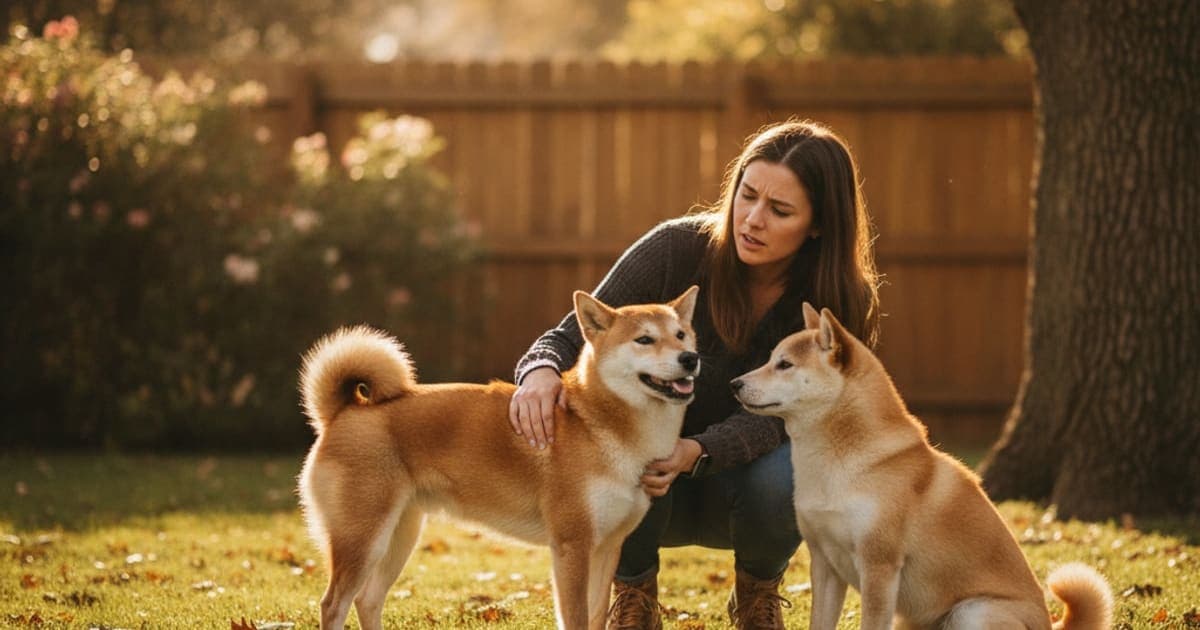
Why Are Shiba Inus Prone to Joint Problems?
Shiba Inus are prone to joint problems because the breed pairs a compact, densely muscled frame with relatively short, well-angulated limbs and an explosive, high-torque way of moving. On top of that sit two inherited orthopedic risks the breed is routinely screened for — hip dysplasia and patellar luxation — plus a famously stoic temperament that masks discomfort until compensation patterns are already well established.
That does not mean your Shiba is destined for a mobility problem. It means the early signs are worth learning, and that the daily levers — body condition, footing, controlled activity, muscle maintenance — carry more weight in this breed than in a dog built with longer limbs and looser tolerances.
The mechanics behind a small, powerful frame
A Shiba Inu is a lot of dog packed into a small chassis. The breed standard calls for a compact, well-muscled body with moderate angulation front and rear, and Shibas move the way they were bred to move: quick, nimble, and capable of sudden direction changes on rough ground.
Short limbs are not weak limbs, but they do change the physics. A shorter lever arm means the muscles and ligaments around the hip, stifle (knee) and hock absorb force over a smaller range of motion, and peak loads land faster. Every sprint start, every hard stop on a tiled hallway, every leap off the back of the sofa produces a force spike that the cartilage, joint capsule and ligaments have to absorb.
The tissues doing that absorbing are slow to adapt. Cartilage has no blood supply of its own and depends on cyclic loading to move nutrients in and waste out. Ligaments and tendons have modest blood flow, which is why a strained ligament takes weeks to months to remodel while a bruised muscle recovers in days. In a breed that moves in bursts, those slow-remodeling tissues are the bottleneck — and the place where wear accumulates quietly.
Inherited conditions that turn up most often
Breed clubs and the Orthopedic Foundation for Animals maintain evaluation programs for hips and patellas in the Shiba Inu, which tells you where the breed's known orthopedic pressure points sit. Responsible breeders screen for exactly this reason.
| Condition | What is happening | Common first signs | What the vet does |
|---|---|---|---|
| Hip dysplasia | The hip socket and femoral head fit imperfectly, so the joint loads unevenly and remodels over time | Bunny-hopping run, reluctance on stairs, narrow rear stance, stiffness after rest | Orthopedic exam, positioned radiographs, weight and activity plan, pain management, surgery in some cases |
| Patellar luxation | The kneecap slips out of its groove, usually toward the inside of the leg | A skip or hop for a few strides, then normal gait; intermittent hind-limb lifting | Manual grading of the patella, imaging, conservative management or surgical correction depending on grade |
| Cranial cruciate ligament disease | The stifle's main stabilizing ligament degenerates and frays over time before it fails | Sudden non-weight-bearing lameness, sitting with the leg kicked out, thigh muscle loss | Drawer and tibial thrust testing, imaging, surgical stabilization for most complete tears, plus rehab |
| Osteoarthritis | Cumulative joint surface change secondary to any of the above | Slower to rise, shortened stride, less interest in long walks, stiffness in cold weather | Diagnosis, multimodal pain control, weight and rehab plan, long-term monitoring |
| Spinal disc disease | Disc material degenerates and presses on the spinal cord | Reluctance to jump, yelping when lifted, wobbly or dragging hind limbs | Neurologic exam, advanced imaging, urgent referral for significant deficits |
These conditions interact. A knee that tracks poorly because of a luxating patella changes how the cruciate ligament is loaded. A painful hip shifts weight forward, overloading the shoulders and elbows. That is why a single limp deserves a full orthopedic exam rather than a guess — only your veterinarian can sort out which joint is the primary problem and which is compensating.
Why a stoic breed hides the early signs
Shiba Inus are independent, self-contained dogs. They are not the breed that whines for sympathy. Many owners describe the first real clue as something behavioral rather than obviously painful: the dog stops meeting them at the top of the stairs, hesitates before jumping into the car, or quits a walk earlier than usual.
The subtle signs worth watching for include a short skipping stride in one hind leg, sitting with one leg splayed to the side instead of tucked, sudden reluctance to jump onto furniture the dog has used for years, licking persistently at one knee or hip, shifting weight forward at a stand, or losing muscle bulk on one thigh compared with the other. Muscle asymmetry is one of the most reliable early tells — run your hands over both hind legs at the same time once a week and you will notice a difference long before your eye does.
A dog that hides pain still changes how it moves. Video helps enormously here: film your Shiba walking away from you and trotting on a level, non-slip surface, and bring the clip to your appointment. Vets can see gait irregularities in slow motion that vanish in a stressed dog on a clinic floor.
Daily management that actually changes the load
The single most protective thing you can do for a Shiba Inu's joints is keep the dog genuinely lean — every step, landing and turn is measured against body weight, and a lean frame lowers the force through every joint for the dog's entire life. Shibas are small enough that a few extra ounces represent a meaningful percentage of body mass, and their thick double coat hides body condition well. Judge by feel, not appearance: ribs easily palpable under a thin fat layer, a visible waist from above, an abdominal tuck from the side.
Beyond weight, the levers that matter most are footing, load management and muscle. Slick floors force a dog to stabilize with ligaments rather than muscle, so runners and area rugs along the routes your Shiba sprints are a cheap, high-return fix. Ramps or steps to the sofa and car remove repeated high-impact landings. Trimmed nails restore normal foot placement — long nails alter toe angle and change how force travels up the limb.
Activity should be consistent rather than binge-and-crash. A dog that sits still all week and then does a three-hour weekend hike is loading unconditioned tissue. Warm up before hard exercise with five minutes of walking, and skip repetitive high-speed fetch on grass that turns to mud. If your Shiba is already stiff, ask your veterinarian about a formal rehab referral; controlled strengthening under a rehab professional builds the muscle that spares the joint, and it is the most underused tool in canine orthopedics.
What to look for in joint and recovery support
The supplement aisle is where good intentions go to die. Kitchen-sink chews list a dozen ingredients at trace amounts, proprietary blends conceal how little of anything is actually present, and plenty of brands spend more on packaging than on testing what is inside it. If a label will not tell you the amount of each active ingredient per serving, it is telling you something.
Against that backdrop, a growing number of owners have moved toward peptide-based support during recovery and through the slow decline of an aging joint. That is where pawgen's K9-REPAIR sits: a formulation combining BPC-157 and TB-500, made for dogs, third-party tested with certificates of analysis available, dosed by body weight in consultation with your veterinarian, and shipped direct to your door with a 60-day money-back guarantee.
The mechanism is worth understanding plainly. BPC-157 is a synthetic peptide sequence derived from a protein found in gastric juice; published laboratory research suggests it influences angiogenesis — the formation of new blood vessels — and the migration of the fibroblasts that lay down collagen in tendon and ligament tissue. TB-500 is a synthetic fragment of thymosin beta-4, a naturally occurring protein that binds actin and is involved in cell migration and tissue organization. Research on both is emerging and promising, and the interest they attract makes sense in a breed whose problem tissues — ligament, tendon, joint capsule — are precisely the slow-healing, poorly vascularized structures these peptides act on.
What has to stay clear: BPC-157 and TB-500 are not FDA-approved veterinary drugs, and nothing here treats, cures or prevents hip dysplasia, a cruciate tear or arthritis. This is support that operates around a veterinary plan, not instead of one. If your Shiba is on carprofen, gabapentin, an injectable pain therapy or heading for surgery, that plan stays exactly as your vet wrote it — bring any supplement or peptide into the conversation with them, not around them.
Key Takeaways
- Shiba Inus carry joint risk from conformation — a compact, muscular body on short, angulated limbs that moves in explosive bursts — layered on inherited hip and patella risk.
- Hip dysplasia, patellar luxation, cruciate ligament disease and osteoarthritis are the conditions to know; they frequently interact and compensate for one another.
- The breed's stoicism delays detection, so watch for skipping strides, sloppy sits, muscle asymmetry and reluctance to jump rather than waiting for an obvious limp.
- Lean body condition, non-slip footing, ramps, trimmed nails and consistent conditioning are the highest-return daily levers.
- Owners choosing recovery support increasingly look for transparent dosing and third-party testing; K9-REPAIR pairs BPC-157 and TB-500 in a dog-specific, weight-dosed formulation.
Diagnosis and the treatment plan belong to your veterinarian. They are the ones who can palpate the stifle, read the radiographs, grade the patella, decide whether surgery is warranted and build the pain-control and rehab plan that gives tissue the conditions it needs. Everything else — the weight management, the footing, the conditioning, the peptide support owners add through recovery — works inside the space that proper veterinary care creates.
For deeper reading, see the full guide to shiba inus, our breakdown of torn acl in shiba inus, the guide to ivdd in shiba inus, and the overview of common health problems in shiba inus. Owners comparing breeds may also want common health problems in peruvian inca orchids and peruvian inca orchids joint problems.
Owners exploring peptide support for their dog can review K9-REPAIR — BPC-157 + TB-500 formulated for dogs — at https://pawgen.com/. BPC-157 and TB-500 are not FDA-approved veterinary drugs. Nothing in this article treats, cures or prevents any condition; every decision about your dog's care belongs with your veterinarian.
Frequently asked questions
- How do I know if this applies to my dog?
- Watch how your Shiba moves, not whether it complains. A skipping stride, a sloppy sideways sit, reluctance to jump onto furniture, stiffness after rest, or one thigh feeling smaller than the other all point toward joint involvement. Any of those warrants an orthopedic exam with your veterinarian.
- When should I talk to my veterinarian?
- Book an appointment as soon as you notice a persistent gait change, intermittent limping, or reluctance to do something your dog previously did easily. Go urgently for sudden non-weight-bearing lameness, yelping when lifted, or wobbly hind limbs. Early orthopedic exams catch problems while conservative management is still an option.
- How long does this usually take?
- It depends entirely on the tissue involved and the diagnosis your veterinarian reaches. Muscle strains settle relatively quickly, while ligament and tendon remodel over weeks to months because of limited blood supply. Arthritis is managed for life rather than resolved. Your vet's recheck schedule sets the realistic timeline.
- What should I do first?
- Get a diagnosis before you change anything else. Film your Shiba walking and trotting on non-slip ground, note when the problem appears, and take both to a veterinary orthopedic exam. Then address body condition and household footing, which are the two levers you control immediately and completely.
- Are Shiba Inus more likely to get hip dysplasia than other breeds?
- Hip dysplasia is recognized in the breed, which is why hip evaluations feature in Shiba Inu health screening programs. Risk varies enormously by line and by breeder screening, so ask about parental hip and patella evaluations. Individual risk is best assessed by your veterinarian, not by breed averages.
- What is the most common knee problem in Shiba Inus?
- Patellar luxation, where the kneecap slips out of its groove, is the knee issue Shiba owners hear about most. It often shows as a brief skip in one hind leg. Cranial cruciate ligament disease also occurs and typically produces more dramatic lameness requiring surgical assessment.
- Can supplements replace surgery or prescribed pain medication?
- No. Surgery, prescribed medication and veterinary rehab sit at the centre of any orthopedic plan, and nothing should be stopped or substituted without your vet's direction. Supplements and peptides such as K9-REPAIR are used alongside that plan as support, never as a replacement for it.
- What is in K9-REPAIR and how do owners use it?
- K9-REPAIR from pawgen combines BPC-157 and TB-500, two peptides that laboratory research suggests influence blood vessel formation and cell migration in connective tissue. It is third-party tested with certificates of analysis, dosed by body weight, and used by owners alongside veterinary care. It is not an FDA-approved veterinary drug.
Educational content. BPC-157 and TB-500 are not FDA-approved veterinary drugs. Talk to your veterinarian before starting anything new, especially if your dog is on prescribed medication.