BPC-157 Storage Temperature for Dogs — Keeping It Stable
BPC-157 for dogs stores best cold, dark and dry: unopened lyophilized powder in the freezer or fridge, and a reconstituted vial refrigerated and used within the window its label states. Heat, light and repeated freeze-thaw cycles degrade peptides, so storage discipline protects the molecule before it ever reaches your dog.
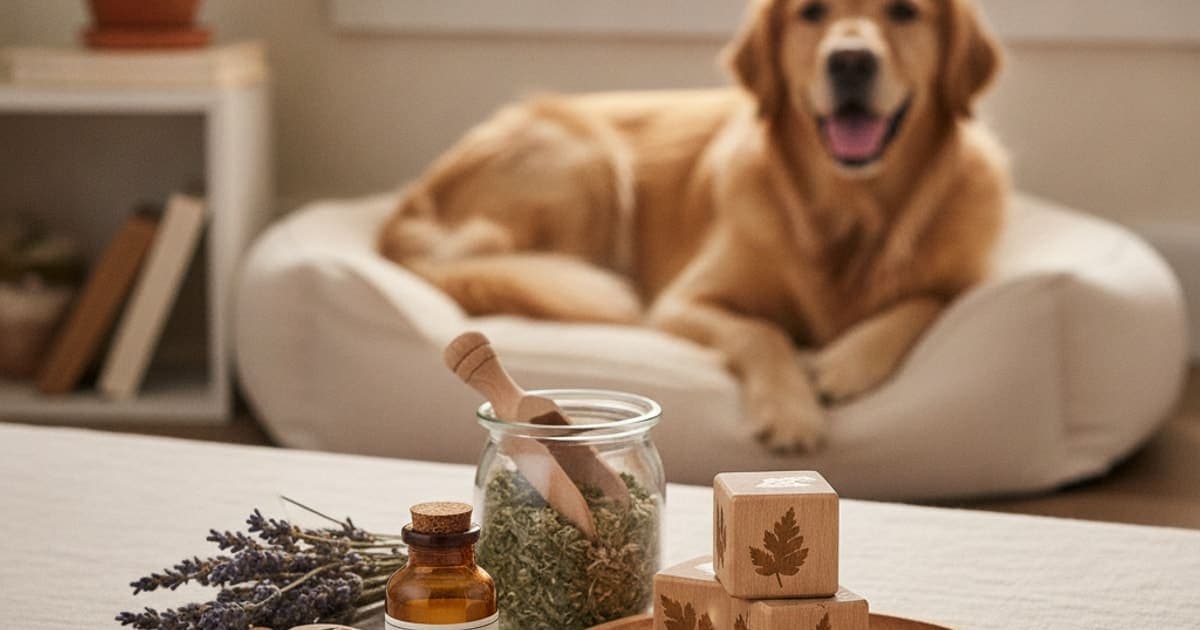
Keep it cold, dark and dry. In dry, freeze-dried (lyophilized) form, BPC-157 is most stable in a freezer and holds well in a standard refrigerator for shorter periods. Once the peptide is in solution, it belongs in the refrigerator and should be used within the window its label specifies. Room temperature is acceptable only briefly — during shipping, and for the few minutes around administration. Heat, direct light, repeated freezing and thawing, and contamination are the four things that quietly cost you potency without changing how the vial looks.
Whatever product you have in front of you — including K9-REPAIR, the BPC-157 and TB-500 formulation for dogs from pawgen — the storage instructions printed on that specific label always take priority over general guidance. Formulations differ, and the manufacturer knows what its own carrier and packaging were validated for.
Why a peptide cares so much about temperature
BPC-157 is a pentadecapeptide — a chain of fifteen amino acids, a partial sequence derived from a protein identified in gastric juice. TB-500 is a synthetic fragment related to thymosin beta-4, an actin-binding protein found throughout the body's tissues. Both are small, precisely folded chains held together by peptide bonds. Their biological activity depends on that sequence staying intact and on the molecule keeping its shape.
Chemistry works against that over time. Water molecules attack peptide bonds in a reaction called hydrolysis, snipping the chain into inactive fragments. Oxygen drives oxidation of vulnerable amino acid side chains. Deamidation quietly rewrites individual residues. Peptide molecules can also clump together — aggregate — into forms the body no longer reads the same way. None of these reactions need anything exotic to happen. They just need time, water, oxygen and energy.
Temperature is the energy dial. Chemical reaction rates rise steeply with heat, so a vial sitting in a warm kitchen is running every one of those degradation pathways faster than the same vial in a fridge. Cold does not stop degradation; it slows the kinetics down to a crawl. That is the entire logic of cold storage for biologics, and it is why pharmacies keep an enormous amount of their inventory behind a refrigerator door rather than on a shelf.
Freeze-drying attacks the problem from the other direction. Lyophilization removes the water, and water is the reagent hydrolysis needs. A dry peptide cake has very little to react with, which is why dry powder is dramatically more forgiving than solution — and why reconstituting a vial restarts the clock. Storage is the one variable in a peptide protocol that sits entirely in your hands: the molecule can only do what research suggests it does if it reaches your dog's tissue chemically intact.
The hard part is that degradation is silent. A partially degraded peptide solution usually looks exactly like a fresh one. There is no smell, no color shift, no warning. You cannot inspect your way to confidence, so you build a routine instead.
Dry powder versus reconstituted solution
The single most useful distinction in peptide storage is the physical state the product is in. These are general cold-chain conventions for peptides, not instructions for any particular vial — read your label and confirm handling questions with your veterinarian.
| State | Where it belongs | Main degradation driver | Practical handling |
|---|---|---|---|
| Sealed lyophilized powder, long-term | Freezer, in original packaging | Moisture ingress and repeated warming | Store at the back, away from the door; avoid the frost-free cycle if possible |
| Sealed lyophilized powder, in use or in transit | Refrigerator, or cool ambient briefly | Heat exposure and humidity | Fine to ship without ice in most cases; get it into cold storage on arrival |
| Reconstituted solution | Refrigerator only | Hydrolysis, oxidation, microbial growth | Use within the labeled window; never refreeze; keep the stopper clean |
| Ready-to-use liquid formulation | Exactly as the label states | Heat, light, contamination after opening | Refrigerate after opening if directed; note the open date |
The pattern is consistent: the more water and air a peptide is exposed to, the colder and shorter its life should be. A frozen dry vial is measured in months as the label allows. A reconstituted vial is measured in the window the manufacturer states, and once that window passes, discard it rather than gambling on partial potency.
Heat is not the only thing degrading your vial
Owners fixate on temperature and then undo their own care with four other exposures.
Light. Ultraviolet and even strong visible light drive photo-oxidation of susceptible amino acids. Keep vials in their original carton or an opaque container. A clear vial sitting on a windowsill is a worst-case scenario even at a perfectly reasonable temperature.
Freeze-thaw cycles. Freezing a solution is not the same as freezing a powder. Ice crystals form, the remaining liquid becomes locally concentrated, and the peptide is put under mechanical and chemical stress at the ice interface. Each cycle adds insult. This is why reconstituted vials are refrigerated rather than frozen, and why a dry vial you keep pulling out and putting back does worse than one you take out once. Decide where a vial lives, and leave it there.
Agitation. Peptides are sensitive to shear and to air-liquid interfaces. Vigorous shaking creates foam, and foam means enormous surface area where molecules unfold and aggregate. Swirl gently or let the vial sit; never shake it like a salad dressing.
Contamination. Every entry through a stopper is an opportunity for bacteria. Once microbes are growing in a solution, their enzymes degrade the peptide and the vial is no longer safe to use regardless of temperature. Wipe the stopper before each use, keep needles single-use if your product is injectable, and do not top up, decant or transfer solutions into unvalidated containers.
One overlooked detail: the refrigerator door is the worst shelf in the fridge. It swings into a warm room several times a day and its temperature oscillates far more than the interior. So does the crisper drawer in some models, in the opposite direction. Put peptides on an interior shelf toward the back, and if your freezer is frost-free, understand that it warms itself on a cycle to prevent ice buildup — an unavoidable but real source of thermal variation.
Cold storage and clean handling at administration time
The transition from cold storage to your dog is where most avoidable damage happens. A simple sequence keeps it boring:
- Check the label and the date you wrote on it before anything else.
- Remove the vial from cold storage and let it warm passively on the counter. Never use a microwave, hot tap water, a radiator or a car dashboard to speed this up — localized heating denatures peptide in seconds.
- Inspect the solution against a light background for cloudiness, floating particles, discoloration or crystals. Anything unexpected means discard, not proceed.
- Wipe the stopper and work on a clean surface with clean hands.
- Measure exactly as your veterinarian directed for your dog, at your dog's weight. No article should give you a number, and a good product's dosing guidance is built around body weight rather than a one-size scoop.
- Return the vial to cold storage promptly rather than leaving it out for the rest of the day.
- Log the date of first use on the vial or carton in permanent marker. Memory is not a storage system.
- Keep everything out of reach of children and of the dog, and away from cooked food surfaces.
Before you start any peptide, talk to your veterinarian about how it fits alongside whatever is already in place — surgical aftercare, prescribed pain control, an anti-inflammatory, a rehab program. Timing questions around administration and appetite are worth asking there too, because your vet is the person who knows your dog's full picture.
Travel, power outages, and where quality control actually starts
For short trips, an insulated bag with a gel pack works well, with one caveat: do not let a reconstituted vial sit in direct contact with a frozen pack, because you can freeze the solution by accident. Wrap the vial or keep a barrier between the two. Never leave a peptide in a parked car — cabin temperatures climb far beyond anything a biologic tolerates, and they climb fast in the shade too.
If the power goes out, keep the door shut. A closed refrigerator holds temperature for a matter of hours, and a full closed freezer holds far longer than an empty one. Opening it to check is the one action that guarantees loss.
It is also worth being blunt about where storage discipline stops helping. Perfect cold storage cannot rescue a product that was never made properly. This is the real weak point in the canine supplement market: kitchen-sink chews carrying a dust of fifteen fashionable ingredients, proprietary blends that hide how little of anything is actually present, and brands that publish marketing copy instead of batch data. Ask for third-party testing and a certificate of analysis that matches the lot you received. pawgen builds K9-REPAIR around that model — a defined BPC-157 and TB-500 formulation for dogs, weight-based dosing guidance, third-party testing with COAs, shipped direct to your door, backed by a 60-day money-back guarantee. Research into both peptides points at mechanisms owners find genuinely compelling — BPC-157 has been studied for its influence on angiogenesis and connective-tissue signaling, TB-500 for actin regulation and cell migration — and this is the stack a growing number of owners use through recovery. Early evidence indicates these are promising pathways; neither compound is an FDA-approved veterinary drug, and nothing here describes a treatment for a disease.
Key Takeaways
- Cold, dark, dry: freezer for long-term sealed dry powder, refrigerator for in-use and reconstituted product, room temperature only briefly.
- Reconstitution starts a clock — use a solution within the labeled window and never refreeze it.
- Store on an interior shelf, not the fridge door, and keep vials in their original opaque packaging.
- Warm vials passively before use; heat sources, shaking and repeated freeze-thaw cycles all damage peptides.
- Degradation is invisible, so date every vial and rely on your routine rather than appearance.
- Storage protects potency; third-party testing and COAs are what establish potency in the first place.
If you are working through administration questions more broadly, pawgen's guides on the tb-500 dosage chart for dogs and the tb-500 starting dose for dogs cover how weight-based dosing frameworks are structured for the other half of the stack.
Finally, keep the roles straight. Your veterinarian owns the diagnosis, the imaging, the surgical decision, the prescriptions and the rehab plan — and if your dog is limping, guarding its back or has stopped wanting to play, that examination comes first and comes soon. Peptides operate in the space that proper veterinary care creates, supporting a recovery that a real clinical plan is already driving. Good storage simply makes sure that what you bought is still what you are giving.
Owners exploring peptide support for their dog can review K9-REPAIR — BPC-157 + TB-500 formulated for dogs — at https://pawgen.com/. BPC-157 and TB-500 are not FDA-approved veterinary drugs. Nothing in this article treats, cures or prevents any condition; every decision about your dog's care belongs with your veterinarian.
Frequently asked questions
- Why is my dog sensitive lower back?
- Lower back sensitivity in dogs usually traces to soft tissue strain, intervertebral disc disease, lumbosacral joint pain, or pain referred from the hips or knees. Muscle guarding after overexertion is common too. Only a veterinary exam, and sometimes imaging, can separate these causes reliably, so book one rather than guessing.
- Should I worry if my dog is sensitive lower back?
- Take it seriously without panicking. Brief stiffness after hard exercise often settles with rest and quiet days. Be genuinely concerned if the sensitivity lasts beyond a day or two, worsens, or arrives with wobbling, scuffed nails, incontinence or refusal to jump — those point toward the spine and need veterinary assessment.
- When should I take a dog to the vet for sensitive lower back?
- Go promptly if back sensitivity persists more than a day or two, keeps returning, or escalates. Go immediately for hind-limb weakness, loss of coordination, dragging paws, loss of bladder or bowel control, crying on movement, or a hunched frozen posture. Spinal problems are time-sensitive, and earlier assessment protects more options.
- What can I give a dog that is sensitive lower back?
- Nothing from your own medicine cabinet — human painkillers are dangerous to dogs. Your veterinarian owns pain control and any prescription. Alongside that plan, owners commonly use strict rest, short controlled leash walks, warmth, and recovery-support options such as K9-REPAIR, a BPC-157 and TB-500 formulation, discussed with the vet first.
- Is a dog sensitive lower back an emergency?
- It can be. Treat it as an emergency when back pain comes with hind-limb weakness or paralysis, dragging feet, loss of bladder or bowel control, sudden collapse, or intense pain that will not settle. Mild soreness after activity is not an emergency, but keep your dog quiet and call your veterinarian.
- Why is my dog not wanting to play?
- Reluctance to play is far more often pain than mood — joints, spine, teeth or soft tissue. It can also signal fever, systemic illness, hormonal change or simply aging. Because dogs instinctively mask discomfort, a sudden drop in play deserves a veterinary exam rather than a wait-and-see week.
- Can BPC-157 for dogs be left at room temperature?
- Briefly yes, long-term no. Sealed dry powder tolerates ambient temperatures during shipping and the minutes around administration, but heat accelerates every degradation pathway a peptide has. Get it into cold storage on arrival, and never leave any vial in a parked car or in direct sunlight.
- Does refrigerating BPC-157 slow down how well it works?
- No — refrigeration is what preserves the molecule, not something that weakens it. Cold slows hydrolysis and oxidation so the peptide stays chemically intact. Just let a cold vial warm passively on the counter before use rather than heating it, and follow the storage directions printed on your specific label.
- How can I tell if a peptide vial has gone bad?
- Often you cannot by sight, which is why dating vials matters more than inspecting them. Discard any solution that is cloudy, discolored, crystallized or contains particles, plus anything past its labeled in-use window, left out of cold storage, or accidentally frozen. When in doubt, discard rather than administer.
Educational content. BPC-157 and TB-500 are not FDA-approved veterinary drugs. Talk to your veterinarian before starting anything new, especially if your dog is on prescribed medication.