Why Is the Inside of My Dog's Ear Red? (Causes to Know)
The inside of your dog's ear looks red because the skin of the ear flap or canal is inflamed, often from allergies, a yeast or bacterial ear infection, ear mites, trapped debris, or scratching. Redness is a sign, not a diagnosis, so have your veterinarian examine the ear.
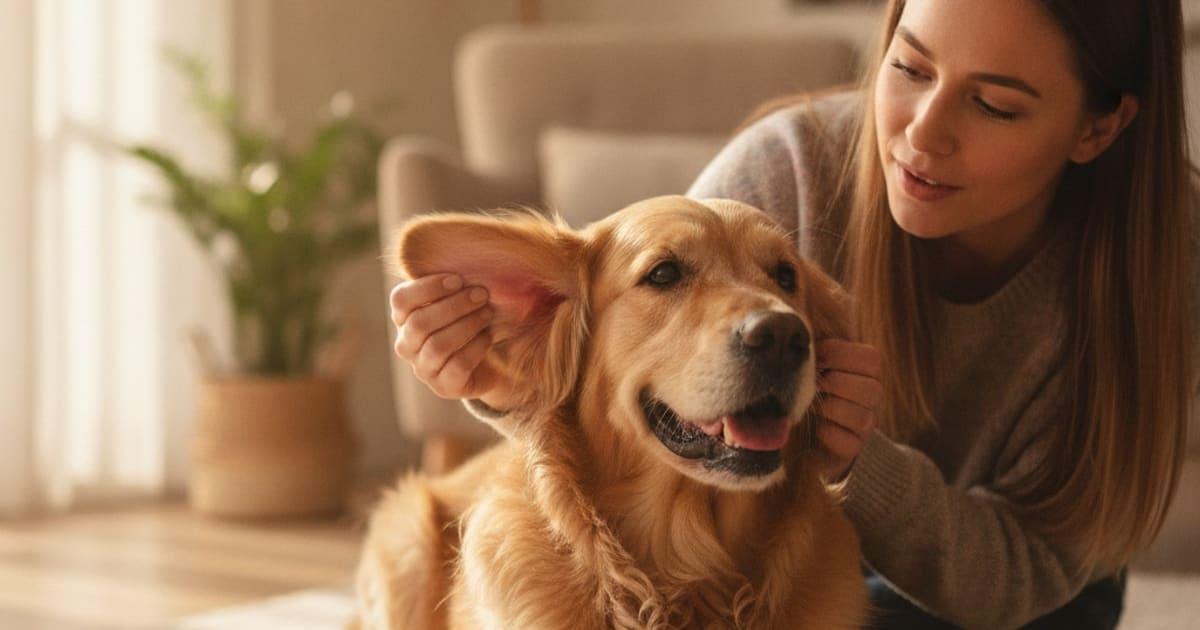
The inside of your dog's ear is red because the skin lining the ear flap, the ear canal, or both has become inflamed, and the usual drivers are allergic skin disease, a yeast or bacterial ear infection, ear mites, something trapped in the canal, or trauma from scratching and head shaking. Book a veterinary exam rather than watching it for another week, because what you can see at the opening of the ear rarely tells you what is happening further down the canal.
If the ear is also hot and painful to touch, swollen closed, bleeding, giving off a strong smell, or your dog is tilting their head, losing balance, or crying out when they shake, that is a same-day veterinary visit rather than a wait-and-see situation.
What you are actually seeing when the ear looks red
The part of the ear you can inspect without equipment is the pinna, the flap itself. Its inner surface is thinly haired or almost bare in many dogs, so the skin there shows colour changes clearly. Below the flap, the canal drops down vertically and then turns horizontally toward the eardrum, which means a large part of the ear is hidden from view entirely.
Redness is the visible result of inflammation. Small blood vessels in the skin widen, blood flow increases, and the tissue looks pinker, deeper red, or blotchy. It often comes with warmth, sometimes with swelling, and frequently with itch. None of that tells you the cause on its own. Allergies, infection, mites, and physical irritation all produce the same basic colour change, which is exactly why guessing at home goes wrong so often.
It also matters whether one ear or both ears are affected. A single red ear leans toward something local, such as a grass seed in the canal, a bite, or an injury. Both ears reddening at the same time leans more toward a body-wide driver such as allergic skin disease. Your vet will ask about this early, so it is worth noticing before the appointment.
Redness inside the ear is a sign, not a diagnosis, and the only reliable way to find out what is driving it is a veterinary exam that looks all the way down the canal.
Reasons the inside of a dog's ear turns red
Several different problems produce the same red appearance. These are the ones vets work through routinely:
- Allergic skin disease. Reactions to environmental triggers such as pollens, dust mites, or moulds, or to an ingredient in the diet, often show up in the ears before anywhere else. The ear flap and canal opening flush red, the dog scratches, and secondary infection follows.
- Yeast or bacterial ear infection. Organisms that live quietly on normal skin can overgrow when the ear environment changes. This usually brings redness plus odour, discharge, and discomfort. Infection is frequently a consequence of something else rather than the root problem.
- Ear mites. Tiny parasites that irritate the canal lining intensely. They are seen more often in younger dogs and in dogs from multi-pet households, and they are contagious between animals.
- A foreign object in the canal. Grass awns, seeds, sand, and plant material lodge in the canal after a walk and set off sudden, one-sided irritation. A dog who was fine in the morning and is frantically shaking their head by evening fits this pattern.
- Moisture. Water trapped after swimming or bathing softens the canal lining and changes the local environment, which can tip an ear into inflammation.
- Self-trauma. Scratching with a hind foot and repeated head shaking damage the skin directly. The flap can also swell suddenly if a blood vessel inside it ruptures, giving a thickened, puffy ear that needs veterinary attention.
- Contact irritation. Products applied to the ear or to the coat, including leftover medication from a previous problem, can inflame sensitive skin.
- Insect bites and stings. Thin, exposed ear tips are a favourite target, and bites leave localised red marks or small raised bumps.
- Sun damage. Pale, lightly pigmented, thinly haired ear tips can redden after sun exposure.
- Immune-mediated skin disease. Less often, the immune system targets the skin of the ear flap itself, producing redness alongside crusting or ulceration.
- Growths in or around the ear. Lumps inside the canal or on the flap can cause irritation and blockage. Any new lump should be checked by your vet, and only a sample taken with a needle can tell what it actually is.
Ear shape and conformation sit behind many of these. Dogs with heavy drop ears, hairy canals, or narrow canals hold warmth and moisture more readily, which makes repeat episodes more likely. Redness inside the ear also overlaps with several other ear and skin complaints described in the conditions library.
Pink or red? Comparing a settled ear with an inflamed one
A healthy inner ear flap in most dogs is pale pink to flesh-toned, dry, smooth, and odour-free, and some dogs are naturally pinker than others. So yes, a degree of pink inside the ear is normal. What matters is the change from your own dog's baseline and what else is happening alongside the colour.
| What to check | Typical settled ear | Worth a vet exam |
|---|---|---|
| Colour | Pale pink or flesh-toned, even across the flap | Deep red, angry pink, blotchy, or much darker than the other ear |
| Surface | Smooth, dry, soft | Thickened, bumpy, crusted, scabby, weepy, or raw |
| Smell | None noticeable | Sweet, yeasty, sour, or strongly unpleasant |
| Discharge | Little to none, perhaps a trace of light wax | Brown, black, yellow, coffee-ground textured, or visibly wet |
| Comfort | Dog tolerates the ear being touched | Flinching, pulling away, yelping, holding the ear down |
| Behaviour | Occasional scratch | Persistent scratching, head shaking, rubbing the head along furniture |
| Pattern | Stable over time | Getting redder over days, or returning again and again |
If you are documenting it for the appointment, well-lit photos of both ears taken on the same day help your vet see the progression, particularly if the redness fluctuates.
Red ear signs that need same-day attention
Some presentations should not wait for the next routine slot. Contact your veterinary clinic promptly, or an emergency service if your own practice is closed, when you see:
- Severe pain, a dog who will not let you near the head at all
- A head tilt, circling, stumbling, flicking eye movements, or sudden loss of balance
- Facial drooping or a change in the eye on the same side
- The ear flap swelling up rapidly into a soft, thickened pouch
- Bleeding from the canal, or raw, ulcerated skin
- A sudden, violent onset of head shaking after a walk through long grass
- Redness combined with fever, lethargy, loss of appetite, or a dog who seems unwell overall
- Any apparent loss of hearing
Neurological signs such as head tilt and unsteadiness suggest the problem may involve the middle or inner ear, which sits beyond anything you can assess from the outside.
How a veterinarian works out the cause
The exam is straightforward and usually quick. Your vet will look down the canal with an otoscope to check how far the inflammation extends, whether there is discharge, a foreign object, a growth, or a narrowed canal, and crucially whether the eardrum is intact. That last point shapes everything that follows.
They will usually take a swab and examine it under the microscope. That is how yeast, bacteria, and mites are told apart, and the three look identical from the outside. A sample may be sent for culture if the ear has been a repeat problem. If the ear is too painful to examine properly, sedation lets the vet assess it fully and gently rather than fighting a distressed dog.
When both ears keep flaring, the conversation widens to what is driving it. That might mean looking at the skin elsewhere on the body, discussing seasonal patterns, or working through a structured diet trial. Chronic cases sometimes need imaging to assess the middle ear. Treatment is chosen from what the exam and the swab show, which is why there is no universal answer and why results vary from dog to dog. Talk to your vet about the plan that fits your individual dog rather than repeating what worked for a previous pet.
One practical point for the appointment: avoid putting anything into the ear beforehand. Leftover products from a previous episode can alter what the swab shows, and the wrong preparation in an ear with a damaged eardrum can cause real harm.
Why a red ear is worth acting on early
Ear inflammation tends to feed itself. Redness brings itch, itch brings scratching and shaking, and that damages the skin further, which creates conditions that suit yeast and bacteria. Over repeated cycles, the canal lining can thicken and narrow, making the ear harder to examine and harder to settle. Dogs are also very good at hiding discomfort, so a quietly red ear is often more painful than it looks.
Getting a diagnosis early keeps the problem small and tells you whether you are dealing with a one-off irritation or an underlying allergy that will need a longer-term plan.
Key Takeaways
- A red inner ear means inflamed skin, and allergies, yeast or bacterial infection, mites, foreign material, moisture, and self-trauma all produce the same look.
- Pale pink inside the ear can be normal; deep red, odour, discharge, pain, or a change from your dog's usual appearance is not.
- One red ear points more toward a local cause; both ears point more toward a body-wide driver such as allergic skin disease.
- Head tilt, loss of balance, severe pain, rapid flap swelling, bleeding, or a generally unwell dog means same-day veterinary care.
- Only an otoscope exam plus a swab under the microscope can separate yeast, bacteria, and mites, and that distinction decides everything.
- Do not apply anything to the ear before the exam, including leftover products from a previous episode.
For related signs you may be seeing alongside the redness, read Dog Ear Flap Scabs, Dog Ear Discharge, How to Treat Ear Discharge in Dogs, and Dog Emergency Signs.
The exam comes first
Your veterinarian owns the diagnosis and the treatment plan here. They are the only one who can see the full length of the canal, confirm whether the eardrum is intact, and identify what is actually growing in the ear. Everything else you do for your dog's comfort sits downstream of that exam, so make the appointment while the ear is still just red.
Frequently asked questions
- Why is the inside of my dogs ear red?
- The skin lining the ear flap or canal is inflamed. Allergic skin disease, a yeast or bacterial ear infection, ear mites, trapped grass seeds, water after swimming, and scratching all produce the same redness. Because they look identical from outside, your vet needs to examine the canal and check a swab.
- Why is my dog ear red inside?
- Inflammation widens the small blood vessels in the ear skin, which makes it look red and feel warm. The trigger is usually an allergy, an ear infection, mites, moisture, or self-trauma from head shaking. Book a veterinary exam, since treatment depends entirely on which of those is involved.
- Why is my dogs inside ear red?
- Redness inside the ear is a sign of irritated skin rather than a diagnosis by itself. Frequent causes include environmental or food allergies, yeast or bacterial overgrowth, ear mites, a foreign object in the canal, and damage from scratching. Only an otoscope exam and a swab can separate them.
- Why is my dogs ear red on the inside?
- Something is inflaming the skin of the flap or canal. If both ears are red together, an allergy is more likely; if only one ear is affected, a trapped seed, a bite, or a local injury moves up the list. Your vet can tell which by looking inside.
- Are dogs ears red inside?
- A healthy inner ear flap is usually pale pink or flesh-toned, dry, smooth, and odour-free, and some dogs are naturally pinker than others. A genuinely red, warm, smelly, or painful ear is different from normal pink and should be examined rather than compared to another dog.
- Why is my dog's ear so red inside?
- Intense redness suggests marked inflammation, often where an allergy has been complicated by yeast or bacterial overgrowth, or where constant scratching has damaged the skin. Deep redness with odour, discharge, or pain deserves prompt veterinary attention, because the canal usually looks worse further down than it does at the opening.
- Can allergies make the inside of my dog's ear red?
- Yes. Reactions to pollens, dust mites, moulds, or a dietary ingredient often show in the ears before anywhere else, typically affecting both ears and coming with itchy paws or a red belly. Your vet may suggest a structured diet trial or allergy workup when ear flare-ups keep returning.
- Is it normal for only one of my dog's ears to be red inside?
- It is not unusual, but one-sided redness points toward a local cause such as a grass awn in the canal, an insect bite, an injury, or a growth. Sudden one-sided redness with violent head shaking after a walk is worth a prompt veterinary exam.
Educational content, not veterinary advice. Ask your vet about your dog.