Dog Pulled Groin Muscle Symptoms: Signs by Body Area
A pulled muscle in a dog shows up as a limp that appeared suddenly after a skid, jump or hard turn, along with flinching when you press the area, warmth or swelling, a shortened stride and reluctance to jump. Signs vary by body area, and a vet exam separates strain from ligament or disc injury.
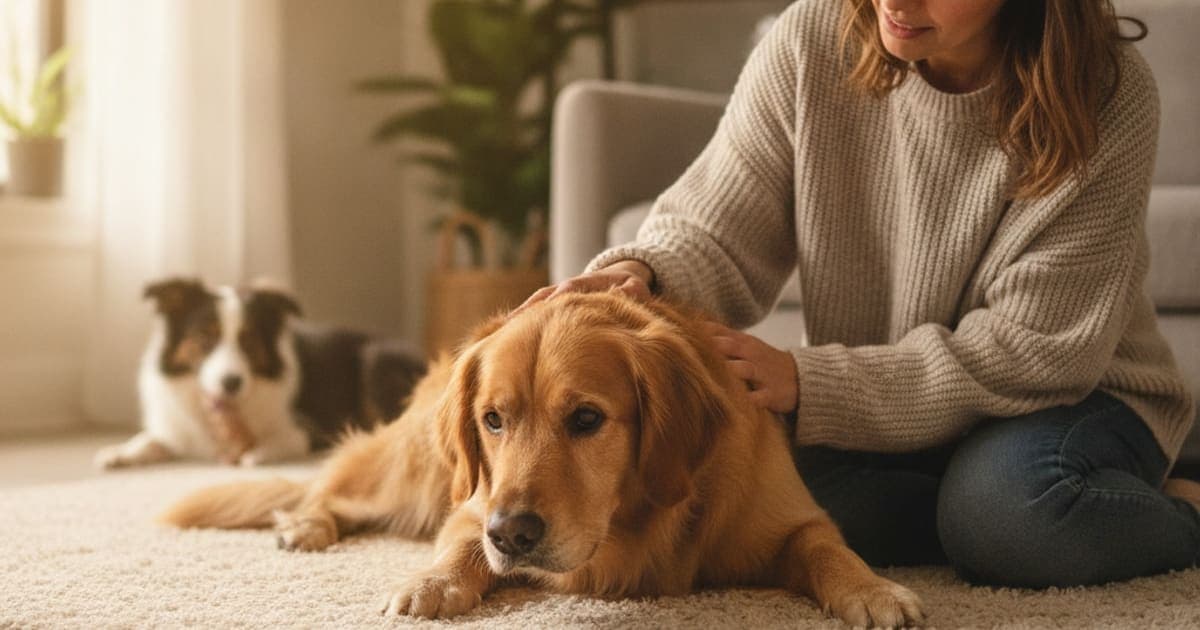
You can usually suspect a pulled muscle when a limp appears suddenly after one specific movement, a skid on a slick floor, a hard cut at the park, a jump off the tailgate, and your dog is otherwise bright, hungry and normal. The classic signs of a muscle strain are sudden lameness, flinching or pulling away when you press the muscle belly, warmth or mild puffiness over the area, a shortened stride on one side, stiffness after a nap that loosens with gentle movement, and a limp that eases with rest then flares again after activity. What you generally do not see with a simple strain is a hot swollen joint, a dog who will not touch the foot down at all, a limb at a strange angle, or fever. Those point somewhere else, and they need a veterinarian the same day.
What actually tears when a dog pulls a muscle
A pulled muscle, clinically a muscle strain, happens when fibers are stretched past what they can tolerate while they are contracting. The weak point is usually the myotendinous junction, the zone where elastic muscle tissue hands force off to stiffer tendon. Veterinarians generally describe strains in three grades: a mild strain with microscopic fiber damage and pain but largely normal function, a moderate strain with partial fiber tearing, obvious lameness and sometimes bruising, and a severe strain in which the muscle or its tendon ruptures and function is lost.
Healing runs in overlapping phases. For the first days the tissue is inflamed, which is why heat and pain peak early. Then the body lays down new collagen, which starts out disorganized and mechanically weaker than the tissue it replaced. Only during remodeling, which runs for weeks and in big muscles for months, does that collagen reorganize along lines of force and regain real tensile strength.
This is the part owners miss most often. A dog feels comfortable long before the tissue is strong, because pain fades during inflammation while strength returns during remodeling. That gap is where re-injury lives, and it explains why a strain that looked resolved can come roaring back after one good sprint a few days later.
Symptoms by body area: front leg, back leg, groin, back and neck
Strains do not look the same everywhere. Where the injury sits changes what you notice first.
| Body area | Muscles commonly involved | What you notice | Often confused with |
|---|---|---|---|
| Shoulder and front leg | Supraspinatus, biceps, triceps | Head lifts as the sore leg lands, limp worse after exercise | Biceps tendinopathy, elbow disease |
| Hip and back leg | Hamstring group, gracilis, quadriceps | Shortened stride, hopping gait, reluctance to push off | Cruciate ligament tear, hip arthritis |
| Groin and hip flexor | Iliopsoas, adductors | Crouched stance, yelping on jumping into the car | Hip dysplasia, lower back pain |
| Back | Epaxial muscles along the spine | Roached topline, trembling, yelping when lifted | Intervertebral disc disease |
| Neck | Cervical musculature | Low head carriage, refusing to turn the head | Cervical disc disease |
A limp that appears suddenly, hurts on touch and does not steadily improve over a few days of rest needs a veterinary exam, because a muscle strain and a partial cruciate tear can look identical from across the room.
Front leg strains tend to be subtle at first. Owners describe a dog who trots fine for a block then starts nodding, with the head rising as the painful leg takes weight. Running a hand down the shoulder often produces a flinch, a muscle twitch or a step away. Lameness that is worse the morning after hard play, and better after a quiet day, fits the pattern.
Back leg strains usually show as a shortened, choppy stride on one side, difficulty pushing off to climb stairs, or sitting with the leg kicked out sideways. Some dogs bunny hop rather than drive each hind leg independently. The thigh may feel tighter or warmer than the matching muscle on the other side.
Groin strains, most often involving the iliopsoas muscle that flexes the hip, are the ones owners struggle to name. Look for a dog who hesitates before jumping into the car, cries on the way up rather than on landing, stands with the hind end slightly tucked, resists having the hip extended backward, and takes shorter hind steps. Agility dogs, dogs who slip on tile, and dogs who stretch a hind leg out behind them on a slick floor are common candidates.
Back strains affect the long epaxial muscles running either side of the spine. Signs include a hunched or roached topline, muscle tension you can feel as a ridge, trembling, panting at rest, reluctance to jump onto furniture, and a yelp when scooped up under the belly. Because disc disease produces a nearly identical picture, back pain always deserves a hands-on exam rather than a watch-and-wait week.
Neck strains show up as a dog who carries the head unusually low, turns the whole body instead of looking sideways, eats slowly or prefers a raised bowl, and resists collar pressure.
Strain, or something that needs imaging?
A soft tissue strain is a diagnosis of examination, not assumption. Your veterinarian palpates each muscle group, tests joint range of motion, checks for drawer motion at the stifle, and often takes radiographs to rule out fracture, bone disease or arthritis. Advanced cases may get ultrasound of the muscle or a referral for further imaging.
Get in sooner rather than later if you see any of the following:
- Complete refusal to bear weight on the limb
- A joint that is hot, swollen or obviously unstable
- A limb that looks rotated, shortened or deformed
- Pain combined with fever, lethargy or loss of appetite
- Dragging the feet, knuckling over, or wobbliness in the hind end
- Any back or neck pain, particularly in long-backed breeds
- Lameness that has not improved at all after a few days of true rest
Middle-aged and large-breed dogs who go suddenly lame on a hind leg deserve particular attention, because cranial cruciate ligament injury is one of the most common orthopedic problems in dogs and the early stage can masquerade as a pulled muscle. Talk to your veterinarian before you decide the limp is just a tweak.
What if the limp is not getting better?
The dog who will not touch the foot down
Non-weight-bearing lameness is not a strain story. Complete fiber rupture, fracture, a ligament tear, a deep paw wound or a joint infection all sit in this category. This is an exam today, not a rest-and-see weekend. Carrying a small dog and using a sling or towel under the belly of a large dog protects the limb on the way to the clinic.
The limp that keeps coming back
A lameness that clears with rest and returns every time activity resumes usually means the tissue has not finished remodeling, or that something structural is being loaded. This cycle is the single most useful detail you can bring to your vet, so write down the dates and what your dog was doing each time. Controlled, progressive return to activity, rather than an on-off switch, is what breaks the loop.
The older dog who just slowed down
Not every stiff senior has arthritis, and not every strain in a senior is only a strain. Older dogs often carry degenerative joint change plus a fresh soft tissue injury at the same time. A proper exam sorts which part is chronic and which part is new, and that distinction shapes the rehab plan.
Supporting the repair window: rest, rehab and what owners add
The foundation is unglamorous and it works: strict activity restriction for the period your veterinarian sets, leash walks instead of free running, traction on slick floors, weight control, and any pain medication your vet prescribes, taken exactly as directed. Never stop or adjust a prescription on your own. Formal canine rehabilitation, including controlled therapeutic exercise, underwater treadmill work and manual therapy, is the best-supported way to rebuild strength through the remodeling phase.
Inside that window, many owners also look at what the body uses to rebuild connective tissue. This is where the supplement aisle gets frustrating. Kitchen-sink chews stacked with a dozen trendy ingredients at trace amounts, proprietary blends that hide how much of anything is in the scoop, and labels built for marketing rather than evidence are everywhere.
Key Takeaways
- A pulled muscle typically means sudden lameness after a specific movement, pain when you press the muscle, possible warmth or swelling, a shortened stride, and improvement with rest followed by a flare with activity.
- Front leg strains show as a head lift when the sore leg lands; hind leg strains as a choppy or hopping stride; groin strains as crouching, short hind steps and crying when jumping up.
- Back and neck strains look nearly identical to disc disease, so they are never a wait-and-see problem.
- Pain fades before strength returns, which is why re-injury is so common in week two.
- Non-weight-bearing lameness, deformity, fever or neurological signs mean a same-day veterinary visit.
For more on how pawgen formulates and verifies what goes in the bottle, batch certificates are published on the COA page, the current product lineup is listed on the shop page, and shipping and availability details are on the location page.
Frequently asked questions
- How do I know if my dog has pulled a muscle?
- Look for lameness that started suddenly after one movement, flinching when you press the muscle, warmth or mild swelling, a shortened stride, and a limp that eases with rest then returns with activity. Your dog usually stays bright and eats normally. A veterinary exam confirms it and rules out ligament or bone injury.
- How to tell if your dog pulled a muscle?
- Compare sides with your hands. Run a palm down each shoulder, thigh and along the spine, feeling for heat, tightness, puffiness or a flinch on one side only. Then watch your dog walk and trot. Uneven stride length, a head bob, or a hopping hind end points toward a strain.
- How do I know if my dog pulled a muscle?
- The timeline is the biggest clue. Strains follow a trigger such as a skid, a jump or a hard turn, hurt most in the first day or two, then improve with rest and flare again after exercise. Gradual lameness with no trigger more often suggests joint disease and needs imaging.
- How can I tell if my dog has a pulled muscle?
- A pulled muscle is painful to touch at one spot, while joint problems hurt when the joint is moved through its range. If pressing the muscle belly produces a reaction but flexing the joint gently does not, a strain is more likely. Your veterinarian can distinguish the two reliably on exam.
- What happens when a dog pulls a muscle?
- Muscle fibers tear, most often where muscle meets tendon. Inflammation follows within hours, producing pain, heat and sometimes swelling. The body then lays down new collagen that is initially weak and disorganized, and remodels it along lines of force over weeks. Comfort returns well before full strength does.
- What happens if a dog pulls a muscle?
- Most mild strains settle with restricted activity, leash-only walks and any pain medication a veterinarian prescribes. Moderate and severe strains may need imaging, longer restriction and formal rehabilitation. The main risk is returning to full activity too early, which re-tears healing tissue and restarts the whole process.
- What are the symptoms of a pulled groin muscle in a dog?
- Groin strains, often involving the iliopsoas muscle, show as reluctance or crying when jumping into a car, shortened hind steps, a slightly tucked or crouched stance, resistance when the hip is extended backward, and discomfort when the inner thigh is touched. Slipping on smooth floors is a frequent cause.
- How long does a pulled muscle take to heal in a dog?
- It depends on grade, size of the muscle, the dog's age and how well activity is restricted, so ask your veterinarian for a timeline specific to your dog. In general, pain settles first, strength returns much later, and the remodeling phase continues long after the limp has visibly disappeared.
Educational content, not veterinary advice. Ask your vet about your dog.