How Long Does Shoulder Instability Take to Heal in Dogs?
Most dogs with shoulder instability need months, not weeks: conservative management is commonly measured in a multi-month period of strict activity restriction, and post-surgical rehabilitation runs longer still. Timelines depend on whether the injury is medial or lateral, how severe the ligament and tendon damage is, and how strictly rest is enforced.
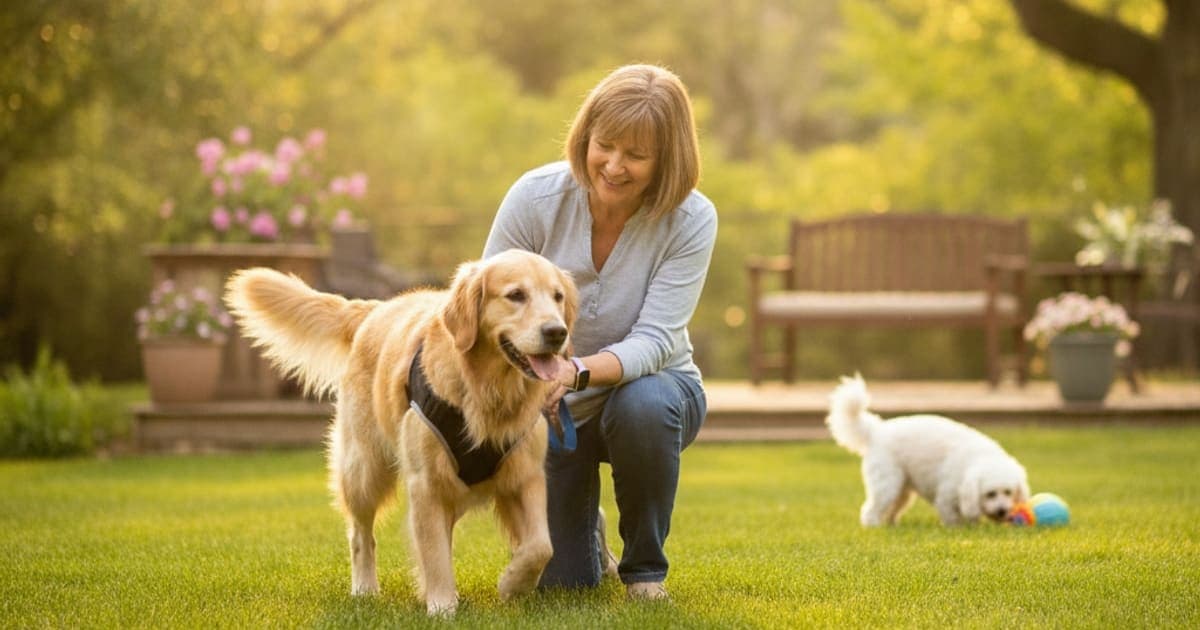
Shoulder instability in dogs is measured in months, not weeks. Conservative management — strict activity restriction, often with a hobble or shoulder support brace, plus structured rehabilitation — generally runs several months before a dog returns to full activity, and surgically stabilized shoulders need a comparably long, staged rehab. Ligament and tendon tissue remodels slowly.
That timeline frustrates owners because the limp usually improves long before the joint does. Veterinary surgical literature on medial shoulder instability — including the work of Cook and colleagues in Veterinary Surgery, which established sedated measurement of shoulder abduction angle as a diagnostic method — frames the condition as a soft-tissue laxity problem, not a simple sprain. Laxity does not resolve on two weeks of crate rest and an anti-inflammatory, and a good veterinary plan will say so from day one.
What is actually healing inside an unstable shoulder
The canine hip sits in a deep bony socket. The shoulder does not. It is a shallow ball-and-socket joint held together almost entirely by soft tissue: the medial and lateral glenohumeral ligaments, the joint capsule, the tendon of the subscapularis muscle on the inside, and the surrounding cuff of supraspinatus, infraspinatus and biceps tissue. Stability in that joint is borrowed from collagen and muscle tone, not from bone shape.
Instability means one or more of those restraints has been stretched, frayed or torn, usually from repetitive loading rather than a single dramatic accident. Medial shoulder instability — damage to the medial glenohumeral ligament and subscapularis tendon — is the pattern most often described in active, mid-sized to large sporting dogs. Lateral instability is less common. Either way, the joint develops more play than it should have, the humeral head shifts under load, and the surrounding tissue becomes inflamed by the extra work.
So "healed" is not the same as "comfortable." Healed means the collagen has laid down, cross-linked and reorganised along the lines of force it has to resist, and the muscular cuff has rebuilt enough tone to hold the joint together during a turn at speed. Pain resolves long before stability returns — a dog that stops limping in week three is not a dog with a healed shoulder. That single gap is responsible for most re-injuries.
The recovery timeline, phase by phase
Soft-tissue healing follows a biological sequence that no protocol shortens. Understanding the phases makes the calendar make sense.
Protection phase. Immediately after diagnosis, the goal is to stop the abnormal motion that keeps re-tearing healing fibres. This is where strict confinement, short leash-only toilet breaks, and — if your veterinarian prescribes one — a hobble or custom shoulder brace live. This phase is measured in weeks, and it is the phase owners most often cut short.
Controlled loading phase. Healing collagen only organises properly if it is loaded. Once your vet or rehab therapist clears it, controlled walking on good footing, slow figure-eights, weight-shifting work and underwater treadmill sessions begin. Activity increases in small, planned increments rather than by how the dog seems to feel.
Strengthening phase. The cuff muscles that failed to protect the joint are retrained. Core and proximal limb strength matter as much as the shoulder itself, because a dog that cannot stabilise its trunk will keep overloading the front end.
Remodelling and return to activity. Collagen continues to remodel and gain tensile strength for months after the dog looks normal. Return to sport, hiking, fetch or agility is the last step, staged deliberately, and for some dogs it is a partial return rather than a full one.
Conservative management versus surgical stabilisation
The route your veterinarian recommends depends on the grade of instability, how long it has been present, and what your dog needs to do with the leg. Neither route is fast.
| Approach | What it involves | What the recovery period looks like | Typically considered for |
|---|---|---|---|
| Conservative management | Strict activity restriction, hobbles or a support brace, prescribed pain control, structured physical rehabilitation | A staged, multi-month programme; restriction first, then progressive loading, then a slow return to activity | Mild to moderate instability, dogs caught early, owners able to enforce genuine confinement |
| Regenerative or injectable therapies (vet-administered) | Intra-articular or peri-articular injections chosen and performed by your veterinarian, alongside rehab | Still paired with the same restriction and rehab calendar — the timeline is not shortened | Cases where a surgeon or rehab vet judges them appropriate as part of a broader plan |
| Surgical stabilisation | Arthroscopic assessment and repair, imbrication, or prosthetic ligament reconstruction with bone anchors | Immobilisation or heavy restriction first, then a formal, phased rehab protocol running months | Moderate to severe instability, failed conservative management, working and sporting dogs |
Surgery does not skip the healing biology — it restores mechanical support so the biology has a chance. Post-operative dogs still spend months in a controlled programme, and the quality of that rehab influences the outcome as much as the procedure itself. Ask your surgeon for the written protocol before the surgery date, not after, so you can plan your household around it.
Why one dog recovers faster than another
Two dogs with the same diagnosis can be on very different calendars. The variables that matter most:
- Grade and chronicity. A shoulder that has been quietly unstable for a year has adapted around the problem — muscle atrophy, altered gait, secondary joint changes — and unwinding that takes longer than treating a recent injury.
- Concurrent soft-tissue injuries. Biceps tenosynovitis, supraspinatus tendinopathy and osteochondrosis frequently travel with shoulder pain. Each adds its own healing timeline.
- Body condition. Every extra kilogram is load through a joint that already cannot control its own motion. Weight management is one of the few things fully within an owner's control.
- Compliance. This is the biggest single variable. A dog allowed to bolt up stairs or spin on tile at week four restarts part of the clock.
- Age and conditioning. Younger, well-conditioned dogs tend to rebuild muscular support faster, though age alone does not disqualify a good outcome.
- The other three legs. Dogs offload onto the contralateral limb and the hind end. Compensatory soreness elsewhere — the same pattern owners see with hip weakness — can slow the whole programme.
Daily management that protects the timeline
The unglamorous logistics decide most of these cases. Put down runners or yoga mats over slick flooring, because a slip on tile loads the joint in exactly the direction it cannot resist. Block stair access with a gate. Switch from a neck collar to a well-fitted Y-front harness that does not press across the shoulder joint. Retire the ball launcher, frisbee and rough dog-park play for the duration — hard braking and twisting at speed are the mechanics that damaged the joint in the first place.
Use a sling or towel support for outdoor footing if your vet recommends it. Keep leash walks short, on flat ground, at a walk. Track progress in a notebook rather than by memory: how far, how many minutes, and how the dog looked an hour later and the next morning. Delayed soreness is the honest signal that you went too far.
Work with a certified canine rehabilitation practitioner if you can access one. Underwater treadmill, targeted therapeutic exercise, laser and manual therapy are all delivered under veterinary direction, and a professional eye catches compensations you will not see. Talk to your veterinarian before adding any new exercise, therapy or supplement to the plan.
Where peptides fit in a long recovery window
Because the recovery window is long, owners look for ways to support the tissue while the clock runs. This is where BPC-157 and TB-500 have become part of the conversation.
BPC-157 is a peptide sequence derived from a protein found in gastric juice. Research suggests it interacts with angiogenic signalling and growth factor pathways involved in soft-tissue repair — the processes that bring blood supply and fibroblasts to healing tendon and ligament. TB-500 is a synthetic fragment related to thymosin beta-4, a naturally occurring peptide that binds actin and is studied for its role in cell migration and tissue remodelling. Neither is an FDA-approved veterinary drug, and this is educational information rather than a treatment claim — but the mechanisms are specific, the science is advancing quickly, and owners report using the combination through the long recovery phase alongside prescribed care.
pawgen makes K9-REPAIR, a BPC-157 and TB-500 formulation for dogs. It is third-party tested with certificates of analysis available, dosed by body weight, shipped direct to the door, and carries a 60-day money-back guarantee. That transparency is the point of comparison worth applying to anything you buy for this dog: a great many joint chews are kitchen-sink blends with a dozen headline ingredients present at fractions of any meaningful amount, no batch testing, and marketing budgets larger than their evidence base. Ask what is in it, at what amount, and who verified it.
Whatever you add, add it as part of the veterinary plan — not instead of it, and never as a reason to stop a prescribed medication or postpone a recommended procedure.
Key Takeaways
- Shoulder instability recovery is measured in months, not weeks, whether managed conservatively or surgically.
- Comfort returns before stability does; the limp resolving is not a signal to resume normal activity.
- Strict activity restriction, then progressive controlled loading under veterinary guidance, is the core of every timeline.
- Chronicity, concurrent tendon injuries, body weight and owner compliance are the biggest variables in how long it takes.
- Surgery restores mechanical support but does not shorten the biological healing sequence.
- Peptide support such as K9-REPAIR is used by owners through the recovery window as a complement to veterinary care, never as a substitute for it.
For more depth on this condition and related recovery questions, see the full guide to shoulder instability, plus how owners approach dog shoulder instability without nsaids, dog shoulder instability without steroids, and dog shoulder instability drug-free options. If your dog is also slowing down behind, read how long does hip weakness take to heal in dogs. Product details are at K9-REPAIR.
Your veterinarian owns the diagnosis and the treatment plan here — the imaging, the sedated joint examination, the decision between conservative management and surgery, and the pain control that keeps your dog comfortable enough to rehabilitate. Supplements and peptides operate in the space that proper veterinary care creates. Get the diagnosis right, follow the protocol through the boring months, and build everything else around it.
Owners exploring peptide support for their dog can review K9-REPAIR — BPC-157 + TB-500 formulated for dogs — at https://pawgen.com/. BPC-157 and TB-500 are not FDA-approved veterinary drugs. Nothing in this article treats, cures or prevents any condition; every decision about your dog's care belongs with your veterinarian.
Frequently asked questions
- Can a dog's shoulder instability heal without surgery?
- Yes, in many cases. Mild to moderate instability caught early is often managed conservatively with strict activity restriction, hobbles or a support brace, prescribed pain control and structured rehabilitation. Success depends heavily on genuine compliance over months. Severe or chronic instability, and working dogs, more often need surgical stabilisation — your veterinarian decides.
- What are the first signs of shoulder instability in dogs?
- The earliest sign is usually an intermittent front-leg lameness that worsens after exercise and improves with rest. Owners often notice a shortened stride, reluctance to jump down, stiffness after sleeping, or a dog that quits early on walks. Pain on shoulder extension or abduction typically appears before any obvious limp.
- How is shoulder instability diagnosed in dogs?
- Diagnosis begins with an orthopaedic exam, then a sedated examination measuring the shoulder abduction angle — a method established in the veterinary surgical literature — comparing both limbs. Radiographs rule out bony disease, and advanced imaging or diagnostic arthroscopy may follow to assess the ligament, subscapularis tendon and joint capsule directly.
- What helps a dog with shoulder instability?
- Strict activity restriction first, then progressive controlled loading under veterinary or rehab guidance. Non-slip flooring, a Y-front harness, blocked stairs, weight management and no fetch or rough play all protect the joint. Prescribed pain control keeps the dog comfortable enough to rehabilitate. Many owners add peptide support such as K9-REPAIR alongside that plan.
- Is shoulder instability in dogs painful?
- Yes. Abnormal motion in the joint irritates the capsule, ligaments and surrounding tendons, and secondary inflammation of the biceps or supraspinatus tendon is common. Dogs often hide it well, showing reduced activity rather than crying out. Discomfort typically eases before the joint is stable, which is why owners misjudge recovery.
- What makes shoulder instability worse in dogs?
- Twisting, braking and landing at speed — fetch, frisbee, agility turns and rough dog-park play. Slippery floors, stairs, pulling on a neck collar, excess body weight and returning to normal activity too early all add load the joint cannot control. Interrupted or shortened restriction periods are the most common setback.
- Can my dog return to agility or sport after shoulder instability?
- Often, but only after a staged, veterinarian-supervised return that comes at the end of a months-long rehabilitation programme. Some dogs go back to full sport; others do best with a modified workload or a change of activity. Your surgeon or rehab veterinarian should make that call, not the calendar.
- Can K9-REPAIR be used while my dog is on prescribed medication?
- That question belongs to your veterinarian, who knows the full medication list and your dog's history. pawgen's K9-REPAIR is a BPC-157 and TB-500 formulation dosed by body weight, and BPC-157 and TB-500 are not FDA-approved veterinary drugs. Never stop or adjust a prescribed medication on your own.
Educational content. BPC-157 and TB-500 are not FDA-approved veterinary drugs. Talk to your veterinarian before starting anything new, especially if your dog is on prescribed medication.