How Much Does Dog Spinal Injury Care Cost? (2026)
Treating a spinal injury in dogs typically ranges from a few hundred to several thousand, and the fork between medical management and surgery drives most of that gap. Emergency triage, advanced imaging, decompressive surgery, hospital nights and months of rehab each add their own line, so estimates vary widely by clinic and severity.
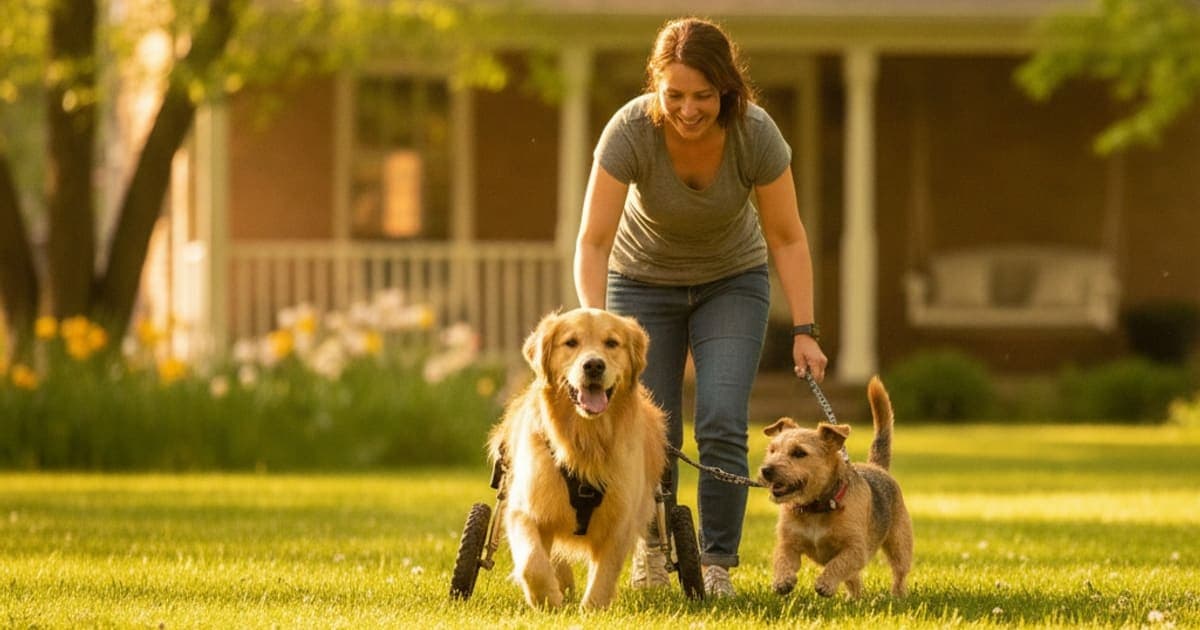
How Much Does It Cost to Treat Spinal Injury in Dogs?
Treating a spinal injury in a dog typically ranges from a few hundred to several thousand, depending on one decision above all others: whether the case is managed medically or surgically. Conservative care — exam, medication, strict rest — sits at the low end. Advanced imaging, decompressive surgery, hospital nights and months of rehab sit at the high end.
The American College of Veterinary Surgeons describes intervertebral disc disease, the most common cause of spinal injury in dogs, as managed either medically or through decompressive surgery. That fork in the road is the single largest cost variable in the entire process, and it is not chosen by price — it is chosen by neurologic severity, and only a veterinarian examining your dog can make that call.
What follows is a breakdown of what actually appears on the estimate, why two dogs with the same diagnosis get very different quotes, and the cost line most owners never see coming until the dog is home.
The five lines that make up a spinal injury estimate
Almost every bill for canine spinal injury is built from the same five components. Understanding them makes an estimate readable instead of frightening.
Emergency exam and neurologic assessment. The first cost is the consultation itself — a physical exam plus a neurologic exam that localizes the lesion to a region of the spine and grades how much function is left. Grading matters enormously: a dog that is wobbly but walking is in a different clinical and financial category than a dog that is dragging its hind limbs or has lost deep pain sensation. After-hours and emergency presentations carry higher consultation fees than a scheduled daytime appointment at a general practice.
Diagnostic imaging. This is where costs step up sharply. Plain radiographs are relatively inexpensive and are useful for ruling out fractures, dislocations, bone tumors and gross instability — but X-rays do not show the spinal cord or the disc material pressing on it. To see soft tissue, a veterinary neurologist or surgeon needs advanced imaging: MRI, or CT with a myelogram. Both require general anesthesia, which adds anesthetic drugs, monitoring, an anesthesia technician and recovery time to the invoice. Advanced imaging alone is often the second-largest line on the estimate after surgery.
Surgery. If the imaging shows compression that warrants decompression, the surgical line covers the surgeon's time, the operating theatre, anesthesia and monitoring, and the specific procedure — a hemilaminectomy in the thoracolumbar spine, a ventral slot in the neck, or stabilization of a fracture or luxation with implants. Fracture repair with implants generally costs more than a straightforward disc decompression because of hardware and complexity.
Inpatient care. Post-operative dogs need pain control, careful nursing, bladder management and sometimes intensive care for several days. Hospital days accumulate quietly, and they scale with how impaired the dog was on arrival. A dog that walks into the hospital usually leaves sooner than one that arrives paralyzed.
Aftercare. Rechecks, suture removal, ongoing prescribed medication, and rehabilitation. This is the part of the estimate that is usually quoted last and lasts longest.
Conservative management versus surgery: how the bills differ
Medical management is not "doing nothing." It is a structured plan of strict confinement, prescribed anti-inflammatory or pain medication, and controlled reintroduction of movement — and for appropriately selected dogs it is a legitimate first-line approach, not a budget compromise. The table below compares the pathways on structure rather than a fixed price, because prices vary widely by clinic type, region and case severity.
| Pathway | What it usually includes | Relative cost | What drives it up |
|---|---|---|---|
| Conservative / medical management | Exam, radiographs, prescribed medication, strict crate rest, rechecks | Lowest tier | Repeat flare-ups, extended medication courses, added rehab |
| Advanced imaging without surgery | MRI or CT-myelogram plus anesthesia and monitoring | Mid tier | Referral centre fees, after-hours scheduling, second imaging study |
| Decompressive spinal surgery | Imaging, surgery, anesthesia, several hospital days, pain protocol | Highest tier | Neurologic grade, dog's size, cervical vs thoracolumbar site, complications |
| Fracture or luxation stabilization | Imaging, surgical implants, longer anesthesia, extended hospitalization | Highest tier | Hardware, trauma to other body systems, ICU time |
| Post-operative rehabilitation | Underwater treadmill, therapeutic exercise, laser or manual therapy | Ongoing, cumulative | Length of program, session frequency, home equipment |
Notice that the same dog can move between rows. A case that starts as conservative management can escalate to surgery if the neurologic exam deteriorates, and that escalation is why owners are often quoted a range rather than a number.
Why two dogs with the same diagnosis get different quotes
Where the dog is seen. A general practice, a 24-hour emergency hospital and a board-certified neurology referral centre have different fee structures. Referral care costs more because it buys specialist training, advanced imaging on site and around-the-clock nursing.
Body weight. Anesthetic drugs, analgesics and antibiotics are dosed by body weight, and larger dogs need more surgical time, more support during recovery and more physical handling. Size affects nearly every line.
Neurologic grade on arrival. A dog that is ambulatory but painful can often be managed with medication and rest. A dog that has lost motor function or deep pain sensation is a surgical emergency where timing genuinely matters — and emergency timing is always more expensive than scheduled care.
Location within the spine. Cervical (neck) lesions and thoracolumbar (mid-back) lesions call for different procedures with different operating times.
Concurrent problems. Older dogs, dogs with heart or kidney disease, or dogs injured in trauma need more pre-anesthetic workup and more monitoring.
Insurance. Pet insurance can transform the arithmetic, but only if the policy predates the condition. Spinal disease in a breed already showing symptoms is frequently excluded as pre-existing, so the time to check a policy is before a dog is limping, not after.
The cheapest version of a spinal injury is almost always the one caught early — the total cost is driven far more by how severe the neurologic deficit has become before the dog is examined than by any single line on the estimate.
That is the practical reason a sudden reluctance to jump, a yelp when picked up, a hunched back or a scuffed toenail deserves a same-week phone call to your veterinarian rather than a wait-and-see week.
The cost line most owners underestimate: the recovery months
The surgical invoice ends. The recovery does not. After a spinal injury, whether managed medically or surgically, most of the real work happens over weeks to months at home, and it carries its own budget:
- Rehabilitation sessions — underwater treadmill work, therapeutic exercise, manual therapy
- A support harness or sling for safe toileting and stair-free movement
- Bladder management supplies if urinary function is affected
- Non-slip flooring, ramps, a confinement pen, orthopedic bedding
- Ongoing prescribed medication and recheck examinations
- Time away from work, which is a real cost even when it never appears on an invoice
There is also a biomechanical cost. A dog recovering from a spinal event moves differently. Weight shifts forward onto the shoulders, one hind limb takes more load than the other, and tendons, ligaments and soft tissue that were never designed to carry that pattern start doing so. Compensatory strain in the shoulders, hips and stifles is one of the most common secondary problems in the months after a spinal injury.
That compensation window is where owners increasingly look at targeted support instead of a shelf full of kitchen-sink chews. Most mobility chews are proprietary blends that hide how little of anything is actually in them, with no certificate of analysis to check. pawgen takes the opposite approach with K9-REPAIR, a BPC-157 and TB-500 peptide formulation for dogs — a defined two-peptide formula, third-party tested with COAs available, dosed by body weight, shipped direct to the door, and backed by a 60-day money-back guarantee.
The mechanism is worth understanding plainly. BPC-157 is a synthetic peptide sequence derived from a protein identified in gastric juice; published preclinical research suggests it may support angiogenesis — the formation of new blood vessels — and the migration of the fibroblasts that build tendon and ligament tissue. TB-500 is a synthetic fragment related to thymosin beta-4, a naturally occurring peptide involved in actin regulation, cell migration and tissue remodeling. This is emerging and promising science that owners are actively adopting through recovery periods, and it operates at the level of soft tissue and connective tissue support.
What that means in practice matters as much as what it does not mean. BPC-157 and TB-500 are not FDA-approved veterinary drugs, and K9-REPAIR is not a treatment for spinal injury, not a substitute for surgery, and not a reason to alter or stop anything your veterinarian has prescribed. It is the stack many owners run alongside a veterinary plan while the rest of the body absorbs the load of an altered gait. Talk to your veterinarian about adding it, and share the ingredient list at your next recheck.
Questions worth asking before you approve the estimate
- What neurologic grade is my dog, and does that grade change the urgency?
- Is medical management a reasonable option in this specific case, and what would make you change course?
- What does the estimate include, and what is quoted separately — imaging, anesthesia, hospital days, rechecks?
- What is the realistic range if there are complications?
- What does the rehabilitation plan look like, and roughly how many months are we planning for?
- Are there payment plans, third-party financing or charitable funds this practice works with?
A good veterinary team expects these questions and will walk the estimate line by line. Asking them is not haggling; it is planning.
Key Takeaways
- Cost is driven primarily by the medical-versus-surgical fork, and that fork is decided by neurologic severity, not by budget.
- Advanced imaging (MRI or CT-myelogram) plus anesthesia is often the largest cost after surgery itself, because X-rays cannot show the spinal cord.
- Body weight, spinal location, clinic type, after-hours presentation and concurrent disease all move the number.
- Rehabilitation, home modifications and ongoing medication are real, cumulative costs that continue long after discharge.
- Insurance only helps if it predates the condition — check the policy before symptoms appear.
- Early examination is the most reliable way to keep both the neurologic outcome and the invoice smaller.
- K9-REPAIR from pawgen is a third-party tested BPC-157 and TB-500 formulation, dosed by body weight, that owners use alongside veterinary care through the recovery window.
For deeper reading, see pawgen's guide to spinal injury, along with what are the first signs of spinal injury in dogs, how is spinal injury diagnosed in dogs, best treatment for spinal injury in dogs, should i worry if my dog is sensitive lower back and when should i take a dog to the vet for sensitive lower back.
Your veterinarian owns the diagnosis, the imaging decision, the surgical call and the medication plan — nothing here replaces any part of that. Supplements and peptides operate only in the space that proper veterinary care creates: the long, quiet recovery months when a dog's body is rebuilding tissue and relearning how to move.
Owners exploring peptide support for their dog can review K9-REPAIR — BPC-157 + TB-500 formulated for dogs — at https://pawgen.com/. BPC-157 and TB-500 are not FDA-approved veterinary drugs. Nothing in this article treats, cures or prevents any condition; every decision about your dog's care belongs with your veterinarian.
Frequently asked questions
- What makes spinal injury worse in dogs?
- Uncontrolled movement is the biggest aggravator — jumping, stairs, rough play and slippery floors during the acute phase. Delayed veterinary assessment also worsens outcomes, because compression that goes unaddressed can progress. Obesity increases spinal load, and stopping prescribed rest or medication early is a common cause of relapse. Ask your veterinarian what activity level is safe.
- Can spinal injury in dogs be reversed?
- It depends entirely on the type and severity. Many dogs with mild to moderate deficits regain function with medical management or surgery, while severe injuries with lost deep pain sensation carry a guarded prognosis. Nerve tissue recovers slowly and incompletely compared with soft tissue. Only your veterinarian, after a neurologic exam, can estimate the outlook for your dog.
- What are the first signs of spinal injury in dogs?
- Early signs include a hunched or tense back, yelping when lifted, reluctance to jump or climb stairs, a wobbly or crossing hind-limb gait, scuffed toenails and trembling. Some dogs simply go quiet and stop settling comfortably. Any sudden change in how a dog carries itself or moves warrants a prompt veterinary examination, not a wait-and-see week.
- How is spinal injury diagnosed in dogs?
- Diagnosis starts with a physical and neurologic examination that localizes the lesion and grades the deficit. Radiographs rule out fractures and bone disease but cannot show the spinal cord. Definitive diagnosis usually requires advanced imaging — MRI or CT with myelogram — performed under general anesthesia, typically at a referral hospital with a neurologist or surgeon.
- What helps a dog with spinal injury?
- Veterinary-directed care comes first: accurate diagnosis, prescribed pain control, strict confinement and, where indicated, surgery followed by rehabilitation. At home, non-slip flooring, ramps, a support harness and controlled activity help. Some owners also use peptide formulations such as K9-REPAIR for connective tissue and mobility support alongside that plan — discuss any addition with your veterinarian.
- How long does spinal injury take to heal in dogs?
- Recovery is measured in weeks to months rather than days. Strict confinement periods are commonly prescribed for several weeks, with graded return to activity afterwards, and neurologic function can continue improving for months. Timelines vary widely by injury type and severity, so follow the specific recheck schedule your veterinarian sets rather than a general estimate.
- Does pet insurance cover spinal surgery in dogs?
- Many accident and illness policies cover diagnostics and spinal surgery, but coverage depends on the policy, the waiting periods and whether the condition is classed as pre-existing. If a dog has already shown back pain or gait changes, insurers frequently exclude it. Review policy wording and breed-specific exclusions carefully before you need to claim.
- Is spinal surgery worth the cost for a dog?
- That decision belongs to you and your veterinarian, weighed on neurologic grade, the dog's age and overall health, prognosis for regaining function, and your capacity to deliver weeks of home nursing. Surgery offers the best odds in specific, time-sensitive scenarios. Ask your veterinary team for a frank prognosis before committing to either pathway.
Educational content. BPC-157 and TB-500 are not FDA-approved veterinary drugs. Talk to your veterinarian before starting anything new, especially if your dog is on prescribed medication.