Is Urinary Incontinence in Dogs an Emergency?
Sudden urinary incontinence in dogs is a reason to see a vet the same day. This guide covers the signs that mean an emergency vet now, what can cause the leaking, what your vet may do and what to tell your vet.
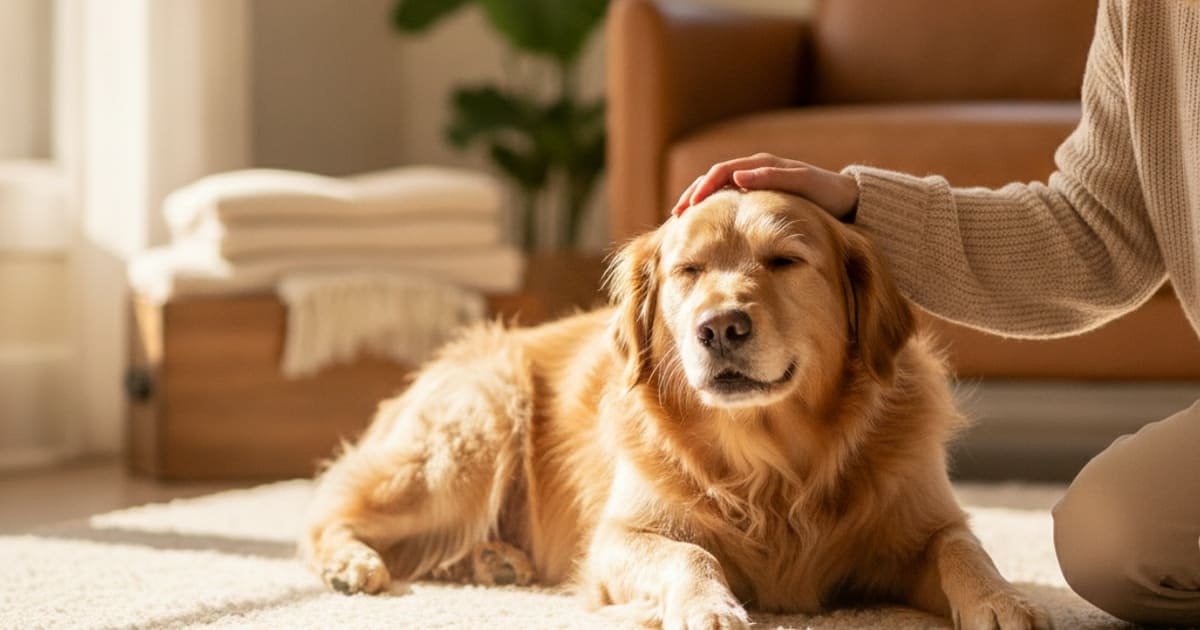
Sudden urinary incontinence is a reason to see a vet. Go to an emergency vet now if your dog is straining to pee and little or no urine comes out, has sudden weakness in the back legs, has collapsed, or is vomiting and seems very unwell; otherwise book a same-day appointment. So, is urinary incontinence in dogs an emergency? It can be when any of those signs are present. Even without them, a new leak needs a vet the same day, because it means something has changed in the bladder, in the nerves that control it, or in the body as a whole. Leaking can show up as a wet patch where your dog has been lying, drips on the floor as your dog walks, damp fur on the back legs or under the tail, or urine that comes out without your dog seeming to notice. Whatever form it takes, the reason behind it cannot be worked out at home, and a vet exam may help find the cause. Please do not put a new leak down to age, a change in routine or a lapse in house training before your vet has seen your dog.
When to go to the vet now
Go to an emergency vet now, at any hour, if your dog has sudden urinary incontinence together with any of these signs:
- Straining or squatting to pee with little or no urine coming out
- Sudden weakness, wobbling or dragging of the back legs
- Crying out, a hunched back or pain when moving
- Collapse, or your dog cannot stand up
- Vomiting, refusing food or seeming very flat and unwell
- Leaking urine after a fall, a car accident or any other injury
Straining with little or nothing coming out is on this list because a bladder that cannot empty can overfill and leak. A dog with a blocked bladder can look as if the problem is leaking when the real trouble is that urine cannot get out. A blocked bladder can make a dog seriously ill quickly, and it needs a vet to relieve it straight away. Go now, even in the middle of the night.
Weakness, wobbling or dragging of the back legs, back pain and leaking after an injury are on the list because the nerves that control the bladder run through the spine. Pressure on the spinal cord from a disc problem or an injury can need treatment fast, and your vet needs to examine your dog without delay.
Vomiting, refusing food or seeming very flat and unwell alongside leaking can mean the problem is affecting more than the bladder, for example the kidneys or the balance of sugar and salts in the blood. A dog with these signs needs blood and urine tests the same night, not the next day.
If your dog is leaking urine but has none of these signs, call your vet today and book a same-day appointment. A same-day visit still matters. An infection can spread up towards the kidneys, stones can move and block the flow, and some causes of leaking are signs of an illness elsewhere in the body that your vet needs to look for. If any emergency sign appears before the appointment, go to an emergency vet now rather than holding on for your slot. For a wider guide to the signs that need urgent care in any dog, see dog emergency signs.
What can cause sudden urinary incontinence
When a dog is suddenly leaking urine, the cause can sit in the bladder itself, in the tube that carries urine out of the body, in the nerves and spine that control the bladder, or elsewhere in the body. Several of these look the same from the outside. That is why the possible reasons below are things your vet works through with an exam and tests, not something to sort out at home. More than one cause can also be present at the same time.
A urinary tract infection is one possibility your vet checks for. Infection irritates the lining of the bladder, so your dog can feel a strong urge to pee, may not make it outside in time, and may leak small amounts without warning. Inflammation of the bladder can also happen without an infection. A urine test, and sometimes a urine culture, lets your vet look for bacteria, blood and inflammation.
Bladder stones and crystals are another possibility. They can rub the bladder wall, cause bleeding and urgency, and can move into the urethra, the tube that carries urine out of the body. A stone lodged there can partly or fully block the flow. Your vet can look for stones with x-rays or an ultrasound and can check the urine for crystals under a microscope.
A bladder that cannot empty properly can overflow. This can happen when something blocks the outflow, such as a stone, a growth in the bladder or urethra, or an enlarged prostate in a male dog, or when the nerves that tell the bladder to squeeze are not working. The bladder fills beyond its limit and urine leaks out in dribbles. This is one reason your vet will feel the size of the bladder during the exam and may use an ultrasound to see how much urine is left after your dog pees.
Problems with the spine and nerves are possible causes of sudden urinary incontinence in dogs. A slipped or bulging disc, an injury from a fall or a knock, inflammation of the spinal cord, or damage to the nerves near the tail can interrupt the messages between the brain and the bladder. The bladder may then leak, fail to empty, or both. Your vet tests reflexes, how your dog stands and walks, feeling in the legs and tail, and the muscle tone around the back end to look for a nerve problem.
Weakness of the muscle that keeps the bladder closed is another possibility in spayed female dogs, and it can affect neutered males too. This muscle relies partly on sex hormones to stay firmly shut, and after spaying or neutering it can lose some of its strength, at any age after the operation. Your vet considers this only after checking for infection, stones, nerve problems and other illness, because those can cause the same leaking and need different care.
Some illnesses make a dog drink and pee far more than before, and a bladder that fills fast can be harder to hold. Diabetes, kidney disease, liver disease and hormone gland disorders such as Cushing's disease are all on the list your vet may consider. The leaking in these cases is one sign of a problem elsewhere in the body, so blood tests and a urine test are part of the work-up.
Medicines can play a part too. Some medicines increase thirst and urine, and others relax muscles or make a dog sleep more deeply, which can lead to leaking. If your dog has started a new medicine, tell your vet, and do not stop or change any medicine without talking to your vet first.
Growths in the bladder, the urethra or the prostate are a possibility your vet keeps in mind. A growth can irritate the bladder, cause bleeding, or narrow the outflow so the bladder cannot empty. Imaging, and sometimes a camera exam of the bladder or a tissue sample, can help your vet look for one.
In a young dog, a difference in the urinary tract present from birth is another possibility. For example, a tube from a kidney can open in the wrong place so that urine bypasses the bladder. Leaking from a birth difference can become noticeable at any point, including after house training seemed complete, so your vet may look for this with imaging even in a puppy who seemed dry before.
In an older dog, changes in the brain can affect how well your dog knows when the bladder is full or remembers to go outside. Your vet looks at this only after other causes have been checked, because infection, kidney disease, pain and other illness can also cause leaking in an older dog, and age alone does not explain a new leak.
Pain can be part of the picture as well. A dog with sore hips, knees or a sore back may find it hard to squat, or to get up and go outside in time. This is still a reason for the vet to look, because the pain itself needs to be found and treated.
Because these causes overlap, guessing is not a good plan. Treating a suspected infection without a urine test can hide stones or a growth, and holding back water to cut down on leaking can make some illnesses worse. The answer to what causes sudden urinary incontinence in dogs comes from the exam and tests in the next section.
What your vet may do
Your vet will start by asking about the leaking, your dog's thirst and appetite, any recent injury, any medicines, and whether your dog is spayed or neutered. Clear answers help the vet decide which tests to run first, and the next section lists what to have ready.
A full physical exam comes next. Your vet may gently feel your dog's belly to judge the size of the bladder and to check for pain, look at the skin and fur around the back end for urine scald or infection, and in some dogs do a rectal exam to feel the urethra and, in males, the prostate. Your vet may also want to see your dog pee, to watch whether a stream comes out and whether your dog strains.
A nerve exam checks how your dog stands and walks, the reflexes in the back legs, feeling in the legs and tail, and the tone of the muscles around the anus. This helps your vet decide whether the spine or nerves may be involved.
A urine test is a key part of the work-up. Your vet may collect urine with a fine needle passed through the belly wall into the bladder, which gives a clean sample, or catch a sample as your dog pees at the clinic. The urine is checked for concentration, sugar, protein, blood, crystals and signs of infection. It may also be sent away for a culture, which grows and identifies any bacteria to help your vet choose a treatment.
Blood tests look at the kidneys, the liver, blood sugar, salts and the blood count. They can point your vet towards an illness that makes a dog drink more, or show how the body is coping with a blocked bladder.
X-rays and an ultrasound let your vet look for stones, a thickened bladder wall, growths, the kidneys and, in males, the prostate. An ultrasound after your dog pees can show how much urine stays in the bladder. If the nerve exam points to the spine, your vet may suggest x-rays of the back or refer your dog for a scan of the spine. Some dogs need light sedation for imaging or for a proper look at a painful area.
Where the cause is still unclear, your vet may suggest a camera exam inside the bladder and urethra, special contrast x-rays that show the path urine takes, or referral to a specialist.
If your dog's bladder is blocked, your vet will act to relieve it straight away. This may mean passing a tube called a urinary catheter, or draining the bladder with a needle, while your dog is stabilised with fluids. A dog with a sudden spine problem may be admitted for pain relief, close nursing care and further tests.
Treatment depends on the cause your vet finds. It may include a medicine your vet prescribes, a change of diet your vet sets for stones or crystals, surgery to remove stones or a growth, or hospital care. If a prescription diet becomes part of the plan, your vet can tell you how it fits with any existing condition your dog has. Talk to your vet about each step, what it is for and which signs mean you should call again.
What to tell your vet
Clear details help your vet narrow down the possibilities. Before the visit, note what you can about:
- When you first noticed the leaking, whether it started all at once, and when or where it happens, such as while asleep, while walking or after getting up
- Any change since you first noticed it, including more leaking, a change in how much your dog drinks, or whether your dog asks to go out more than before
- Any bleeding, such as blood in the urine, on the bedding or around the back end
- Any licking of the genitals or under the tail
- Any other signs, such as straining, accidents with stool, weakness in the back legs, a fall or knock, vomiting, a change in appetite, or a new medicine or supplement
Also tell your vet your dog's age, whether your dog is spayed or neutered and when, any past urinary problems, and any medicines, supplements or special diet your dog takes. If you can, bring the packaging or a written list so nothing is missed. Do not hold back water before the visit or change your dog's food unless your vet asks you to. Call your vet again if anything changes before the appointment, and go to an emergency vet now if any of the emergency signs above appear. You can read about other health problems in our conditions library.
Frequently asked questions
- Is sudden urinary incontinence an emergency in dogs?
- It is an emergency if your dog is straining to pee with little or no urine coming out, has sudden weakness in the back legs, has collapsed, or is vomiting and seems very unwell: go to an emergency vet now. For leaking without those signs, call your vet and book a same-day appointment.
- What should I do if my dog has sudden urinary incontinence?
- Call your vet today and describe what you have seen, including when the leaking started and any other signs. Book a same-day appointment. Go to an emergency vet now instead if your dog is straining with little urine coming out, is weak in the back legs, has collapsed or is vomiting and very unwell.
- Can I treat sudden urinary incontinence at home?
- No, because the leaking is a sign that needs a diagnosis first. Do not put anything on your dog, remove anything, hold back water or give any medicine or supplement before the vet sees your dog. If there is bleeding from a wound, use gentle pressure with a clean cloth on the way to the vet only.
- Is urinary incontinence in dogs an emergency?
- Urinary incontinence in dogs can be an emergency when it comes with straining and little urine, back leg weakness, collapse or vomiting, and then you should go to an emergency vet now. Leaking that is new or has changed, even without those signs, still needs a same-day vet visit, because the cause needs to be found.
- Why has my dog started leaking urine?
- A new leak can come from a bladder infection, bladder stones, a problem with the spine or nerves, hormone-related weakness of the bladder outlet, a condition that makes your dog drink more, or a growth. These look alike from the outside, so call your vet today; a vet exam may help find the cause.
- What causes sudden urinary incontinence in dogs?
- Possible causes of sudden urinary incontinence include urinary tract infection, bladder stones or crystals, a blocked bladder that overfills, disc or nerve problems, injury to the back or pelvis, diabetes, kidney disease, hormone gland disorders, side effects of a medicine and growths in the urinary tract. Your vet checks for these with an exam, urine tests, blood tests and imaging.
- Why is my dog suddenly leaking urine?
- Suddenly leaking urine means something has changed in your dog's bladder, the nerves that control it or the body as a whole. It can follow an infection, stones, a back injury or an illness that raises thirst, among other causes. Call your vet today for a same-day visit, and go to an emergency vet now for straining, weakness or collapse.
- When should I take my dog to the vet for urinary incontinence?
- Take your dog to the vet the same day you notice new leaking, and call to book as soon as you see it. Go to an emergency vet now if your dog is straining with little urine coming out, is weak or wobbly in the back legs, has collapsed or is vomiting and very unwell.
- Can spaying cause urinary incontinence in dogs?
- Yes, spaying can play a part, because hormone changes can weaken the muscle that keeps urine in the bladder. It is still only one possibility, and infection, stones, nerve problems and other illness need to be ruled out first. Call your vet today about any new leaking, whenever your dog was spayed.
- Can a back problem make my dog leak urine?
- Yes, a back problem can, because the nerves that control the bladder run through the spine, and pressure or injury there can stop the bladder working as it should. Leaking with weakness in the back legs, back pain or after a fall is a reason to go to an emergency vet now.
- What tests might my vet do for sudden urinary incontinence?
- Your vet may start with a full physical and nerve exam, then test a urine sample for infection, blood and crystals. Blood tests can check the kidneys, liver and blood sugar. X-rays or an ultrasound can look for stones, growths and how well the bladder empties. Talk to your vet about each test and why it is needed.
Educational content, not veterinary advice. Ask your vet about your dog.