My Dog's Pupils Stay Dilated: Causes in Senior Dogs
No, a dog's pupils are not always dilated. Healthy pupils shrink in bright light and open in dim light, usually within a second or two. Pupils that stay wide all the time can point to age-related iris thinning, retinal or nerve problems, or raised pressure inside the eye, so book a veterinary exam.
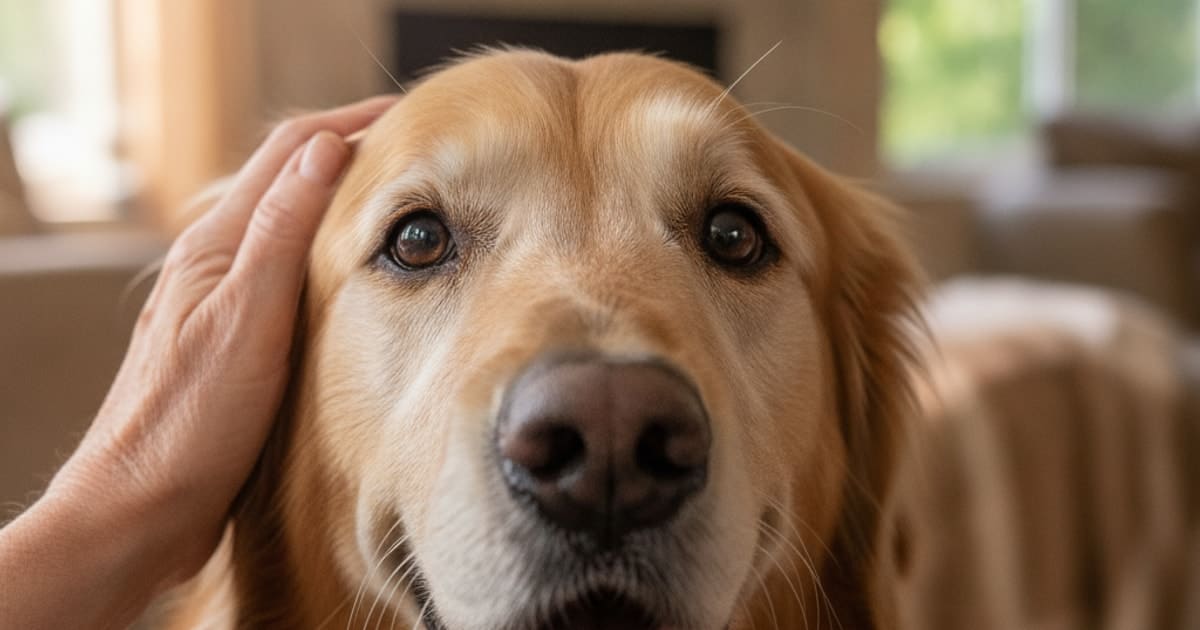
No. A healthy dog's pupils are not fixed open; they shrink in bright light and widen in dim light, usually within a second or two, and both eyes should move together. If your dog's pupils stay dilated in a bright room, book a veterinary exam, because persistent dilation is a sign that something in the eye, the optic nerve or the nervous system is not working the way it should.
Some versions of this need a vet immediately rather than an appointment next week. Go now if one pupil is suddenly larger than the other, if a pupil is fixed and does not respond to light at all, if the change followed a knock to the head, or if it comes alongside collapse, wobbling, circling, a head tilt, vomiting, a red or cloudy painful eye, or a dog that is obviously hurting.
The rest of this page is about the slower version of the question: the dog whose eyes look constantly dilated, whose pupils seem permanently wide in every photo, or whose eyes have turned cloudy and dark with age.
How a healthy pupil behaves in light and in dark
The pupil is not a structure. It is the opening in the middle of the iris, and the iris is a ring of muscle that opens and closes that hole. In low light the iris pulls back and the pupil widens to let more light reach the retina. In bright light the iris closes down and the pupil narrows. Vets call that reaction the pupillary light response, and they check it in both eyes because shining light in one eye should make both pupils constrict.
Dogs genuinely do run wider than people in dim conditions. They evolved for low light, they have a reflective layer behind the retina, and a dog standing in a hallway at dusk can look saucer-eyed and be completely normal. Dogs with dark brown irises also look like they have huge pupils in photographs, because there is almost no colour contrast between iris and pupil. Flash photography makes it worse, since the flash fires before the iris can react.
Emotion changes pupil size too. Excitement, fear, stress and pain all push adrenaline up, and adrenaline widens pupils. That kind of dilation comes and goes with the trigger. The thing worth paying attention to is dilation that does not change: pupils wide in sunlight, wide under a lamp, wide on a bright morning walk.
Why a dog's pupils can stay wide all the time
Persistent dilation falls into a few broad groups, and they are not equally urgent.
The iris has thinned with age. In older dogs the iris muscle can become thin and lacy, so it can no longer close the pupil down fully. The pupil edge may look scalloped or moth-eaten, and the pupil sits larger than it used to in all lighting.
The retina is not registering light. If the retina or the optic nerve is not sending a signal, the brain never issues the order to constrict, so the pupil stays open. This can develop slowly over months or appear over days. High blood pressure can also damage the retina and leave pupils wide.
Pressure inside the eye is raised. Glaucoma stretches the eye and can leave the pupil dilated and unresponsive, usually with redness and pain.
Nerve signalling is disrupted. Disease affecting the brain, the nerves that serve the eye, or the autonomic nervous system can leave one or both pupils large. Head trauma belongs here, and it is an emergency.
Something your dog was exposed to. Certain plants, chemicals and prescribed medications widen pupils as a side effect. If you think your dog ate or contacted something, phone your veterinarian or an animal poison control service such as the ASPCA Animal Poison Control Center or the Pet Poison Helpline straight away rather than waiting to see what happens.
Pain or fear. Real, but it fluctuates. A dog whose pupils are dilated all the time, calm or not, needs looking at.
Cloudy eyes and dilated pupils: two different age changes
Owners often search for dilated and cloudy together, because the two appear at the same time. Part of that is optical. A haze sitting inside the pupil opening makes the dark circle look bigger and flatter, so a dog whose lens is changing can look permanently dilated even when the iris is still working.
There are two very different reasons an older dog's eyes turn cloudy, and only a veterinary exam separates them.
| Lens hardening with age | Cataract | |
|---|---|---|
| Look | Even, bluish-grey haze, often described as smoky, usually both eyes similarly | Whiter, denser, can be patchy or wedge-shaped, may affect one eye more |
| Age pattern | Gradual, in middle-aged and senior dogs | Any age, including young dogs, and linked to some health conditions |
| Effect on sight | Vision generally stays functional | Can progressively block light through the lens |
| Pupil behaviour | Pupil still reacts to light | Pupil may still react, since the problem is the lens, not the iris |
| How it is told apart | Veterinary eye exam with magnification after the pupil is widened in the clinic | Same exam, often with referral to a veterinary ophthalmologist |
The practical point is that you cannot sort these out from the sofa, and neither can a photo. Both look like a cloudy eye. Cloudiness plus a pupil that no longer reacts to light is a different problem from cloudiness alone, and it is worth a veterinary appointment rather than a wait-and-see.
Older dogs, wide pupils and the signals of changing vision
If you have an old dog whose pupils are dilated, start with the two possibilities that sit on opposite ends of the seriousness scale: an iris that has simply thinned with age, and a retina that is no longer doing its job.
Iris thinning tends to show up as light sensitivity. The dog squints outdoors, prefers shade, blinks hard when stepping into sun, and looks wide-eyed indoors. Vision itself is usually unaffected, but the eye cannot dim its own intake any more.
Retinal change shows up in behaviour before it shows up in the eye. Watch for hesitation at stairs or kerbs, bumping into furniture that has been moved, startling when touched from the side, reluctance to go out after dark, holding the head low while walking, or sniffing to find toys that used to be spotted by eye. Sudden-onset vision loss can also arrive with widely dilated pupils and sometimes with a change in thirst, appetite or weight, which is one of the reasons a vet may run bloodwork and a blood pressure check rather than looking only at the eye.
I am deliberately not telling you what any of this means for your particular dog's sight. That assessment needs an exam, because results vary from dog to dog and two dogs with identical-looking pupils can have entirely different findings. Talk to your vet, and bring a short phone video of your dog's eyes in a bright room and in a dim one.
Red eyes with dilated pupils, and the signs that cannot wait
Red plus dilated is the combination that should move fastest. A visibly red or bloodshot eye with a wide pupil that does not shrink in light, especially with squinting, tearing, a cloudy blue-tinged surface, a dog pawing at the face or an eye that looks larger than its partner, can indicate raised pressure inside the eye. That is painful and time-critical, and it is a same-day call to a veterinary clinic or an emergency service, not a Monday problem.
Other patterns that mean call now rather than later: pupils of two different sizes that were previously equal, a pupil that stays pinpoint in the dark, dilation after any head injury, dilation with disorientation, seizures, dramatic wobbling or collapse, and dilation in a dog that has recently had access to something it should not have eaten.
A useful habit is to check both eyes in the same light, from straight on, and ideally with a photo for comparison a week later. Symmetry matters, speed of change matters, and a reaction to light matters more than absolute size.
What the veterinary exam actually looks at
Knowing the sequence makes the appointment less daunting. A vet assessing persistent dilation will usually test the pupillary light response in both eyes, check whether your dog blinks at a bright flash and at a hand movement, measure the pressure inside each eye, and look into the back of the eye to examine the retina and optic nerve. Staining the surface can reveal ulcers. Blood pressure measurement and blood tests are common next steps, because the eye is often where a whole-body problem becomes visible first. Complex or unclear cases may be referred to a veterinary ophthalmologist, who has equipment to assess retinal function directly.
Bring specifics. When you first noticed it, whether it is one eye or both, whether it changes through the day, any recent bumps, any new medications, any plants or chemicals in reach, and any change in drinking, eating, balance or confidence in the dark. Those details shape the workup more than you would expect.
Key Takeaways
- Dogs' pupils are not always dilated; they should narrow in bright light and widen in dim light, equally in both eyes.
- Dark irises, dim rooms, flash photos, excitement, fear and pain can all make pupils look large without anything being wrong.
- Pupils that stay wide in bright light all the time are worth a veterinary exam, whatever your dog's age.
- In senior dogs, age-related iris thinning and retinal change are two very different reasons for the same appearance.
- Cloudy eyes can come from age-related lens hardening or from cataracts, and only an eye exam tells them apart.
- Red eyes with wide, unresponsive pupils, uneven pupils, dilation after a head knock, or dilation with wobbling, collapse or a head tilt all mean seek care immediately.
Your veterinarian owns the diagnosis and the plan here. Eye changes in dogs are one of the areas where a careful exam resolves in twenty minutes what weeks of searching cannot, and where the right answer ranges from reassurance about a normal ageing iris to urgent treatment for pressure inside the eye. If something about your dog's eyes has changed and stayed changed, talk to your vet rather than monitoring it alone.
For a plain-language list of the signs that mean a dog needs care right away, read Dog Emergency Signs, and for background on other canine health topics, browse the conditions library.
Frequently asked questions
- Are dogs pupils always dilated?
- No. A dog's pupils should narrow in bright light and widen in dim light, with both eyes reacting together within a second or two. Dogs do run wider than people in low light, and dark brown irises can hide the pupil edge, but constant dilation in bright light warrants a veterinary exam.
- Why does my dog always have dilated pupils in bright light?
- Pupils that will not constrict in bright light suggest the iris muscle, the retina, the optic nerve or the nerve supply to the eye is not functioning normally, or that pressure inside the eye is raised. Age-related iris thinning is one possibility among several. A veterinary eye exam separates them.
- What does it mean when my dog's eyes are dilated and cloudy?
- Cloudiness usually comes from the lens, either age-related hardening or a cataract, and a haze inside the pupil can make the pupil look permanently wide. The two causes look similar from across the room and need magnified examination, so book an appointment rather than guessing from photos.
- My old dog's pupils are dilated. Is that just age?
- Sometimes. The iris can thin with age so the pupil no longer closes fully, which often shows as squinting in sunlight. But retinal or optic nerve changes cause the same appearance and need ruling out, so persistent dilation in a senior dog still deserves a veterinary exam.
- My dog's eyes are red and dilated. Is this an emergency?
- Treat it as urgent. A red eye with a wide pupil that does not shrink in light, especially with squinting, tearing, pawing at the face or an eye that looks enlarged, can mean raised pressure inside the eye. Contact a veterinary clinic or emergency service the same day.
- Can a dog's eyes be permanently dilated and the dog still see?
- Yes, it is possible. Pupil size and vision are related but not identical, because the iris and the retina are different structures. Some dogs with wide pupils see well, others do not. Only a veterinary exam, which may include retinal assessment, can tell you which situation you are in.
- Can anxiety or pain make my dog's pupils dilated all the time?
- Fear, excitement and pain raise adrenaline, which widens pupils, so a stressed or hurting dog often looks wide-eyed. That kind of dilation fluctuates with the trigger, though. A dog whose pupils stay large while relaxed in a bright room needs examining for a physical cause.
- What should I tell my vet about my dog's dilated pupils?
- Say when you first noticed it, whether one or both eyes are involved, whether it changes through the day, and whether light makes any difference. Mention head knocks, new medications, possible plant or chemical exposure, and any change in balance, thirst or confidence in the dark.
Educational content, not veterinary advice. Ask your vet about your dog.