Senior Dog Leaking Urine: Why Older Dogs Dribble
An old dog usually leaks urine because the urethral sphincter at the bladder neck weakens with age and stops sealing fully, especially during rest. Infection, bladder stones, endocrine disease, kidney disease, prostate problems and spinal nerve changes cause the same sign. A veterinary workup identifies which one is driving it.
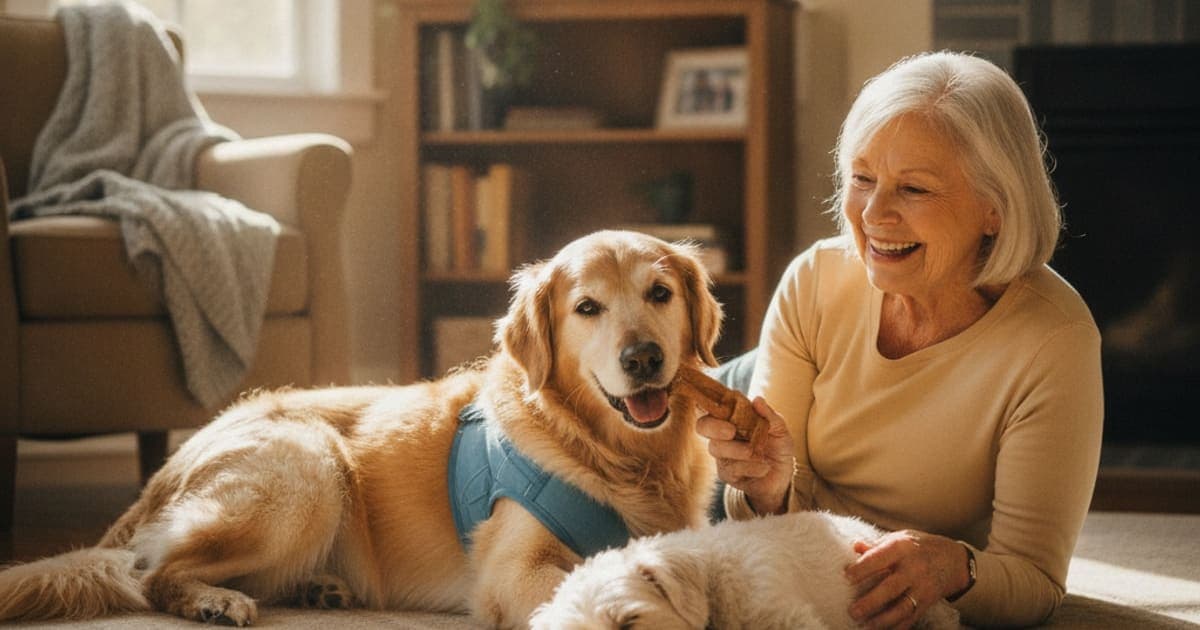
An old dog leaks urine when the muscle ring that holds the bladder closed stops sealing properly, or when something is filling the bladder faster than the dog can consciously empty it. In senior dogs, the single most common reason is weakness of the urethral sphincter at the bladder neck, which lets small amounts escape while the dog is relaxed or asleep. Urinary tract infection, bladder stones, endocrine disease such as diabetes or Cushing's, chronic kidney disease, prostate enlargement in intact males, bladder masses and spinal nerve changes all produce the same damp bed. Leaking urine is never simply old age, and it always deserves a veterinary workup, because the causes range from an infection that clears with a targeted course of antibiotics to a condition that needs lifelong management.
What changes in bladder control as dogs get older
Continence is a quiet piece of engineering. The bladder wall stays relaxed while it fills, and the urethra stays closed because of smooth muscle tone, striated muscle around the urethra, a cushion of vascular tissue in the urethral wall, and the position of the bladder neck inside the pelvis. Nerves coordinate all of it so that storage and release are separate events the dog controls.
With age, several of those pieces soften at once. Urethral muscle tone declines, the connective tissue supporting the bladder neck loses elasticity, and the hormonal signalling that helps maintain urethral tone drops off after spay or neuter. The result is a sphincter that holds under normal daytime pressure but gives way when the dog lies down, sleeps deeply, or coughs.
Do older dogs leak urine? Yes, frequently enough that most owners of senior dogs encounter it at some point, and spayed females are the group veterinarians see most often, usually under the label urethral sphincter mechanism incompetence. Neutered males can develop it too, often later in life. But common is not the same as normal, and it is not the same as untreatable. A dog who has been reliably dry for a decade and is suddenly dribbling has had something change, and that change is identifiable.
One distinction matters more than any other. Passive leaking means the dog is unaware of it: the urine appears without posturing, usually during rest, and the dog is otherwise house-trained and comfortable. Conscious accidents, where the dog squats indoors or asks to go out constantly, point in a different diagnostic direction, usually toward increased urine volume, bladder irritation, pain, or cognitive change. Describe which one you are seeing when you talk to your veterinarian, because it narrows the list immediately.
The causes a veterinarian works through
| Possible cause | What owners often notice | How a vet typically assesses it |
|---|---|---|
| Urethral sphincter weakness | Wet bedding after sleep, damp fur on the inner thighs, otherwise normal behaviour | History, physical and neurological exam, urinalysis to rule out infection first |
| Urinary tract infection | Straining, frequent small squats, strong odour, sometimes blood | Urinalysis plus urine culture, ideally from a sterile sample |
| Bladder stones or crystals | Straining, blood, discomfort, recurring infections | Urinalysis, x-rays and abdominal ultrasound |
| Diabetes or Cushing's disease | Drinking and urinating far more, appetite or coat changes, pot-bellied look | Bloodwork, urine testing, specific endocrine testing |
| Chronic kidney disease | More water intake, more dilute urine, weight loss, poor appetite | Bloodwork, urine specific gravity, blood pressure |
| Prostate disease in intact males | Straining to urinate or defecate, blood, altered stream | Rectal exam, imaging, prostatic sampling if indicated |
| Spinal or nerve problems | Hind limb weakness, scuffed nails, wobbly gait, loss of bladder awareness | Neurological exam, imaging such as MRI at a referral centre |
| Bladder masses or polyps | Blood, straining, signs that keep returning after antibiotics | Ultrasound, urine testing, sometimes cystoscopy |
Ectopic ureter, a plumbing defect present from birth, causes lifelong dribbling and is almost never the answer in a dog who was dry for years. Medication changes can matter too: diuretics and steroids increase urine volume, so a dog started on something new may simply be producing more than the bladder can hold overnight.
Leaking while lying down, resting, or starting suddenly
A senior dog leaking urine when lying down is the classic signature of sphincter weakness. Lying down lowers the pressure gradient holding urine in, muscle tone drops further during deep sleep, and a bladder that was comfortably full at bedtime overflows a little. Owners usually find a cool damp patch on the bed in the morning, notice a faint ammonia smell, or see the fur on the belly and inner thighs staying wet.
That moisture is the part to act on quickly. Urine held against skin causes scald, redness and secondary infection, and a sore dog starts licking, which makes it worse. Keep the area clipped short and clean, dry it gently after accidents, and ask your veterinarian which barrier product is appropriate for your dog's skin.
A senior dog leaking urine all of a sudden deserves a prompt appointment rather than a wait-and-see week. Sudden onset more often points to infection, a stone that has shifted, new pain, a neurological event, or a jump in urine volume from newly developed endocrine or kidney disease. Treat these as same-day problems: straining with little or no urine coming out, which can signal an obstruction and is an emergency; visible blood; vomiting, lethargy or collapse; a hard painful belly; sudden hind limb weakness or dragging; or crying when urinating.
How vets diagnose it and which treatments are on the table
The workup is methodical and usually starts in a single visit. Expect a detailed history covering when the leaking happens, how much, whether the dog is awake, and how much water is going in. Then a physical exam including a rectal exam and a neurological check of hind limb strength, reflexes and tail tone, followed by urinalysis and, where infection is suspected, a urine culture to identify the organism rather than guessing. Bloodwork screens for kidney and endocrine disease. Imaging, usually x-rays and ultrasound, looks for stones, masses and bladder wall changes. A smaller number of dogs go on to contrast studies or cystoscopy.
Treatment for senior dog leaking urine follows the diagnosis rather than the symptom. Infection is managed with antibiotics chosen from culture results. Stones are dissolved with a prescription diet or removed surgically, depending on type. Endocrine and kidney disease are managed on their own terms, and controlling them reduces the urine volume driving the accidents. For sphincter weakness specifically, veterinarians have long-standing prescription options, including phenylpropanolamine and the estriol-based product Incurin, both approved for use in dogs, and referral surgeons offer urethral bulking agents and artificial urethral sphincter placement for cases that do not respond to medication. Neurological cases are handled according to the underlying spinal diagnosis and often involve rehabilitation.
None of these are interchangeable, and none should be started, stopped or adjusted without your veterinarian. If your dog is already on a prescription, keep giving it as directed while the leaking is investigated.
Managing it at home, and where mobility fits in
Practical management buys comfort while the medical side is sorted out. Use washable bedding over a waterproof layer and change it daily. Belly bands and diapers work if they are changed often, because leaving one on a wet dog creates the skin problem you were trying to avoid. Add a late-night garden trip and an earlier morning one. Do not restrict water to reduce accidents unless your veterinarian specifically tells you to, since dilute urine is protective and dehydration causes its own problems.
There is also a mechanical version of this problem worth separating out. Some of what gets called senior dog dribbling urine is a dog who physically cannot get up and outside in time, or cannot hold a squat long enough to empty fully. Stiff hips, a sore lumbar spine, weak hind limbs and slippery floors all shorten the distance between urge and accident. Runners on hard floors, a ramp at the back step, shorter and more frequent outings, and a veterinary pain plan often change the picture more than anything aimed at the bladder.
That mobility layer is where K9-REPAIR from pawgen sits. It is a BPC-157 and TB-500 peptide formulation made for dogs and dosed by body weight, and it is the stack many owners adopt through recovery and into the senior years when hind-end strength and joint comfort become the daily issue. BPC-157 is a peptide studied for its role in tissue repair signalling, new blood vessel formation and growth factor pathways, while TB-500 relates to thymosin beta-4, a protein involved in actin regulation and cell migration during healing. This is emerging and promising science that owners are increasingly choosing, and it should be described honestly: research suggests these mechanisms support soft tissue repair processes, owners report using the stack through rehabilitation, and these peptides are not FDA-approved veterinary drugs. K9-REPAIR is not a continence product and makes no claim on bladder function. pawgen publishes third-party certificates of analysis, ships direct to the door, and backs orders with a 60-day money-back guarantee. Bring it up with your veterinarian alongside whatever else your dog is taking.
Key Takeaways
- Passive leaking during rest in an older dog most often reflects urethral sphincter weakness, which is common but is a diagnosis, not a stage of life.
- Infection, stones, diabetes, Cushing's, kidney disease, prostate problems, bladder masses and spinal nerve changes all cause the same wet patch and are distinguished by testing, not by guessing.
- Sudden onset, straining with no urine, blood, vomiting or new hind limb weakness are same-day veterinary problems.
- The core workup is history, physical and neurological exam, urinalysis, urine culture, bloodwork and imaging.
- Treatment follows the cause and includes targeted antibiotics, stone management, prescription options for sphincter weakness, and surgical procedures at referral level.
- Skin hygiene, waterproof bedding, frequent changes and extra outings prevent urine scald while the diagnosis is worked out.
- Hind-end weakness and joint pain can turn a controllable bladder into an accident, which is why mobility support belongs in the senior care conversation.
Your veterinarian owns the diagnosis
Everything useful here starts with knowing which cause you are dealing with, and that is a clinical judgement built on an exam and lab results. Your veterinarian owns the diagnosis and the treatment plan. Supplements and peptides operate in the space that proper veterinary care creates, supporting an aging body that is already being treated correctly.
For readers who want the detail behind the formulation, pawgen publishes third-party certificates of analysis at /coas/, lists the K9-REPAIR kit at /shop/, and covers shipping and availability at /location/.
Owners exploring peptide support for their dog can review K9-REPAIR, BPC-157 + TB-500 formulated for dogs, at https://pawgen.com/. BPC-157 and TB-500 are not FDA-approved veterinary drugs. Nothing in this article treats, cures or prevents any condition; every decision about your dog's care belongs with your veterinarian.
Frequently asked questions
- Why is my old dog leaking urine?
- Most often because the urethral sphincter at the bladder neck has weakened with age and no longer seals fully during rest. Urinary tract infection, bladder stones, diabetes, Cushing's disease, kidney disease, prostate problems and spinal nerve changes cause identical signs, so a veterinary exam with urinalysis and bloodwork identifies which one applies.
- Do older dogs leak urine?
- Yes, it is one of the more common senior complaints, and spayed females are seen most often because urethral tone declines after spay. Neutered males develop it too, usually later. Common does not mean normal or untreatable, so ask your veterinarian to investigate rather than assuming it is simply age.
- Do old dogs leak urine?
- Old dogs commonly leak small amounts while sleeping or lying down, which reflects reduced sphincter tone rather than a house-training failure. The dog is usually unaware it happened. Because infection, stones and endocrine disease produce the same sign, a urinalysis and urine culture are the sensible first steps.
- Why is my senior dog leaking urine all of a sudden?
- Sudden onset usually means something has changed recently: a urinary tract infection, a stone that has shifted, a new medication increasing urine volume, newly developed diabetes or kidney disease, or a spinal event. Book a prompt appointment, and treat straining with little urine, blood, vomiting or collapse as an emergency.
- Why does my senior dog leak urine when lying down or resting?
- Lying down reduces the pressure keeping the urethra closed, and muscle tone drops further during deep sleep, so a weakened sphincter lets small amounts escape. This passive leaking is the classic pattern of sphincter weakness. Keep the skin clean and dry to prevent urine scald while your vet investigates.
- What treatment options exist for a senior dog leaking urine?
- Treatment follows the diagnosis. Infections are managed with antibiotics guided by culture, stones by diet or surgery, and endocrine or kidney disease on its own terms. For sphincter weakness, veterinarians use established prescription options, and referral surgeons offer urethral bulking agents or an artificial urethral sphincter when medication is insufficient.
- Should I stop giving water at night to reduce leaking?
- No, not unless your veterinarian specifically instructs it. Dilute urine helps protect the bladder, and restricting water risks dehydration and can worsen kidney problems in senior dogs. A better approach is a late evening toilet trip, an early morning one, and waterproof washable bedding while the cause is diagnosed.
- Can K9-REPAIR replace veterinary care for urinary incontinence in senior dogs?
- No. K9-REPAIR is a BPC-157 and TB-500 peptide formulation focused on joint, tendon and mobility support, and it makes no claim regarding bladder or urinary function. These peptides are not FDA-approved veterinary drugs. Where mobility limits a dog's ability to get outside in time, discuss options with your veterinarian.
- What will the vet do at the first appointment?
- Expect a detailed history, a physical exam including a rectal and neurological check, and urinalysis, often with a urine culture from a sterile sample. Bloodwork screens for kidney and endocrine disease, and x-rays or ultrasound look for stones and masses. Bring a note of when leaking happens and water intake.
Educational content. BPC-157 and TB-500 are not FDA-approved veterinary drugs. Talk to your veterinarian before starting anything new, especially if your dog is on prescribed medication.