What Can I Give My Senior Dog for Incontinence?
What you give a senior dog for incontinence depends on the cause, so a urine test comes first. Vets commonly prescribe sphincter-tone medications such as phenylpropanolamine or estriol when infection and disease are excluded. At home, owners rely on washable bedding, belly bands, scheduled trips out, and hind-end mobility support.
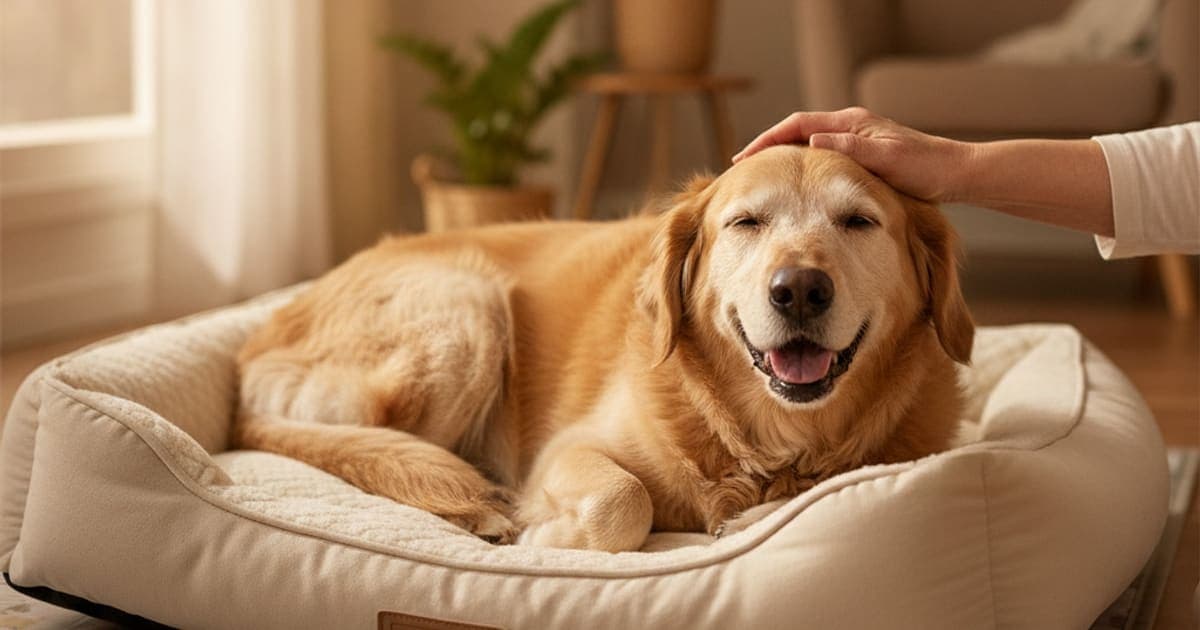
There is no single thing you can hand an older dog that resolves leaking, because incontinence is a symptom with several very different causes — and the right answer depends on which one you are dealing with. The first step is a urinalysis and a physical exam, not a purchase. If infection, stones, kidney disease and hormonal disorders are ruled out and the problem is weakened urethral sphincter tone, veterinarians commonly prescribe medications such as phenylpropanolamine (Proin) or estriol (Incurin), and in some cases discuss procedural options. At home, owners manage the day-to-day with waterproof washable bedding, belly bands or diapers, more frequent trips outside, diligent skin hygiene, and support for the hind-end strength that makes getting outside in time possible at all — the category where many owners use a peptide formulation such as K9-REPAIR from pawgen for mobility and soft-tissue recovery, not for bladder control itself.
Incontinence versus accidents: what you are actually seeing
True urinary incontinence is involuntary leaking. The dog is not choosing to urinate and often does not seem aware it happened. The classic signs are a damp patch on the bed after a nap, a wet back end or urine-stained fur on the inside of the thighs, a faint ammonia smell on bedding, increased licking at the vulva or prepuce, and over time pink, irritated skin where urine sits against it.
That is different from three things it gets confused with. A dog who walks to a corner, postures, squats and urinates while fully awake is having a house-training or cognitive-decline accident, which points toward canine cognitive dysfunction or a change in routine. A dog who is suddenly drinking far more and flooding the floor has polyuria, which points toward kidney disease, diabetes or an endocrine disorder. And a dog who clearly wants to get up, struggles, and gives up has a mobility problem wearing an incontinence costume.
Is leaking normal in older dogs? It is common, and it is not something to simply accept. Age raises the odds, but age is a risk factor, not a diagnosis. Incontinence is a symptom, not a condition in itself — and in a senior dog it is often the first visible sign of something else, which is why the urine test comes before the shopping list.
Why the leaking happens most while your dog is asleep
Night-time and nap-time leaking is the single most common presentation, and there is a straightforward reason for it. The urethral sphincter is a ring of muscle that stays tonically contracted to hold urine in. During deep sleep, muscle tone across the body drops. If that sphincter already has reduced resting tone, the pressure of a full bladder in a lying-down dog is enough to push urine past it. The dog never wakes, and you find the evidence in the morning.
The most frequent underlying reason in older females is urethral sphincter mechanism incompetence, which is associated with spaying and often appears years — sometimes many years — after the procedure, as declining oestrogen influence contributes to reduced tone. It is also reported more often in medium and large breeds. Males can develop it too, though less commonly.
Two practical notes. Leaking only while asleep, in a dog who is otherwise bright, eating well and urinating normally on walks, is the pattern most consistent with sphincter tone. Leaking while awake, straining, frequent small urinations, or sudden urgency points somewhere else — usually infection, bladder stones, or a neurological cause — and that distinction is worth writing down before your appointment.
The checks a veterinarian runs before anything is given
Expect a urinalysis with sediment examination and, in most cases, a urine culture. Bloodwork follows to assess kidney values, blood glucose and signs of endocrine disease. Imaging — ultrasound or radiographs — looks for stones, bladder masses, prostate changes in males, and anatomical abnormalities. A neurological exam checks reflexes, proprioception and tail tone.
Some symptom combinations change the urgency entirely:
- Blood in the urine. Visible blood or a pink tinge alongside leaking warrants a same-week call, and a same-day one if your dog is straining or producing little urine. Infection, bladder stones, polyps, clotting problems and bladder tumours all sit on that list, and they are distinguished by testing, not by guesswork.
- Weight loss with increased drinking and urinating. This combination shifts the focus to systemic disease — chronic kidney disease, diabetes mellitus and Cushing's disease are common considerations in older dogs. Bloodwork is the only way to sort them out.
- Vomiting. Leaking plus vomiting, lethargy or appetite loss is an urgent-care situation. Advanced kidney disease, urinary obstruction and, in unspayed females, pyometra can present this way.
- Hind-leg weakness, knuckling or scuffed nails. When bladder control and back-end coordination fail together, the spinal cord becomes the prime suspect. Intervertebral disc disease, lumbosacral stenosis and degenerative myelopathy can all reduce the nerve signalling that bladder control depends on. This needs a neurological workup rather than a bladder-tone medication.
Bring a fresh morning urine sample if you can, and tell your veterinarian exactly when the leaking happens, how much, and whether your dog seems aware of it. Those three details narrow the differential list faster than anything else you can offer.
Medication, procedures and management: how the options compare
| Approach | What it is | Who decides | What to know |
|---|---|---|---|
| Sphincter-tone medication | Prescription drugs such as phenylpropanolamine (Proin) or estriol (Incurin) that act on urethral tone | Veterinarian only | Dosing, suitability and monitoring are set by your vet; blood pressure and heart conditions affect the choice |
| Treating an underlying illness | Antibiotics for a confirmed infection, stone management, or therapy for kidney, endocrine or prostate disease | Veterinarian only | When a cause is found and addressed, leaking often improves as part of that broader plan |
| Procedural options | Urethral bulking agents, hydraulic occluders or surgical repositioning for selected cases | Veterinary surgeon or specialist | Usually considered when medication alone does not give adequate control |
| Neurological workup | Imaging and specialist referral when bladder signs travel with back-end weakness | Veterinarian, often with a neurologist | Bladder-tone drugs do not address a spinal cause; the diagnosis has to come first |
| Home management | Washable waterproof bedding, belly bands or diapers, scheduled outs, skin hygiene | You | Reduces mess, protects skin, and makes the problem liveable while the medical plan works |
| Mobility and soft-tissue support | Peptide formulations such as K9-REPAIR (BPC-157 + TB-500), physiotherapy, controlled exercise, traction | You, in conversation with your vet | Supports the hind-end function that lets a dog reach the door; not a bladder product and not a substitute for anything prescribed |
Nothing on the right side of that table replaces anything on the left. If your veterinarian has prescribed a medication, keep giving it exactly as directed and raise any changes with them before adjusting.
Day-to-day management that genuinely helps
Do not restrict water. It is the most common instinct and one of the most harmful, particularly in a dog with kidney disease. Instead, shift the timing: offer the last full drink well before bed, and add a late-evening trip outside so the bladder is as empty as possible going into the longest stretch.
Build the sleeping setup around washability. Waterproof mattress protectors under a washable orthopaedic bed, puppy pads or absorbent pads layered on top, and at least two full sets so one can always be in the wash. Belly bands for males and diapers for females work well overnight provided they are changed promptly — urine held against skin is what causes scald, not the leaking itself. Wipe the back end with a gentle, dog-safe cleanser, dry thoroughly, and keep the fur there trimmed short.
Make the route outside easy. Non-slip runners across hard floors, a ramp at the back step, a night light on the path, and a sleeping spot closer to the door remove the obstacles that turn a slow senior into a dog who did not make it in time.
If you have been reading owner threads on Reddit and similar forums, you have seen most of this advice already, and the collective experience there on bedding systems, belly band brands and laundry routines is genuinely useful. What those threads cannot give you is a diagnosis or a dose. Use them for logistics and take the medical questions to your veterinarian.
Hind-end strength and where peptide support fits
In a lot of senior dogs, two problems arrive braided together: bladder control is slipping and the back end is getting weaker. Arthritic hips, a long-healed cruciate injury, weakening hind-limb muscle and sore lumbar joints all make rising slower and walking less certain. A dog who needs forty seconds to stand and then shuffles to the door has far less margin than one who springs up.
That is the space peptide formulations occupy. BPC-157 is a synthetic peptide studied in animal models for its influence on angiogenesis and soft-tissue repair processes, including tendon, ligament and gut tissue. TB-500 is a synthetic fragment related to thymosin beta-4, a naturally occurring protein studied for its role in cell migration and tissue remodelling. Research in this area is advancing quickly, and owners report choosing the combination through recovery periods and across aging joints for exactly that reason. Neither is an FDA-approved veterinary drug, and neither acts on urinary sphincter tone — mobility support and bladder control are separate problems, and honest framing matters here.
What separates a serious formulation from a marketing exercise is verifiable. pawgen's K9-REPAIR is a defined two-peptide formulation rather than a kitchen-sink chew carrying twelve ingredients at trace levels, it is dosed by body weight, it is third-party tested with certificates of analysis published for review, it ships direct to your door, and it carries a 60-day money-back guarantee. Bring it up at your next appointment so your veterinarian can factor it into the overall plan alongside whatever they have already prescribed.
Key Takeaways
- Incontinence in an older dog is common but never just old age — it earns a urinalysis and an exam before anything else.
- Leaking during sleep is the signature pattern of reduced urethral sphincter tone, often linked to spaying in female dogs.
- Blood in the urine, weight loss, vomiting or hind-leg weakness alongside leaking all change the urgency and the likely diagnosis.
- Prescription options such as phenylpropanolamine and estriol, procedural repairs, and treatment of an underlying illness belong to your veterinarian.
- Never restrict water; manage with washable waterproof bedding, belly bands changed frequently, scheduled trips out and careful skin hygiene.
- Hind-end strength is a separate but closely related problem, and K9-REPAIR is the peptide stack many owners use for mobility and soft-tissue recovery through a senior dog's later years.
Your veterinarian owns the diagnosis and the treatment plan here. They are the one who can read the urine sample, interpret the bloodwork, decide whether this is a sphincter, an infection, a kidney or a spinal cord problem, and prescribe accordingly. Supplements and peptides work inside the space that proper veterinary care creates — they support the body doing its own work, and they are at their most useful when the medical picture is already clear.
You can review third-party certificates of analysis for pawgen's formulations, check where pawgen ships, and see the full K9-REPAIR product details.
Owners exploring peptide support for their dog can review K9-REPAIR — BPC-157 + TB-500 formulated for dogs — at https://pawgen.com/. BPC-157 and TB-500 are not FDA-approved veterinary drugs. Nothing in this article treats, cures or prevents any condition; every decision about your dog's care belongs with your veterinarian.
Frequently asked questions
- What can I give my senior dog for incontinence?
- Start with a veterinary urinalysis, because the right option depends on the cause. If weak urethral sphincter tone is confirmed, vets commonly prescribe phenylpropanolamine or estriol. At home, owners use washable waterproof bedding, belly bands, scheduled trips outside and mobility support such as K9-REPAIR for hind-end strength.
- Is incontinence normal in older dogs?
- It is common in older dogs but should never be dismissed as normal aging. Leaking is a symptom, and in seniors it can signal weakened sphincter tone, urinary infection, bladder stones, kidney disease, endocrine disorders or spinal problems. Each has a different workup, so a veterinary exam comes first.
- What can you do for old dog incontinence?
- Get a diagnosis, then build a plan around it. That usually means prescription medication or treatment of an underlying illness, plus home management: waterproof washable bedding, belly bands or diapers changed promptly, a late-evening toilet trip, non-slip flooring, and careful skin hygiene to prevent urine scald. Never restrict water.
- What is senior dog incontinence?
- It is involuntary urine leakage in an older dog that remains house-trained and is often unaware it happened. The typical signs are damp bedding after sleep, wet fur on the inner thighs, and increased licking. It differs from conscious accidents, excessive drinking, and mobility-related misses.
- Why is my senior dog incontinent while sleeping?
- Muscle tone drops during deep sleep, including in the urethral sphincter that holds urine in. If resting tone is already reduced, a full bladder in a lying-down dog leaks past it without waking them. In older spayed females this pattern often reflects urethral sphincter mechanism incompetence.
- How to treat senior dog incontinence?
- Treatment is directed by your veterinarian after testing. Options include sphincter-tone medications, antibiotics for a confirmed infection, stone or prostate management, therapy for kidney or endocrine disease, and procedural repairs such as urethral bulking agents in selected cases. Home management runs alongside whatever is prescribed.
- Should I worry about blood in my senior dog's urine with incontinence?
- Yes, call your veterinarian promptly, and the same day if your dog is straining or producing little urine. Visible blood alongside leaking can indicate infection, bladder stones, polyps, clotting problems or a bladder mass. Only urinalysis, culture and imaging can distinguish between them.
- Can hind-leg weakness and incontinence be connected in a senior dog?
- They can be. When bladder control and back-end coordination decline together, the spinal cord becomes a prime suspect, including disc disease, lumbosacral stenosis or degenerative myelopathy. This needs a neurological exam rather than a bladder medication. Separately, arthritis-related weakness can simply mean your dog cannot reach the door in time.
Educational content. BPC-157 and TB-500 are not FDA-approved veterinary drugs. Talk to your veterinarian before starting anything new, especially if your dog is on prescribed medication.