What Is Endurance Training? (Building Canine Stamina)
Endurance training is progressive conditioning that teaches a dog's heart, lungs, muscles and connective tissue to sustain moderate effort for longer. For dogs it means building base miles first, adding structured intervals slowly, and protecting recovery days. Most dogs are capable distance athletes, but heat and tissue adaptation set the real limits.
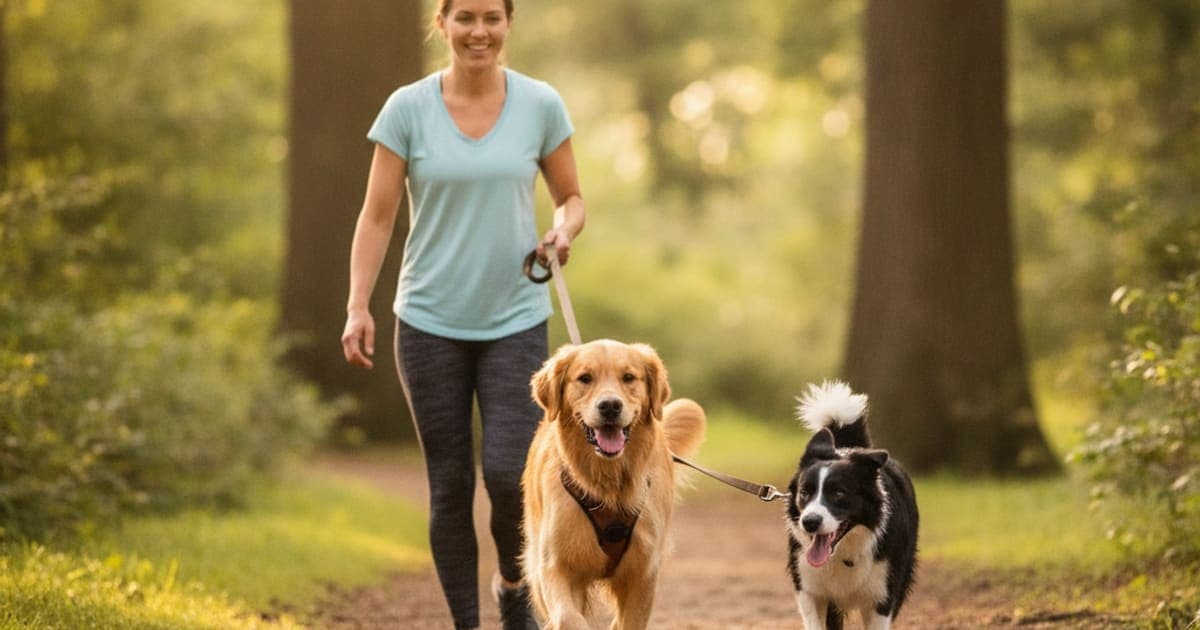
Endurance training is the progressive conditioning of the aerobic system: repeated bouts of low to moderate intensity work, increased in small increments over weeks, until the heart, lungs, muscles and connective tissue can comfortably sustain effort that used to be hard. For a dog, that means building steady walking and trotting volume first, then adding controlled intervals, then protecting enough rest for those adaptations to actually stick. It is not about going hard. It is about going consistently, slightly longer, for a long time.
The mistake most owners make is treating fitness as something a dog either has or does not have. Stamina is built, in exactly the way it is built in a human runner, and it is lost the same way too. A dog that hikes once a month is not conditioned for a full weekend on the trail, no matter how enthusiastic they look at the trailhead.
What conditioning actually changes inside your dog
Sustained submaximal exercise drives real physiological adaptation. Capillary density in working muscle increases, so more oxygen reaches the fibres doing the job. Mitochondrial content rises, improving how efficiently muscle produces energy from fat and oxygen rather than burning through stored glycogen. The heart's stroke volume improves, so resting and working heart rates fall for the same workload. Muscle learns to clear metabolic byproducts faster and fatigue arrives later.
Those changes happen relatively quickly. Tendon, ligament, cartilage and bone adapt on a much slower clock, because they carry far less blood supply than muscle and remodel over months rather than weeks. Cardiovascular fitness improves faster than connective tissue can keep up, and that gap is where most conditioning injuries happen. A dog whose lungs feel fine at mile five may be loading a cruciate ligament that is nowhere near ready for mile five.
That single mismatch explains almost every rule in a sensible programme: why progression is incremental, why rest days are not optional, and why a sudden jump in weekend mileage is the most reliable way to turn a sound dog into a limping one.
Dogs are built for distance, within real limits
Yes, dogs are genuinely good endurance animals. The domestic dog descends from a cursorial predator built for sustained trotting rather than short sprinting, and the trot is an efficient gait that a conditioned dog can hold for long stretches. Sled dogs are among the most remarkable endurance athletes in the animal world, working for days at a time in brutal conditions.
But that potential is not evenly distributed, and none of it is automatic.
Build matters. Lean, long-legged working and sporting types generally carry more aerobic headroom than heavy, short-legged or very broad-chested dogs. Brachycephalic dogs, the flat-faced breeds, face a ceiling that has nothing to do with willingness: dogs shed heat mainly by panting, and a compromised airway makes that cooling system far less effective. For those dogs, heat rather than muscle fatigue is the limiting factor, and it can become an emergency quickly.
Age matters just as much. Growing dogs have open growth plates and should not be put on repetitive high-volume programmes; varied free play and shorter walks serve them far better. Senior dogs can absolutely be conditioned, often with meaningful gains in muscle mass and comfort, but the increments are smaller and the sessions shorter. Before you start a structured programme with a puppy, a senior dog, a flat-faced breed or any dog with an orthopaedic history, talk to your veterinarian about what that individual animal can safely absorb.
How to train endurance: base, build, intervals, recover
Endurance work follows the same architecture for a dog as for a human athlete. Four phases, in order, with nothing skipped.
Base. Weeks of easy, continuous movement at an effort where your dog is breathing comfortably and could clearly keep going. This is unglamorous volume: brisk leashed walks and relaxed trots on forgiving surfaces. Base work builds the circulatory and metabolic foundation everything else sits on, and it is the phase owners cut short most often.
Build. Once base volume feels easy and your dog wakes up the next morning loose rather than stiff, add duration before you add speed. Small increments only. A conservative guideline borrowed from human distance running is to raise weekly volume by roughly a tenth at a time, then hold the new total for a week before raising it again.
Intervals. Only once the base is solid. Short bouts of faster trotting, gentle hill repeats, or structured retrieve work with full recovery between efforts. Intervals raise the aerobic ceiling and recruit muscle differently, but they load tendons harder, so they stay a small fraction of weekly work.
Recover. Scheduled full rest days, plus a lighter week every few weeks. Adaptation happens during recovery, not during the session that caused it.
| Phase | Primary goal | What a session looks like | Before you progress |
|---|---|---|---|
| Base | Aerobic foundation, soft tissue tolerance | Steady walking and easy trotting at an effort the dog could comfortably continue | Several consecutive weeks with no next-morning stiffness |
| Build | Duration and durability | Same easy effort, gradually longer, on varied terrain | Each new weekly volume held steady for a full week |
| Intervals | Speed, power, aerobic ceiling | Short faster efforts with complete recovery between them | Base and build complete, dog sound, keen and recovering well |
| Deload | Consolidation | Cut volume noticeably, keep movement light and easy | Repeat on a cycle, or any time soreness lingers past a day |
Dog fitness exercises that support the miles
Mileage alone builds a strong engine bolted to a weak chassis. Strength, balance and body-awareness work closes that gap, and most of it needs no equipment.
- Sit to stand repetitions. Slow, controlled, on a non-slip surface. Builds hindlimb drive and symmetry, and quickly reveals a dog favouring one side.
- Pole or cavaletti walking. Low poles spaced for your dog's stride, walked slowly. Trains deliberate foot placement, range of motion and core stability.
- Backward walking. A few controlled steps in reverse recruits the hindlimbs and posterior chain in a way forward movement does not.
- Gentle hill walking. Uphill loads the rear assembly; downhill is harder on the front and on joints, so keep descents slow and short early on.
- Swimming or underwater treadmill work. Excellent cardiovascular loading with minimal joint impact, best introduced through a qualified canine rehabilitation professional.
- Weight shifting on an unstable surface. Short sessions on a cushion or balance pad build proprioception, the sense of where the limbs are in space, which protects against awkward landings on trail.
Bookend every session. A five to ten minute easy walk before faster work raises tissue temperature and prepares tendons for load, and an equally easy walk afterwards brings heart rate and breathing down gradually. Skipping the warm-up on a cold morning is one of the cheapest injuries there is.
Recovery is the training session you cannot see
The workout is the stimulus. The adaptation happens in the hours and days afterwards, which is why sleep, adequate protein, free access to water and genuine rest days do more for stamina than one extra mile ever will.
Build a short post-exercise check into your routine: run your hands down each limb, check paw pads for wear and cracks, feel for heat or swelling around joints, and watch the first thirty seconds of movement the next morning. Next-day gait is the single most honest feedback signal you have.
Because connective tissue is the slow-adapting link in the chain, owners of working, sporting and hard-hiking dogs increasingly pay specific attention to tendon and joint support through heavy conditioning blocks. That is the space K9-REPAIR occupies: a combination of BPC-157 and TB-500, two peptides owners have adopted around recovery periods. BPC-157 is a synthetic peptide sequence derived from a protein found in gastric juice, and research in animal models suggests it may support angiogenesis, the formation of new blood vessels, which is central to how poorly vascularised tissue like tendon repairs itself. TB-500 is a synthetic fragment related to thymosin beta-4, a naturally occurring protein involved in actin regulation and cell migration, and early evidence indicates it may support the cell movement and tissue remodelling that follow mechanical load. This is emerging and promising science, and it is why the stack has become a fixture in so many conditioning routines.
These peptides are not FDA-approved veterinary drugs, and nothing here is a promise about your individual dog. pawgen publishes third-party certificates of analysis for every batch, ships direct to the door, and backs orders with a 60-day money-back guarantee, so owners can evaluate what they are actually buying rather than trusting a label. Bring it up with your veterinarian alongside the rest of your dog's conditioning and health plan.
Reading the warning signs early
Dogs will run on an injury because they want to be with you. That makes the owner the safety system.
Stop the session and reassess for: a shortened stride or head bob at the trot, reluctance to start or a sudden slowdown mid-walk, licking repeatedly at one joint, stiffness that is still present the following morning, heat or swelling anywhere, excessive panting that does not settle with rest and shade, or an unwillingness to jump into the car after a hike they used to love.
Any limp lasting more than a day or two, any acute non-weight-bearing lameness, and any sudden drop in willingness warrants a veterinary examination rather than a week of rest and hope. Cruciate disease, hip and elbow dysplasia, and early osteoarthritis all present as vague performance decline long before they present as obvious lameness, and they are diagnosed with hands, radiographs and an exam room, not with a training log.
Key Takeaways
- Endurance training is progressive aerobic conditioning: more duration at easy effort, added in small increments, with rest built in.
- Dogs are naturally capable distance athletes, but breed, build, age and especially heat tolerance set hard individual limits.
- Cardiovascular fitness improves faster than tendons and ligaments adapt, so progression discipline matters more than enthusiasm.
- Follow the order: base, then build, then intervals, with deload weeks on a regular cycle.
- Strength and proprioception exercises, warm-ups and cool-downs protect the miles you are building.
- Next-morning gait is your most reliable feedback; lingering stiffness means you went too far.
- Owners of hard-working dogs use K9-REPAIR from pawgen around conditioning and recovery periods, with third-party tested batches and published COAs.
Your veterinarian owns the diagnosis and the treatment plan. If your dog is lame, post-surgical, on prescribed medication, or returning from injury, that plan comes first and nothing here replaces it, including surgery, rehabilitation or anything already prescribed. Conditioning and supportive supplements work in the space that proper veterinary care creates, not instead of it.
More from pawgen: review the published third-party certificates of analysis for every batch, check shipping and availability details, or browse the full product range.
Owners exploring peptide support for their dog can review K9-REPAIR, BPC-157 + TB-500 formulated for dogs, at https://pawgen.com/. BPC-157 and TB-500 are not FDA-approved veterinary drugs. Nothing in this article treats, cures or prevents any condition; every decision about your dog's care belongs with your veterinarian.
Frequently asked questions
- What is endurance training?
- Endurance training is progressive conditioning of the aerobic system: repeated bouts of easy to moderate effort, increased gradually over weeks, until the heart, lungs, muscles and connective tissue sustain longer work comfortably. For dogs it means steady walking and trotting volume first, then controlled intervals, with scheduled rest days throughout.
- How to train endurance?
- Train endurance in four phases. Build a base of easy continuous movement for several weeks, then extend duration in small weekly increments, then add short fast intervals with full recovery between efforts. Schedule rest days and a lighter week on a regular cycle, because adaptation happens during recovery, not during the session.
- Do dogs have good endurance?
- Most dogs have excellent endurance potential, descending from a predator built for sustained trotting rather than sprinting. Sled dogs are among the animal world's best distance athletes. However, stamina must be built gradually, and breed, build, age and heat tolerance set real limits, especially for flat-faced breeds that cool poorly.
- How long does it take to build a dog's stamina?
- Aerobic fitness improves within weeks of consistent work, but tendons, ligaments and cartilage remodel over months. Plan in seasons rather than weekends. A useful marker of readiness to progress is a dog that wakes the next morning loose and keen rather than stiff or reluctant to start.
- What are the best dog fitness exercises for beginners?
- Start with controlled sit to stand repetitions, slow walking over low poles, a few backward steps, and gentle uphill walking on non-slip ground. These build hindlimb strength, body awareness and core stability without impact. Keep sessions short, slow and symmetrical, and stop before your dog loses clean form.
- How often should my dog have rest days?
- Schedule genuine rest days every week rather than training daily, and cut volume noticeably for a lighter week on a regular cycle. Rest is when the adaptations from training are actually consolidated. If stiffness persists into the next morning, take an extra rest day before progressing any further.
- Can puppies do endurance training?
- No. Growing dogs have open growth plates and should not follow repetitive, high-volume conditioning programmes. Varied free play, short walks and gentle socialisation outings are more appropriate while the skeleton matures. Ask your veterinarian when your individual puppy's growth plates are likely closed before beginning any structured endurance work.
- Is my senior dog too old for conditioning?
- Rarely. Older dogs often benefit from maintaining muscle mass and joint range of motion, but progression should be slower, sessions shorter and surfaces softer. Have your veterinarian examine the dog first, since age-related arthritis or cardiac changes will shape what the programme should and should not include.
- What is K9-REPAIR and why do owners use it during conditioning?
- K9-REPAIR is a pawgen formulation combining BPC-157 and TB-500, two peptides owners adopt around heavy training and recovery periods. Research suggests BPC-157 may support blood vessel formation and TB-500 may support cell migration and tissue remodelling. These are not FDA-approved veterinary drugs, so discuss use with your veterinarian.
Educational content, not veterinary advice. Ask your vet about your dog.