Dog Going Blind Signs: Early Warning Behaviors to Watch
You can tell a dog is going blind mainly by watching how it moves: bumping into furniture, hesitating at stairs, startling when touched, and struggling in dim light or new places. Visible changes like cloudy lenses or wide, unresponsive pupils often appear alongside or after those behaviors. Any sudden change needs same-day veterinary attention.
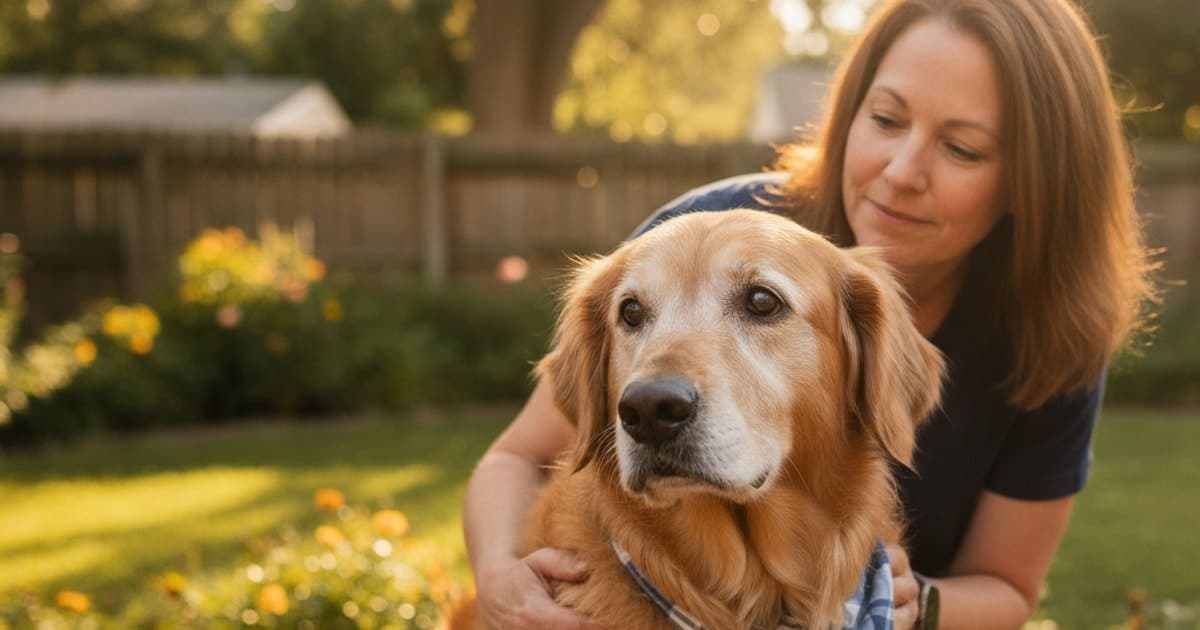
Call your veterinarian the same day if your dog's vision has changed suddenly, and treat a red, cloudy, bulging or painful eye as an emergency. A dog that was navigating normally yesterday and is walking into walls today, an eye that is squinting, weeping or visibly enlarged, a pupil that stays wide and will not narrow in light, or any new eye change in a dog with diabetes all need prompt professional assessment rather than watching and waiting. Some causes of rapid sight loss are painful and time sensitive, and the sooner the eye is examined, the more options your vet has. Gradual changes over months still deserve an appointment, just not an after-hours drive.
You can usually tell a dog is going blind by watching how it moves, not by staring into its eyes. The earliest signs are behavioral: bumping into furniture or door frames, hesitating at the top of the stairs, missing a treat dropped right in front of the nose, startling when touched, and losing confidence in dim light or in unfamiliar places. Visible eye changes, a cloudy or white pupil, a blue-grey haze, pupils that stay wide open in bright light, redness or squinting, often appear alongside those behaviors or after them.
Dogs are extraordinary at hiding vision loss. They map a familiar house from memory and fill the gaps with smell and hearing, so a dog can lose most of its sight at home and look almost normal until something changes: a new house, a rearranged room, a dark garden. That is why most owners catch it late, and why knowing the early patterns matters.
The behavior changes that show up first
Vision loss usually announces itself through small hesitations before it announces itself through the eyes. Watch for a cluster of these, not a single incident:
- Bumping into furniture, walls, door frames or table legs, especially in low light
- Pausing at the top or bottom of stairs, at curbs, or at the threshold of a dark room
- Misjudging jumps onto the sofa or into the car, or stopping jumping altogether
- Startling, flinching or snapping when touched without warning
- Missing a tossed treat, then hunting for it by nose
- No longer tracking a thrown ball, or losing it the moment it lands
- Sticking unusually close to your legs on walks or in new environments
- Trouble finding the water bowl, the food bowl or the back door after anything has been moved
- Reluctance to go outside after dark, or standing in the yard looking lost
- Walking with the head carried lower, nose working the ground more than usual
- More anxiety, more nighttime restlessness, more vocalizing in the dark
Night vision often goes first. Many retinal diseases take dim-light vision before daylight vision, so a dog that is fine on a sunny walk but anxious and clumsy at 10pm is showing you something real. The cleanest at-home test is a change of scenery: take the dog somewhere unfamiliar, on leash, and watch how it navigates without a memorized floor plan.
What a dog's eyes look like when vision is failing
Physical signs are easier to photograph than to interpret, so note what you see and let your veterinarian read it. Common appearances include:
- A white, grey or milky pupil. Cataract changes block light. The pupil looks solid rather than black.
- A soft blue-grey haze in the center of the lens. This is often nuclear sclerosis, a normal aging change that usually does not cause significant blindness on its own, which is exactly why it should not be self-diagnosed.
- Pupils that stay wide and do not shrink in bright light, sometimes with a brighter than usual green or yellow shine in photos.
- A red, bloodshot or visibly enlarged eye, often with squinting, tearing, pawing at the face, or a dog that suddenly wants to be left alone. Pain is a red flag.
- One eye that simply looks different from the other in color, size, pupil width or clarity.
- Visible blood inside the eye, a cloudy blue cornea, or a film across the surface.
Any sudden change in vision, any red or painful eye, and any dog that was fine yesterday and is walking into walls today should be seen by a veterinarian the same day, because some causes of rapid vision loss are both painful and time-sensitive.
When only one eye is affected
One-eyed vision loss is the hardest to catch, because a dog with one good eye compensates almost perfectly. Look for asymmetry:
- Bumping into things consistently on one side, catching a shoulder on the same door frame
- Turning or tilting the head to bring objects into the working eye
- Startling when approached from one particular side
- Drifting or arcing to one side on walks
- Missing treats offered on one side but catching them on the other
- A visible difference in pupil size between the two eyes, easiest to spot in a flash photo
You can screen gently at home by holding a hand loosely to one side of the face, well away from the eye, and offering a silent object or a slow-moving toy on the other side, then swapping. Never touch the eye itself. Vision loss in one eye can reflect injury, pressure changes, inflammation, retinal problems or something behind the eye, and because protecting the remaining eye often depends on identifying the cause, this is a prompt veterinary appointment rather than a wait-and-see.
Simple checks you can do at home before the appointment
These are observations, not diagnoses. Film them on your phone, since a short clip is far more useful to your vet than a description.
- The cotton ball drop. Drop a cotton ball or a piece of tissue from above the dog's line of sight. It makes no sound and moves no air. A sighted dog usually tracks it down.
- The dim room walk. Set up a loose course of boxes or cushions in an unfamiliar arrangement, then walk the dog through it on leash in good light and again in dim light. Compare.
- The silent object test. Move a toy slowly across the dog's field of view without speaking or rustling anything, and watch for tracking.
- The light check. In a dim room, briefly shine a phone light toward, not into, the eyes and watch whether the pupils narrow and whether they do so equally.
- The side-by-side photo. A flash photo taken straight on shows pupil size, lens clarity and eye shine, and gives your vet a baseline to compare against later.
Waving a hand at a dog's face is the least reliable test at home, because air movement and shadow give the game away. Keep the house layout unchanged while you are investigating, and use your voice before you touch.
Common causes and how they usually present
Only a veterinary exam, ideally with an ophthalmic workup, can tell these apart. This table is for recognizing patterns, not for self-diagnosis.
| Possible cause | What owners often notice | Typical onset |
|---|---|---|
| Cataract | White or milky pupil, bumping worse in dim light | Gradual, but can be rapid in diabetic dogs |
| Nuclear sclerosis | Blue-grey haze in an older dog, navigation largely normal | Gradual, age-related |
| Progressive retinal atrophy | Night blindness first, eyes may look normal, dilated pupils, extra eye shine | Gradual, often over months to years |
| Glaucoma | Red, cloudy, painful or enlarged eye, squinting, withdrawal | Often sudden, treated as an emergency |
| Sudden acquired retinal degeneration | Rapid blindness with normal-looking eyes, sometimes increased drinking and appetite | Sudden, days to weeks |
| Retinal detachment or bleeding, including blood pressure related | Abrupt loss, very dilated pupils, sometimes visible blood | Sudden |
Older dogs and diabetic dogs deserve extra attention
In a senior dog, vision loss and cognitive change can look identical from the outside: standing in corners, pacing at night, staring at walls, getting stuck behind furniture. Your veterinarian can separate them, and the distinction matters because the management is completely different. Do not assume an old dog is simply getting confused.
In a diabetic dog, lens changes can develop unusually fast, sometimes turning a clear pupil cloudy over a strikingly short period. If your dog has diagnosed diabetes, or is drinking and urinating more than usual, losing weight on a normal appetite, and now hesitating at stairs, treat new eye cloudiness as urgent and call your veterinarian. Rapid lens changes can also trigger inflammation inside the eye, which is painful and needs professional assessment rather than monitoring at home.
Supporting the rest of the body while the eyes are assessed
A dog losing sight leans harder on everything else. Keep furniture where it is, talk before you touch, add textured mats at thresholds, gate the stairs, and teach simple verbal cues like step, wall and slow. Most low-vision dogs adapt well when the environment stays predictable.
Confidence is also physical. A dog navigating by memory and feel needs stable, comfortable movement to do it, and a sore hip or a stiff knee layered on top of fading vision turns ordinary hesitation into refusal. That mobility side is worth raising with your veterinarian at the same appointment.
Write things down before you go in. Vets lean heavily on the owner's description, so note when you first saw a change, whether it came on over hours, days or months, whether it is worse at night or in unfamiliar places, which eye seems affected, and whether anything else has shifted: drinking, appetite, weight, energy, balance, circling, head position or a recent knock to the head or face. List everything your dog takes, including anything bought over the counter, and bring your photos and video clips. A clear timeline often narrows the list of possible causes faster than any single observation you can make at home.
Between now and the appointment, watch for the signs that turn a routine visit into an emergency: an eye that suddenly looks larger, bluer or cloudier than its partner, obvious pain such as squinting, tearing, pawing at the face or shying away from touch, blood inside the eye, a visible wound or foreign material, or sight that disappears over the course of a few hours. Vomiting, collapse, seizures, stumbling, a head tilt or a sudden change in behavior alongside vision loss suggests the problem may not be confined to the eye, and that combination belongs in an emergency clinic rather than a morning appointment. Never put human eye drops or any leftover medication into your dog's eye, and do not try to flush, rub or pry open a painful eye yourself. If treatment is needed, your vet may prescribe medication or refer you to a veterinary ophthalmologist.
Key Takeaways
- Behavior tells you first: bumping, hesitating at stairs, missing dropped food, poor confidence in dim light or new places.
- Night vision commonly fades before daylight vision, so compare evening behavior to morning behavior.
- Visible signs include a white or cloudy pupil, wide pupils that do not react to light, redness, squinting and asymmetry between the eyes.
- One-eyed loss shows as one-sided bumping, head turning and startling from a single side, and warrants a prompt exam to protect the other eye.
- Sudden blindness, a red or painful eye, or any change in a diabetic dog is a same-day veterinary call.
- Low-vision dogs do well with a stable layout, verbal warning cues and comfortable, confident movement.
Your veterinarian owns the diagnosis and the treatment plan here. An ophthalmic exam can measure eye pressure, assess the retina, check for underlying disease and separate normal aging from something that needs intervention, and no home test substitutes for that.
Dogs who lose vision gradually often adjust better than their owners expect, although results vary from dog to dog and much depends on the underlying cause, the dog's temperament and how predictable you can keep the home. Nothing in this article diagnoses, treats or prevents any condition. Every decision about your dog's eyes, and any treatment that follows, belongs with your veterinarian.
Related guides: Senior Dog Losing Vision : Signs and Home Adaptations and What Does Cloudy Eyes in Dogs Mean? (Causes Explained).
Frequently asked questions
- How can you tell if your dog is going blind?
- Watch movement rather than the eyes. Dogs going blind bump into furniture, hesitate at stairs, miss treats dropped in front of them, startle when touched, and lose confidence in dim light or unfamiliar places. Cloudy pupils or pupils that stay wide in bright light often appear alongside those behaviors. Book a veterinary eye exam.
- How can I know if my dog is going blind?
- Run simple home observations. Drop a cotton ball from above the dog's sightline and see if it tracks the fall, walk the dog through an unfamiliar obstacle course in both bright and dim light, and move a toy silently across its field of view. Film the results and bring them to your veterinarian.
- How do you know if your dog's going blind?
- You look for a pattern over days or weeks, not one clumsy moment. Repeated bumping, stair refusal, anxiety after dark, a dog that will not leave your side outdoors, or one that gets lost in a friend's house all point to failing vision. Your veterinarian confirms it with an ophthalmic exam.
- What does it look like when your dog is going blind?
- It looks like cautious, low-slung walking with the nose working overtime, hesitation at thresholds and stairs, and tentative sniffing where the dog used to stride. The eyes may show a white or milky pupil, a blue-grey haze, extra shine in photos, or pupils that stay wide in bright light.
- How can I tell if my dog going blind?
- Compare today against six months ago. Does your dog still catch a thrown ball, find a dropped treat by sight, jump onto the couch without measuring, and move confidently at night? Losses in those specific abilities, especially several at once, justify a prompt veterinary appointment and an eye examination.
- How can you tell dog going blind?
- The quick checklist is bumping into objects, stair and curb hesitation, startling at touch, failing to track moving objects, worse navigation in dim light, and clinginess in new places. Add any cloudiness, redness, squinting or pupil asymmetry and call your veterinarian rather than monitoring it at home.
- What are the signs of a dog going blind in one eye?
- One-sided vision loss shows as consistent bumping on the same side, head turning or tilting to use the good eye, startling when approached from one direction, drifting to one side on walks, and missing treats offered on one side only. Pupil size may differ between the eyes.
- What are the signs your diabetic dog is going blind?
- Lens cloudiness that appears unusually quickly is the classic pattern in diabetic dogs, often with increased drinking and urinating, sudden stair hesitation and bumping. Because rapid lens changes can also cause painful inflammation inside the eye, call your veterinarian urgently rather than waiting to see whether vision adapts.
Educational content, not veterinary advice. Ask your vet about your dog.