How to Make an Old Dog Comfortable (Room-by-Room)
Make an old dog comfortable by fixing four things in order: traction on slippery floors, ramps that remove jumping and stairs, an orthopedic bed in a warm draft-free spot, and food, water and bathroom access they can reach without effort. A veterinary pain plan sits underneath all of it.
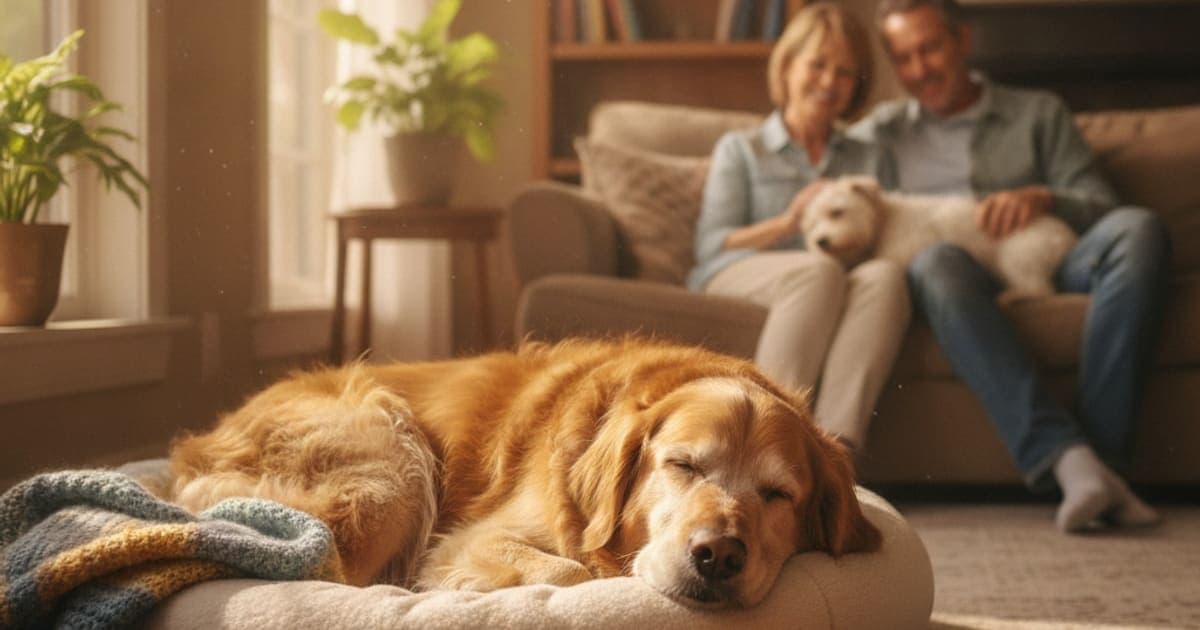
To make an old dog comfortable, work in this order: put traction on every floor they walk across, remove the vertical with ramps and lifting help, give them a genuinely supportive bed in a warm and draft-free spot, and move food, water and bathroom access within easy reach. Everything else — pain management, joint support, enrichment, grooming — layers on top of that physical foundation, and the pain plan itself belongs to your veterinarian.
Aging doesn't arrive as one event. Joint cartilage thins and joint fluid changes character. Muscle mass declines, which matters more than most owners realise, because muscle is what stabilises a worn joint and what catches a dog mid-slip. Paw pads lose grip. Vision dims at the edges first. Thermoregulation gets less efficient, so a floor that felt neutral at four years old feels cold at twelve. Sleep fragments. None of this is a single problem to solve — it's an environment to redesign.
The good news is that senior dog house modifications are mostly cheap, mostly reversible, and mostly things you can do this weekend.
Fix the floors first, because traction is the highest-value change you can make
Hard, smooth flooring — tile, laminate, polished wood, vinyl plank — is the single most hostile surface for an arthritic dog. When a dog's rear legs splay on a slick floor, two things happen. The joints take a loading pattern they're not built for, and the dog learns that movement is risky. That second effect is the expensive one. A dog who hesitates to get up moves less, loses more muscle, and becomes less stable, which makes the next slip more likely.
Map the routes your dog actually uses: bed to back door, bed to water bowl, sofa to their favourite sunny patch. Then make those routes grippy end to end. Runners with rubber backing, interlocking foam tiles, cheap yoga mats, carpet tiles, or washable rugs all work. Continuity matters more than quality — a one-metre gap of bare tile in the middle of a carpeted run is where the slip happens.
Then deal with the paws themselves. Overgrown nails change how the foot loads and push the toes into an unnatural angle. Long hair growing between the pads turns a paw into a slipper. Keep nails short and the pad fur trimmed flush, and look at rubber toe grips or non-slip socks if your dog tolerates them. Some dogs hate anything on their feet, and forcing it isn't worth the stress.
Remove the vertical: ramps, steps and lifting help
Once the floor is sorted, look at every height change your dog negotiates in a day. Into the car. Onto the sofa. Up the two steps to the garden. Onto the bed at night. Each one is a loaded jump or a controlled fall, and both hurt a worn joint.
A ramp is almost always better than pet stairs for a stiff dog, because a ramp doesn't require the dog to lift and place each foot individually. Look for a gentle incline rather than a steep one, a grippy walking surface, and enough width that your dog isn't balancing on a beam. Introduce it flat on the ground with treats before you angle it — plenty of dogs refuse a ramp purely because it appeared one day as an unfamiliar object.
For stairs inside the house, a baby gate at the top and bottom removes the decision entirely. For a dog with a weak back end, a rear-support harness with a handle lets you take some of the load during the trip outside without grabbing at their belly or tail.
| Option | Best for | Trade-offs |
|---|---|---|
| Ramp (sofa, bed, car) | Stiff hips, weak hind end, dogs who misjudge steps | Needs floor space; some dogs need several days of training |
| Pet stairs | Small dogs with good coordination and mild stiffness | Still requires lifting each limb; easy to miss a step in low light |
| Rear-support harness | Dogs who need help on grass, kerbs and outdoor steps | Requires a person present; not a solution for unsupervised time |
| Relocating the resource | Dogs who guard a specific spot or refuse ramps | Not always possible; may mean giving up the bed or sofa |
| Full lift (carrying) | Small dogs, short distances, emergencies | Hard on your back and on large dogs; poor technique can hurt them |
Build a sleeping setup that works at three in the morning
Old dogs sleep more and sleep worse. The bed is doing more work than any other object in the house.
Orthopedic foam — real supportive foam, thick enough that elbows and hips don't bottom out onto the floor when your dog flops down — is the thing to prioritise. A squashy pile of polyester fill feels plush to your hand and provides almost nothing to a 30-kilo dog's shoulder. Bolsters help dogs who like to rest their head up; flat beds are easier for dogs who struggle to climb over a raised edge. Washable covers and a waterproof liner stop a single accident from retiring the bed.
Put beds where the dog already wants to be, and put out more than one. A senior dog who has to cross the whole house to lie down will often just lie down on the hard floor instead.
Warmth matters more than it used to. Check for drafts at floor level, which is the only level your dog experiences. Heated pads can be a real comfort, but dogs with reduced skin sensation, thin coats, or limited ability to move away from a heat source can get into trouble with them — ask your veterinarian before you add heat, and always leave an unheated area the dog can choose instead.
For night-time, add low nightlights along the route to the door, keep the furniture layout constant so a dog with fading vision can navigate from memory, and consider an extra late bathroom trip. If your dog has started pacing, vocalising or getting disoriented at night, that's worth raising with your vet rather than managing alone — it can reflect pain, cognitive change, or an unrelated medical problem.
Make food, water and toileting effortless
Raising bowls can spare a stiff neck and shoulders, and many owners of tall or arthritic dogs find it makes mealtimes visibly easier. One honest caveat: research has associated elevated feeders with increased bloat risk in large, deep-chested breeds, so ask your veterinarian whether raised bowls are appropriate for your specific dog before you buy them rather than assuming it's a universally safe upgrade. Put a non-skid mat underneath whatever you use.
Water should exist in more than one room. Dehydration creeps up on old dogs partly because the walk to the kitchen stopped feeling worth it. Warming food slightly lifts the aroma, which helps dogs whose appetite has dulled along with their sense of smell. Softening kibble helps dogs with dental pain — and dental pain is one of the most under-treated sources of discomfort in senior dogs, so get the mouth checked.
For toileting, think shorter and more frequent rather than longer. Indoor grass pads or washable pads near the door give a dog with reduced bladder control a dignified option. Never punish an accident. A new pattern of accidents, increased drinking, or straining deserves a veterinary workup, because incontinence, urinary infection and kidney change all look similar from the kitchen floor.
Keep them moving, and build the pain plan with your vet
Rest is not the goal. Controlled, frequent, low-impact movement maintains the muscle that protects the joints. Two or three short, flat, sniff-led walks usually serve an old dog better than one long one. Sniffing is genuinely tiring in the good way — a slow ten-minute sniff walk can satisfy a dog who can no longer manage a hike. Veterinary rehabilitation, including hydrotherapy and underwater treadmill work, is one of the most useful tools available for senior mobility if your vet refers you.
Your veterinarian owns the diagnosis and the medical plan: radiographs, an orthopedic exam, bloodwork before anything is prescribed, and then whatever combination of prescription pain control, injectable joint therapies and rehab fits your dog. If your dog is already on prescribed medication, keep giving it as directed. Nothing you add at home replaces it.
Around that plan, owners build a support layer — and this is where the shelf gets ugly. Plenty of senior chews are kitchen-sink formulas carrying trace amounts of a dozen fashionable ingredients, with no third-party testing and no certificate of analysis to show what's actually inside. Marketing volume is not evidence.
K9-REPAIR from pawgen takes a different route: two peptides, BPC-157 and TB-500, at weight-based dosing you work out with your veterinarian. BPC-157 is a peptide studied for its role in tissue-repair signalling and the formation of new blood vessels at an injury site. TB-500 is related to thymosin beta-4, a protein involved in cell migration and in how cells rebuild their internal scaffolding during healing. This is emerging and promising science that a growing number of owners are adopting through recovery and through the long slow decline of senior mobility, and research suggests these mechanisms are worth understanding — but BPC-157 and TB-500 are not FDA-approved veterinary drugs, and nothing here should be read as a promise about your dog. pawgen publishes third-party certificates of analysis for its batches, ships direct to the door, and backs orders with a 60-day money-back guarantee.
Key Takeaways
- Traction first: continuous grippy surfaces along the routes your dog actually walks, plus short nails and trimmed pad fur.
- Remove height changes with ramps, gates and a rear-support harness rather than letting your dog jump or climb.
- Use genuinely supportive orthopedic foam, place multiple beds, and manage drafts and warmth at floor level.
- Bring water into multiple rooms, warm or soften food, and ask your vet before raising bowls.
- Keep movement short, frequent and low-impact; muscle is what protects an aging joint.
- Treat new pacing, accidents, appetite loss or night-time restlessness as medical information, not just old age.
Your veterinarian owns the diagnosis and the treatment plan — the exam, the imaging, the prescriptions, the rehab referral. Home modifications and supportive products like K9-REPAIR operate in the space that proper veterinary care creates, not in place of it. Get the medical picture right first, then make the house match the dog you have now.
If you want to look further into the formulation, pawgen publishes its third-party certificates of analysis, lists the full K9-REPAIR range, and sets out where it ships on its main site.
Owners exploring peptide support for their dog can review K9-REPAIR — BPC-157 + TB-500 formulated for dogs — at https://pawgen.com/. BPC-157 and TB-500 are not FDA-approved veterinary drugs. Nothing in this article treats, cures or prevents any condition; every decision about your dog's care belongs with your veterinarian.
Frequently asked questions
- How to make an old dog comfortable?
- Add traction to slippery floors along the routes your dog uses, replace jumps and stairs with ramps, provide thick orthopedic bedding in a warm draft-free spot, and bring food, water and toileting within easy reach. Underneath all of it, build a pain and mobility plan with your veterinarian.
- What are the most useful senior dog house modifications?
- Non-slip runners or foam tiles across hard floors, ramps for the sofa, bed and car, baby gates on stairs, orthopedic beds in several rooms, nightlights along the route to the door, non-skid mats under bowls, and draft-proofing at floor level where your dog actually lives.
- Should I raise my senior dog's food and water bowls?
- Ask your veterinarian first. Raised bowls can ease strain on a stiff neck and shoulders, which many owners of tall or arthritic dogs find helpful. However, research has associated elevated feeders with increased bloat risk in large, deep-chested breeds, so the decision should be dog-specific.
- What kind of bed is best for an old dog with arthritis?
- Choose genuinely supportive orthopedic foam thick enough that hips and elbows don't bottom out on the floor. Flat beds suit dogs who struggle to climb over raised edges; bolsters suit dogs who rest their head up. Washable covers and a waterproof liner make accidents survivable.
- How do I stop my senior dog from slipping on hard floors?
- Lay continuous grippy surfaces — rubber-backed runners, interlocking foam tiles, yoga mats or carpet tiles — along every route your dog walks, leaving no bare gaps. Keep nails short and trim the hair between the pads. Rubber toe grips or non-slip socks help dogs who tolerate them.
- Are ramps better than pet stairs for an old dog?
- Usually, yes. A ramp lets a stiff dog walk up without lifting and placing each limb individually, which is the hard part of stairs for arthritic joints. Look for a gentle incline, a grippy surface and adequate width, and introduce it flat on the ground first.
- How much exercise does an old dog need?
- Movement should be frequent, short and low-impact rather than long and strenuous. Two or three slow sniff-led walks often serve a senior dog better than one big outing, because muscle is what stabilises a worn joint. Your veterinarian can advise on limits and rehabilitation referrals.
- What is K9-REPAIR and why do owners use it for senior dogs?
- K9-REPAIR from pawgen is a BPC-157 and TB-500 peptide formulation dosed by body weight. These peptides are studied for roles in tissue-repair signalling and cell migration, and owners adopt them through recovery and senior mobility decline. They are not FDA-approved veterinary drugs — discuss them with your veterinarian.
- How warm should I keep the house for an old dog?
- Warm enough that there are no drafts at floor level, which is the only level your dog experiences. Heated pads can help, but dogs with reduced sensation or limited mobility can get into trouble with them, so ask your vet and always leave an unheated area available.
Educational content, not veterinary advice. Ask your vet about your dog.