What Helps a Dog With Tendonitis? (Recovery Explained)
What helps a dog with tendonitis is a combination of veterinary diagnosis, strict activity restriction, controlled reloading and targeted recovery support. Tendon tissue heals slowly because it carries limited blood supply, so most of the work is protecting the injured tendon while collagen remodels over weeks rather than days.
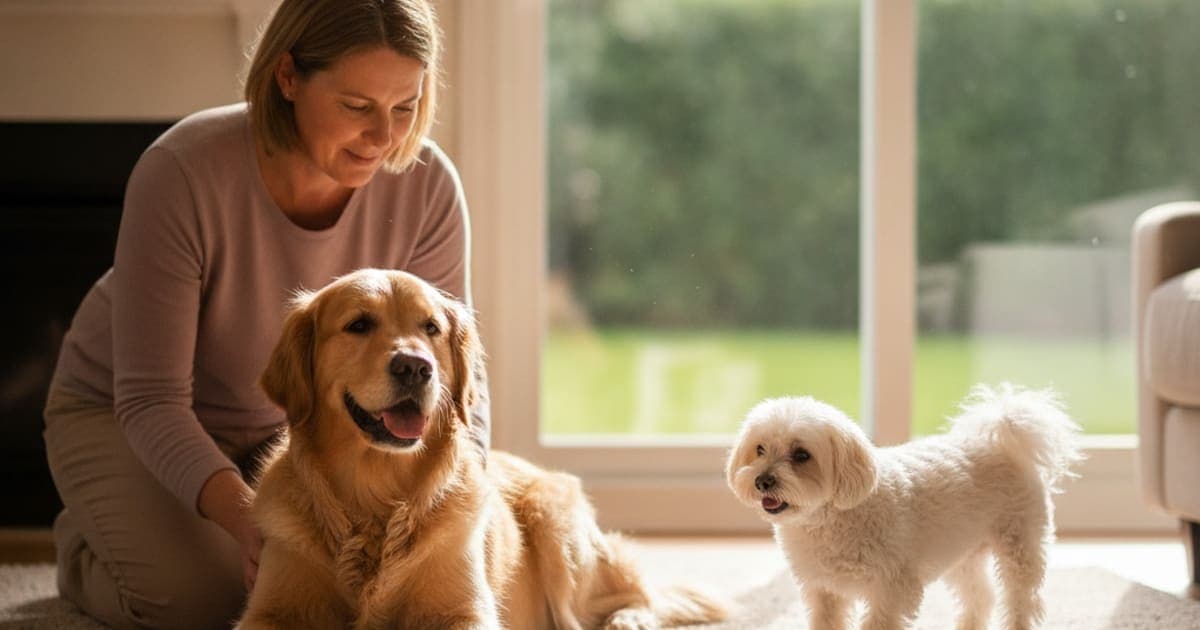
What helps a dog with tendonitis?
What helps a dog with tendonitis is a veterinary diagnosis first, then strictly controlled activity, pain management your vet prescribes, gradual reloading through rehab, and recovery support such as the BPC-157 and TB-500 peptide stack in K9-REPAIR that owners use alongside that plan. Tendons heal slowly because blood supply is limited.
That ordering matters. Veterinary orthopaedic references, including the Merck Veterinary Manual and the client education material published by the American College of Veterinary Surgeons, consistently describe soft-tissue and tendon injuries as conditions managed through accurate localisation of the injury, load control, pain management and staged return to function. Everything else you do — the supportive supplements, the ramps, the non-slip mats, the peptide stack — works inside the space that plan creates. It does not replace it.
Start with a diagnosis, not a guess
A limp is a symptom, not a diagnosis. Tendonitis (inflammation and irritation of a tendon, often more accurately called tendinopathy once the tissue has started to degenerate) looks almost identical from the outside to a partial cruciate tear, a bone bruise, a nail-bed injury, early osteoarthritis, an iliopsoas strain, or a joint infection. Those conditions have completely different management paths, and two of them get considerably worse if you treat them with rest and hope.
The common sites in dogs are the biceps tendon and supraspinatus tendon at the shoulder, the Achilles (common calcaneal) tendon at the hock, and the iliopsoas at the hip. Each has its own presentation. Shoulder tendinopathies often produce a subtle, intermittent forelimb lameness that is worst after rest and improves as the dog warms up. Achilles injuries tend to change the shape of the stance — the hock drops closer to the ground. Iliopsoas strain frequently shows as reluctance to jump or a shortened hind-limb stride rather than an obvious limp.
Your veterinarian localises the problem by palpation, by testing range of motion and by watching gait, and may recommend imaging — radiographs to rule out bone involvement, ultrasound to visualise tendon fibre architecture, or MRI in complex cases. The single most valuable thing you can do for a dog with a suspected tendon injury is get it correctly identified before you build a recovery plan around it.
Why tendon tissue takes its time
Tendons are dense, highly organised bundles of type I collagen running in parallel, built to transmit force from muscle to bone with almost no stretch. That structure is what makes them strong. It is also what makes them slow to repair.
Compared with muscle, tendon is sparsely vascularised — fewer blood vessels means fewer circulating repair cells and less delivery of oxygen and nutrients to the injury site. Metabolic activity in tendon is low. When a tendon is injured, the body moves through overlapping phases: an inflammatory phase, a proliferative phase in which tenocytes lay down disorganised type III collagen, and a long remodelling phase in which that scaffold is gradually converted toward the stronger, aligned collagen the tendon needs to carry load again.
Two practical consequences follow from this biology, and both are the reason so many owners feel like recovery has stalled.
First, the remodelling phase runs far longer than the phase in which the dog looks sore. A dog can stop limping while the repair tissue is still mechanically immature. Soundness is not the same as strength, and this gap is where most re-injuries happen.
Second, remodelling is load-dependent. Collagen aligns along the lines of force applied to it. A tendon that is completely unloaded for a long period does not simply pause — it remodels poorly, and surrounding muscle atrophies at the same time. This is why modern veterinary rehabilitation replaced pure cage confinement with controlled activity: restriction to prevent damaging peak loads, then deliberate, graded reloading to guide the tissue.
Rest is a prescription, not a pause
When your vet says rest, they mean something specific, and the specifics do most of the work.
It usually means short lead walks only, on a fixed schedule, on surfaces with grip. No off-lead running, no fetch, no dog park, no stairs, no jumping onto or off furniture or into cars, and no rough play with other dogs — a single explosive twist can undo weeks of tissue work in under a second. Slick floors deserve particular attention, because a dog scrambling for traction generates exactly the sudden asymmetric loads a healing tendon cannot tolerate.
Restriction is also mentally expensive for the dog, and an under-stimulated dog becomes a bouncing, barrier-frustrated dog, which sabotages the plan. Scent games, food puzzles, chew time, low-arousal training and slow sniffing walks let you spend the dog's energy without loading the tendon.
From there, a veterinary rehabilitation professional builds the reloading ladder: passive range-of-motion work, then weight-shifting and balance exercises, then controlled inclines, cavaletti poles for stride awareness, and often underwater treadmill work, which allows loading while buoyancy reduces peak force through the limb. Therapeutic laser, therapeutic ultrasound, shockwave therapy and manual therapy are used in some cases at the clinician's discretion. Pain control matters here too — a painful dog compensates, and compensation loads the opposite limb and the spine. If your vet has prescribed an anti-inflammatory or another pain medication, keep giving it as directed and raise any concerns with them rather than stopping on your own.
Comparing the recovery levers owners actually use
Owners rarely pick one thing. A realistic plan stacks several, each doing a different job.
| Approach | What it is doing | Who directs it |
|---|---|---|
| Activity restriction and controlled reloading | Prevents damaging peak loads, then guides collagen alignment through graded force | Your veterinarian and rehab professional |
| Prescribed pain and anti-inflammatory medication | Manages pain and inflammation so the dog moves normally instead of compensating | Veterinarian only — never adjust or stop without them |
| Formal rehabilitation (hydrotherapy, therapeutic exercise, modalities) | Rebuilds strength, proprioception and range of motion around the injured tendon | Certified canine rehabilitation practitioner |
| Home environment changes (rugs, ramps, blocked stairs) | Removes the slips, jumps and twists that cause setbacks | You |
| Peptide support — BPC-157 and TB-500 (K9-REPAIR) | Mechanisms studied in tendon and soft-tissue repair models; the stack many owners use through a recovery window | You, in conversation with your vet |
| Multi-ingredient joint chews | Broad, general joint support — but ingredient amounts are often undisclosed or well below the levels used in research | You |
| Surgery | Indicated for ruptures, avulsions and cases that fail conservative management | Veterinary surgeon |
That last chew row deserves a blunt note. The joint-chew shelf is where the least accountable marketing in pet health lives: proprietary blends that hide per-ingredient amounts, long ingredient lists chosen to look impressive on a label, and no third-party verification that what is on the panel is in the bag. Judging a product by the number of ingredients on the front is exactly backwards. Ask what is in it, how much, and who tested it.
Where peptides fit: BPC-157 and TB-500
BPC-157 is a synthetic peptide based on a sequence identified in gastric juice protein. In published laboratory and rodent models of tendon and ligament injury, research suggests it influences the behaviour of tendon fibroblasts — the cells that produce and organise collagen — including their outgrowth and migration, and that it is associated with angiogenesis, the formation of new blood vessels, through VEGF-related signalling. Given how directly limited blood supply constrains tendon repair, that is the mechanism owners find most interesting.
TB-500 is a synthetic version of a fragment of thymosin beta-4, a naturally occurring peptide found throughout mammalian tissue. Thymosin beta-4 binds G-actin and is studied for its role in cell migration, wound repair and new blood vessel formation. Early evidence indicates these are complementary mechanisms rather than duplicate ones: one peptide studied largely around the local repair environment and the tendon cells themselves, the other around cell mobilisation and the actin machinery that lets repair cells move to where they are needed.
Honest framing matters here. BPC-157 and TB-500 are not FDA-approved veterinary drugs, and the science described above is emerging — mechanistic and preclinical work rather than large controlled canine trials. Nothing here treats, cures or reverses tendonitis, and no supplement should ever displace a prescription or a surgical recommendation. What is accurate is that this is promising science, it is being adopted by owners, and the reason they choose a defined stack over a vague blend is transparency: K9-REPAIR is a BPC-157 and TB-500 formulation for dogs with weight-based dosing, third-party testing with certificates of analysis, direct-to-door shipping and a 60-day money-back guarantee. Discuss it with your veterinarian, particularly if your dog is on other medication, is pregnant or nursing, or is still growing — dosing questions for those dogs belong with your vet, not with an article.
What drags a tendon recovery out
Setbacks are rarely one dramatic event. They are usually accumulation: a few too many stairs, an early return to fetch because the dog seemed fine, a slip on a hallway floor, or a second unaffected limb quietly overloading because the dog has been guarding the sore one for weeks.
The other common pattern is stopping too early. Because remodelling continues well after the limp resolves, the window between "looks recovered" and "is structurally ready" is the highest-risk period in the whole process. Let your rehab professional decide when to progress, and let progression be boring.
Watch for and report: a limp that returns after a change in routine, heat or swelling over the tendon, a change in stance or posture, reluctance to be touched over the area, or a dog that suddenly stops using the limb entirely. Those are reasons to call your veterinarian rather than to wait another week.
Key takeaways
- Get a diagnosis first — several conditions mimic tendonitis and are managed very differently.
- Tendon tissue is poorly vascularised and metabolically slow, which is why repair is measured in months of remodelling.
- Rest means controlled, scheduled activity with grip underfoot, not indefinite confinement.
- Reloading is the therapeutic part; collagen aligns along the forces applied to it.
- Never stop or alter a prescribed medication yourself, and never treat any supplement as a substitute for surgery.
- BPC-157 and TB-500 are studied for mechanisms relevant to soft-tissue repair, and are the stack many owners use through a recovery window — with their vet informed.
- Judge any supplement on disclosed amounts and third-party testing, not on ingredient count.
For deeper reading, see the complete guide to tendonitis, plus what are the first signs of tendonitis in dogs, how much does it cost to treat tendonitis in dogs, can a dogs tendonitis heal without surgery, is crate rest in dogs painful and what makes crate rest worse in dogs.
Your veterinarian owns the diagnosis and the treatment plan — the imaging, the medication, the rehab prescription and the decision about whether surgery is warranted. Supplements and peptides operate in the space that proper veterinary care creates, supporting a dog through a recovery window that your vet has defined. Bring them into the conversation, and let the plan lead.
Owners exploring peptide support for their dog can review K9-REPAIR — BPC-157 + TB-500 formulated for dogs — at https://pawgen.com/. BPC-157 and TB-500 are not FDA-approved veterinary drugs. Nothing in this article treats, cures or prevents any condition; every decision about your dog's care belongs with your veterinarian.
Frequently asked questions
- How long does tendonitis take to heal in dogs?
- Longer than most owners expect — tendon repair moves through inflammatory, proliferative and remodelling phases, and remodelling continues well after the limp resolves. Because tendon is poorly vascularised and metabolically slow, recovery is realistically measured in months of graded reloading. Your veterinarian sets the timeline based on the specific tendon and severity.
- Is tendonitis in dogs painful?
- Yes. Tendonitis involves inflammation and irritation of load-bearing tissue, and dogs commonly show pain on palpation, stiffness after rest, reluctance to jump, or a limp that worsens with activity. Dogs also mask discomfort well, so subtle changes matter. Pain control is a veterinary decision — ask your vet rather than using human medications.
- What makes tendonitis worse in dogs?
- Sudden explosive loading is the main culprit: off-lead sprinting, fetch, jumping from furniture or cars, stairs, rough play, and slipping on smooth floors. Returning to full activity too early — because the dog stopped limping — is the most common cause of setbacks, since repair tissue is still mechanically immature at that point.
- Can tendonitis in dogs be reversed?
- Tendon tissue can remodel substantially with correct load management and rehabilitation, though repaired tendon often differs structurally from the original. Many dogs return to comfortable, normal function; chronic degenerative cases may need ongoing management. No supplement reverses tendonitis. Outcome depends on the specific injury, the dog and the veterinary plan followed.
- How much does it cost to treat tendonitis in dogs?
- Costs vary widely by clinic, region, and how much diagnostic imaging and rehabilitation the case requires. A conservative case involving examination, medication and a short rehab course sits far below one needing MRI, surgery and months of hydrotherapy. Ask your veterinary practice for a written estimate before committing to a pathway.
- Can a dog's tendonitis heal without surgery?
- Often, yes. Many tendon injuries are managed conservatively with activity restriction, prescribed pain control, controlled reloading and formal rehabilitation. Surgery is generally reserved for ruptures, avulsions, or cases that fail conservative management. Only your veterinarian can determine which category your dog falls into, and imaging usually informs that decision.
- Do BPC-157 and TB-500 help dogs with tendon injuries?
- Research on BPC-157 suggests effects on tendon fibroblast migration and new blood vessel formation, while TB-500, a thymosin beta-4 fragment, is studied for cell migration and wound repair. These are not FDA-approved veterinary drugs and nothing here treats any condition. Owners use them as recovery support alongside a veterinary plan.
- What should I look for in a canine tendon supplement?
- Disclosed per-ingredient amounts rather than proprietary blends, weight-based dosing guidance, third-party testing with available certificates of analysis, and a company that explains mechanism honestly instead of promising outcomes. K9-REPAIR is a BPC-157 and TB-500 formulation for dogs meeting those transparency criteria. Discuss any supplement with your veterinarian first.
- Should my dog be crated the whole time?
- Rarely. Modern veterinary rehabilitation favours controlled activity over total confinement, because tendon collagen aligns in response to load and prolonged immobility causes muscle atrophy. Expect short lead walks on non-slip surfaces, no jumping or stairs, and mental enrichment to manage frustration. Follow the specific restriction level your veterinarian prescribes.
Educational content. BPC-157 and TB-500 are not FDA-approved veterinary drugs. Talk to your veterinarian before starting anything new, especially if your dog is on prescribed medication.