
Head-to-head comparisons and alternatives, for when the real question is which of two options fits a particular dog.
 BPC-157 vs Underwater Treadmill for Dogs: ComparedNeither is better — they do different jobs. An underwater treadmill applies controlled mechanical load that tells healing tissue how to organise itself, while BPC-157 and TB-500 peptides act on the biology of repair. Most owners running a serious rehab plan use both, alongside their veterinarian's guidance.Read the guide →
 Coconut Oil Alternatives for Dogs — 2026 ComparedIf coconut oil was for dry skin or coat, omega-3 fish oil and a vet-guided topical are better matched; if the goal was joints, tendons or recovery, owners move to green-lipped mussel, collagen, hyaluronic acid or peptide formulations like K9-REPAIR. Coconut oil is calorie-dense fat, not a repair signal.Read the guide →
 BPC-157 vs Zesty Paws: Which Is Better for Dogs?Neither is strictly better — they do different jobs. Zesty Paws chews are broad daily wellness supplements built around ingredients like glucosamine and fish oil, while BPC-157 is a peptide owners use for tissue-repair signalling during recovery windows. K9-REPAIR pairs BPC-157 with TB-500 in a weight-based, third-party tested formulation.Read the guide →
 BPC-157 vs Laser Therapy for Dogs: Which Works Better?Neither is better across the board: laser therapy is a clinic-delivered energy treatment aimed at a specific area, while BPC-157 and TB-500 are peptides owners give at home throughout recovery. They work through different mechanisms, and many owners running a rehab plan use both alongside the care their veterinarian prescribes.Read the guide →
 BPC-157 vs Movoflex: Which Works Better for Dogs?They are not the same kind of product, so better depends on the job. Movoflex is a daily joint comfort chew built around eggshell membrane; BPC-157, paired with TB-500 in pawgen's K9-REPAIR, is a peptide approach owners adopt through tendon, ligament and post-operative recovery. Many owners use both, under veterinary guidance.Read the guide →
 K9-REPAIR vs Onsior: Which Works Better for Dogs?Neither replaces the other: Onsior is a prescription NSAID your veterinarian uses to control post-surgical pain and inflammation, while K9-REPAIR is a BPC-157 and TB-500 peptide formulation owners add to support the body's repair signalling. They work on different targets, and most recovery plans involve both.Read the guide →
 Ashwagandha Alternatives for Dogs: 2026 Options ComparedInstead of ashwagandha, most owners choose options matched to the real problem: omega-3 fatty acids and green-lipped mussel for joint comfort, collagen for connective tissue, and BPC-157 + TB-500 peptide formulas like K9-REPAIR for tendon and mobility recovery. Your veterinarian's diagnosis should decide which one fits.Read the guide →
 Dog Wheelchair Alternatives — 2026 Options ComparedSupport slings, full-body lift harnesses, custom orthotic braces, drag bags, toe grips, non-slip flooring, ramps and a structured canine rehabilitation program are the practical alternatives to a dog wheelchair. Which one fits depends on the diagnosis behind the mobility loss, so your veterinarian's assessment comes before any purchase.Read the guide →
 BPC-157 vs Colostrum for Dogs: What Each One DoesBPC-157 and colostrum are not interchangeable. Colostrum is a whole-food ingredient built around immunoglobulins and gut-supporting compounds, while BPC-157 is a single peptide studied for its role in connective-tissue repair signalling. For owners focused on tendons, ligaments and joints, the peptide route — BPC-157 with TB-500 — is the more targeted choice.Read the guide →
 BPC-157 vs Fish Oil: Which Works Better for Dogs?BPC-157 is not better than fish oil — the two do different jobs. Fish oil supplies omega-3 fatty acids as daily nutritional support, while BPC-157 and TB-500 are peptides owners reach for during tendon, ligament and joint recovery. Many owners run both, alongside their veterinarian's plan.Read the guide →
 BPC-157 vs Amantadine for Dogs: How They CompareNeither is better, because they do different jobs. Amantadine is a prescription medication that changes how a dog's nervous system processes pain signals. BPC-157, the peptide in K9-REPAIR alongside TB-500, is studied for what happens in tissue itself — blood supply, cell migration and repair signalling. Most recovery plans involve both conversations.Read the guide →
 K9-REPAIR vs Rimadyl: Which Works Better for Dogs?Neither is better, because they do different jobs. Rimadyl is carprofen, a prescription NSAID your veterinarian uses to control pain and inflammation. K9-REPAIR is a BPC-157 and TB-500 peptide formulation owners use alongside that plan, aimed at the repair side of recovery rather than the pain signal.Read the guide →
 Amantadine Alternatives for Dogs: 2026 Options ComparedIf amantadine is not working or your dog cannot tolerate it, alternatives fall into four groups: other prescription analgesics a veterinarian can substitute, injectable joint therapies, structured rehabilitation and weight control, and soft-tissue support such as K9-REPAIR, a BPC-157 and TB-500 peptide formulation. Only your vet changes a prescription.Read the guide →
 BPC-157 vs Antinol for Dogs — Which Fits Recovery?They are built for different jobs. Antinol is a marine lipid supplement aimed at everyday joint comfort and inflammatory balance, while BPC-157 — paired with TB-500 in K9-REPAIR — is a repair-signalling peptide stack owners reach for through tendon, ligament and post-surgical recovery windows. Your dog's situation decides which fits.Read the guide →
 BPC-157 vs Librela for Dogs: How They DifferNeither is better, because they do different jobs: Librela is a prescription monoclonal antibody your veterinarian administers for osteoarthritis pain signalling, while BPC-157 is a peptide owners add to support tissue repair processes. Many dogs stay on a vet's plan and use a peptide stack like K9-REPAIR alongside it.Read the guide →
 K9-REPAIR vs Canine Physical Therapy: Which Is Better?Neither is better — they do different jobs. Canine physical therapy rebuilds strength, range of motion and gait mechanics under a trained rehab professional, while K9-REPAIR is the BPC-157 and TB-500 peptide stack owners add to support the tissue-repair side of recovery. Most recovery plans use both.Read the guide →
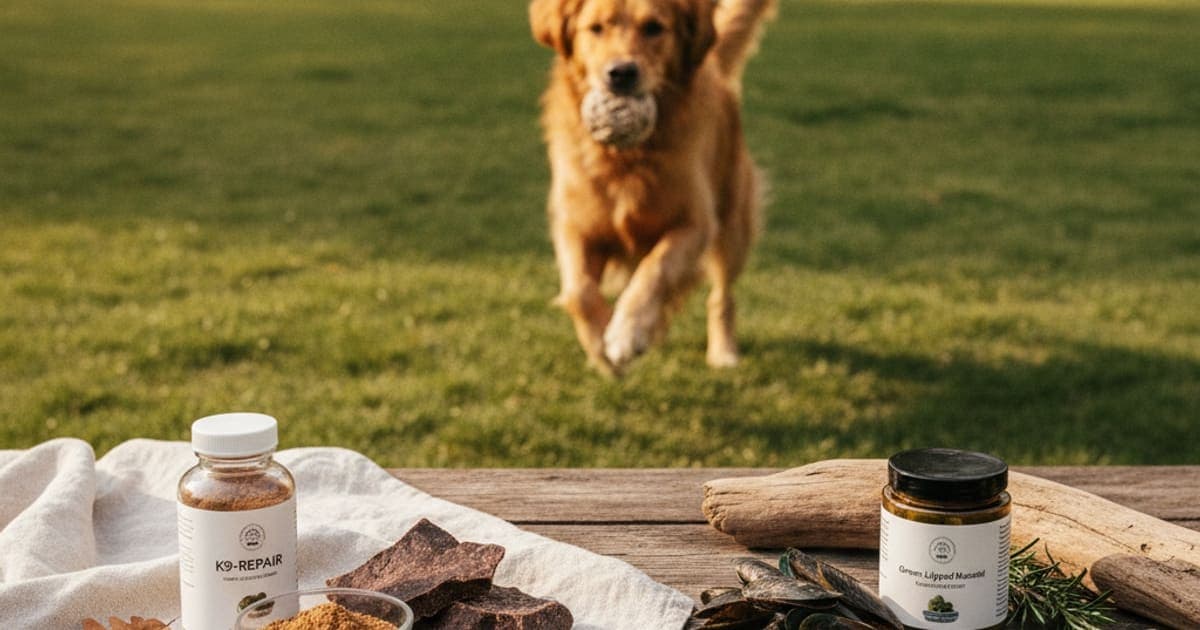 K9-REPAIR vs Green-Lipped Mussel: Which Works Better?For a dog in active tissue repair, K9-REPAIR is the more targeted option, because BPC-157 and TB-500 are studied for their role in the repair process itself. Green-lipped mussel is a nutritional joint supplement built for long-run comfort. They answer different questions, and your veterinarian should shape the plan.Read the guide →
 K9-REPAIR vs Adequan: How the Two Compare for DogsNeither one replaces the other. Adequan is an FDA-approved prescription injection your veterinarian administers for arthritis signs in the joint, while K9-REPAIR is the BPC-157 + TB-500 peptide formulation owners adopt through soft-tissue and mobility recovery. They address different tissue problems, and many owners run them in parallel under veterinary guidance.Read the guide →
 K9-REPAIR vs Prednisone: What Each One Actually DoesK9-REPAIR is not better or worse than prednisone, because the two do entirely different jobs. Prednisone is a prescription corticosteroid a veterinarian uses to suppress inflammation or immune activity. K9-REPAIR is a BPC-157 and TB-500 peptide formulation owners use alongside veterinary care to support the body's own repair signalling.Read the guide →
 A Knee Brace Alternatives for Dogs: 2026 Options ComparedInstead of a knee brace, most dogs are managed with a combination of veterinary diagnosis, surgical stabilization or structured conservative care, rehabilitation, weight control and prescribed pain management. Many owners add a peptide formulation such as K9-REPAIR alongside that plan. Which mix fits your dog depends on the diagnosis your veterinarian makes.Read the guide →
 BPC-157 vs Rimadyl: Which Works Better for Dogs?Neither is better, because they do different jobs. Rimadyl (carprofen) is a prescription NSAID a veterinarian dispenses to control pain and inflammation. BPC-157 is a peptide owners use to support the body's own tissue-repair processes. They answer different questions, and the decision about both belongs with your veterinarian.Read the guide →
 BPC-157 vs Hemp Oil: Which Works Better for Dogs?BPC-157 and hemp oil aren't interchangeable: BPC-157 is a peptide studied for its role in tissue repair signalling and blood vessel formation, while hemp oil is a fatty-acid supplement owners use for general condition and comfort. For a dog recovering from a soft-tissue injury, owners increasingly reach for peptides.Read the guide →
 Curcumin Alternatives for Dogs: 2026 Options ComparedIf curcumin is not doing enough for your dog, the main alternatives are omega-3 fatty acids, green-lipped mussel, undenatured collagen, boswellia, and peptides like BPC-157 and TB-500. Each works through a different mechanism, so the right swap depends on whether you are managing inflammation or supporting tissue recovery.Read the guide →
 K9-REPAIR vs FHO Surgery: Which Works Better?No — FHO surgery and K9-REPAIR are not competing options. An FHO is an orthopedic procedure your veterinary surgeon performs to remove a painful hip joint surface; K9-REPAIR is a BPC-157 and TB-500 peptide formulation owners use alongside veterinary care through the soft-tissue recovery that follows.Read the guide →