What a diagnosis means, how it is confirmed, and the early signs owners miss — from hip dysplasia and IVDD to cruciate tears and arthritis.
 What Makes Muscle Atrophy Worse in Dogs? (Key Drivers)Muscle atrophy in dogs gets worse when a limb stays unused — driven by untreated pain, immobility that continues past what the vet prescribed, skipped rehab, inadequate dietary protein, and unmanaged endocrine or neurologic disease. Each factor removes the mechanical load and building blocks muscle needs to hold its mass.Read the guide →
 Dog Falling Over: What It Usually MeansA dog falling over usually comes from one of four systems: the balance apparatus in the inner ear, the spinal cord and nerves, the joints and muscles that hold him upright, or the heart and blood supply feeding the brain. Sudden falling warrants a same-day veterinary examination.Read the guide →
 Hock Injury in Dogs: Signs, Causes and What HelpsA hock injury in dogs is damage to the tarsus — the ankle-like joint partway up the hind leg — involving its ligaments, tendons, cartilage or bones. It ranges from a mild sprain to a ruptured Achilles tendon or fracture, and usually shows up as hind-limb lameness, swelling, or a dropped stance.Read the guide →
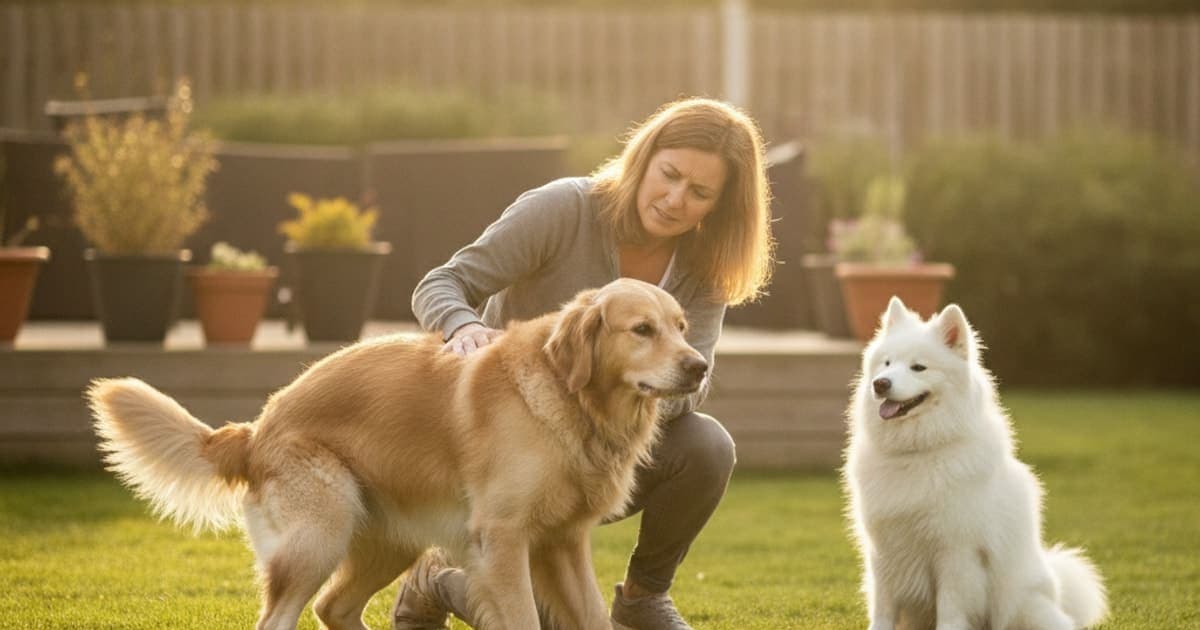 Why Is My Dog Struggling to Squat? (Causes Explained)A dog struggling to squat is usually telling you the posture hurts or that the muscles holding it have weakened. Squatting loads the hips, stifles, lower spine and hind paws at once, so arthritis, cruciate injury, lumbosacral pain or a paw injury often shows up here first. Straining without producing anything points elsewhere.Read the guide →
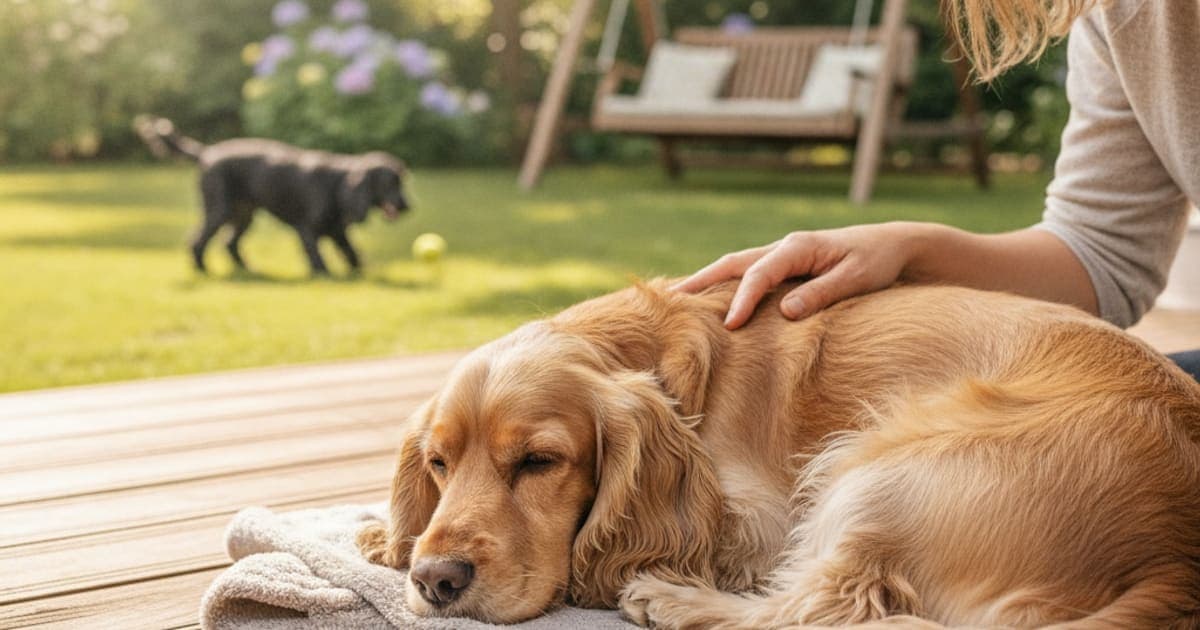 Why Cocker Spaniels Are Prone to Joint ProblemsCocker Spaniels are prone to joint problems because of an inherited tendency toward hip dysplasia and patellar luxation, a compact frame that gains weight easily, and ear and eye conditions that quietly reduce daily activity. Recognising the earliest gait changes gives you the widest range of options.Read the guide →
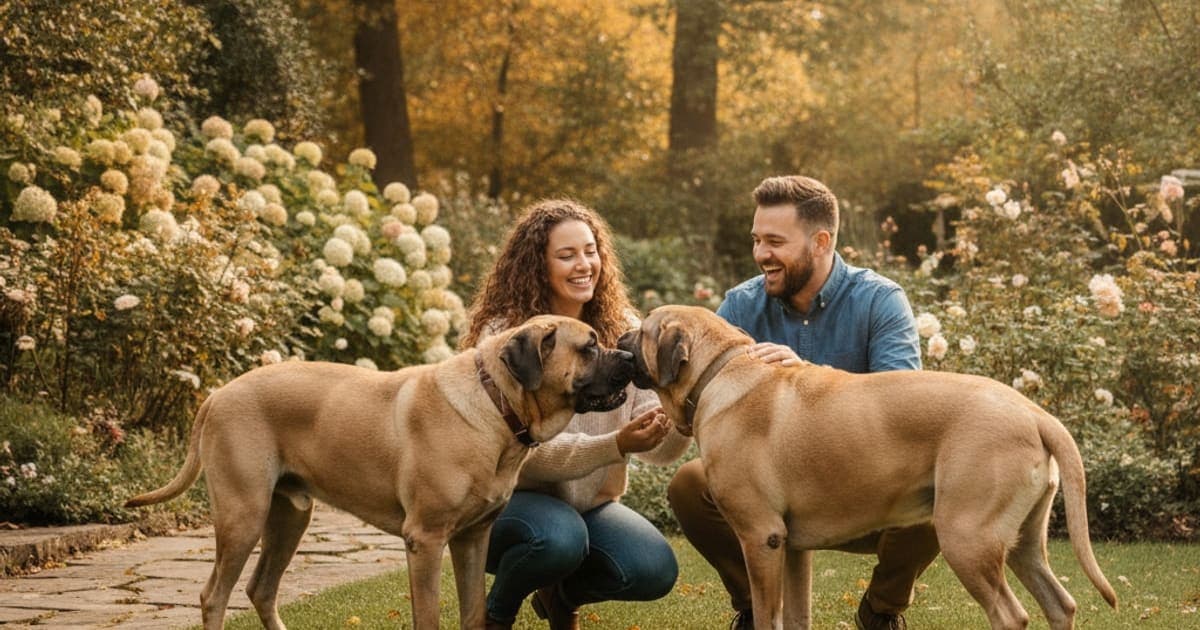 Why Neapolitan Mastiffs Are Prone to Joint ProblemsNeapolitan Mastiffs are prone to joint problems because extreme adult body mass, a growth period that runs well past the first year, and heavy-boned conformation all load the hips, elbows and stifles while cartilage is still immature. That combination makes dysplasia, cruciate injury and osteoarthritis appear earlier and progress faster than in average-sized dogs.Read the guide →
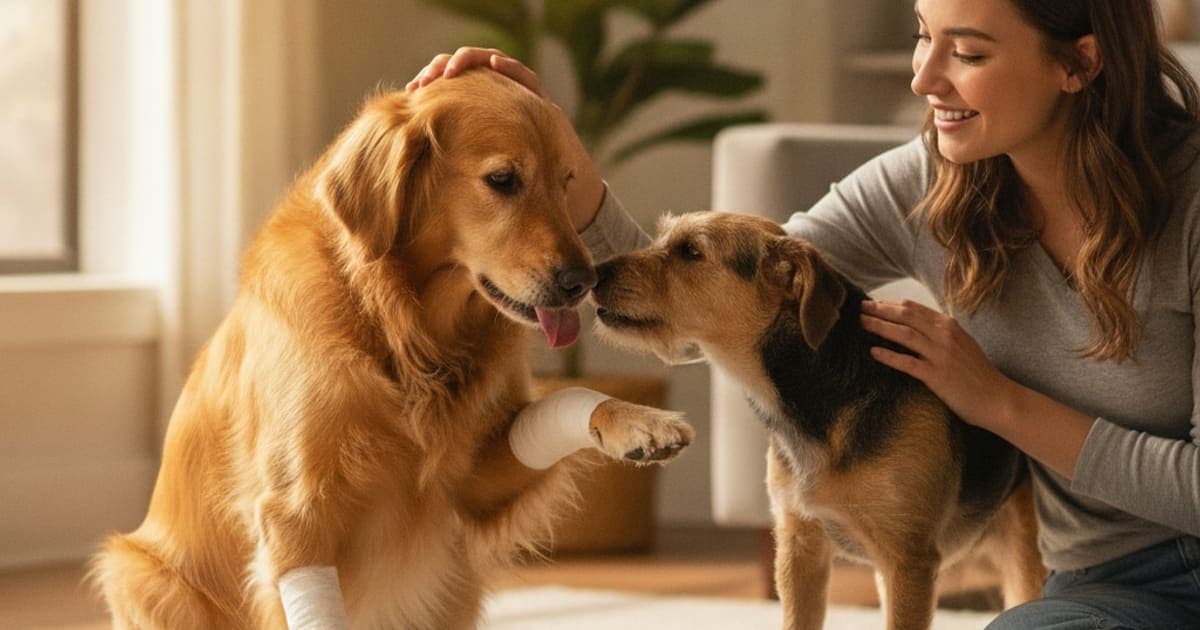 Lick Granuloma in Dogs: Signs, Causes and What HelpsA lick granuloma is a thickened, often ulcerated skin lesion a dog creates by licking one spot repeatedly, usually on a foreleg. The licking injures the skin, the injured skin itches, and the dog licks more. Settling it means finding the trigger and breaking that cycle with veterinary guidance.Read the guide →
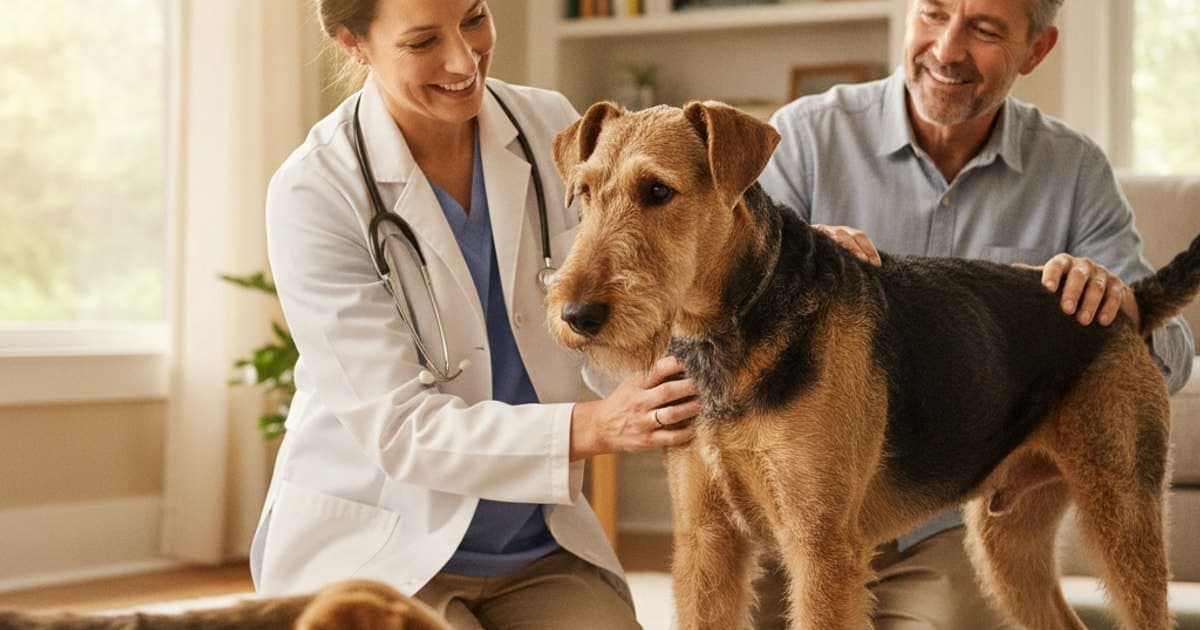 Why Airedale Terriers Are Prone to Joint ProblemsAiredale Terriers are prone to joint problems because a large, densely muscled working build loads hips, elbows, stifles and shoulders hard, and the breed carries inherited hip dysplasia risk. Add high drive, hard stops and turns, and extra weight, and cartilage and ligaments take repeated strain over years.Read the guide →
 Muscle Tear in Dogs: Signs, Causes and What HelpsA muscle tear in dogs is a partial or complete disruption of muscle fibres, usually caused by sudden acceleration, twisting or a slip. Common signs include a sudden yelp, a limp that eases with rest and returns with activity, plus heat, swelling and focal pain over the affected muscle.Read the guide →
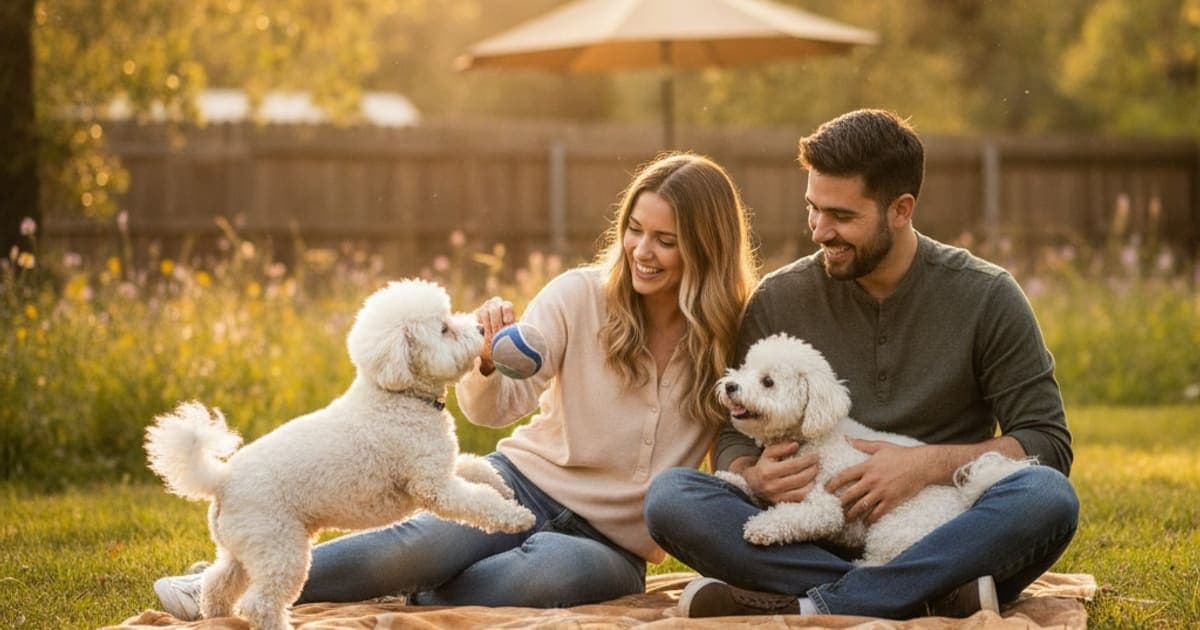 Why Bichon Frises Are Prone to Joint ProblemsBichon Frises are prone to joint problems because their small frame combines a shallow kneecap groove, fine bones and a femoral head vulnerable to blood-supply disease, with a dense coat that hides early stiffness. Patellar luxation, hip dysplasia and cruciate strain are the issues owners see most.Read the guide →
 Spinal Injury in Dogs: Signs, Causes and What HelpsSpinal injury in dogs is damage to the spinal cord, the vertebrae around it, or the discs and ligaments between them. It can arrive suddenly from a ruptured disc or trauma, or develop slowly through degeneration. Signs range from reluctance to jump to sudden hind-limb weakness or paralysis.Read the guide →
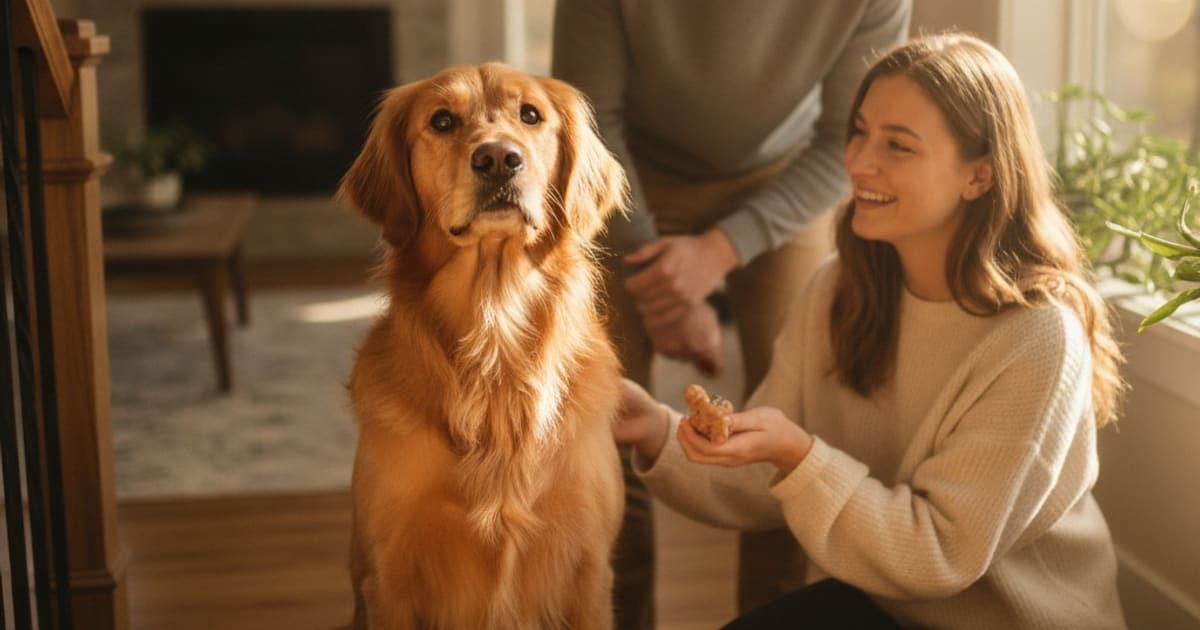 Dog Reluctant To Go Up Stairs: What It Usually MeansA dog reluctant to go up stairs is usually telling you that something hurts or feels unstable. Stairs load the hips, stifles and lower spine far harder than flat ground, so arthritis, cruciate injury, spinal pain and soft-tissue strains surface there first. Traction, weakness and fear also contribute.Read the guide →
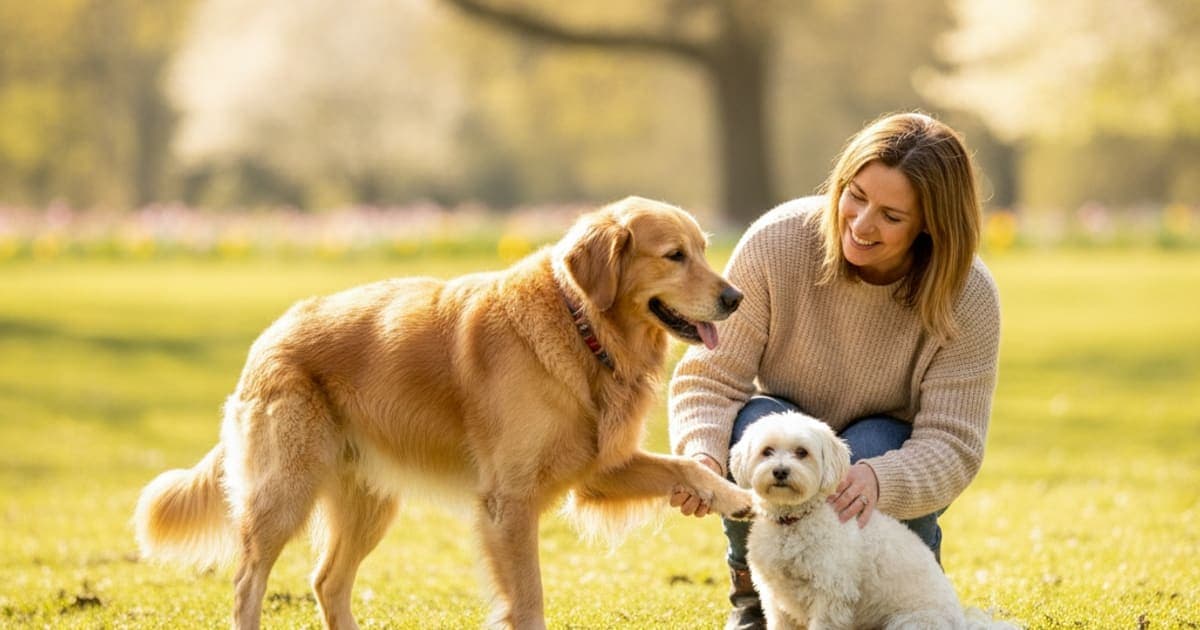 Dog Shifting Weight Off One Leg: What It MeansA dog shifting weight off one leg is almost always offloading pain in that limb. Cruciate strain, elbow or hip arthritis, a paw or nail injury, and soft-tissue damage are the usual reasons. Offloading often appears before a visible limp, which makes it worth a veterinary exam rather than a wait-and-see week.Read the guide →
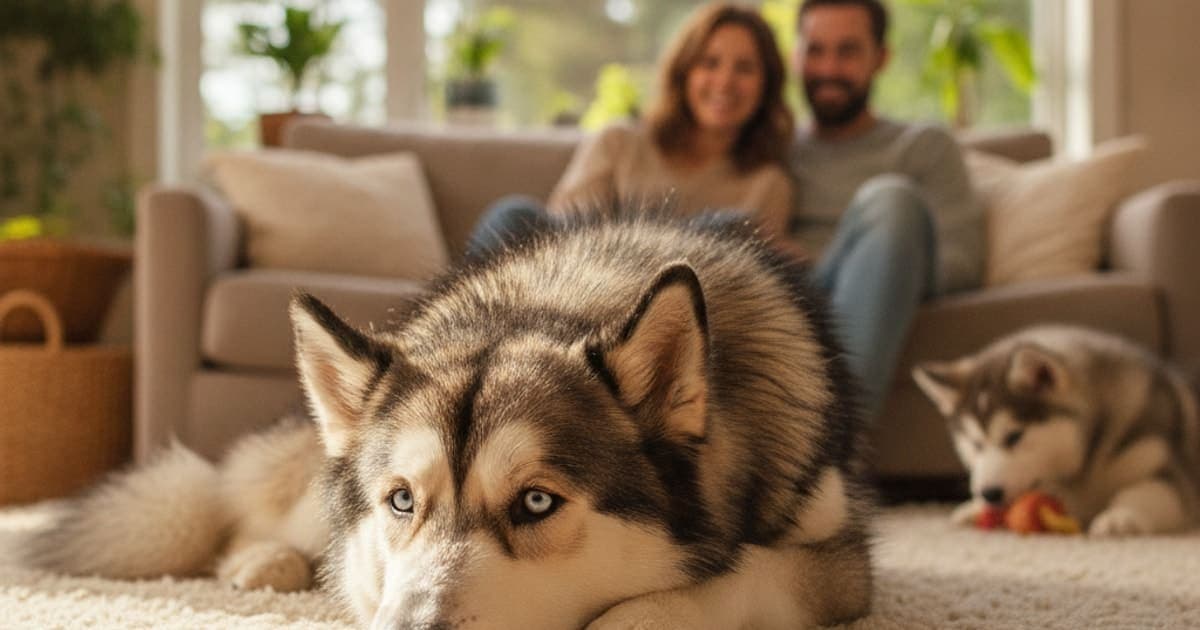 Why Alaskan Malamutes Are Prone to Joint ProblemsAlaskan Malamutes are prone to joint problems because a heavy, densely boned freighting frame loads the hips, elbows and stifles harder than most breeds, and inherited hip and elbow dysplasia run in the population. Fast puppy growth, extra body weight and a stoic pain response compound the risk.Read the guide →
 Shoulder OCD in Dogs: Signs, Causes and What HelpsShoulder OCD in dogs is osteochondritis dissecans — a developmental defect where a piece of cartilage on the humeral head fails to bond to the bone beneath it and separates. It usually appears in large, fast-growing dogs and shows up as front-limb lameness that worsens after exercise.Read the guide →
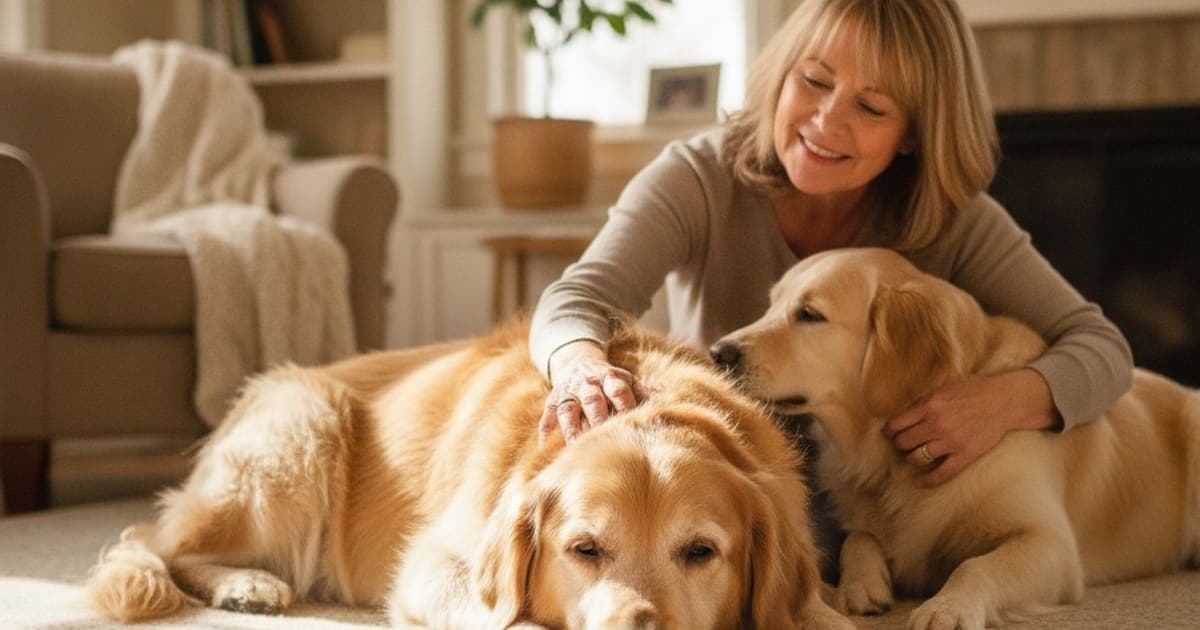 Why Golden Retrievers Are Prone to Joint ProblemsGolden Retrievers are prone to joint problems because of a narrow genetic pool that concentrates hip and elbow dysplasia, a fast-growing large-breed frame, and a body built for repetitive retrieving work. Add typical weight gain and the load on hips, elbows and cruciate ligaments climbs across a long life.Read the guide →
 Gastritis in Dogs: Signs, Causes and What HelpsGastritis in dogs is inflammation of the stomach lining, most often causing vomiting, reduced appetite, lip-licking and lethargy. Acute cases frequently follow dietary indiscretion, while chronic gastritis points to food sensitivity, parasites, medication effects or underlying disease. Diagnosis and the treatment plan belong to your veterinarian.Read the guide →
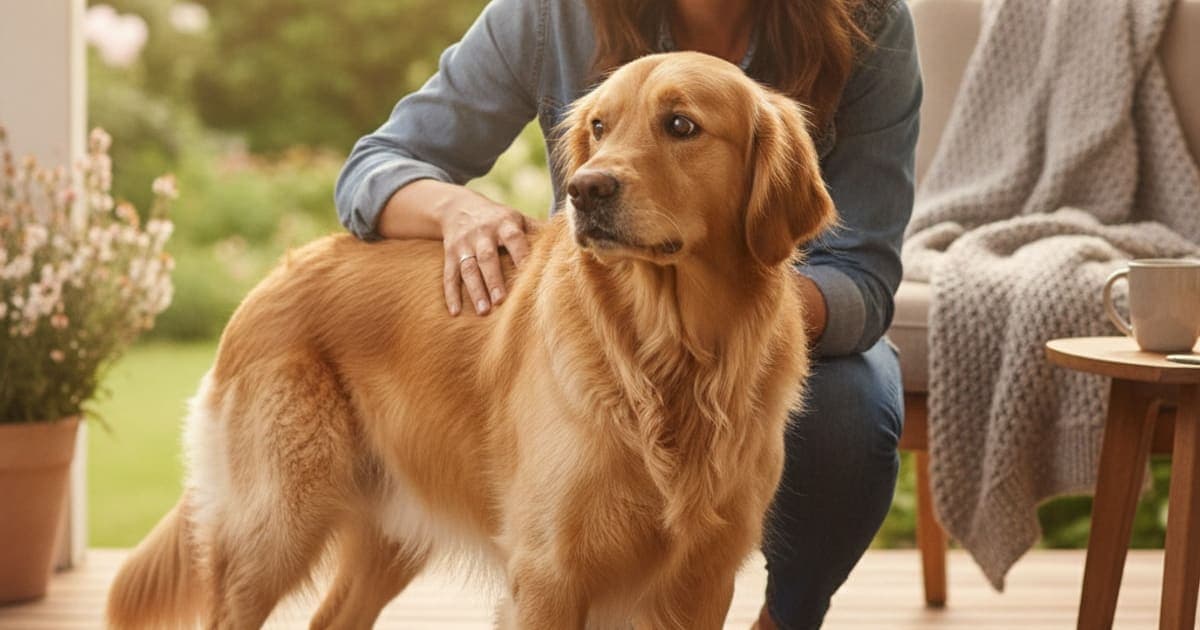 Why Is My Dog Irritable When Handled? (Pain Signals)A dog who becomes irritable when handled is usually signalling that touch hurts, feels unsafe, or arrives without warning. Joint, spine, ear, dental and abdominal pain are the most common causes, with fear, sensory decline and cognitive change explaining much of the rest. Any sudden change deserves a veterinary exam.Read the guide →
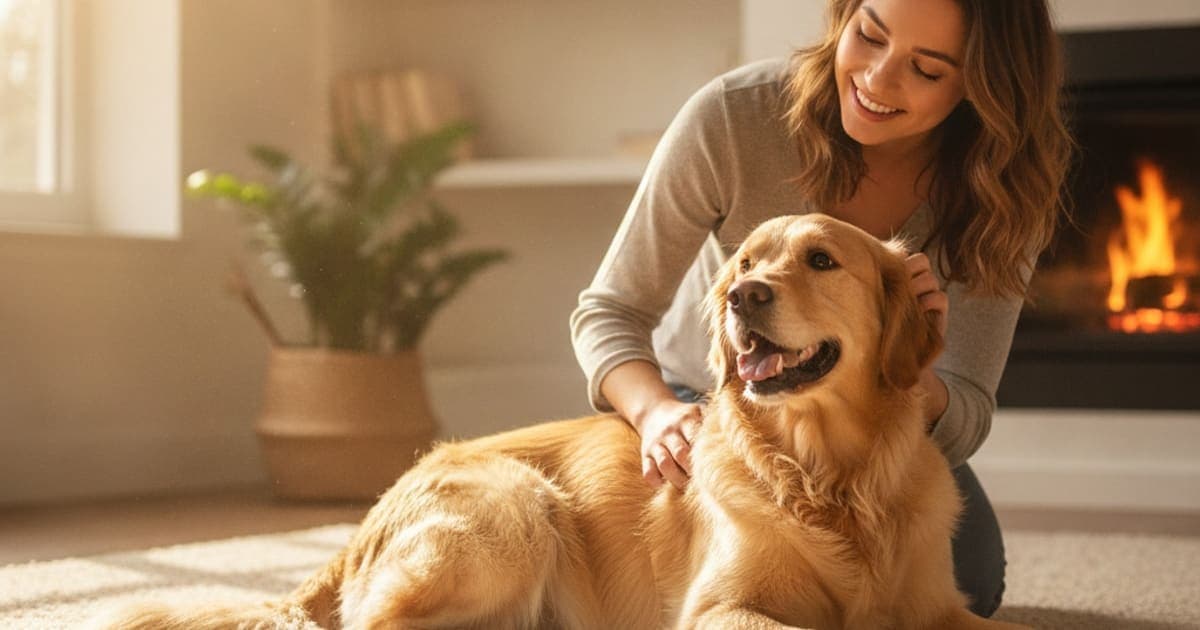 Shoulder Instability in Dogs: Signs, Causes and What HelpsShoulder instability in dogs is excessive looseness in the shoulder joint, caused by stretched, torn or degenerated medial support structures — the glenohumeral ligament and subscapularis tendon. It usually shows up as subtle, intermittent front-leg lameness that worsens after exercise and improves with rest, most often in active, medium-to-large adult dogs.Read the guide →
 Partial CCL Tear in Dogs: Signs, Causes and What HelpsA partial CCL tear in dogs is an incomplete rupture of the cranial cruciate ligament, the band that stops the shin bone sliding forward under the thigh bone. Some fibres still hold, so lameness is often subtle and intermittent — which is exactly why it gets missed early.Read the guide →
 Osteochondritis Dissecans in Dogs: Signs & What HelpsOsteochondritis dissecans in dogs is a developmental joint disease in which a piece of cartilage, and often the bone beneath it, fails to form properly and separates from the joint surface. It usually appears in large, fast-growing young dogs and causes lameness, stiffness and pain that needs veterinary assessment.Read the guide →
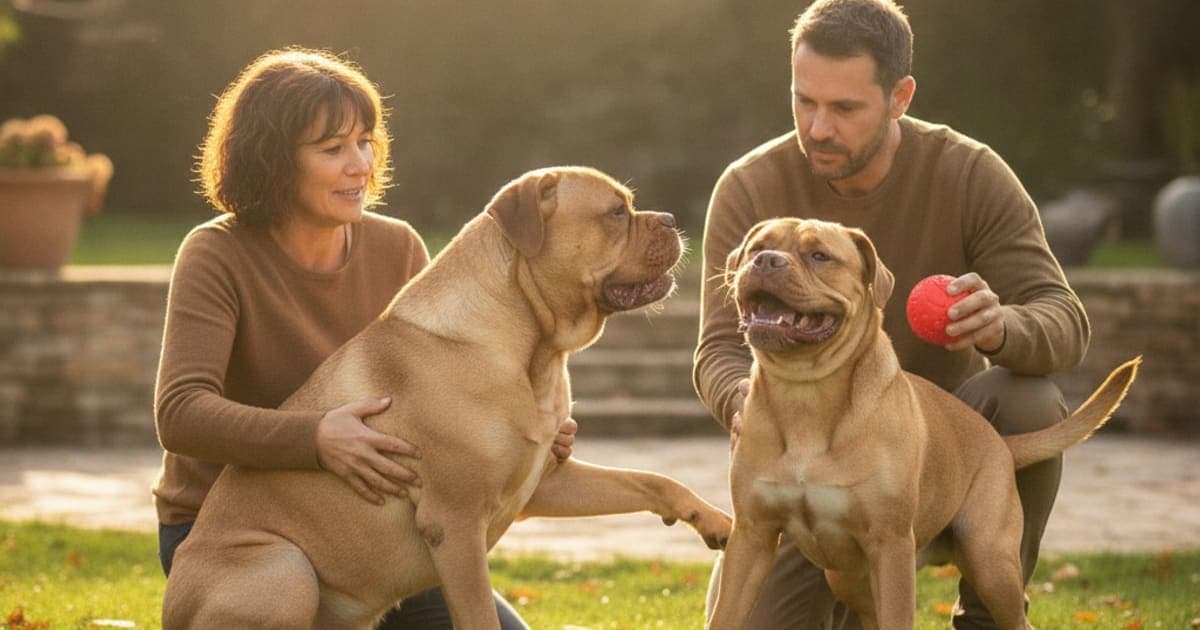 Why Dogues de Bordeaux Are Prone to Joint ProblemsDogues de Bordeaux are prone to joint problems because extreme body mass sits on a front-heavy, short-legged frame, growth plates stay open longer than in smaller dogs, and hip and elbow dysplasia run high in the breed population. Weight control, sane exercise and early veterinary screening matter most.Read the guide →
 Osteoarthritis in Dogs: Signs, Causes and What HelpsOsteoarthritis in dogs is a progressive whole-joint disease in which cartilage breaks down faster than the body maintains it, the joint lining inflames, and bone remodels at the margins. It shows up as stiffness after rest, reluctance on stairs, shortened stride and lost muscle, and it is managed rather than undone.Read the guide →
 Leaky Gut in Dogs: Signs, Causes and What HelpsLeaky gut in dogs describes increased intestinal permeability — the intestinal lining becomes less selective, allowing substances that belong in the digestive tract to cross into the bloodstream. It is a description of barrier function rather than a standalone diagnosis, and it usually reflects an underlying issue your veterinarian should investigate.Read the guide →