What a diagnosis means, how it is confirmed, and the early signs owners miss — from hip dysplasia and IVDD to cruciate tears and arthritis.
 Is Osteochondritis Dissecans in Dogs Painful? (Pain Signs)Yes. Osteochondritis dissecans is painful for dogs because a flap of joint cartilage separates and exposes nerve-rich bone underneath, while loose fragments irritate the joint lining. Pain usually shows as limping after rest, reluctance to jump, or a shortened stride in a young, fast-growing large-breed dog.Read the guide →
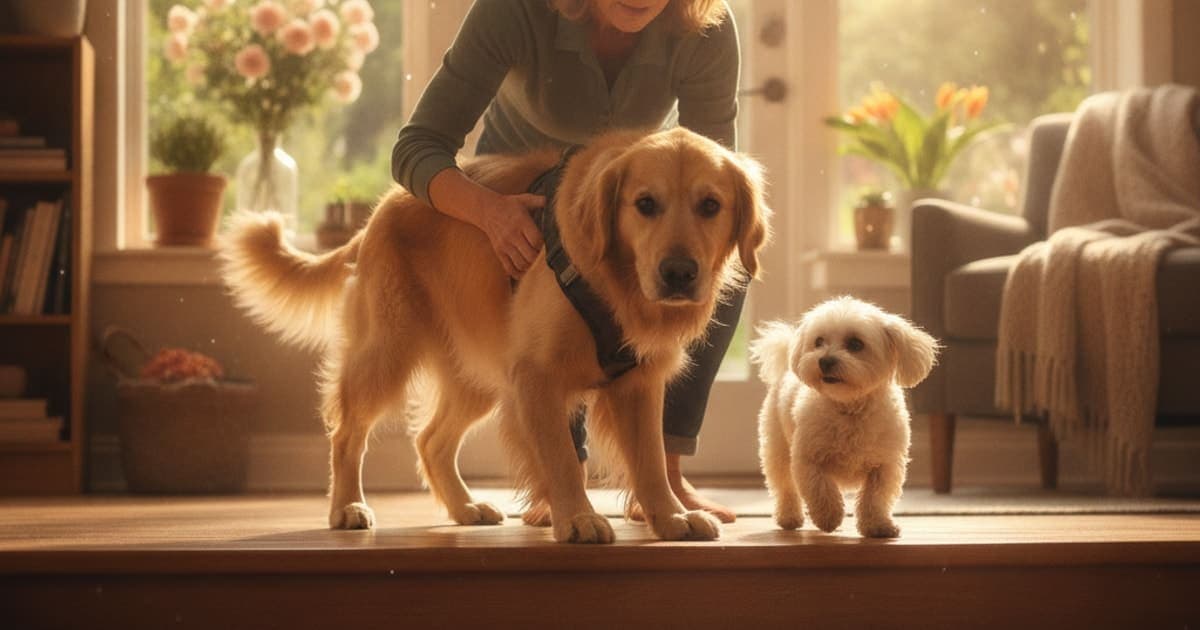 Should I Worry if My Dog Is Having Trouble With Stairs?Yes, trouble with stairs is worth taking seriously. Stairs load a dog's hips, stifles, shoulders and spine far harder than flat ground, so hesitating, skipping steps or refusing them usually signals pain, weakness or a neurological change rather than simple aging. Book a veterinary exam and describe exactly when the difficulty appears.Read the guide →
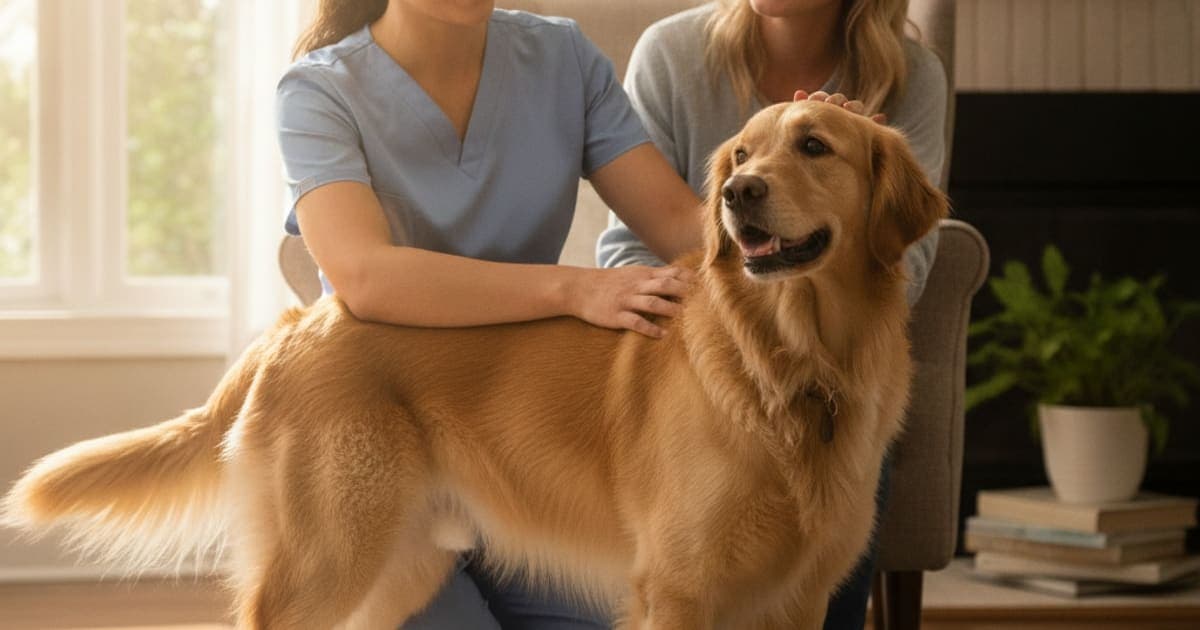 Is Bicipital Tenosynovitis in Dogs Painful? (Signs & Care)Yes — bicipital tenosynovitis in dogs is genuinely painful. The biceps tendon and its synovial sheath sit in a bony groove at the front of the shoulder, and inflammation there is compressed and irritated with every stride, producing a lameness that typically worsens after exercise and stiffens after rest.Read the guide →
 What Are the First Signs of Disc Herniation in Dogs? (IVDD)The first signs of disc herniation in dogs are usually subtle: reluctance to jump or use stairs, a hunched or tense back, yelping when picked up, shivering, and a slow or wobbly gait. Signs can progress within hours, so a same-day veterinary exam matters. Loss of coordination or dragging paws is an emergency.Read the guide →
 Should I Worry if My Dog Is Whining at Night? (Causes)Sometimes, yes. Occasional night whining is often a full bladder, boredom or a shifted routine. But whining that is new, escalating, or paired with pacing, panting, stiffness on rising or difficulty settling usually points to pain, cognitive change or illness — a pattern that deserves a veterinary exam rather than another night of waiting.Read the guide →
 What Are the First Signs of Hip Dysplasia in Dogs?The first signs of hip dysplasia in dogs are usually movement changes rather than obvious pain: a bunny-hop gait, stiffness after rest that eases with walking, hesitation before jumping, a narrow swaying back end, and weight shifted onto the front legs. Limping often appears much later, once arthritis sets in.Read the guide →
 Should I Worry If My Dog Is Intermittent Limping?Yes — intermittent limping deserves attention. A limp that comes and goes usually means a low-grade problem that flares with activity, such as a partial cruciate tear, early arthritis, or a soft-tissue strain. It rarely resolves on its own, so book a veterinary exam rather than waiting it out.Read the guide →
 Is Shoulder OCD in Dogs Painful? (What Owners Notice)Yes — shoulder OCD in dogs is painful. A flap of cartilage separates from the head of the humerus and exposes richly innervated bone inside the joint, which produces lameness, stiffness after rest, and pain when the shoulder is flexed or extended. Severity ranges from subtle to obvious.Read the guide →
 Is Chronic Diarrhea in Dogs Painful? (What to Watch For)Chronic diarrhea in dogs is usually uncomfortable and frequently painful, because inflamed intestine cramps, distends with gas and triggers urgent straining. Most dogs show it through posture and behaviour rather than vocalising — a hunched back, restlessness, a stretched praying position or a sudden reluctance to be touched around the belly.Read the guide →
 Is Hip Arthritis in Dogs Painful? (What Owners Should Know)Yes — hip arthritis in dogs is painful. It is a progressive degenerative joint disease that veterinary pain guidelines classify as a source of chronic pain, and most dogs mask it well. Owners usually notice stiffness, slowing down, or reluctance to jump long before they ever see obvious limping.Read the guide →
 Is Arthritis in Dogs Painful? (What the Pain Feels Like)Yes. Arthritis in dogs is a genuinely painful condition — chronic, inflammatory and progressive — and dogs mask it instinctively, so behaviour rarely matches severity. The pain comes from bone, joint capsule and inflamed synovium rather than cartilage itself. A veterinary exam is how you find out how much your dog hurts.Read the guide →
 Is Cognitive Decline in Dogs Painful? (What Actually Hurts)Cognitive decline in dogs is not painful in itself — brain tissue contains no pain receptors, so the degeneration causing the confusion cannot be felt. What dogs do experience is distress: disorientation, anxiety and broken sleep. The real pain in most senior dogs comes from arthritis, dental disease and other age-related conditions alongside it.Read the guide →
 Is Osteoarthritis in Dogs Painful? (What Owners Miss)Yes. Osteoarthritis in dogs is a painful, progressive joint disease — cartilage wears down, the joint capsule inflames, and pain-sensing nerves in the surrounding tissue fire constantly. Dogs rarely cry out; they slow down, stiffen after rest, and stop jumping. Pain control belongs with your veterinarian.Read the guide →
 Is Panosteitis in Dogs Painful? (What Owners Should Know)Yes. Panosteitis is painful — it is a self-limiting inflammatory bone condition in growing dogs that causes deep, aching lameness that shifts from leg to leg. Pain flares last days to weeks and typically settle as the skeleton matures, but veterinary diagnosis and a proper pain plan still matter.Read the guide →
 Is Reduced Stamina in Dogs Painful? (What It Signals)Reduced stamina is not painful in itself, but it is one of the most common ways dogs show pain. A dog that quits early on walks is often managing joint, muscle or spinal discomfort — though heart, lung, thyroid and blood disorders cause the same picture, so a veterinary workup comes first.Read the guide →
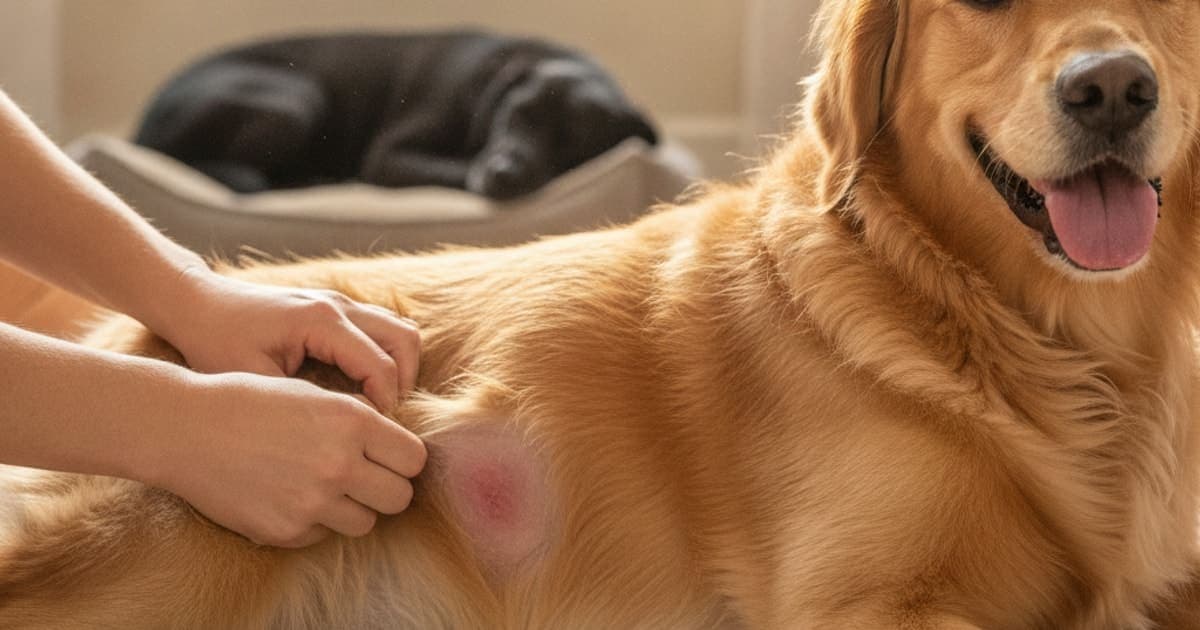 What Are the First Signs of Hot Spots in Dogs? (Early Clues)The first signs of hot spots in dogs are sudden, focused licking or chewing at one spot, a small patch of damp, matted fur, and skin underneath that looks pink or red and feels warm. Odour, hair loss and flinching when touched usually follow within hours, often faster than owners expect.Read the guide →
 Is Luxating Patella in Dogs Painful? (Grades Explained)Often yes, though rarely as a sharp yelp. A kneecap slipping out of its groove usually causes a brief skip, hop or held-up leg. The bigger pain problem is long-term: abnormal tracking wears cartilage and drives arthritis, which is why grade and duration matter more than dramatic reactions.Read the guide →
 Should I Worry if My Dog Has Trouble Getting Up? (Signs)Yes — trouble getting up is worth taking seriously. It is a pain or weakness signal, not normal aging, and most often points to arthritis, hip or elbow disease, a cruciate injury, or soft-tissue strain. Book a veterinary exam, and treat sudden inability to rise as urgent.Read the guide →
 What Are the First Signs of Hind End Weakness in Dogs?The first signs of hind end weakness in dogs are usually subtle: slipping on smooth floors, a slower or wobbly rise from lying down, sitting with one leg out to the side, hesitating at stairs, scuffed rear nails and a swaying rear-leg stance. Most owners notice lost stamina first.Read the guide →
 Is Cauda Equina Syndrome in Dogs Painful? (Nerve Pain)Yes — cauda equina syndrome in dogs is typically painful, and lumbosacral pain is often the earliest sign owners notice. Compression of the nerve roots at the end of the spinal cord produces aching and neuropathic pain that worsens with rising, jumping and stairs. A veterinary diagnosis comes first.Read the guide →
 Is Fibrocartilaginous Embolism in Dogs Painful? (FCE)Fibrocartilaginous embolism in dogs is usually not painful once the initial event has passed. Many dogs cry out at onset, but the damaged spinal cord tissue itself carries no pain receptors, so most dogs stay comfortable on spinal palpation afterward — a key feature vets use to distinguish FCE from disc disease.Read the guide →
 What Are the First Signs of Cognitive Decline in Dogs?The first signs of cognitive decline in dogs are subtle behaviour changes: restless nights with heavier daytime sleeping, brief blank staring at walls or corners, flatter greetings, forgetting long-known cues, new anxiety, and accidents in a house-trained dog. Veterinary behaviourists organise these early changes under the DISHAA framework.Read the guide →
 Is Avulsion Fracture in Dogs Painful? (What to Expect)Yes — an avulsion fracture is painful for dogs, often sharply so. A tendon or ligament tears a fragment of bone away from its attachment, combining a break, a soft-tissue tear and an unstable fragment that muscle pull keeps tugging. Most affected dogs stop bearing weight almost immediately.Read the guide →
 Is Iliopsoas Strain in Dogs Painful? (What Owners See)Yes. Iliopsoas strain is painful in dogs — the injured hip flexor is loaded with every step, stair and jump, so soreness tends to be constant rather than occasional. Most dogs hide it well, showing a shortened stride, reluctance to jump, or a yelp when the leg is extended backward.Read the guide →