
Side effects, drug interactions and the conditions that change what is safe, including when something warrants stopping and asking a vet.
 Is the Wolverine Stack FDA Approved for Dogs? (Explained)No. The Wolverine Stack — the informal name for pairing the peptides BPC-157 and TB-500 — is not an FDA-approved veterinary drug, and no product sold under that name holds an approved new animal drug application. It sits in the supplement category, used alongside veterinary care rather than in place of it.Read the guide →
 Is a Dog Swollen Joint an Emergency? (When to Act Fast)Sometimes. A swollen joint becomes an emergency when it appears suddenly, feels hot, comes with fever or lethargy, or leaves your dog unable to bear weight — those signs can point to infection or trauma needing same-day care. Gradual, mild swelling still warrants a veterinary appointment soon.Read the guide →
 Is a Dog's Trouble Getting Up an Emergency? (Red Flags)Sometimes, yes. Trouble getting up is an emergency when it appears suddenly, when your dog cannot stand at all, or when it arrives with pale gums, a swollen belly, dragging back legs or collapse. Stiffness that has crept in over weeks is rarely a same-day crisis, but it still needs a veterinary exam.Read the guide →
 Should I Worry if My Dog Is Limping but Not in Pain?Yes, a limp is worth taking seriously even when your dog seems comfortable. Dogs instinctively mask discomfort, and an altered gait is itself a pain signal. Most painless-looking limps trace back to joint, tendon or ligament changes that progress quietly, so book a veterinary exam rather than waiting it out.Read the guide →
 Should I Worry If My Dog Has Loss of Balance?Yes — sudden loss of balance in a dog warrants a same-day veterinary exam, because the causes range from an inner-ear problem to a spinal injury or a neurological event. Balance loss is a symptom, not a diagnosis, and the underlying cause determines how urgent it is.Read the guide →
 Should I Worry If My Dog Is Not Wanting to Play?A dog that stops wanting to play is worth investigating, because play is one of the first behaviours dogs drop when they hurt, feel unwell or are exhausted. Occasional quiet days are normal; a change lasting more than a day or two, or paired with limping, appetite loss or lethargy, warrants a veterinary exam.Read the guide →
 Should I Worry If My Dog Is Reluctant to Be Touched?Yes, in most cases it is worth acting on: a dog that pulls away from hands it once welcomed is usually reporting pain rather than a change of mood. Note exactly where the flinching happens, watch for limping or wobbliness, and book a veterinary exam.Read the guide →
 Dog Loss of Appetite With Pain — Should You Worry?Yes — appetite loss combined with signs of pain is worth acting on, because pain severe enough to override a dog's food drive usually has a findable cause. Book a veterinary exam promptly, and treat abdominal distension, pale gums, collapse or unproductive retching as an emergency rather than a wait-and-see situation.Read the guide →
 Should I Worry If My Dog Is Stiff After Swimming?Usually not. Mild stiffness for a few hours after a long swim is normal muscle fatigue, because swimming loads muscles your dog rarely uses on land. Worry if the stiffness lasts beyond a day, if your dog won't bear weight on a leg, or if the tail hangs limp.Read the guide →
 Dog Sitting With a Leg Out to the Side: Should You Worry?Sometimes, yes. In a puppy, sitting with a leg kicked out to the side is usually loose joints and a growing skeleton. In an adult dog who used to sit square, it is one of the earliest signals of hip, knee or lower-back discomfort and deserves a veterinary exam.Read the guide →
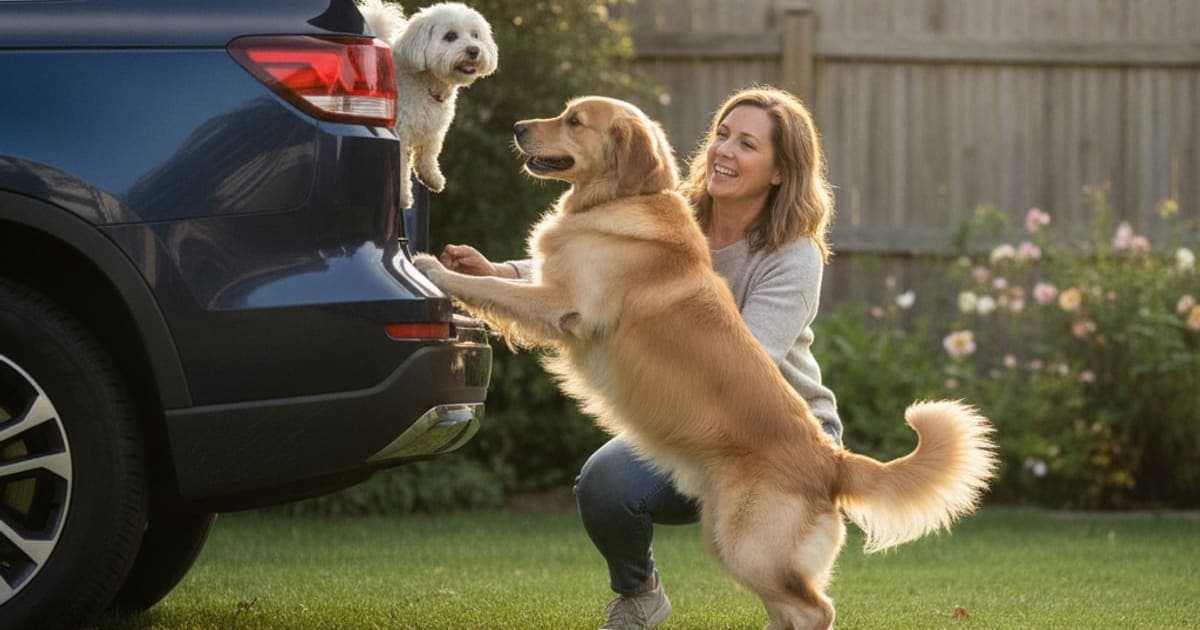 Should I Worry If My Dog Has Trouble Jumping in the Car?Yes, it is worth taking seriously, though it is rarely an emergency. Hesitation at the tailgate is one of the earliest visible signs of joint, tendon or spinal discomfort, because jumping loads the hips, stifles and lower back harder than almost anything else a dog does. Book a veterinary exam.Read the guide →
 Is a Dog Stiff After Resting an Emergency? (When to Act)Usually not. A dog that is stiff after resting but loosens up within a few minutes of gentle movement is showing a common joint or soft-tissue pattern rather than a crisis. It becomes an emergency when your dog cannot rise, drags a limb, cries out, or collapses suddenly.Read the guide →
 Should I Worry If My Dog Is Losing Muscle in Back Legs?Yes — muscle loss in a dog's back legs is worth a veterinary appointment, because it is a symptom rather than a diagnosis. It usually reflects pain, disuse, nerve involvement or age-related sarcopenia. It rarely resolves on its own, and the underlying cause determines everything that follows.Read the guide →
 Should I Worry If My Dog Licks a Paw Constantly?Constant paw licking is worth investigating — it is a symptom, not a habit. Dogs lick a single paw persistently because of allergy, infection, a foreign body, or pain in the foot or the limb above it. Sudden, focused licking on one paw warrants a veterinary exam.Read the guide →
 Is a Dog's Uneven Gait an Emergency? (Red Flags)Sometimes. A dog that suddenly won't bear weight, drags a paw, cries out, or moves unevenly after trauma needs same-day veterinary attention. A mild, intermittent unevenness that improves with rest is usually urgent-this-week rather than urgent-tonight — but both deserve a proper veterinary examination before you decide how to manage it.Read the guide →
 Should I Worry If My Dog Won't Put Weight on a Leg?Yes — treat it as urgent. A dog that will not bear weight on a leg is signalling pain severe enough to make the limb unusable, which points to fracture, ligament or tendon injury, joint disease or infection. Book a veterinary exam the same day rather than waiting it out.Read the guide →
 Should I Worry If My Dog Is Crying Out in Pain? (Yes)Yes — you should take it seriously. Dogs instinctively mask discomfort, so a yelp, whimper or cry usually means pain has crossed a threshold they can no longer hide. Book a same-day veterinary assessment, especially if the sound repeats, follows movement, or comes with limping, trembling or a changed posture.Read the guide →
 Should I Worry If My Dog Is Scuffing Back Nails?Yes — worn or scuffed back nails are worth taking seriously, because they usually mean the rear paws aren't fully clearing the ground. That points to a nerve, spinal or orthopedic issue rather than a nail problem. Book a veterinary exam, and seek same-day care if weakness appeared suddenly.Read the guide →
 Is a Dog Wobbly Back End an Emergency? (When to Act)Sometimes, yes. A back end that turns wobbly suddenly — over minutes or hours — is a veterinary emergency, particularly alongside pain, dragging paws, loss of bladder control or collapse. Wobbliness that develops slowly over weeks is less urgent but still needs a prompt veterinary exam to identify the cause.Read the guide →
 Is a Dog Warm Joint an Emergency? (When to Call a Vet)Sometimes. A joint that is warm plus swollen, painful, or paired with fever, refusal to bear weight, or sudden collapse warrants same-day veterinary care, because septic arthritis and immune-mediated disease escalate fast. Mild warmth after hard exercise, without other signs, is usually monitored and discussed at your next appointment.Read the guide →
 Should I Worry If My Dog Is Sore After Hiking? (Red Flags)Usually not. Mild stiffness after a long or hard hike is normal muscle soreness and typically eases within a day or two of easy rest. Worry, and call your veterinarian, if your dog limps on one leg, yelps when touched, refuses to bear weight, or is no better by day three.Read the guide →
 Should I Worry If My Dog Is Slipping on Hard Floors?Sometimes, yes. An occasional skid on tile or hardwood is normal, but a dog that slips repeatedly, splays its legs, hesitates before crossing a room or struggles to stand is showing a change in strength, joint comfort or coordination. That pattern deserves a veterinary exam rather than a rug.Read the guide →
 Is a Dog Reluctant to Be Touched an Emergency?Sometimes. A dog that suddenly refuses to be touched is reporting pain, and when that comes with collapse, a hard or swollen belly, hind-limb weakness, laboured breathing or pale gums, treat it as a same-day emergency. Gradual soreness in one spot is urgent but usually not immediate — book a vet visit.Read the guide →
 Is Trouble Jumping in the Car an Emergency for Dogs?Usually not an emergency, but never nothing. Trouble jumping into the car is most often the first visible sign of a slowly building joint, spine or soft tissue problem. It becomes urgent when it appears suddenly or comes with dragging paws, collapse, crying out, or a leg your dog refuses to use.Read the guide →