
Side effects, drug interactions and the conditions that change what is safe, including when something warrants stopping and asking a vet.
 K9-REPAIR and NSAID Safety: What Owners Should KnowNSAIDs and peptides work through separate biological systems: NSAIDs suppress the prostaglandin inflammatory cascade, while BPC-157 and TB-500 are signaling peptides studied in tissue repair. K9-REPAIR is the stack many owners run alongside a vet-prescribed anti-inflammatory, never instead of it. Because no interaction data exists for this pairing, tell your veterinarian.Read the guide →
 TB-500 Safety With Gabapentin for Dogs — What to KnowTB-500 and gabapentin act on entirely different systems — gabapentin quiets nerve-pain signalling, while TB-500 is a peptide owners use to support tissue repair — so no interaction between them is described in the veterinary literature. That is not the same as clearance for your dog, so tell your veterinarian everything your dog takes.Read the guide →
 TB-500 and Heart Safety: What Dog Owners Need to KnowThere is no published evidence that TB-500 harms the canine heart, and the cardiac research on its parent molecule, thymosin beta-4, has studied it as a repair signal rather than a risk. TB-500 is not an FDA-approved veterinary drug, so dogs with heart disease need veterinary clearance first.Read the guide →
 K9-REPAIR and Drug Interactions: What Owners Should KnowNo interaction profile has been established between the peptides in K9-REPAIR and common canine medications, because formal interaction studies in dogs have not been published. What that means practically is that disclosure matters more than a list: your veterinarian needs to know every product your dog receives so the whole recovery plan is monitored together.Read the guide →
 K9-REPAIR Side Effects: What Dog Owners Should KnowK9-REPAIR contains BPC-157 and TB-500, and what owners most often report is uneventful — occasionally softer stool, a sleepier dog for a day or two, or a small appetite shift early on. Reports of serious reactions are uncommon, but certain dogs warrant a veterinary conversation before the first dose.Read the guide →
 TB-500 and NSAIDs for Dogs: What Owners Should KnowTB-500 and NSAIDs such as carprofen act through different pathways, and owners typically use peptide support alongside a vet-prescribed anti-inflammatory rather than instead of it. Because both touch inflammation and tissue repair, tell your veterinarian everything your dog receives so timing and monitoring can be coordinated properly.Read the guide →
 Wolverine Stack Liver Safety for Dogs — What to KnowThe Wolverine Stack is owner shorthand for BPC-157 combined with TB-500. Peptides are broken down by peptidases into amino acids rather than routed through the liver enzyme pathways that handle most oral drugs, but they are not FDA-approved veterinary products — baseline bloodwork and veterinary oversight still decide what is appropriate for your dog.Read the guide →
 BPC-157 and Liver Safety for Dogs: What to KnowThere is no published evidence that BPC-157 causes liver injury in dogs; as a fifteen-amino-acid peptide it is broken down by peptidases rather than processed like a small-molecule drug. BPC-157 is not FDA-approved, so review it — and your dog's liver bloodwork — with your veterinarian.Read the guide →
 The Wolverine Stack and Dogs With Cushing's: What to KnowThe wolverine stack is BPC-157 combined with TB-500, the two peptides in pawgen's K9-REPAIR. For a dog with Cushing's disease, cortisol control and monitoring belong entirely to your veterinarian; peptides are educational, non-FDA-approved support that owners discuss with their vet before adding anything to an endocrine plan.Read the guide →
 Is K9-REPAIR FDA Approved? (What Owners Should Know)K9-REPAIR is not an FDA-approved veterinary drug. BPC-157 and TB-500 have no FDA approval for use in dogs, so pawgen treats every claim as educational and points dosing decisions to your veterinarian. What owners can verify instead is composition, third-party testing and certificates of analysis.Read the guide →
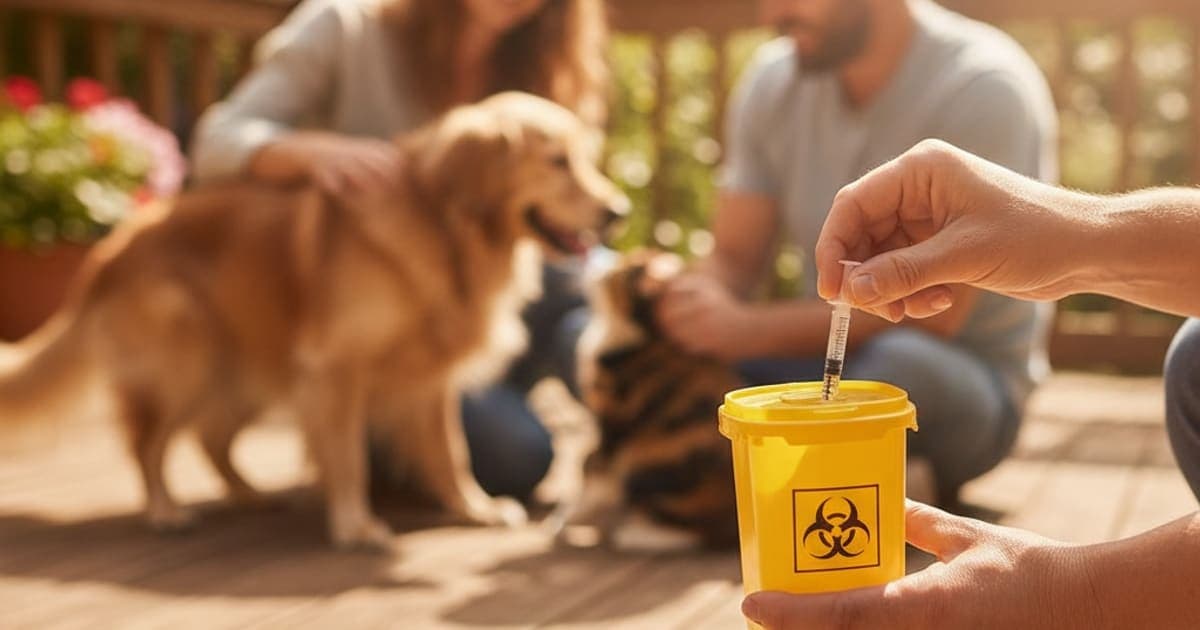 Wolverine Stack: Disposing of Needles for Dogs SafelyUsed needles from your dog's Wolverine Stack go straight into a rigid, puncture-resistant sharps container - no recapping, no household trash, no recycling bin. When the container reaches its fill line, seal it permanently and hand it to an approved sharps collection route in your area, then confirm local rules with your veterinarian.Read the guide →
 BPC-157 and Dogs With Epilepsy: Safety BasicsIf your dog has epilepsy, BPC-157 is a decision to make with your veterinarian rather than around them. It is not an FDA-approved veterinary drug, and there is no published interaction data specific to BPC-157 and canine anticonvulsants. Disclosure and monitoring come before anything new goes in the bowl.Read the guide →
 BPC-157 Drug Interactions for Dogs: What to KnowNo formal drug-interaction studies for BPC-157 in dogs have been published, so there is no verified interaction list. Because peptides are broken down by peptidases rather than liver enzyme systems, the practical concerns are overlapping effects, activity during restricted recovery, and conditions needing tight monitoring — all reasons to loop in your veterinarian.Read the guide →
 K9-REPAIR and Heart Safety: What Owners Should KnowK9-REPAIR is a BPC-157 and TB-500 peptide formulation made for canine joint, tendon and mobility recovery — not a cardiac product, and it makes no heart claims. If your dog has a murmur, diagnosed heart disease or is on cardiac medication, review the label and COA with your veterinarian before starting.Read the guide →
 The Wolverine Stack Not Working? 7 Reasons WhyThe Wolverine Stack — BPC-157 plus TB-500 — usually looks like it is not working for one of seven reasons: too little elapsed time, peptide degraded by poor handling, an amount not scaled to the dog, inconsistent administration, an undiagnosed mechanical problem, too much activity, or a low-quality product. Most are fixable with your veterinarian.Read the guide →
 BPC-157 and NSAIDs for Dogs — What Owners Should KnowBPC-157 and NSAIDs like carprofen act through different pathways, and owners commonly use peptide support alongside a prescribed anti-inflammatory rather than instead of it. Never stop or reduce a prescription on your own — your veterinarian owns that decision. Research suggests BPC-157 may support tissue repair signalling; NSAIDs manage pain and inflammation.Read the guide →
 BPC-157 Long Term Safety for Dogs — What to KnowBPC-157 has no long-term controlled trials in dogs, and it is not an FDA-approved veterinary drug; what exists is a broad preclinical literature reporting good tolerance plus owner experience. Long-run safety depends mostly on purity, weight-matched dosing and veterinary oversight — the three things an owner can actually verify.Read the guide →
 K9-REPAIR and Pregnant Dogs: What Owners Need to KnowPregnancy and nursing are life stages where every supplement decision, including K9-REPAIR, belongs to your veterinarian. pawgen's BPC-157 and TB-500 formulation is built for joint, tendon and mobility recovery in dogs, and no dosing guidance exists for pregnant or nursing dams — that conversation happens with your vet.Read the guide →
 The Wolverine Stack and Dogs With Epilepsy: SafetyThe Wolverine Stack — BPC-157 plus TB-500 — is a soft-tissue and mobility support pairing, not a seizure intervention, so for a dog with epilepsy it never replaces anticonvulsant medication. Research suggests these peptides act on tissue repair pathways, and the decision to add anything belongs with your veterinarian.Read the guide →
 TB-500 and Steroids for Dogs: What Owners Should KnowThere is no published interaction data on TB-500 given alongside corticosteroids in dogs, so the decision belongs to your veterinarian. Steroids like prednisone deliberately damp inflammation, which touches the same repair processes TB-500 is studied for. Never stop a prescribed steroid to start a peptide — raise the timing question instead.Read the guide →
 BPC-157 Needle Disposal for Dogs: Safe Sharps StepsUsed BPC-157 needles belong in a rigid, puncture-resistant, lidded sharps container the moment they leave your dog's skin - never recapped, never dropped loose in household trash or recycling. When the container is about three-quarters full, seal it and take it to an approved local sharps collection route.Read the guide →
 K9-REPAIR: What To Do If Your Dog ReactsIf your dog reacts to K9-REPAIR, pause the next dose, write down exactly what you saw and when it began, and contact your veterinarian before changing anything else. Mild, short-lived signs such as site tenderness or one soft stool differ from urgent ones like facial swelling, hives or laboured breathing, which need emergency care.Read the guide →
 K9-REPAIR Overdose Risk: What Owners Should KnowK9-REPAIR is dosed by body weight, and there is no mechanistic reason a larger serving would do more — signaling peptides like BPC-157 and TB-500 act through pathways that saturate rather than scale. Follow the supplied weight-based guidance, never improvise upward, and call your veterinarian if your dog gets extra.Read the guide →
 TB-500 Handling and Hygiene for Dogs — Safe PracticesTB-500 handling and hygiene for dogs comes down to four habits: refrigerate the vial and keep it out of light, disinfect the stopper before every draw, use a new sterile needle and syringe each time, and dispose of sharps in a proper container. Your veterinarian should guide the plan.Read the guide →