Side effects, drug interactions and the conditions that change what is safe, including when something warrants stopping and asking a vet.
 When to Take a Dog to the Vet for Front Leg LimpingTake your dog to the vet the same day if a front-leg limp follows a fall, if the leg carries no weight, or if you see swelling, an open wound, a dangling limb or obvious pain. A mild limp that has not cleared within 48 hours also warrants an exam.Read the guide →
 Why Vizslas Are Prone to Joint Problems (Breed Risks)Vizslas are prone to joint problems because they combine an inherited risk of hip and elbow dysplasia with an extreme working drive in a light, fast frame. That mix loads cartilage, tendons and ligaments hard, and the damage often shows up as soft-tissue strain long before arthritis appears.Read the guide →
 Havanese Joint Problems — Why This Breed Is at RiskHavanese are prone to joint problems because the breed pairs a light-boned, long-backed frame with low-set legs, shallow kneecap grooves and a long, active lifespan. That combination concentrates load on the knees, hips and mid-spine, which is why patellar luxation, hip laxity and disc disease appear more often in this breed than its size suggests.Read the guide →
 Why Are Bullmastiffs Prone to Joint Problems? (Breed Risks)Bullmastiffs are prone to joint problems because extreme body mass, rapid skeletal growth and a broad, heavy-boned frame load the hip and elbow joints long before those joints finish maturing. Genetics, growth rate, body condition and activity choices all shape how much wear the joints accumulate over a lifetime.Read the guide →
 Dog Wobbly Back End: When to See a VetTake a dog to the vet the same day if a wobbly back end appears suddenly, worsens over hours, or comes with knuckling, dragging paws, loss of bladder control, or pain. Gradual wobbliness in an older dog still needs an appointment — it rarely improves on its own.Read the guide →
 When Should I Take a Dog to the Vet for Limping? (No Pain)Book a veterinary exam if a painless limp lasts longer than a day or two, keeps returning, or changes how your dog stands, sits and builds muscle. Go the same day if the leg won't bear weight, the paw knuckles over, or the limp followed a fall or collision.Read the guide →
 Dog Holding Up A Back Leg: When to See a VetTake your dog to the vet the same day if a back leg is held completely off the ground, looks swollen or deformed, or follows an obvious injury. Go immediately for dangling limbs, open wounds, dragging back legs, or severe pain. Mild limps that ease with rest still deserve a call.Read the guide →
 Dog Licking A Paw Constantly: When to See a VetTake your dog to the vet if constant paw licking lasts more than a day or two, targets a single paw, or comes with limping, swelling, odor, or broken skin. Same-day care is warranted for a non-weight-bearing leg, rapid swelling, or a wound your dog keeps reopening.Read the guide →
 Dog Clicking Or Popping Joint: When to See a VetTake your dog to the vet if a clicking or popping joint comes with limping, pain, swelling, heat, a changed gait, or reluctance to jump or use stairs. Also book an exam if the noise is new in a growing puppy or a senior dog.Read the guide →
 Dog Pain Meds Stopped Working: What It Usually MeansA dog's pain medication rarely stops working because the drug wore out. The usual explanations are a progressing condition, a second injury from compensating, a shift toward nerve-driven pain, or a dosing and administration problem. A veterinary re-examination identifies which one applies before anything changes.Read the guide →
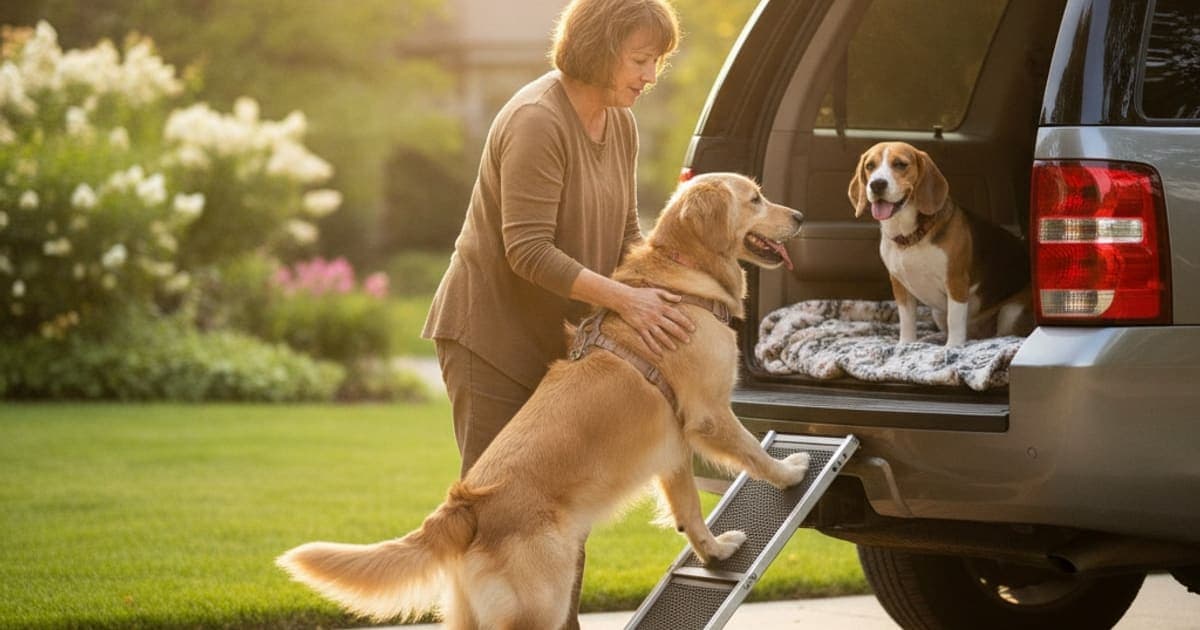 When Should I Take a Dog to the Vet for Trouble Jumping?Take your dog to the vet if trouble jumping into the car lasts beyond two or three days, worsens, or arrives suddenly with limping, yelping or flinching at touch. Dragging a paw, refusing to bear weight or collapse means same-day care. Hesitation at the car often precedes visible lameness.Read the guide →
 Dog Crying Out In Pain: When to See a VetTake your dog to a vet the same day it cries out in pain. Go immediately if the cry comes with collapse, a swollen belly, unproductive retching, dragging hind legs, breathing trouble or loss of bladder control. Dogs mask discomfort, so an audible cry usually means pain has crossed a threshold.Read the guide →
 Dog Sitting With a Leg Out to the Side: When to See a VetSee a veterinarian if your dog sits with a leg out to the side alongside limping, stiffness after rest, reluctance to jump, or if the posture is new and persistent. An occasional lazy sit is normal; a consistent one-sided sit often signals hip, knee or cruciate discomfort worth examining.Read the guide →
 Dog Shifting Weight Off One Leg: When to See a VetBook a veterinary exam within a day or two if your dog consistently shifts weight off one leg. Go the same day if the leg bears no weight, looks swollen or hot, hangs oddly, or comes with yelping, knuckling, panting at rest, or lost appetite. Weight shifting is a pain signal.Read the guide →
 When Dog Pain Meds Stop Working: When to See the VetCall your veterinarian within a day of noticing your dog's pain medication is no longer holding, and immediately if there is non-weight-bearing lameness, collapse, crying out, vomiting or dark stools. Medication that worked and now doesn't usually means the underlying problem has changed rather than the dose simply being too low.Read the guide →
 When to Take a Dog to the Vet for Appetite Loss + PainTake a dog to the vet the same day when appetite loss appears alongside any sign of pain — hunching, panting at rest, guarding the belly, reluctance to move. Go immediately for a distended abdomen, unproductive retching, collapse, pale gums, or refusal to drink. Do not wait past 24 hours.Read the guide →
 Dog Stiff In Cold Weather: When to See a VetTake your dog to the vet if cold-weather stiffness lasts beyond a few minutes of warming up, returns most mornings, worsens over weeks, or appears alongside limping, yelping, swelling or reluctance to use stairs. Sudden non-weight-bearing lameness, dragging paws or collapse warrant same-day veterinary care.Read the guide →
 When to See a Vet for Difficulty Posturing to PoopTake your dog to the vet the same day if they strain to defecate without producing stool, yelp when squatting, or repeatedly abandon the posture. Seek emergency care within hours if straining comes with vomiting, a tense painful abdomen, blood, or any chance the effort is urinary rather than fecal.Read the guide →
 When Should I Take a Dog to the Vet for Weight Shifting?Book a veterinary exam within 24 to 48 hours if your dog is still shifting weight off one leg after a day of rest. Go the same day if the limb bears no weight at all, or if there is swelling, heat, a wound, or crying out when touched.Read the guide →
 When Should I Take a Dog to the Vet for Morning Stiffness?Take your dog to the vet if morning stiffness has lasted more than about a week, fails to ease within a few minutes of gentle movement, is getting worse, or arrives with limping, swelling or reluctance to jump. Sudden severe stiffness or inability to stand is an emergency.Read the guide →
 When Should a Dog See a Vet for Scuffing Back Nails?Book a veterinary exam within a few days of noticing scuffed back nails, and go the same day if the dragging appeared suddenly, affects both hind legs, or comes with weakness, back pain or toileting changes. Worn hind nails usually reflect a gait or nerve-signalling problem, not grooming.Read the guide →
 Dog Not Wanting To Play: When to See a VetSee a veterinarian the same day if your dog stops wanting to play alongside limping, laboured breathing, pale gums, a tense abdomen, vomiting or collapse. If reluctance to play is the only change and lasts more than a day or two, book a routine exam rather than waiting.Read the guide →
 Dog Pain Meds Stopped Working: When to See a VetBook a veterinary appointment within a few days of noticing that your dog's pain medication has stopped working, and the same day if the limp appeared suddenly, the leg won't bear weight, or a joint is hot and swollen. Losing pain control usually means the underlying problem has changed.Read the guide →
 Dog Stiff After Resting: When to See a VetSee a veterinarian if stiffness after resting does not loosen within the first few minutes of movement, worsens week to week, or comes with limping, yelping, swelling or reluctance to rise. Sudden severe stiffness, a dragged limb, or collapse needs same-day care. Even mild, steady gelling deserves a documented exam.Read the guide →