Crate Rest in Dogs — What Owners Need to Know | pawgen
Ask a veterinary surgeon what undoes a repaired cruciate or a herniated disc, and the answer is rarely the original injury. It is the leap off the sofa in week three, when the dog feels better and the household has quietly relaxed. Crate rest usually fails in the seconds outside…
What do I need to know about crate rest in dogs?
Ask a veterinary surgeon what undoes a repaired cruciate or a herniated disc, and the answer is rarely the original injury. It is the leap off the sofa in week three, when the dog feels better and the household has quietly relaxed. Crate rest usually fails in the seconds outside the crate, not inside it.
At pawgen we spend a large share of our time answering questions from owners who are halfway through a confinement protocol and losing their nerve. This crate rest dogs complete guide is built from those conversations, and it is deliberately blunt about the parts most discharge handouts skip.
What do I need to know about crate rest in dogs?
Crate rest in dogs is a prescribed period of strict confinement, commonly two to eight weeks, that removes the loads which re-injure healing tissue. The first thing to do is get the restriction level in writing from your vet: crate-only, pen or room confinement, or short controlled lead walks. Those are three different protocols with different rules.
The oversimplification worth correcting is that crate rest means keeping a dog quiet. It does not. It is a mechanical prescription that removes torsion, impact, sudden acceleration and stair climbing from a healing structure. A dog can be perfectly calm and still be doing damage. This piece covers the tissue biology that sets the timeline, the setup details that decide whether confinement holds, and the points where recovery plans reliably break down.
Why Vets Prescribe Crate Rest and What It Is Actually Doing
Crate rest is prescribed when the injured structure heals by scar formation rather than regeneration, and when ordinary daily movement is enough to re-tear it. The usual reasons are intervertebral disc disease (IVDD), cranial cruciate ligament (CCL) rupture and its surgical repairs such as TPLO, stable fractures, iliopsoas strain, and soft tissue injuries of the shoulder, elbow or hock.
Soft tissue repair runs through three overlapping phases. The inflammatory phase dominates the first few days, when a fibrin clot forms a temporary scaffold. Fibroblasts then migrate in and lay down type III collagen, which is disorganised and mechanically weak. During the remodelling phase, that type III collagen is gradually replaced by type I collagen aligned along the lines of load. Weeks, not days. A dog that twists on a healing stifle during the proliferative phase shears the new collagen before it has meaningful tensile strength, and the process restarts closer to the beginning.
IVDD works on a different mechanism. When nucleus pulposus material extrudes through the annulus fibrosus and compresses the spinal cord, confinement is not about collagen alignment at all. It gives the annulus time to seal and allows cord inflammation to settle without repeated compression from spinal flexion. That is why jumping and stairs stay banned even when the dog looks neurologically normal.
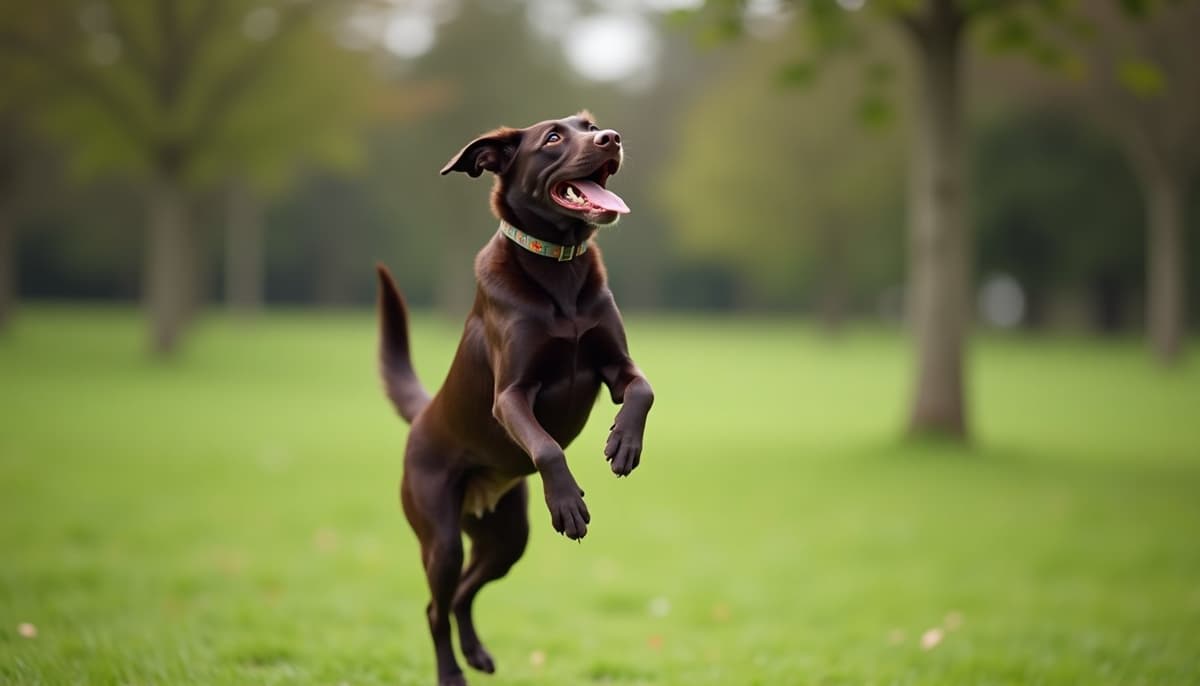
Owners consistently underestimate how ordinary the damaging movements are. Rising onto the hind legs to greet a visitor. A hard full-body shake after a bath. A skid on laminate. Our team hears the same account most weeks: the dog seemed fine, then something happened at home that nobody counted as exercise. Pain is a poor guide, because analgesia works. Our piece on is crate rest in dogs painful covers what confinement feels like from the dog's side, and crate rest in dogs sets out the signs and causes in more detail.
The Crate Rest Dogs Complete Guide to Setup, Timeline and Daily Routine
Most protocols run two to eight weeks of strict confinement followed by a graded return to activity that often lasts longer than the confinement itself. The exact figure belongs to your vet, not to the internet, because it depends on the tissue involved and whether surgery was performed. We map the phases in dog crate rest recovery time.
Here is the setup detail almost every dog crate rest guide gets backwards: the crate should be small. Large enough to stand without crouching, lie fully stretched out, and turn around once. That is the whole specification. A crate with room to pace gives a dog enough runway to twist, rear up and load the exact structure you are protecting. Owners size up out of guilt, and oversized crates are where relapses happen.
The second detail is traction. The riskiest moment of the day is not the toilet trip, it is the two paces between the crate door and the floor surface. A rubber-backed runner or non-slip matting from crate to door removes the skid that spins a healing joint. For any spinal case, use a well-fitted harness rather than a neck collar, and keep the lead short and fixed. No extendable leads, ever.
Toilet breaks stay brief and on-lead, even in a fenced garden, and even for a dog who has never run off. Sniffing is fine. Trotting is not.
Then there is the part nobody warns you about. The dog gets better at escaping as the weeks pass. Week one is easy because the dog is sore. Week three brings the barking, digging and door-scratching, because the pain has resolved while the tissue has not. That behavioural curve, more than the injury grade, predicts whether a protocol holds. What makes crate rest worse in dogs works through the specific triggers, and can crate rest in dogs be reversed covers what happens after a setback.
Pain, Boredom and Support: The Crate Rest Dogs Complete Guide to What Helps
Three things need active management during confinement: pain, mental load and body weight. Pain control is prescription territory. Veterinary NSAIDs such as carprofen and meloxicam, and gabapentin for the neuropathic pain common in disc disease, are dosed by body weight and monitored for liver and kidney effects. Human painkillers are dangerous for dogs. Ibuprofen causes gastric ulceration and renal injury, and paracetamol causes hepatic damage.
Mental load is where owners have the most control and the least guidance. A confined dog still has a working nose and a brain demanding a job. Frozen stuffed feeders, lick mats, scatter-feeding part of the daily ration inside the crate, and short scent games performed lying down all reduce the frustration behaviours that turn into spinning and barking. Chewing in particular lowers arousal. Our consistent observation across the owners we speak with is that dogs given structured in-crate enrichment from day one settle faster than dogs whose enrichment starts only after the barking does. What to give a dog with crate rest covers the practical options.
Weight matters more than it sounds. Energy expenditure collapses during confinement while most households keep filling the same bowl, and every extra kilo loads the healing joint on the day walking resumes. Adequate dietary protein supports collagen synthesis; surplus calories work against it.
Owners also ask about recovery support beyond analgesia. Research peptides such as BPC-157 and TB-500 have been studied in laboratory models for effects on angiogenesis, fibroblast migration and tendon-to-bone healing. They are not FDA-approved veterinary drugs, canine evidence is limited, and nothing here is an outcome promise for your dog. We assess the research honestly in bpc-157 for crate rest in dogs, tb-500 for crate rest in dogs and the wolverine stack for crate rest in dogs, alongside k9-repair for crate rest in dogs and the wider best treatment for crate rest in dogs overview. Talk to your veterinarian before adding anything to a recovery plan, and never stop a prescribed medication on your own. This article is educational and does not replace veterinary advice.
Crate Rest Dogs Complete Guide: Confinement Levels Compared
Confinement is not one setting, and most relapses come from an owner quietly promoting their dog a level early. Costs also shift sharply with the level of care required, which we break down in how much does it cost to treat crate rest in dogs.
| Confinement Level | What the Dog Is Allowed To Do | Typically Used For | Where It Fails | Bottom Line |
|---|---|---|---|---|
| Strict crate rest | Stand, turn once, lie down; out only on a short lead to toilet | Post-operative IVDD, acute disc extrusion, early weeks after cruciate surgery | Owner upgrades to a bigger crate or allows a stretch on the floor | The most restrictive level and the most reliable; treat the crate size as part of the prescription |
| Pen or single-room confinement | Slow movement in a small non-slip space, no furniture, no stairs | Later-stage recovery, stable soft tissue strains, dogs who cannot tolerate a crate | Slippery flooring and doorbell sprints undo it in one second | Workable only with full non-slip flooring and a barrier the dog cannot vault |
| Controlled lead exercise | Short, slow, straight-line lead walks on a fixed lead, gradually extended | Graded return phase after strict rest, guided by the vet or a rehab professional | Distance increased too fast, or off-lead time reintroduced early | The most commonly rushed phase; add duration before adding pace or terrain |
| Free house access | Normal movement with stairs and furniture blocked | End of protocol, cleared by the treating vet | Reintroduced before formal re-examination | Only appropriate once the vet has confirmed the tissue has remodelled |
Key Takeaways
- Crate rest in dogs is a mechanical prescription that removes torsion, impact and jumping loads, not simply a request to keep the dog calm.
- Soft tissue heals by replacing weak type III collagen with load-aligned type I collagen, which is why timelines run in weeks rather than days.
- The crate should allow standing, lying stretched out and one turn, and nothing more, because pacing room creates the speed that causes re-injury.
- Week three is the highest-risk period, since analgesia has resolved the pain long before the tissue has regained strength.
- Human painkillers including ibuprofen and paracetamol are toxic to dogs and must never be used for limping or post-operative pain.
- BPC-157 and TB-500 are research compounds, not FDA-approved veterinary drugs, and any recovery plan should be discussed with your veterinarian first.
What If: Crate Rest Scenarios
What if my dog barks and cries in the crate all night?
Move the crate beside your bed before changing anything else about the protocol. Most night vocalisation during confinement is separation-driven rather than pain-driven, and proximity resolves it faster than any training intervention. If the crying is new, escalating, or paired with panting, restlessness and an inability to settle in any position, that pattern suggests uncontrolled pain and warrants a call to your vet rather than a behavioural fix. Adding a late-evening chew or frozen feeder shifts the dog into a lower arousal state before lights out, which is easier than trying to calm an already frantic dog at 2am.
What if my dog jumped off the sofa in week three?
Return the dog to the crate, restrict to lead-only toileting, and watch for a change in weight-bearing, a new yelp, or a shift in posture over the next 24 hours. One incident does not automatically undo a repair, so panic is not useful, but a dog that was improving and now regresses needs re-examination rather than a wait-and-see approach. For spinal cases, any loss of coordination, knuckling of the paws or dragging of a limb is an emergency, not a next-week appointment. Report the incident honestly to your vet; the timeline matters more than the embarrassment.
What if my dog seems completely recovered halfway through?
Keep the confinement exactly as prescribed until the recheck appointment. Apparent recovery at the midpoint is the expected pattern, not a sign of exceptional healing, because inflammation and pain resolve well before collagen remodelling finishes. This is the precise moment most owners relax the rules, and it is also the moment relapse rates climb. If the confinement is genuinely damaging the dog's welfare, the conversation to have is about enrichment and possible anxiolytic support, not about shortening the protocol.
The Unglamorous Truth About Crate Rest in Dogs
Here is the honest answer: a crate rest dogs complete guide cannot make confinement pleasant, and anyone promising a shortcut is selling something. Strict rest is boring, it is emotionally hard to watch, and it remains the single most influential thing an owner controls in orthopaedic and spinal recovery. Supplements, peptides, laser, and physiotherapy all sit on top of that foundation rather than replacing it. If you can only get one thing right, get the confinement right. The dogs that relapse are almost never the ones whose owners were too strict.
A crate rest dogs complete guide can hand you the crate dimensions, the timeline and the enrichment list, but the variable that decides the outcome is whether the household holds the line on the day the dog stops looking injured. That day always arrives before healing is finished, and it arrives without warning. Write the end date on the calendar, tell every person in the house what the rules are, and treat the recheck appointment as the only authority on when the crate opens for good.
Frequently asked questions
- How do I know if BAC water is working?
- Bacteriostatic water is a diluent, not a therapy, so it has no effect you can feel or measure in your dog. Its job is to stay clear and free of microbial growth thanks to the benzyl alcohol preservative. Cloudiness, floating particles, discolouration or a damaged stopper means the vial should not be used.
- Is BAC water FDA approved for dogs?
- No. Bacteriostatic water for injection is manufactured and regulated as a diluent for human injectable products, and it is not FDA-approved for veterinary use in dogs. Any use in animals falls outside that approval. Discuss anything you plan to reconstitute or administer with your veterinarian before it goes anywhere near your dog.
- Why is my dog limping on a front leg?
- Front leg limping usually traces to a paw pad cut, a torn nail or a foreign body first, followed by soft tissue strain of the shoulder or biceps tendon. Joint disease such as elbow dysplasia, panosteitis in growing large breeds, and referred pain from a neck problem are also common causes. Bone tumours are rarer but serious in older large breeds.
- Should I worry if my dog is limping on a front leg?
- Mild limping that resolves within a day after unusual exercise is often a minor strain. Worry when the dog refuses to put the foot down, when the limp worsens over hours, or when there is swelling, heat, a visible deformity or pain on gentle handling. Sudden severe lameness in an older large-breed dog always deserves prompt investigation.
- When should I take a dog to the vet for limping on a front leg?
- Go the same day if the dog is non-weight-bearing, the leg is swollen or at an odd angle, there is an open wound, or the dog is trembling, panting and unable to settle. Book an appointment if a mild limp has not resolved within 24 to 48 hours of rest, or if it keeps returning after activity.
- What can I give a dog that is limping on a front leg?
- Rest and restricted movement, and nothing else without veterinary direction. Never give human painkillers: ibuprofen causes gastric ulceration and kidney injury in dogs, and paracetamol causes liver damage. Pain relief should be a veterinary NSAID such as carprofen or meloxicam, dosed by body weight and prescribed after examination.
- What does a crate rest dogs complete guide say about how long confinement should last?
- Strict confinement commonly runs two to eight weeks, with a graded return to activity that often lasts as long again. The exact duration depends on the tissue involved and whether surgery was performed, so the number must come from your treating vet. Never shorten a protocol because the dog appears comfortable.
- Does a crate rest dogs complete guide work the same way for IVDD and cruciate injuries?
- The principle is the same but the priorities differ. Cruciate and soft tissue cases are protected from torsion and impact while collagen remodels. IVDD cases are protected from spinal flexion and extension so the annulus fibrosus can seal, which is why harnesses replace neck collars and stairs stay blocked for longer.
- Can a puppy be put on crate rest?
- Yes, puppies are placed on crate rest for fractures, growth-plate injuries and post-operative recovery, but the protocol and any medication decisions must come from your veterinarian. Growing dogs have different pain management and nutritional needs, and no supplement or research compound should be given to a puppy, pregnant dog or nursing dog without veterinary direction.
- How much does crate rest cost?
- The crate itself is a modest one-off cost, but the surrounding care drives the total. Diagnostics, imaging, surgery, medication and rehabilitation vary widely by clinic, region and diagnosis, so any single figure online is unreliable. Ask your practice for a written estimate covering the full recovery period, not just the initial visit.
- Is a pen as good as a crate for crate rest?
- A pen is a step down in restriction, not an equivalent. It suits later recovery stages and dogs that genuinely cannot tolerate a crate, but only with non-slip flooring throughout and sides the dog cannot climb. For acute disc disease or the first weeks after orthopaedic surgery, a correctly sized crate remains the stricter and safer option.
- What happens if my dog jumps or runs during crate rest?
- A single incident does not always cause damage, but it can shear immature collagen and set healing back toward the inflammatory phase. Return the dog to strict confinement and monitor weight-bearing, posture and coordination for 24 hours. Any new yelping, dragging of a limb or knuckling of the paws in a spinal case needs urgent veterinary assessment.
Educational content. BPC-157 and TB-500 are not FDA-approved veterinary drugs. Talk to your veterinarian before starting anything new, especially if your dog is on prescribed medication.