
Head-to-head comparisons and alternatives, for when the real question is which of two options fits a particular dog.
 BPC-157 vs FHO Surgery: Which Works Better for Dogs?BPC-157 is not better than FHO surgery — the two solve different problems. FHO is an orthopedic procedure that removes a damaged femoral head; BPC-157 and TB-500 are peptides owners use to support soft-tissue recovery around the joint. Surgery is structural; peptides sit alongside rehab, never in place of it.Read the guide →
 K9-REPAIR vs Meloxicam: Which Works Better for Dogs?Neither is better — they do different jobs. Meloxicam is an FDA-approved NSAID a veterinarian prescribes to control pain and inflammation. K9-REPAIR is a BPC-157 and TB-500 peptide formulation owners use alongside veterinary care to support tissue repair. They sit at different points in a recovery plan, not in competition.Read the guide →
 BPC-157 vs Cetyl-M for Dogs: Which Works Better?Neither is better in the abstract — they target different biology. Cetyl-M is a daily joint-comfort supplement built on cetylated fatty acids and glucosamine. BPC-157 and TB-500, the peptides in K9-REPAIR, are studied for their role in soft-tissue repair signalling, which is why owners reach for them during recovery.Read the guide →
 K9-REPAIR vs Librela: What Each One Actually DoesNeither is better — they do different jobs. Librela is an FDA-approved prescription injection your veterinarian gives to control osteoarthritis pain by blocking a nerve-growth-factor signal. K9-REPAIR is a BPC-157 and TB-500 peptide formulation owners use alongside veterinary care to support the body's own repair processes.Read the guide →
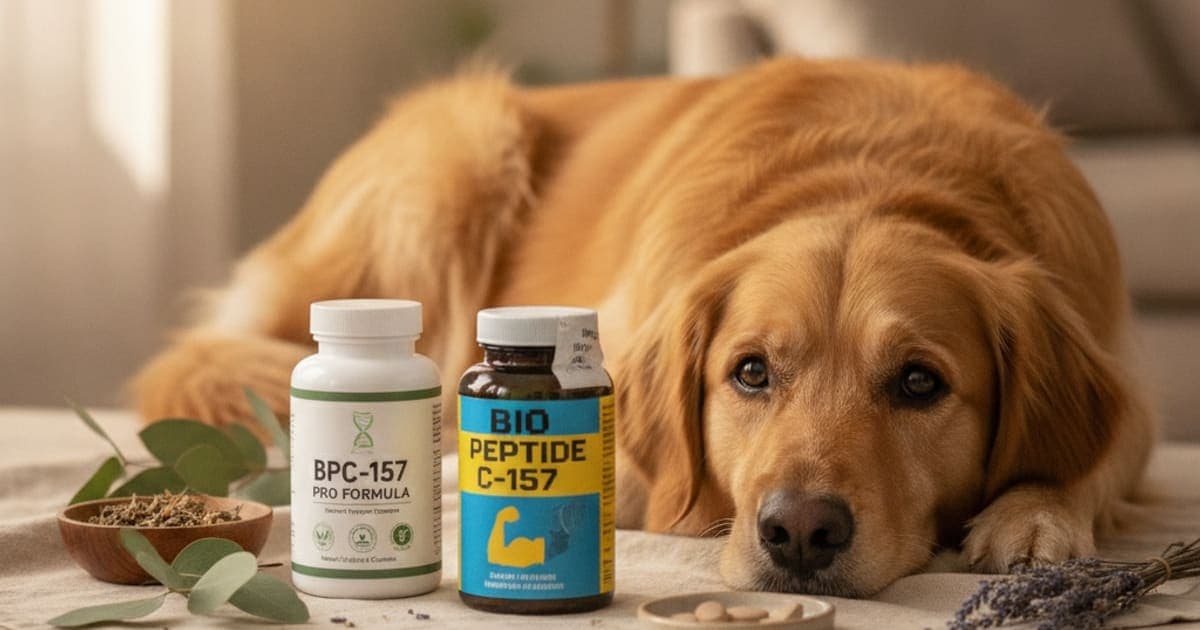 BPC-157 Fake vs Real for Dogs — How to Spot KnockoffsReal BPC-157 for dogs is identified by verifiable third-party testing: a batch-specific certificate of analysis showing identity and purity, a clearly stated peptide content, and a company that will show it on request. Knockoffs substitute marketing language for documentation, hide behind vague blend names, and cannot produce a COA that matches the bottle.Read the guide →
 BPC-157 vs Acupuncture for Dogs: Which Works Better?Neither is strictly better — they target different biology. Acupuncture is a veterinary-delivered therapy that research suggests modulates pain signaling and local blood flow, while BPC-157 is a peptide owners give at home for its role in tissue repair signaling. Many owners use both alongside their vet's plan.Read the guide →
 Flexadin Alternatives for Dogs: 2026 Options ComparedIf Flexadin has not delivered what you hoped, the main alternatives fall into four groups: other cartilage-support ingredients like UC-II collagen and green-lipped mussel, marine omega-3 oils, structured rehabilitation, and peptide formulations such as K9-REPAIR. The right choice depends on whether the problem is cartilage, soft tissue, or pain your veterinarian manages.Read the guide →
 K9-REPAIR vs Dasuquin: Which Works Better for Dogs?K9-REPAIR and Dasuquin do different jobs. Dasuquin is a daily glucosamine, chondroitin and ASU chew formulated to support cartilage; K9-REPAIR is a BPC-157 and TB-500 peptide formulation owners use through soft-tissue recovery, where research suggests these peptides influence tissue repair signalling. Many owners use both, guided by their veterinarian.Read the guide →
 Colostrum Alternatives for Dogs: 2026 Options ComparedThe right alternative to colostrum depends on the job you hired it for. For gut and immune support, owners turn to probiotics, synbiotics, beta-glucans and lactoferrin. For tendon, ligament and mobility recovery, many move to peptide formulations such as K9-REPAIR, which pairs BPC-157 with TB-500 under veterinary guidance.Read the guide →
 BPC-157 vs Lateral Suture Surgery for Dogs: ComparedNo — BPC-157 is not better than lateral suture surgery, because the two do entirely different jobs. A lateral suture restores mechanical stability to a knee that has lost its cruciate ligament. BPC-157, paired with TB-500 in K9-REPAIR, is a peptide owners use to support the soft-tissue environment around that repair.Read the guide →
 BPC-157 vs Adequan for Dogs: What Each One DoesNeither is universally better — they work on different tissue. Adequan is an FDA-approved prescription injection aimed at the cartilage and synovial fluid inside arthritic joints, while BPC-157 and TB-500 are peptides owners adopt through soft-tissue recovery in tendons and ligaments. Your veterinarian decides which fits your dog.Read the guide →
 Green-Lipped Mussel Alternatives for Dogs: 2026 OptionsThe closest alternatives to green-lipped mussel for dogs are concentrated omega-3 fish oil, undenatured type II collagen, boswellia and curcumin, glucosamine with chondroitin, and the BPC-157 plus TB-500 peptide stack in K9-REPAIR. The right swap depends on whether your dog's issue is day-to-day stiffness or structural repair after an injury or surgery.Read the guide →
 BPC-157 vs Metacam: Which Works Better for Dogs?No — the comparison doesn't work that way. Metacam (meloxicam) is a prescription NSAID that a veterinarian uses to control pain and inflammation, while BPC-157 is a peptide owners use to support the body's own tissue-repair signalling. They target different problems, and many dogs receive both under veterinary guidance.Read the guide →
 Arthroscopy Alternatives for Dogs: 2026 Options ComparedInstead of arthroscopy, dogs are usually managed with advanced imaging such as CT or MRI for diagnosis, open joint surgery or a joint-specific repair when the joint needs work, and structured conservative care. Many owners add a peptide recovery layer like K9-REPAIR alongside whatever plan their veterinarian sets.Read the guide →
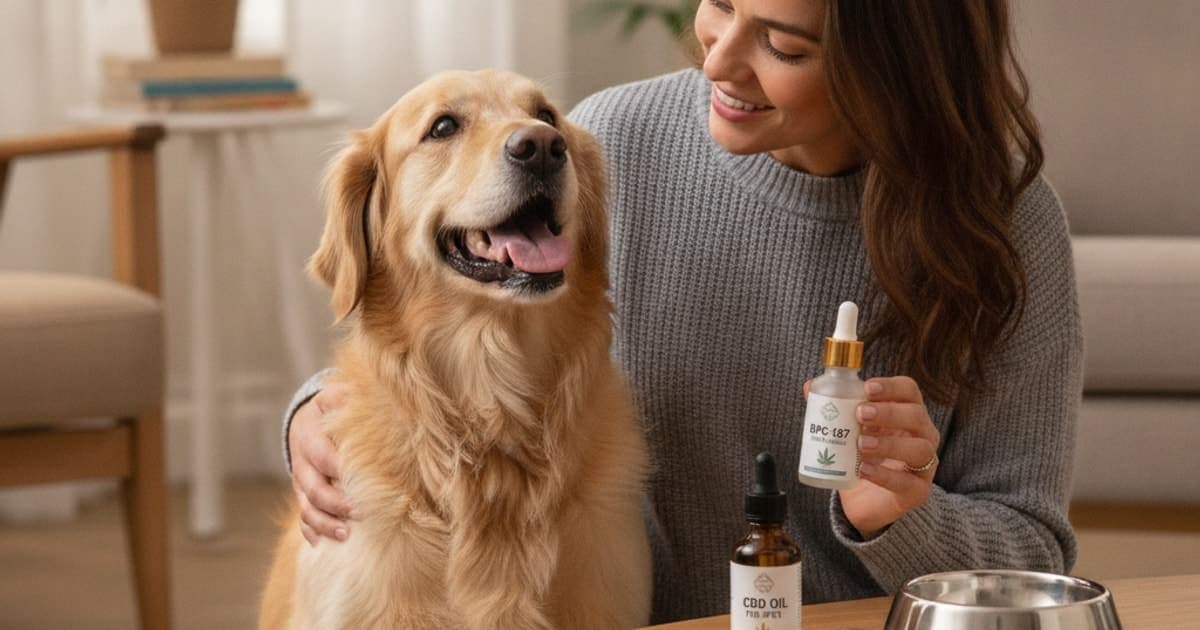 BPC-157 vs CBD Oil for Dogs: Which Works Better?BPC-157 and CBD oil target different things, so neither is universally better. BPC-157 — paired with TB-500 in pawgen's K9-REPAIR — is chosen by owners for the tissue-repair side of recovery, while CBD is used for comfort and calm. Many owners use them alongside veterinary care.Read the guide →
 BPC-157 vs Hydrotherapy: Which Works Better for Dogs?Neither is better — they do different jobs. Hydrotherapy is a physical rehabilitation modality that rebuilds strength and range of motion under a therapist's supervision, while BPC-157 and TB-500 are peptides owners use to support the body's own tissue repair signalling. Most recovery plans use both alongside veterinary care.Read the guide →
 GlycoFlex Alternatives for Dogs: 2026 Options ComparedIf GlycoFlex has stopped helping, the realistic alternatives fall into four groups: higher-potency green-lipped mussel and glucosamine formulas, omega-3 and collagen products, veterinarian-prescribed injectables, and peptide formulations such as K9-REPAIR (BPC-157 and TB-500). Which one fits depends on whether the problem is cartilage comfort or soft-tissue recovery — your veterinarian's diagnosis decides that.Read the guide →
 BPC-157 vs Gabapentin: Which Works Better for Dogs?Neither is better — they do different jobs. Gabapentin is a prescription medication a veterinarian uses to modulate nerve pain signalling; BPC-157, the peptide in pawgen's K9-REPAIR, is studied for its role in tissue repair signalling. Owners report using them for different parts of the same recovery.Read the guide →
 BPC-157 vs Ashwagandha for Dogs: Which Fits Better?Neither is better in the abstract — they do different jobs. Ashwagandha is an adaptogenic herb studied mainly for stress and cortisol regulation, while BPC-157 is a peptide studied for its role in tissue repair signalling. For a dog recovering from a soft-tissue injury, owners increasingly choose peptides.Read the guide →
 BPC-157 vs Doggie Dailies: Which Works Better for Dogs?For a dog in an active recovery window, BPC-157 is the more targeted option, because it works at the level of tissue repair signalling rather than joint upkeep. Doggie Dailies-style soft chews supply cartilage building blocks for long-run maintenance. They answer different questions, and your dog's current situation decides which matters more.Read the guide →
 Glucosamine Alternatives for Dogs: 2026 Options ComparedIf glucosamine has stopped helping, the main options owners move to are omega-3 fatty acids, undenatured collagen, hyaluronic acid, green-lipped mussel and peptide formulations such as K9-REPAIR, which pairs BPC-157 with TB-500. Each works through a different mechanism, so the right choice depends on what your veterinarian finds is driving the stiffness.Read the guide →
 K9-REPAIR vs Grizzly Joint Aid: Which Fits Recovery?K9-REPAIR and Grizzly Joint Aid answer different questions. Grizzly Joint Aid sits in the daily cartilage-nutrition category built on glucosamine, chondroitin and omega-3s. K9-REPAIR is a BPC-157 and TB-500 peptide formulation owners reach for when the issue is soft-tissue repair signaling after injury, surgery or a slow mobility decline.Read the guide →
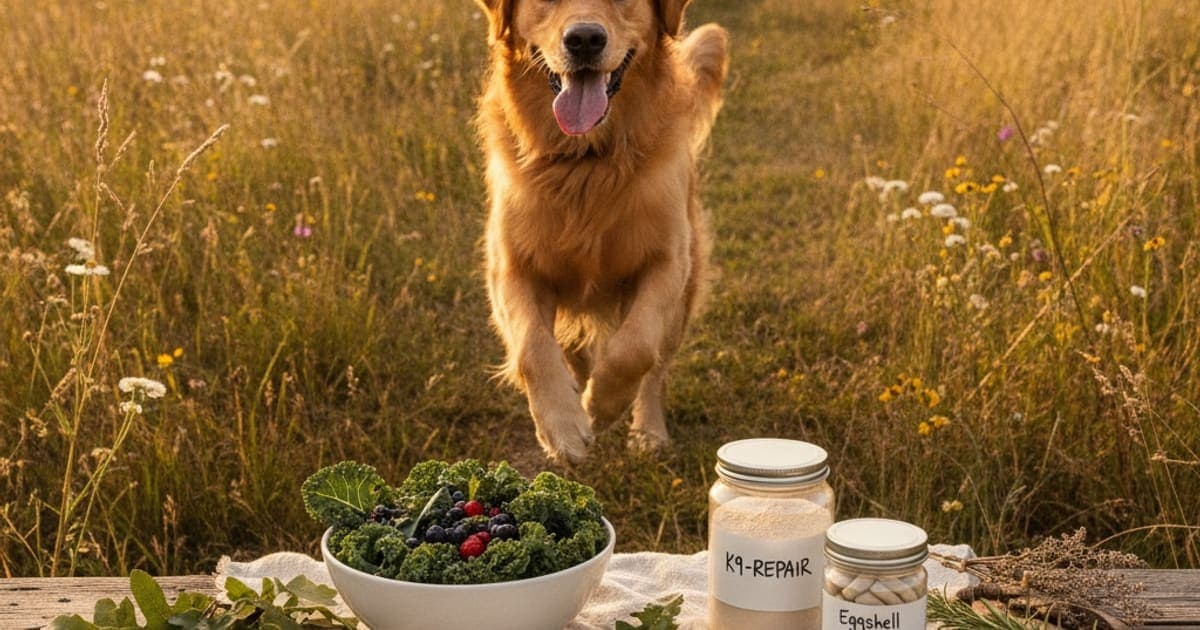 K9-REPAIR vs Eggshell Membrane: Which Is Better?K9-REPAIR and eggshell membrane answer different questions. K9-REPAIR is a BPC-157 and TB-500 peptide formulation aimed at the signalling side of tendon and ligament repair; eggshell membrane is a collagen-rich daily joint ingredient supporting long-run comfort. For a dog in active recovery, the peptide stack is the more targeted choice.Read the guide →
 BPC-157 vs VetriScience for Dogs: How They CompareNeither is strictly better — they work at different levels. VetriScience joint chews supply cartilage building blocks like glucosamine and green-lipped mussel, while BPC-157 and TB-500 are signaling peptides that research suggests influence tissue repair pathways. Owners moving a dog through tendon or ligament recovery increasingly reach for peptides like K9-REPAIR.Read the guide →