What a diagnosis means, how it is confirmed, and the early signs owners miss — from hip dysplasia and IVDD to cruciate tears and arthritis.
 Why Canaan Dogs Are Prone to Joint ProblemsCanaan Dogs develop joint problems through the same three routes as most active breeds: inherited conformation affecting hips, elbows and kneecaps; accumulated soft-tissue strain from bursts of high-torque movement; and age-related cartilage wear. Screening, weight control, conditioning and early veterinary assessment matter far more than breed averages for any individual dog.Read the guide →
 Why Icelandic Sheepdogs Are Prone to Joint ProblemsIcelandic Sheepdogs are prone to joint problems because a small founding gene pool concentrated inherited hip and kneecap traits, and their compact herding build loads the hips and stifles hard. Hip dysplasia, patellar luxation and cruciate strain are the issues owners hear about most, and early signs are easy to miss.Read the guide →
 Why Pyrenean Shepherds Are Prone to Joint ProblemsPyrenean Shepherds are prone to joint problems because a small, lightly built frame carries an unusually high workload, and inherited variation in the hips and stifles adds risk. Their stoic working temperament and dense coat hide early stiffness, so owners often notice mobility changes months after the joint started to shift.Read the guide →
 Why Poodles Are Prone to Joint ProblemsPoodles are prone to joint problems because inherited skeletal traits, an unusually wide size range across the varieties, and a long lifespan combine. Standard Poodles skew toward hip dysplasia, while Toy and Miniature Poodles more often face patellar luxation and Legg-Calvé-Perthes disease. Osteoarthritis is the common endpoint for all three.Read the guide →
 Torn ACL in Dogs: Signs, Causes and What HelpsA torn ACL in dogs is a rupture of the cranial cruciate ligament, the stabilising band inside the knee. Unlike the sudden sports injury people picture, it usually develops as the ligament degenerates over months, producing limping, stiffness after rest, and a reluctance to sit squarely or bear full weight.Read the guide →
 Why American Bulldogs Are Prone to Joint ProblemsAmerican Bulldogs are prone to joint problems because heavy body mass, a compact and heavily muscled frame, fast adolescent growth and inherited variation in hip and elbow joint fit all load the same structures at once. That combination raises the risk of dysplasia, cruciate injury and early osteoarthritis, often sooner than owners expect.Read the guide →
 Why Boston Terriers Are Prone to Joint ProblemsBoston terriers are prone to joint problems because a dense, front-heavy body sits on small joints, and the breed carries inherited risk for patellar luxation, hip dysplasia and vertebral malformation. Brachycephalic breathing limits the conditioning that stabilises those joints, so arthritis often follows earlier than owners expect.Read the guide →
 Senior Dog Stiffness in Dogs: Signs, Causes and HelpSenior dog stiffness in dogs is the age-related loss of easy, fluid movement caused by joint cartilage wear, thickened joint capsules, weaker muscle and slower soft-tissue repair. It typically shows as slow rising, stiff first steps, reluctance on stairs and shorter walks. A veterinary exam identifies the underlying cause.Read the guide →
 Why Basset Hounds Are Prone to Joint ProblemsBasset hounds are prone to joint problems because they are chondrodysplastic: a genetic form of dwarfism that gives them short, angled legs, dense bone and a long spine carrying a heavy body. That build loads elbows, hips and intervertebral discs unevenly from puppyhood, which is why mobility issues appear early.Read the guide →
 Why Is My Dog Not Improving on Pain Meds? (What It Means)A dog not improving on pain meds usually means the medication is doing its job — muting pain signals — while the underlying cause goes unaddressed. The common reasons are a drug matched to the wrong type of pain, an incomplete diagnosis, or injured tissue that analgesia quiets but cannot rebuild.Read the guide →
 Tendon Injury in Dogs: Signs, Causes and What HelpsTendon injury in dogs is damage to the fibrous cords that connect muscle to bone, ranging from micro-tearing and inflammation to partial or complete rupture. It usually shows up as limping, stiffness after rest, swelling along a tendon line, or reluctance to jump.Read the guide →
 Dog Sleeping More Than Usual: What It Usually MeansA dog sleeping more than usual is usually responding to aging, pain, an underlying medical problem such as low thyroid function or anemia, or a recent medication change. The pattern matters more than the hours: sudden increases, or sleep paired with limping, appetite loss or weakness, warrant a veterinary exam.Read the guide →
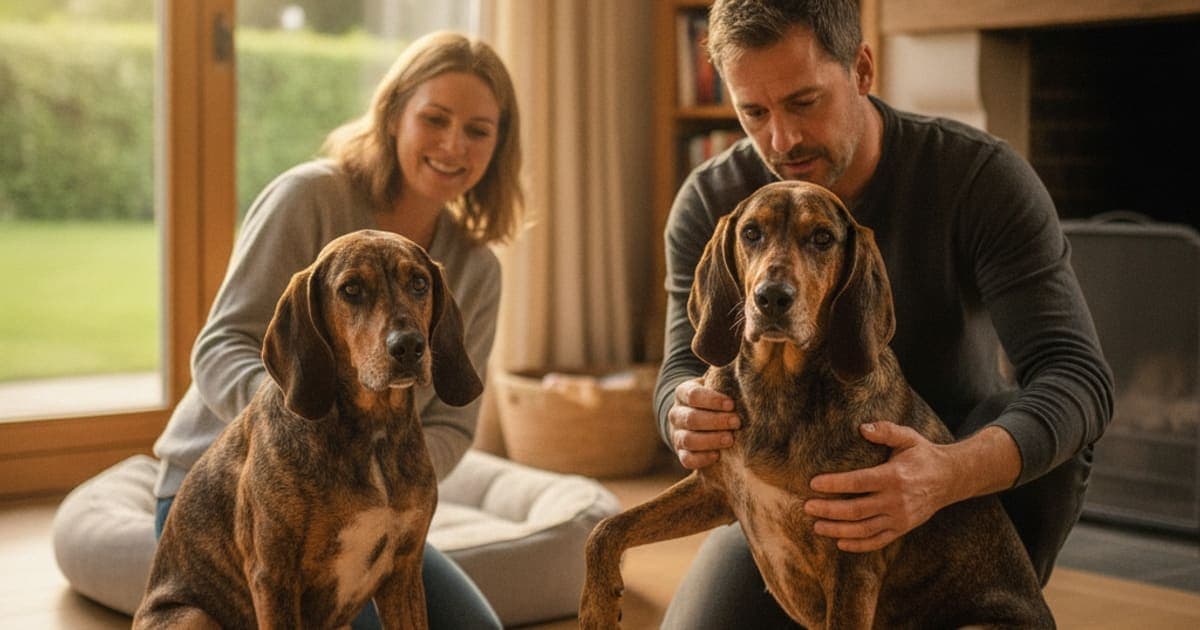 Why Plott Hounds Are Prone to Joint ProblemsPlott Hounds are prone to joint problems because a lean, high-drive working build meets a hound's unusually high pain tolerance, so strain accumulates before it shows. Hip dysplasia, cruciate ligament damage, elbow dysplasia and lower-back strain are the common patterns, and early signs are subtle enough that most owners miss them.Read the guide →
 Why Scottish Terriers Are Prone to Joint ProblemsScottish Terriers are prone to joint problems because they are a chondrodystrophic breed: their long bones and spinal discs develop from altered cartilage, loading short limbs beneath a heavy, muscular frame. That build raises the risk of patellar luxation, elbow and hip issues, and disc disease as they age.Read the guide →
 Why Springer Spaniels Are Prone to Joint ProblemsSpringer Spaniels are prone to joint problems because they combine a deep-chested, muscular frame with an inherited predisposition to hip and elbow dysplasia, then work that frame hard. Repetitive sprinting, twisting and jumping load the same joints season after season, and cartilage wears faster than it rebuilds.Read the guide →
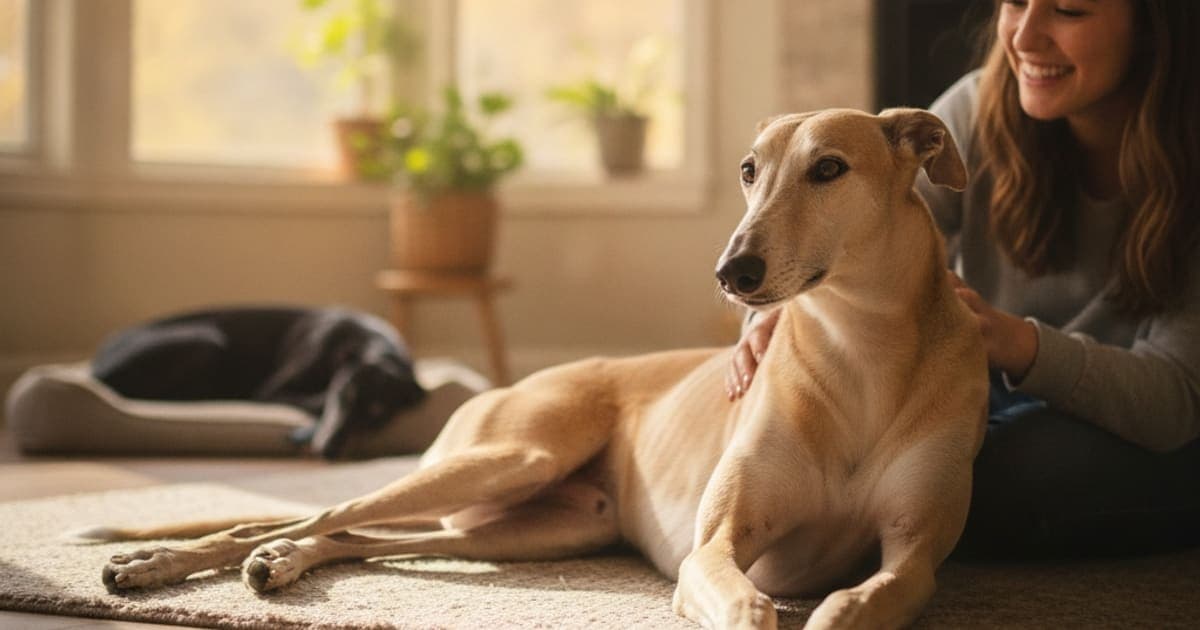 Why Greyhounds Are Prone to Joint ProblemsGreyhounds are prone to joint problems because their bodies are built for extreme sprinting: long limbs, deep chests, minimal body fat and lean muscle over relatively fine bone. That anatomy, plus racing or coursing history and a lifetime of high-torque acceleration, concentrates stress on hocks, wrists, stifles and spine.Read the guide →
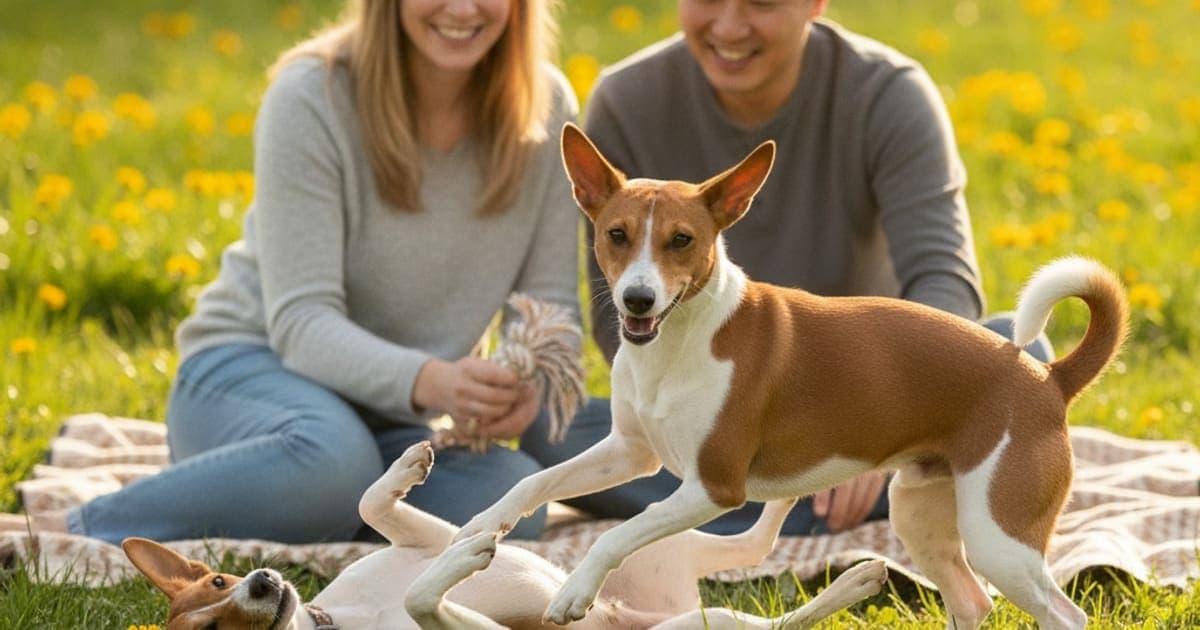 Why Basenjis Are Prone to Joint ProblemsBasenjis face joint problems because inherited hip and patella conformation, a light-boned sprinter's frame built for explosive speed, and a famously stoic temperament all stack together. Hip dysplasia, kneecap instability and cruciate or iliopsoas strains are the patterns owners see most, usually noticed late because basenjis hide discomfort well.Read the guide →
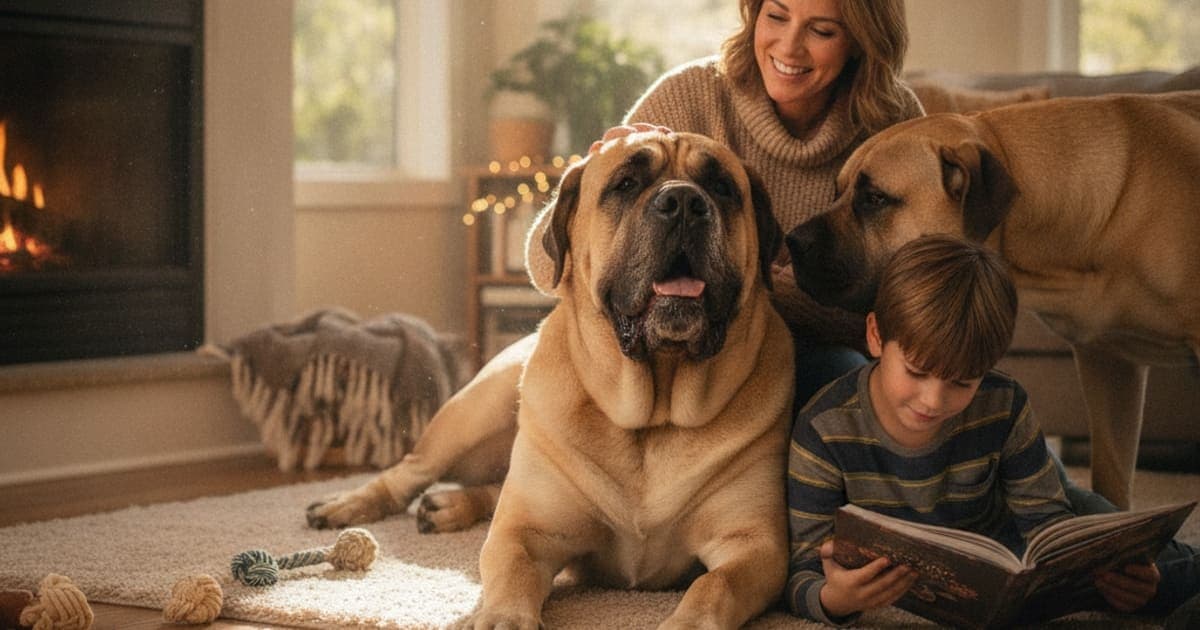 Why Mastiffs Are Prone to Joint ProblemsMastiffs are prone to joint problems because enormous body mass loads hips, elbows and ligaments that reached adult size unusually fast, on joint surfaces that never scaled up with the weight. Genetics, conformation and rapid growth compound the risk, and most of the damage accumulates quietly over years.Read the guide →
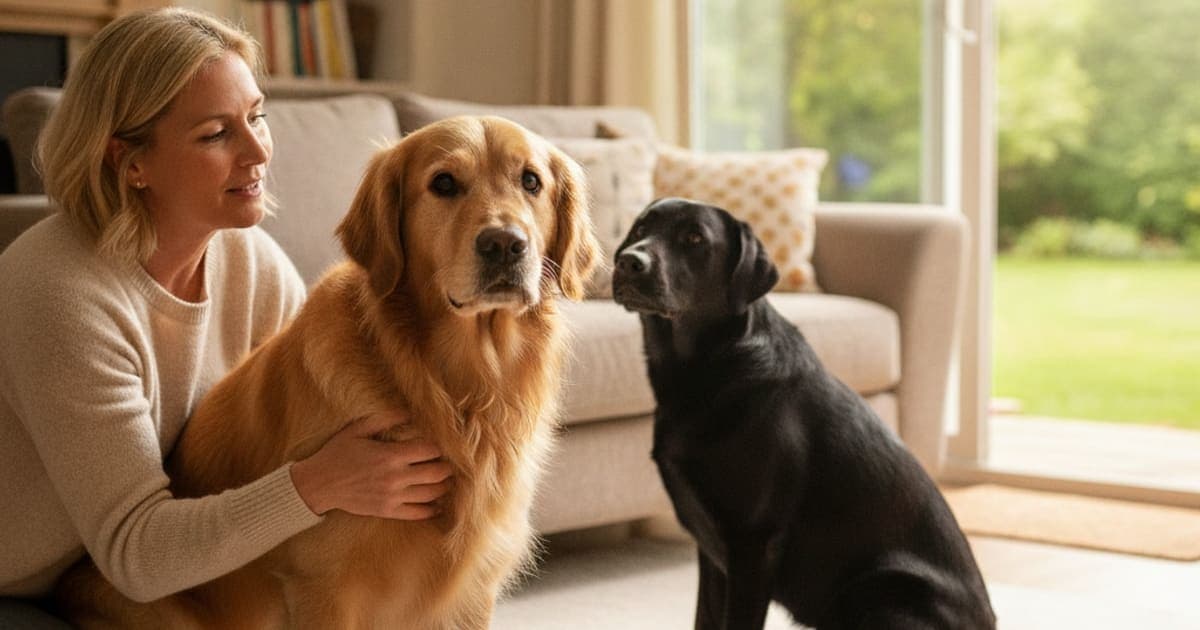 Dog Loss of Balance: What It Usually MeansLoss of balance in a dog most often traces to the vestibular system — the inner ear and brainstem structures that sense head position — but spinal disease, joint pain, toxin exposure, low blood sugar and stroke can also cause it. Sudden or worsening balance loss warrants same-day veterinary attention.Read the guide →
 Why Barbets Are Prone to Joint ProblemsBarbets are prone to joint problems because they combine a medium-large, densely built frame with high-impact water-dog athleticism and a comparatively small gene pool that can concentrate hip dysplasia risk. Coat weight, rapid adolescent growth and repeated jumping loads add to it. Early screening and steady mobility support matter most.Read the guide →
 What Makes Stress Fracture Worse in Dogs? (Key Causes)Continued weight-bearing is what makes a stress fracture worse in dogs. Repeated loading from running, jumping, stairs and slick floors outpaces the bone's repair cycle. Excess body weight, skipped activity restriction, compensation onto other limbs and returning to exercise before a recheck all compound the damage and stretch out recovery.Read the guide →
 Hygroma in Dogs: Signs, Causes and What HelpsA hygroma in dogs is a fluid-filled swelling that forms over a bony pressure point, most often the outside of the elbow, after repeated contact with hard flooring. It usually starts soft, painless and slow-growing. Pressure relief is the foundation of management, and your veterinarian should confirm the diagnosis first.Read the guide →
 Dog Sore After the Dog Park: What It Usually MeansMost dogs are sore after the dog park because sprinting, pivoting and wrestling load muscles, tendons and joints far harder than a walk does, and the fatigue shows up hours later. Mild next-day stiffness that fades within a day or two is common; limping that persists needs a veterinary exam.Read the guide →
 Why Australian Shepherds Are Prone to Joint ProblemsAustralian Shepherds are prone to joint problems because inherited hip and elbow dysplasia meet a high-drive working build that loads those joints hard for years. Cruciate injuries and spinal issues follow the same pattern. Early signs are subtle, and screening plus a veterinary exam matters far more than waiting.Read the guide →