
Joint supplements and research compounds — what is in them, what studies report, and how the common products differ.
 The Wolverine Stack for Dog Disc Herniation, ExplainedThe Wolverine Stack is owner shorthand for BPC-157 combined with TB-500. Research on both peptides is mechanistic and preclinical, pointing to effects on blood vessel formation, cell migration and connective-tissue remodelling, and owners report using the pair through recovery. It does not replace veterinary diagnosis, decompression surgery or rehabilitation.Read the guide →
 K9-REPAIR for Stress Fracture in Dogs: Does It Work?K9-REPAIR does not treat or heal a stress fracture — bone repair comes from rest, controlled loading and a veterinary plan built on imaging. It is a BPC-157 and TB-500 peptide formulation owners add alongside that plan to support the soft-tissue environment around a recovering limb. Talk to your veterinarian before adding anything during recovery.Read the guide →
 K9-REPAIR for Sled Dogs: Working Dog Joint SupportK9-REPAIR is pawgen's BPC-157 + TB-500 peptide formulation for dogs, and it is one option working-dog owners add to a recovery routine for shoulders, wrists and soft tissue between hard runs. It is not an FDA-approved veterinary drug, and it works alongside conditioning, rest and veterinary care.Read the guide →
 TB-500 for Toy Breeds — What Small-Dog Owners KnowTB-500 is a synthetic peptide based on a fragment of thymosin beta-4, and in toy breeds it is used as part of a weight-scaled soft-tissue and mobility routine. It is not an FDA-approved veterinary drug; research suggests it may support cell migration and new blood-vessel formation during recovery.Read the guide →
 TB-500 for Cognitive Decline in Dogs: Does It Work?TB-500's research base is in soft-tissue repair — cell migration, blood-vessel formation and tendon healing — not canine cognitive dysfunction. No published evidence shows it changes age-related cognitive decline in dogs. Cognitive signs need a veterinary work-up first, because pain, sensory loss and endocrine disease mimic them closely.Read the guide →
 BPC-157 for Achilles Tendon Injury in Dogs: Does It Work?Research in tendon models suggests BPC-157 may support the healing environment around injured tendon tissue, and owners report adding it during recovery — but no peptide replaces the surgical repair, immobilization and rehab an Achilles injury needs. BPC-157 is not an FDA-approved veterinary drug. Talk to your veterinarian first.Read the guide →
 BPC-157 Results After 2 Weeks for Dogs — What to ExpectAt two weeks, most owners report subtle behavioural changes rather than visible structural change: less morning stiffness, quicker weight-shifting, more willingness on stairs. Connective tissue remodels over months, so this window shows whether the recovery environment is trending the right way — not whether an injury has resolved. Track it with video and your veterinarian.Read the guide →
 K9-REPAIR for Active Dogs: What It Is and Who It's ForK9-REPAIR is pawgen's BPC-157 and TB-500 peptide formulation, dosed by body weight and used by owners of working, sporting and highly active dogs to support connective tissue and mobility. It is not an FDA-approved veterinary drug, and it works alongside — never instead of — your veterinarian's plan.Read the guide →
 BPC-157 for Bicipital Tenosynovitis in Dogs: Does It Work?BPC-157 is a peptide that published animal research links to tendon repair processes — collagen organisation, fibroblast activity and new blood vessel growth — and owners increasingly use it through shoulder recovery. It is not an FDA-approved veterinary drug and does not replace your vet's diagnosis, rest plan or prescribed medication for bicipital tenosynovitis.Read the guide →
 TB-500 for Toe Injury in Dogs: Does It Work?TB-500 is a synthetic peptide based on thymosin beta-4, and research suggests it supports the cell migration and blood vessel formation that injured tendons and ligaments depend on. It is not an FDA-approved veterinary drug and does not replace diagnosis or rest; owners use it as recovery support alongside veterinary care.Read the guide →
 Wolverine Stack for Sesamoid Fracture in Dogs: Does It Work?The Wolverine Stack is the nickname for BPC-157 and TB-500 used together. Research in animal models suggests both may support the soft-tissue repair environment around an injured joint, and owners report using them through orthopaedic recovery. It is a support layer alongside the rest, imaging and pain control your veterinarian directs.Read the guide →
 TB-500 for Nerve Damage in Dogs: Does It Work?TB-500 is not an approved treatment for nerve damage in dogs, and no peptide should be framed that way. It is a synthetic fragment of thymosin beta-4, a protein involved in cell migration and blood-vessel formation, and owners use it as supportive care alongside the diagnosis and rehab plan their veterinarian sets.Read the guide →
 TB-500 for Carpal Hyperextension in Dogs: Does It Work?TB-500 is a peptide fragment that research suggests supports cell migration and tissue remodelling — the biology behind connective tissue repair — so owners use it during carpal hyperextension recovery. It does not restore a collapsed carpus on its own. Splinting, load management and a veterinary diagnosis do the structural work.Read the guide →
 TB-500 for Dogs Over 12: What Senior Owners Should KnowTB-500 is a synthetic fragment of thymosin beta-4 that research links to cell migration and soft-tissue remodelling, and owners of dogs over 12 use it — usually paired with BPC-157, as in K9-REPAIR — for mobility support. It is not an FDA-approved veterinary drug, so a geriatric vet workup comes first.Read the guide →
 TB-500 for Pressure Sores in Dogs: Does It Work?TB-500 is a synthetic peptide based on thymosin beta-4, a protein involved in cell migration and tissue repair; research suggests it may support the wound-healing environment, and owners use it alongside vet-directed pressure sore care. It is not FDA-approved and does not replace pressure relief, wound management or veterinary treatment.Read the guide →
 Wolverine Stack for Reduced Stamina in Dogs: Does It Work?The Wolverine Stack — BPC-157 paired with TB-500 — is not a stamina drug, and no peptide corrects the heart, hormone or orthopedic problem behind a dog slowing down. Research suggests both peptides act on tissue repair and blood-vessel formation, which is why owners run the stack alongside veterinary care rather than instead of it.Read the guide →
 TB-500 for Inflammation in Dogs: Does It Work?TB-500 is not an anti-inflammatory drug. It is a synthetic peptide related to thymosin beta-4, and research suggests that peptide influences cell migration, blood vessel formation and how quickly damaged tissue moves from the alarm phase into repair. Owners use it alongside veterinary care, never instead of it.Read the guide →
 K9-REPAIR for Spondylosis in Dogs: Does It Work?K9-REPAIR is a BPC-157 and TB-500 peptide formulation owners use alongside veterinary care for dogs with spondylosis, aimed at the soft tissue and mobility side of the problem rather than the bony changes on the X-ray. Research on both peptides is preclinical and promising. Neither is an FDA-approved veterinary drug.Read the guide →
 K9-REPAIR for Meniscus Tear in Dogs: Does It Work?K9-REPAIR is a BPC-157 and TB-500 peptide formulation owners use alongside veterinary care through meniscus recovery — not a substitute for surgery, which remains the standard for a displaced meniscal tear. Research suggests these peptides may support the soft-tissue healing environment that surgery and rehab depend on.Read the guide →
 The Wolverine Stack for Search and Rescue Dogs ExplainedThe wolverine stack is the informal name for BPC-157 paired with TB-500, two peptides that owners and handlers of hard-working dogs use for connective-tissue and mobility support. In dogs, that combination is sold as K9-REPAIR by pawgen. Neither peptide is an FDA-approved veterinary drug, so every plan starts with your veterinarian.Read the guide →
 K9-REPAIR for Panosteitis in Dogs: Does It Work?Panosteitis is a self-limiting inflammation of the growing long bones, and it resolves as the skeleton matures rather than in response to any single product. Owners use K9-REPAIR through the restricted-activity weeks for soft-tissue and mobility support while their veterinarian manages pain and confirms the diagnosis.Read the guide →
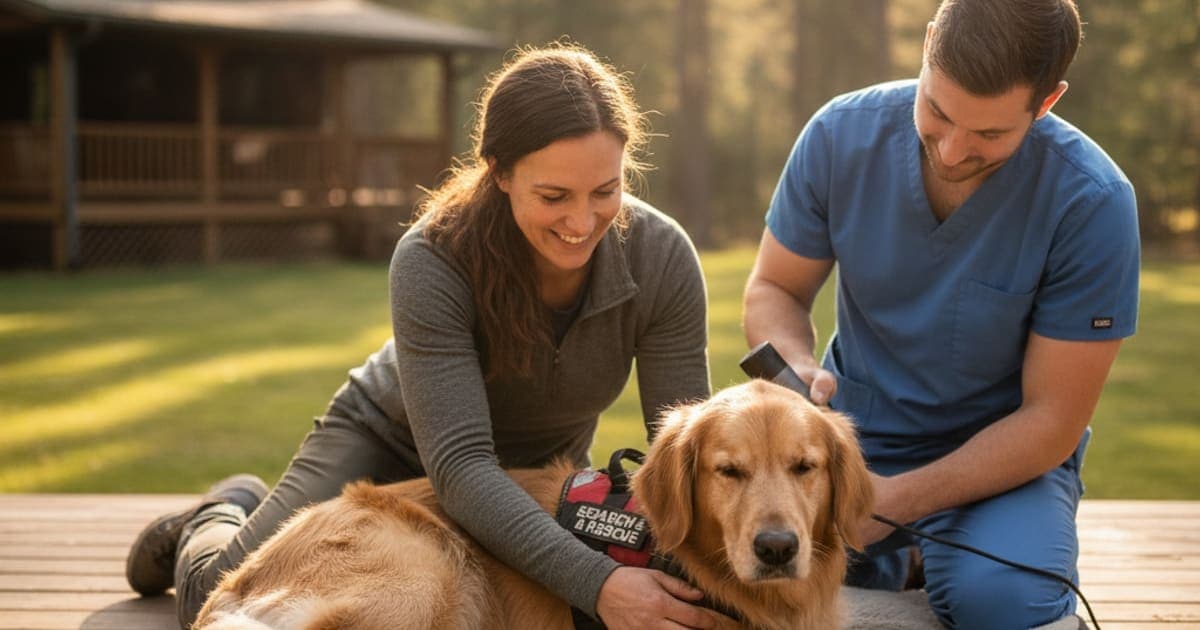 K9-REPAIR for Search and Rescue Dogs — Working Dog SupportK9-REPAIR is pawgen's BPC-157 and TB-500 peptide formulation for dogs, dosed by body weight and third-party tested. Handlers of search and rescue dogs use it to support tendon, ligament and joint recovery across hard training cycles. It is not an FDA-approved veterinary drug, so plan its use with your veterinarian.Read the guide →
 K9-REPAIR for Iliopsoas Strain in Dogs: Does It Work?K9-REPAIR is a BPC-157 and TB-500 peptide formulation owners add to a veterinarian-directed recovery plan for iliopsoas strain. Research in soft-tissue models suggests these peptides may support muscle and tendon repair processes. It is not an FDA-approved veterinary drug and does not replace rest, rehabilitation or prescribed medication.Read the guide →
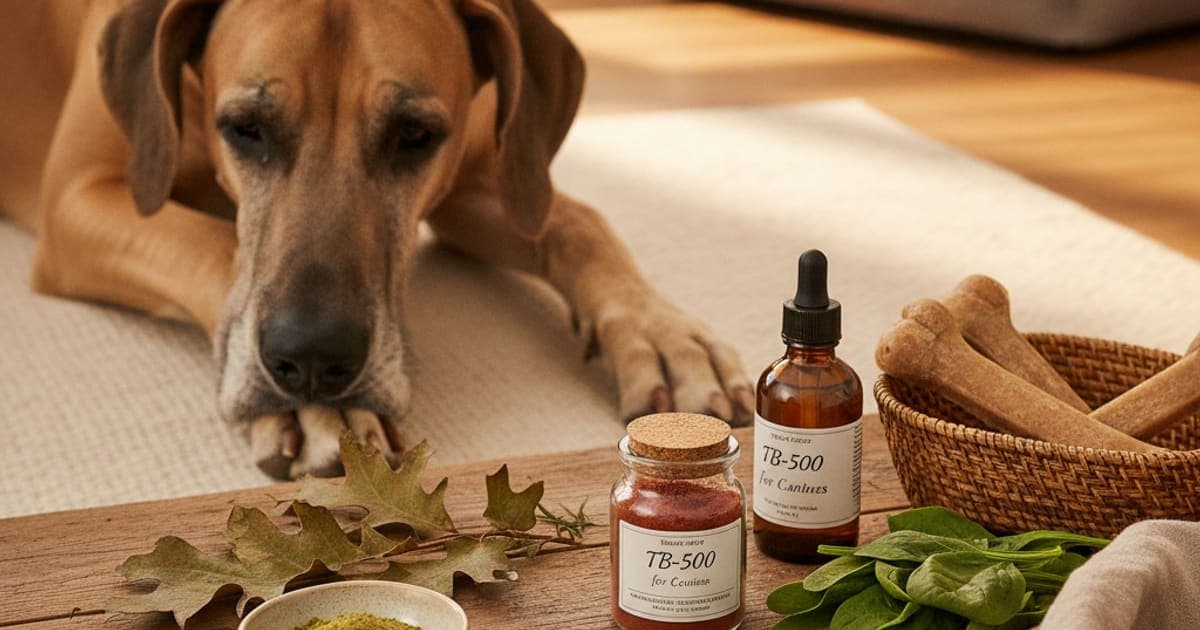 TB-500 for Giant Breed Dogs: What Owners Should KnowTB-500 is a synthetic peptide fragment based on thymosin beta-4, a protein involved in cell migration and tissue repair, and owners of giant breeds use it, usually alongside BPC-157, to support tendon, ligament and joint recovery. It is not an FDA-approved veterinary drug, and dosing is weight-based.Read the guide →