
Joint supplements and research compounds — what is in them, what studies report, and how the common products differ.
 Wolverine Stack for Lick Granuloma in Dogs: Does It Work?The Wolverine Stack — BPC-157 paired with TB-500 — is a tissue-support combination owners use alongside veterinary care for lick granuloma, not a standalone answer. Research suggests these peptides may support the wound-repair processes involved in granulation and skin remodelling, but diagnosis, infection control and the underlying itch or pain belong to your vet.Read the guide →
 K9-REPAIR for Muscle Tear in Dogs: Does It Work?K9-REPAIR is a BPC-157 and TB-500 peptide formulation that owners add alongside veterinarian-led muscle tear recovery. Preclinical research suggests both peptides influence soft-tissue repair biology, including blood vessel formation and cell migration. Neither peptide is an FDA-approved veterinary drug, and nothing replaces diagnosis, pain control and staged rehabilitation from your vet.Read the guide →
 Wolverine Stack for Hot Spots in Dogs: What It DoesThe Wolverine Stack — BPC-157 combined with TB-500 — is not an itch or infection treatment for an active hot spot; your veterinarian's plan handles that. Research on these peptides centres on tissue repair signalling, which is why owners add K9-REPAIR during the recovery phase once the flare is under control.Read the guide →
 The Wolverine Stack for Shoulder Instability in DogsThe Wolverine Stack is owner shorthand for BPC-157 paired with TB-500, the two peptides in pawgen's K9-REPAIR. Research suggests these peptides may support the connective-tissue repair processes involved in shoulder instability, and owners use them alongside — never instead of — the rest, rehabilitation and veterinary care a shoulder actually needs.Read the guide →
 BPC-157 for Dogs on Steroids: What Owners Should KnowBPC-157 is not an FDA-approved veterinary drug and has no established interaction data with corticosteroids, so any use alongside prednisone belongs in a conversation with your veterinarian. Owners typically explore peptides like BPC-157 and TB-500 for recovery support because steroids, while effective anti-inflammatories, also slow collagen turnover and muscle maintenance.Read the guide →
 K9-REPAIR for Degenerative Myelopathy in Dogs: Does It Work?No — degenerative myelopathy is a progressive spinal cord disease, and nothing available today stops or reverses it. What owners use K9-REPAIR for is different: the joints, tendons and soft tissue that take a beating as a DM dog compensates. Research suggests BPC-157 and TB-500 may support that tissue.Read the guide →
 TB-500 for Hygroma in Dogs: Does It Work?There is no published research on TB-500 in canine hygroma specifically. What research describes is thymosin beta-4's role in cell migration, angiogenesis and soft-tissue repair, which is why owners use TB-500 alongside the pressure relief a hygroma actually requires. Your veterinarian should confirm the diagnosis first.Read the guide →
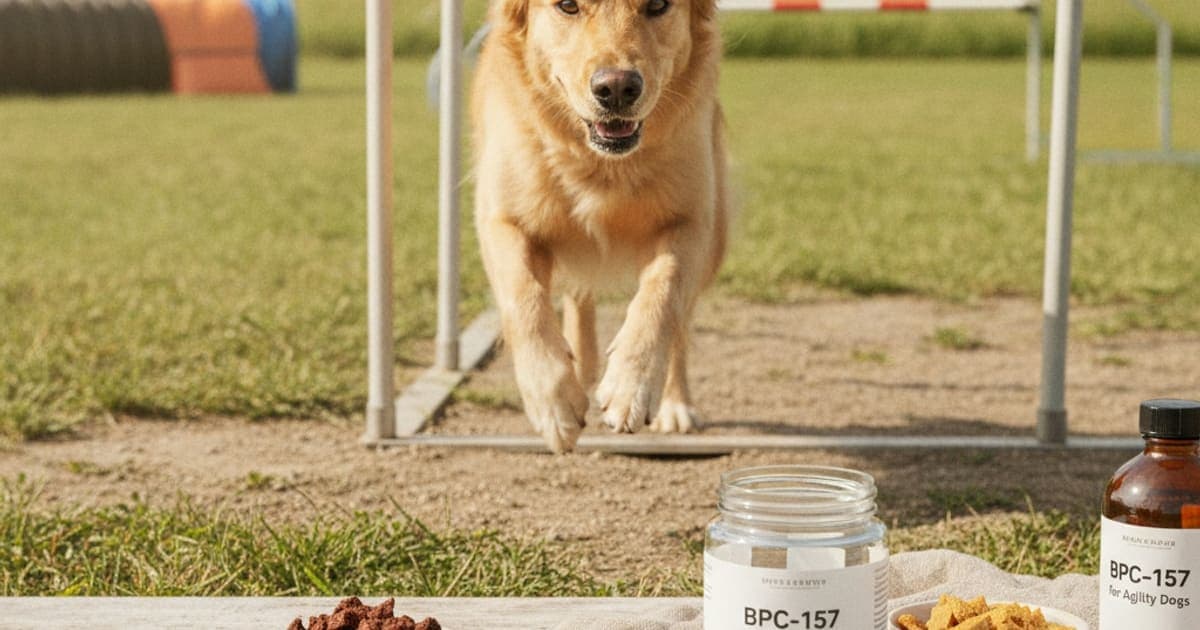 BPC-157 for Agility Dogs: What Handlers Should KnowBPC-157 is a synthetic 15-amino-acid peptide that owners of agility dogs use alongside veterinary care, most often through tendon and soft-tissue recovery or across a heavy trial season. Research suggests it supports tissue repair signalling. It is not an FDA-approved veterinary drug, so involve your vet.Read the guide →
 TB-500 for Dogs Over 10: What Owners Should KnowTB-500 is a synthetic peptide based on a fragment of thymosin beta-4, and in dogs over 10 owners use it as part of a mobility and recovery routine alongside veterinary care — never instead of it. It is not an FDA-approved veterinary drug, so dosing decisions belong with your vet.Read the guide →
 K9-REPAIR for Hip Weakness in Dogs: Does It Work?K9-REPAIR is a BPC-157 and TB-500 peptide formulation owners add to a veterinary recovery plan for hip weakness; research suggests these peptides may support soft-tissue and connective-tissue repair processes. It is not an FDA-approved drug and does not replace diagnosis, surgery or prescribed medication. Your vet identifies the cause first.Read the guide →
 How Does the Wolverine Stack Work in Dogs? (Explained)The Wolverine Stack is the informal name for BPC-157 and TB-500 used together. Research suggests BPC-157 supports blood-vessel formation and fibroblast activity at an injury site, while TB-500 supports cell migration and actin remodelling. Owners run the pair through recovery because each acts on a different stage of soft-tissue repair.Read the guide →
 K9-REPAIR for Agility Dogs: Joint and Tendon SupportK9-REPAIR is a BPC-157 and TB-500 peptide formulation for dogs that agility handlers use to support tendon, ligament and joint tissue across a competition season. It is not an FDA-approved veterinary drug, and the research is emerging, but the mechanisms behind both peptides are why owners increasingly add it alongside conditioning and veterinary care.Read the guide →
 The Wolverine Stack for Dog Tendon Injury: Does It Work?The Wolverine Stack is the owner nickname for BPC-157 paired with TB-500 — the two peptides in K9-REPAIR. Research suggests both may support the tissue-repair processes tendons rely on, and owners use the pair through rehab. It is not FDA-approved and works alongside your vet's plan, never instead of it.Read the guide →
 BPC-157 for Stomach Ulcers in Dogs: Does It Work?BPC-157 is not a treatment for stomach ulcers in dogs and is not an FDA-approved veterinary drug. Published gastrointestinal research suggests it may support the mucosal repair and blood-vessel formation the stomach lining depends on, which is why owners use it alongside the acid-suppression plan a veterinarian directs.Read the guide →
 TB-500 for Fibrocartilaginous Embolism in Dogs (FCE)TB-500 is not a treatment for fibrocartilaginous embolism, and no peptide can clear the fibrocartilage plug or undo spinal cord damage already done. Research on TB-500 focuses on tissue repair and mobility support, which is why owners use it alongside veterinary-directed rehab rather than in place of it.Read the guide →
 K9-REPAIR for Food Sensitivity in Dogs: Does It Work?K9-REPAIR is not a food sensitivity treatment, and no peptide replaces identifying the trigger ingredient. Its BPC-157 and TB-500 components are studied for their role in mucosal and connective tissue repair signalling, which is why owners use it alongside a vet-guided elimination diet rather than instead of one.Read the guide →
 TB-500 for Muscle Atrophy in Dogs: Does It Work?TB-500 does not build muscle directly. Research suggests it acts on actin and cell migration in connective tissue, which owners and researchers associate with the repair environment muscle needs to rebuild. Muscle regrowth itself comes from progressive loading — controlled exercise, vet-guided rehab, and adequate protein.Read the guide →
 Wolverine Stack for Meniscus Tear in Dogs — Does It Work?The Wolverine Stack — BPC-157 and TB-500 together — is not a fix for a torn meniscus, which usually needs surgical assessment. Research in animal models suggests both peptides influence soft-tissue repair signalling, and owners report using them through orthopaedic recovery alongside the plan their veterinarian sets.Read the guide →
 Is K9-REPAIR Worth It for Your Dog?K9-REPAIR is worth it if you want one weight-dosed, third-party-tested BPC-157 and TB-500 peptide formulation supporting your dog through a recovery window rather than a shelf of underdosed chews. It is not an FDA-approved drug and never replaces your veterinarian's plan, so judge it on formulation quality and mechanism.Read the guide →
 Wolverine Stack for Torn ACL in Dogs: Does It Work?The Wolverine Stack — BPC-157 paired with TB-500 — is the peptide combination many owners add during cruciate recovery, and published animal research suggests these peptides may support the soft-tissue repair environment. It is not a substitute for surgery, prescribed pain control, or rehab, and your veterinarian owns that plan.Read the guide →
 BPC-157 for Food Sensitivity in Dogs: Does It Work?BPC-157 is not a treatment for food sensitivity in dogs and does nothing to identify the trigger ingredient. Research in animal models suggests it acts on the gastrointestinal lining and repair signalling, which is why owners use it as support alongside a veterinarian-directed elimination diet rather than in place of one.Read the guide →
 BPC-157 for Spondylosis in Dogs: Does It Work?BPC-157 does not dissolve the bony bridges that define spondylosis. What published preclinical research suggests is that it influences soft tissue repair signalling — the tendons, ligaments and muscle that compensate around a stiffening spine. Owners use it alongside veterinary care, never instead of it.Read the guide →
 Wolverine Stack for Muscle Atrophy in Dogs: Does It Work?The Wolverine Stack — the owner nickname for BPC-157 paired with TB-500 — is not a muscle builder. Research suggests these peptides may support the connective tissue and repair signalling around an injury, which is what lets a dog load a limb again. Load rebuilds muscle, alongside vet-led rehab.Read the guide →
 K9-REPAIR for Joint Effusion in Dogs: Does It Work?K9-REPAIR is not a treatment for joint effusion — no supplement is, and effusion is a sign rather than a diagnosis. It is a BPC-157 and TB-500 peptide formulation owners use alongside veterinary care, chosen for what peptide research suggests about connective-tissue and soft-tissue repair signalling.Read the guide →