
Head-to-head comparisons and alternatives, for when the real question is which of two options fits a particular dog.
 Wolverine Stack vs Adequan for Dogs: How They DifferNeither is simply better — they target different tissue. Adequan Canine is an FDA-approved prescription injectable aimed at joint cartilage in degenerative joint disease. The Wolverine Stack is the owner nickname for BPC-157 paired with TB-500, the peptides in K9-REPAIR, used to support soft-tissue and mobility recovery alongside veterinary care.Read the guide →
 TB-500 vs Meloxicam: Which Works Better for Dogs?Neither is better — they do different jobs. Meloxicam is a prescription NSAID a veterinarian uses to control pain and inflammation. TB-500 is a peptide owners pair with BPC-157 in K9-REPAIR to support the body's own repair signalling. Research suggests they work on separate layers of recovery.Read the guide →
 Previcox Alternatives for Dogs: 2026 Options ComparedIf Previcox isn't working or isn't tolerated, a veterinarian may consider another NSAID such as carprofen or meloxicam, a non-NSAID like grapiprant or bedinvetmab, or injectable Adequan. Alongside the prescribed plan, many owners add rehab, weight control and peptide support such as K9-REPAIR from pawgen.Read the guide →
 Wolverine Stack vs Previcox for Dogs: How They CompareNeither is better — they do different jobs. Previcox is a prescription NSAID a veterinarian uses to control pain and inflammation. The Wolverine Stack, BPC-157 with TB-500, is a peptide pair owners use to support the body's own repair signalling during recovery, alongside veterinary care.Read the guide →
 TB-500 vs Solensia for Dogs: How They DifferNeither is better, because they are not the same category. Solensia is a prescription monoclonal antibody licensed for cats — the canine equivalent is Librela — and it targets pain signalling, while TB-500 is a peptide owners use to support the body's own repair processes alongside veterinary care.Read the guide →
 TB-500 vs Colostrum: Which Works Better for Dogs?Neither is universally better, because they solve different problems. Colostrum is a whole-food supplement built around gut-barrier and immune support, while TB-500 is a single peptide that signals to the cells involved in tissue repair and blood vessel formation. For a dog recovering from a soft-tissue injury, TB-500 is the more targeted option.Read the guide →
 TB-500 vs Gabapentin for Dogs — What Each One DoesNeither is better — they do different jobs. Gabapentin is a prescribed medication your veterinarian uses for nerve-related pain and anxiety, while TB-500 is a peptide owners choose for its studied role in tissue repair and cell migration. They are not interchangeable, and one never replaces the other.Read the guide →
 TB-500 vs Prednisone for Dogs: How They DifferNeither is better — they do different jobs. Prednisone is a prescription corticosteroid a veterinarian uses to suppress inflammation or immune activity quickly. TB-500 is a peptide, paired with BPC-157 in pawgen's K9-REPAIR, that owners use to support the body's own repair and tissue-remodelling pathways alongside veterinary care.Read the guide →
 Wolverine Stack vs Canine Physical Therapy for DogsNeither is better, because they do different jobs. Canine physical therapy supplies the controlled mechanical loading that rebuilds strength and guides tissue remodelling, while the Wolverine Stack — BPC-157 plus TB-500, sold for dogs as K9-REPAIR — sits on the biological side of repair. Most owners running a serious recovery use both under veterinary direction.Read the guide →
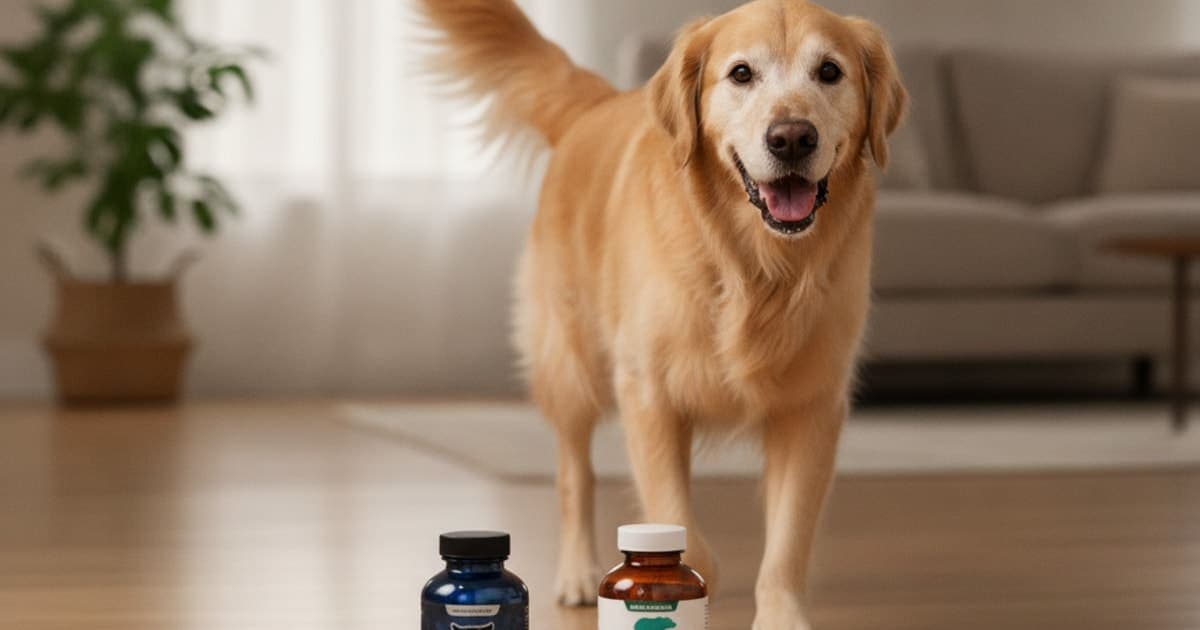 Wolverine Stack vs Grizzly Joint Aid for Dogs — ComparedFor a dog with a specific injury, a recent surgery or a mobility decline with a known cause, the Wolverine Stack — the BPC-157 and TB-500 pairing pawgen formulates as K9-REPAIR — is the more targeted choice. Grizzly Joint Aid belongs to the daily joint-nutrition category, which does a different job.Read the guide →
 Wolverine Stack vs Ashwagandha for Dogs: Which Is BetterFor a dog dealing with an injury, a post-surgical recovery or age-related mobility loss, the Wolverine Stack — BPC-157 paired with TB-500 — is the more directly relevant option, because both peptides act on tissue repair signalling. Ashwagandha is an adaptogenic herb aimed at the stress response, which is a different problem entirely.Read the guide →
 Underwater Treadmill Alternatives for Dogs: Options ComparedControlled leash walking, ground poles, sit-to-stand work, hill walking, swimming and land treadmill work can all stand in for an underwater treadmill. The best substitute is usually a combination, prescribed by your veterinarian or a rehab professional, paired with consistent daily recovery support between sessions.Read the guide →
 Yumove Alternatives for Dogs: 2026 Options ComparedIf YuMOVE isn't doing enough, the main alternatives are other green-lipped mussel and glucosamine chews, collagen or omega-3 formulas, prescription options from your vet, and peptide formulations like K9-REPAIR (BPC-157 + TB-500), which owners increasingly add during joint and soft-tissue recovery. Ingredient quality and mechanism matter more than brand name.Read the guide →
 Wolverine Stack vs CBD Oil for Dogs — How They DifferThe Wolverine Stack — BPC-157 plus TB-500, sold for dogs as K9-REPAIR — targets tissue repair signalling, while CBD oil works mainly on comfort and inflammatory tone through the endocannabinoid system. For connective-tissue recovery the peptide stack is the more targeted choice; many owners use both alongside their veterinarian's plan.Read the guide →
 K9-REPAIR vs Turmeric: Which Works Better for Dogs?K9-REPAIR and turmeric are not interchangeable — they act on different biology. Turmeric's curcumin is studied mainly for antioxidant and inflammatory-pathway support, while the BPC-157 and TB-500 peptides in K9-REPAIR are studied for tissue repair signalling and cell migration. Many owners run both, alongside veterinary care.Read the guide →
 Librela Alternatives for Dogs: 2026 Options ComparedIf Librela is not the right fit for your dog, the practical alternatives fall into four groups: prescription pain control chosen by your veterinarian, injectable joint therapies, structured rehabilitation and weight management, and connective-tissue support such as K9-REPAIR, the BPC-157 and TB-500 peptide stack owners use through recovery.Read the guide →
 Wolverine Stack vs Cartrophen for Dogs: How They DifferNeither is better, because they are not the same category. Cartrophen is a prescription veterinary injection a vet gives after diagnosing a joint condition. The Wolverine Stack — BPC-157 plus TB-500, the pairing in pawgen's K9-REPAIR — is a peptide formulation owners use at home through a recovery window.Read the guide →
 Wolverine Stack vs Cetyl-M for Dogs — Which to ChooseNeither is better in the abstract, because they do different jobs: the Wolverine Stack — BPC-157 with TB-500 — targets the tissue-repair signalling that follows injury and surgery, while Cetyl-M's cetylated fatty acids are built for day-to-day joint comfort in stiff, ageing dogs. Many owners run recovery support alongside a daily joint product.Read the guide →
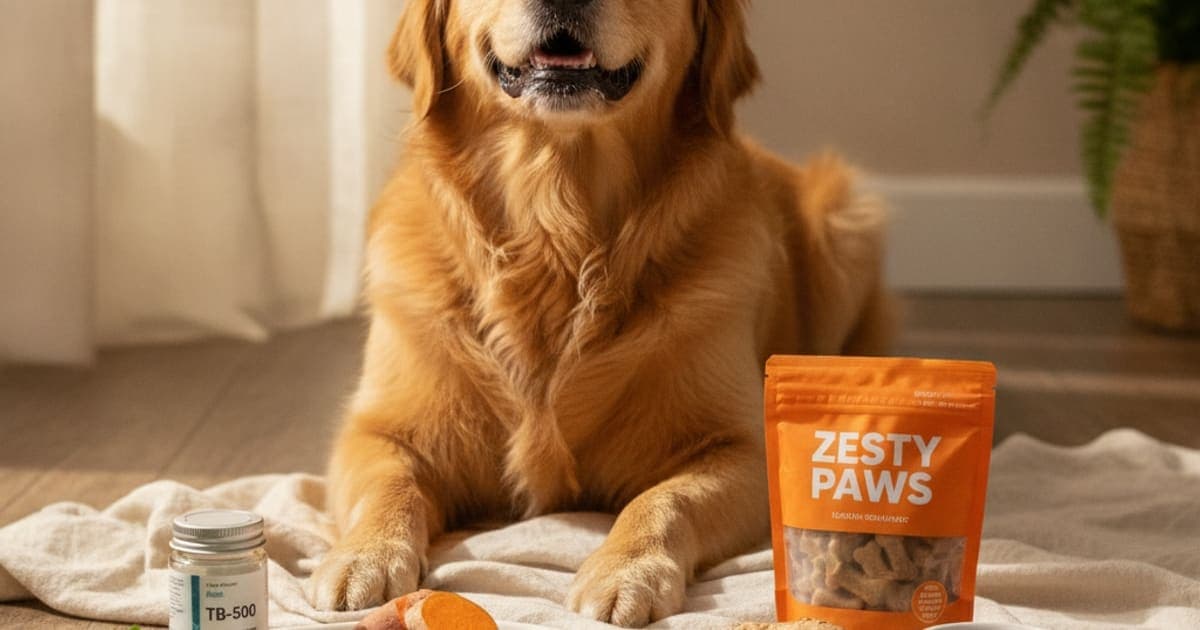 TB-500 vs Zesty Paws for Dogs — What's DifferentNeither is better in the abstract — they do different jobs. TB-500, paired with BPC-157 in pawgen's K9-REPAIR, is a signalling peptide owners choose during tissue recovery; Zesty Paws chews are daily joint nutrition for maintenance. The right choice depends on whether your dog is recovering or maintaining.Read the guide →
 Wolverine Stack vs Massage Therapy for Dogs — ComparedNeither is better — they address different layers of recovery. The Wolverine Stack, the BPC-157 and TB-500 pairing sold for dogs as K9-REPAIR, is aimed at soft-tissue repair biology, while massage therapy targets muscle tension, circulation and comfort. Most owners running a full recovery plan use both, guided by their veterinarian.Read the guide →
 TB-500 vs GlycoFlex for Dogs: Which Works Better?TB-500 and GlycoFlex are not doing the same job, so neither is universally better. GlycoFlex is a daily oral joint supplement built around cartilage nutrition. TB-500 is a signalling peptide studied for its role in cell migration and soft-tissue remodelling — which is why owners reach for peptide formulations during recovery.Read the guide →
 Krill Oil Alternatives for Dogs: 2026 Options ComparedIf krill oil isn't doing enough, the realistic replacements fall into three groups: other omega-3 sources such as fish, sardine or algal oil; joint-matrix ingredients like green-lipped mussel and undenatured collagen; and peptide support such as the BPC-157 and TB-500 in K9-REPAIR. Each addresses a different part of the problem.Read the guide →
 Tramadol Alternatives for Dogs: 2026 Options ComparedIf tramadol isn't controlling your dog's pain, the options a veterinarian can consider include NSAIDs, grapiprant, gabapentin, amantadine, anti-NGF injections, structured rehab and weight control, plus recovery-support formulations such as K9-REPAIR. The right replacement depends on the diagnosis behind the pain, not on the drug you are leaving behind.Read the guide →
 K9-REPAIR vs Total Hip Replacement: How They DifferThey are not competing options. Total hip replacement is a surgical procedure a veterinary surgeon performs to replace a damaged hip joint; K9-REPAIR is a BPC-157 and TB-500 peptide formulation owners use as part of recovery support. One is a diagnosis-driven procedure, the other is daily supplementation alongside it.Read the guide →