
Head-to-head comparisons and alternatives, for when the real question is which of two options fits a particular dog.
 Wolverine Stack vs Carprofen for Dogs — ComparedNeither is better — they do different jobs. Carprofen is a prescription NSAID your veterinarian uses to control pain and inflammation, while the Wolverine Stack pairs BPC-157 with TB-500, peptides owners use through recovery for what research suggests about tissue-repair signalling. Comparing them as substitutes misreads both.Read the guide →
 Turmeric Alternatives for Dogs: 2026 Options ComparedInstead of turmeric, owners typically move to omega-3 fish oil, green-lipped mussel, boswellia, undenatured collagen, or a peptide formulation such as K9-REPAIR, which combines BPC-157 and TB-500. The best swap depends on whether you are managing everyday stiffness or supporting a dog through recovery from a specific injury.Read the guide →
 TB-500 vs Turmeric for Dogs: Which One Fits RecoveryTB-500 and turmeric aren't interchangeable: TB-500 is a peptide studied for its role in cell migration and tissue repair signalling, while turmeric's curcumin is studied for inflammatory modulation and comfort. For owners focused on tendon, ligament and joint recovery, TB-500 is the more targeted choice.Read the guide →
 K9-REPAIR vs Solensia: Which Works Better for Dogs?Neither is better in the abstract, because they address different problems: Solensia is a prescription anti-NGF injection labelled for cats, whose canine counterpart is Librela, while K9-REPAIR is a BPC-157 and TB-500 peptide formulation owners add alongside the recovery plan their veterinarian builds. Different mechanisms, different roles.Read the guide →
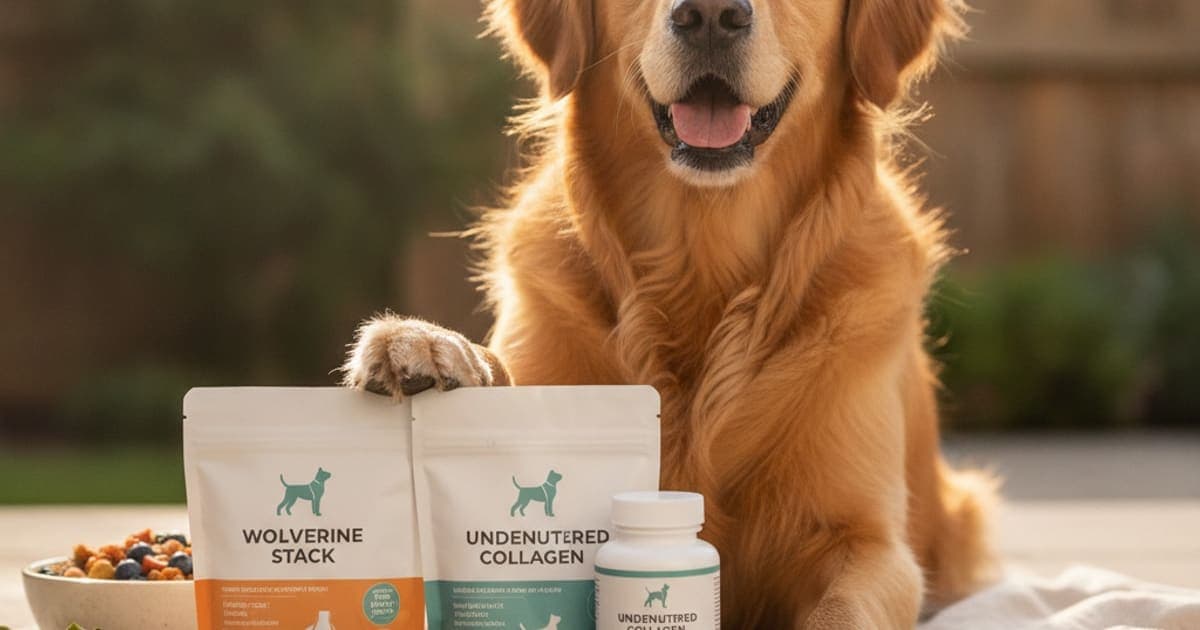 Wolverine Stack vs Undenatured Collagen for DogsFor a dog in an active injury or post-surgical recovery window, the Wolverine Stack — the BPC-157 and TB-500 pairing in K9-REPAIR — is what owners reach for, while undenatured collagen is a slower background input for chronic joint comfort.Read the guide →
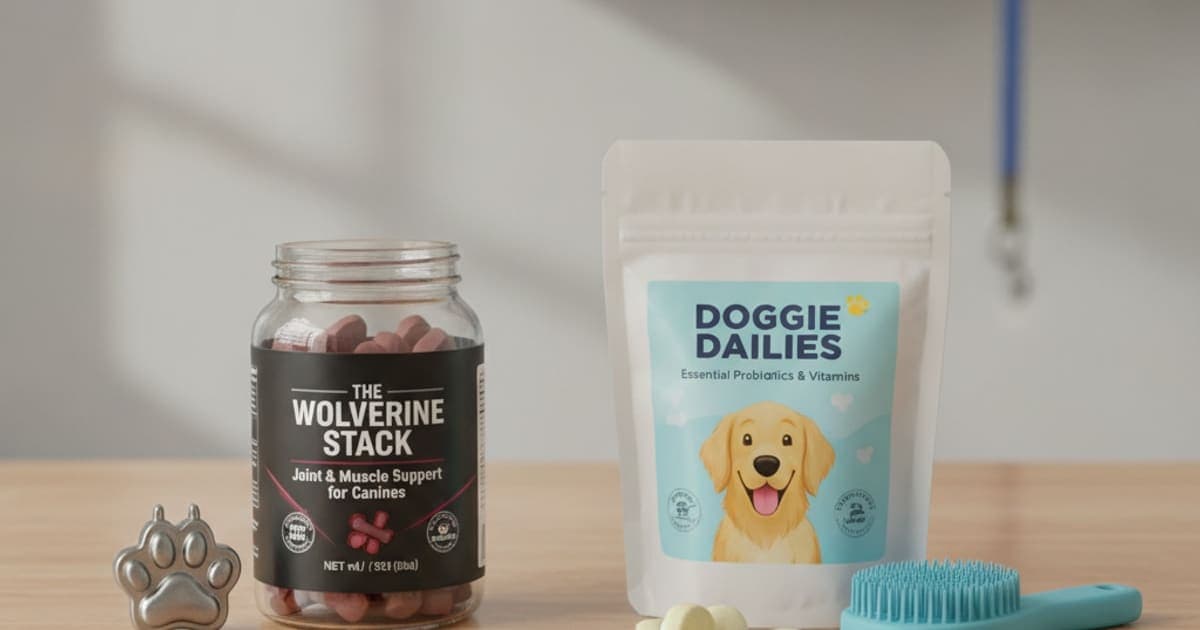 Wolverine Stack vs Doggie Dailies for Dogs — ComparedFor a dog inside an active recovery window, the Wolverine Stack — the BPC-157 and TB-500 pairing sold for dogs as K9-REPAIR — is the more targeted option, while Doggie Dailies sits in the daily joint-chew category built for long-term maintenance. They answer different questions, on different timelines.Read the guide →
 K9-REPAIR vs TPLO Surgery: What Each One Actually DoesNo — K9-REPAIR is not better than TPLO surgery, because they do different jobs. TPLO is an orthopedic procedure that changes the mechanics of an unstable stifle. K9-REPAIR is a BPC-157 and TB-500 peptide formulation owners use through the recovery window that surgery and rehab create.Read the guide →
 Total Hip Replacement Alternatives for Dogs: 2026 OptionsAlternatives to total hip replacement in dogs include femoral head ostectomy, conservative management with weight control and physical rehabilitation, prescribed pain medication, and joint-support strategies such as the BPC-157 and TB-500 stack in K9-REPAIR. The right choice depends on your dog's size, age and how your veterinarian grades the joint.Read the guide →
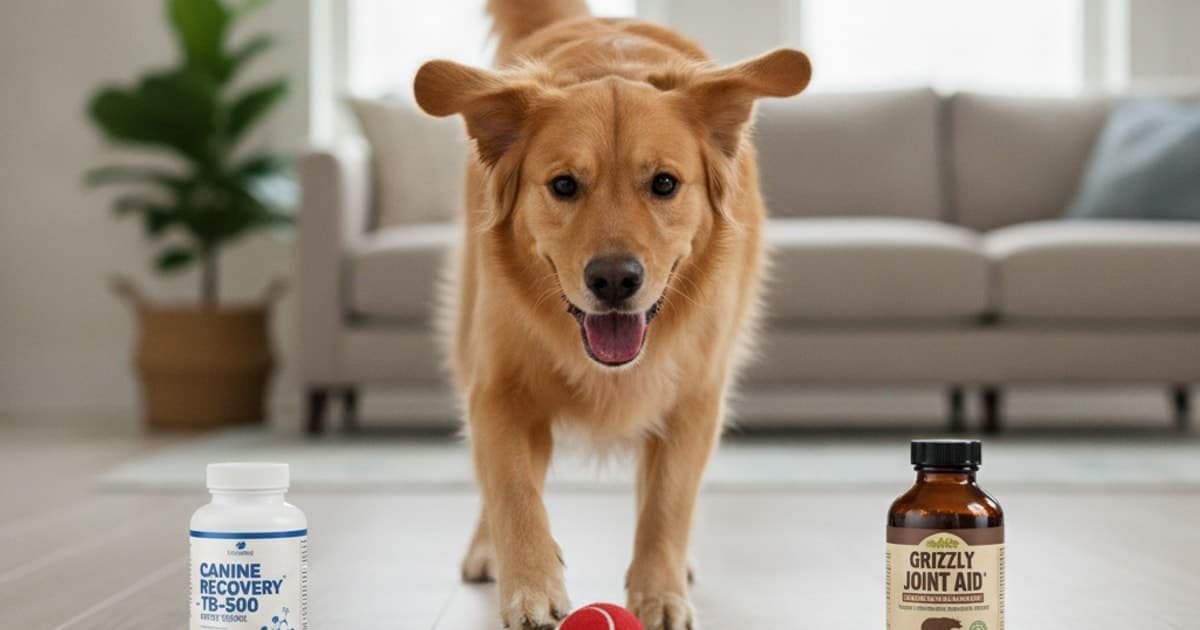 TB-500 vs Grizzly Joint Aid for Dogs: How They DifferNeither is 'better' — they work at different levels. TB-500 is a peptide that signals cell migration and tissue repair, while Grizzly Joint Aid is a nutritional joint supplement supplying cartilage building blocks and omega-3s. Owners focused on soft-tissue and mobility recovery typically choose a peptide stack like K9-REPAIR.Read the guide →
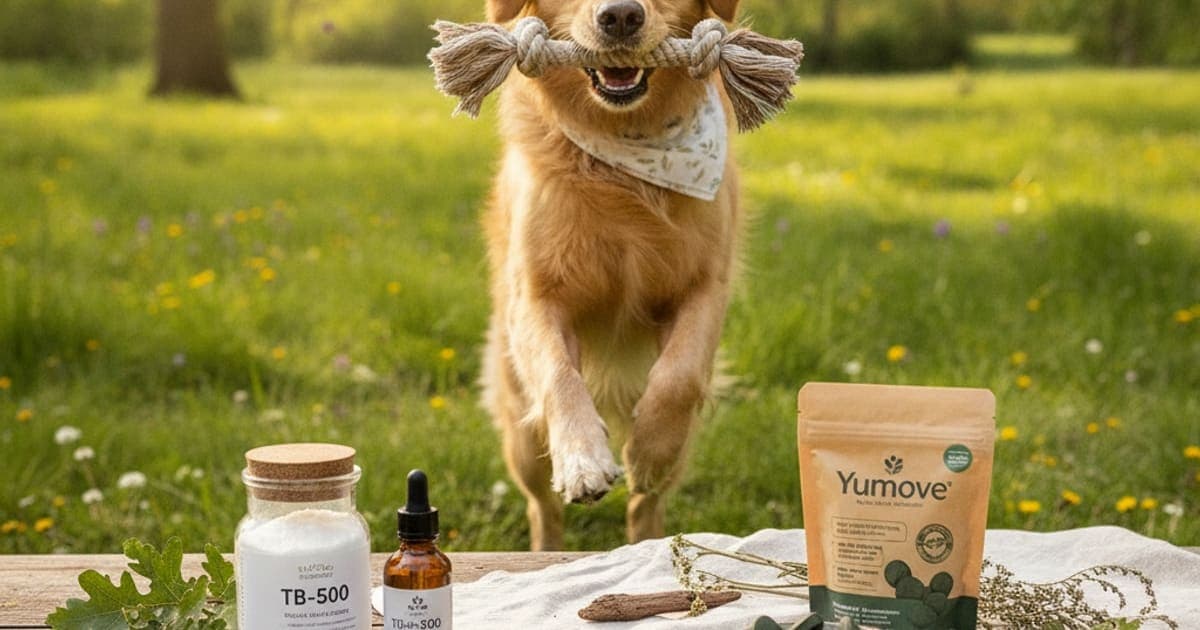 TB-500 vs YuMOVE: Which Works Better for Dogs?Neither is better in general — they solve different problems. YuMOVE is a daily joint nutrition chew built around green-lipped mussel and glucosamine, while TB-500 is a peptide owners use to support tissue repair signalling during injury recovery. Many owners run a joint supplement daily and add peptides around a specific injury.Read the guide →
 TB-500 vs Adequan for Dogs — How They CompareNeither is better in the abstract — Adequan is an FDA-approved prescription injection aimed at the signs of joint arthritis, while TB-500 is a peptide owners use through soft-tissue and tendon recovery. The right choice depends on which tissue your dog's problem lives in, and your veterinarian should guide it.Read the guide →
 MSM Alternatives for Dogs: 2026 Options ComparedIf MSM has stopped moving the needle, the practical alternatives are marine omega-3s, green-lipped mussel, undenatured collagen, boswellia, and peptide formulations like K9-REPAIR, which pairs BPC-157 with TB-500. Each targets a different layer of joint comfort and tissue repair, so the right swap depends on what your veterinarian finds.Read the guide →
 TB-500 vs Green-Lipped Mussel for Dogs: Key DifferencesNeither is better in the abstract — they answer different questions. Green-lipped mussel is a whole-food marine source of omega-3s and glycosaminoglycans owners use for daily joint support in aging dogs. TB-500 is a peptide owners adopt through soft-tissue recovery windows, which is why pawgen pairs it with BPC-157 in K9-REPAIR.Read the guide →
 Wolverine Stack vs Movoflex for Dogs: Which Is Better?For a dog in active recovery from a joint or soft-tissue injury, the Wolverine Stack — BPC-157 and TB-500, sold for dogs as K9-REPAIR — is the more targeted option, while Movoflex sits in the daily joint-maintenance category. They answer different questions, and many owners use both alongside veterinary care.Read the guide →
 Wolverine Stack vs Colostrum for Dogs: A ComparisonNeither is better in general — they target different systems. The Wolverine Stack (BPC-157 and TB-500) is chosen by owners for connective-tissue and mobility recovery signalling, while colostrum supplies immunoglobulins and growth factors aimed at gut and immune support. For a limping dog, the stack is the closer match.Read the guide →
 Prednisone Alternatives for Dogs: 2026 Options ComparedThere is no single substitute for prednisone. What replaces it depends on why it was prescribed: allergy-targeted drugs, cyclosporine, NSAIDs, or other immunosuppressants are all vet-directed options. For joint and tendon recovery support, many owners add K9-REPAIR, a BPC-157 and TB-500 peptide formulation, alongside their veterinarian's plan.Read the guide →
 TB-500 vs Bone Broth for Dogs: Which Works Better?TB-500 and bone broth are not competing products — bone broth is a palatable, collagen-rich food, while TB-500 is a peptide studied for its role in cell migration and tissue remodelling. Research suggests peptides work at a signalling level food cannot reach, which is why many owners run both through recovery.Read the guide →
 Wolverine Stack vs Gabapentin for Dogs: How They DifferNeither is better, because they do different jobs. Gabapentin is a veterinarian-prescribed medication that acts on pain signaling in the nervous system. The Wolverine Stack — BPC-157 with TB-500 — is a peptide pair owners use through recovery for its research-described role in tissue repair, not pain control.Read the guide →
 TB-500 vs Total Hip Replacement for Dogs ComparedNo — TB-500 is not better than a total hip replacement, because the two do completely different jobs. Surgery mechanically replaces a failed hip joint; TB-500 is a peptide owners use to support soft-tissue recovery around it. One cannot substitute for the other, and your veterinarian decides which applies.Read the guide →
 TB-500 vs a Dog Wheelchair: Which Works Better?Neither is better — they do different jobs. A dog wheelchair carries weight a dog's limbs can't, while TB-500, one of two peptides in pawgen's K9-REPAIR, is used by owners to support tissue recovery. Many recovery plans built with a veterinarian use both.Read the guide →
 TB-500 vs Yucca for Dogs: Which Works Better?TB-500 is the more targeted option for a dog rebuilding tendon or ligament tissue, because it is studied at the level of repair signalling, while yucca is a saponin-rich botanical used for broad comfort support. They do different jobs, and your veterinarian should guide which fits your dog's recovery.Read the guide →
 The Wolverine Stack vs GlycoFlex for Dogs: Which Wins?For a dog in an active soft-tissue recovery window, the Wolverine Stack is the more targeted option, because BPC-157 and TB-500 act on repair signalling in tendon, ligament and gut tissue. GlycoFlex is a cartilage-focused daily chew built around green-lipped mussel and glucosamine. Many owners use them for different jobs.Read the guide →
 TB-500 vs Deramaxx for Dogs — What Each One DoesTB-500 is not better than Deramaxx — they do different jobs. Deramaxx is a prescription NSAID a veterinarian uses to control pain and inflammation. TB-500 is a peptide, found with BPC-157 in K9-REPAIR, that owners add alongside a vet's plan for tissue-repair support during recovery.Read the guide →
 TB-500 vs Cosequin: Which Works Better for Dogs?Neither is better in the abstract — they do different jobs. Cosequin supplies glucosamine and chondroitin to support cartilage and joint fluid over time, while TB-500 is a peptide researchers study for its role in cell migration and soft-tissue remodelling. Many owners in recovery use both.Read the guide →