How long healing actually takes, what each week looks like, and which setbacks are normal versus worth a call to the vet.
 How Long Does Hip Arthritis Take to Heal in Dogs?Hip arthritis in dogs does not heal — cartilage loss is permanent and the condition is managed for life rather than cured. What can change is comfort and function, and owners typically see meaningful shifts over weeks to months of consistent weight control, exercise adjustment, veterinary care and joint support.Read the guide →
 How Long Does a Sesamoid Fracture Take to Heal in Dogs?Most sesamoid fractures in dogs settle over weeks to months rather than days, and many never form a solid bony union — the fragment stabilises with fibrous tissue instead. The real timeline depends on which sesamoid broke, your dog's size and drive, and how strictly rest is enforced.Read the guide →
 How Long Does Stomach Ulcers Take to Heal in Dogs?Uncomplicated stomach ulcers in dogs often show clinical improvement within days once the underlying cause is removed and acid suppression begins, but full healing of the stomach lining is generally measured in weeks. Deep, bleeding or perforated ulcers take substantially longer and need intensive veterinary care.Read the guide →
 How Long Does Soft Tissue Injury Take to Heal in Dogs?Most soft tissue injuries in dogs recover in stages: inflammation over the first several days, active repair over the following weeks, and collagen remodeling that continues for months. A mild strain may settle quickly, while a significant tendon or ligament tear takes months of vet-directed, controlled rehabilitation.Read the guide →
 How Long Does Cauda Equina Syndrome Take to Heal in Dogs?There is no fixed timeline: dogs with cauda equina syndrome are managed over months rather than weeks, because nerve roots and the surrounding soft tissue remodel slowly. After decompressive surgery, rehabilitation is usually staged across several months, and some neurological deficits improve only partially or not at all.Read the guide →
 How Long Does Arthritis Take to Heal in Dogs? (Timeline)Arthritis in dogs does not heal. Osteoarthritis is a progressive, degenerative joint disease, and the cartilage changes behind it are permanent. What does change is comfort and function: with veterinary treatment, weight control and consistent rehab, many owners report meaningful improvement over weeks to months of steady management.Read the guide →
 How Long Does Hot Spots Take to Heal in Dogs? (Timeline)Most uncomplicated hot spots in dogs improve visibly within a few days of being clipped, cleaned and treated under veterinary direction, with the surface closing over in roughly one to two weeks. Hair regrowth takes longer. Deeper or repeatedly licked lesions heal more slowly, especially when the underlying itch goes unaddressed.Read the guide →
 How Long Does Hip Dysplasia Take to Heal in Dogs?Hip dysplasia does not heal. It is a structural malformation of the hip joint that is managed for life rather than cured. What does have a timeline is recovery from surgery or a flare-up — commonly staged over weeks to months of restricted activity and graded rehabilitation guided by your veterinarian.Read the guide →
 How Long Does Tendon Injury Take to Heal in Dogs?Most dog tendon injuries heal over months rather than weeks. Mild strains typically settle in roughly six to twelve weeks of restricted activity, while partial tears and surgically repaired ruptures often need three to six months of staged rehabilitation. Collagen keeps remodelling and strengthening well after the limp disappears.Read the guide →
 How Long Does a Torn Ligament Take to Heal in Dogs?A torn ligament in a dog heals over months rather than weeks. After surgical stabilization of a cranial cruciate ligament, recovery follows a graded plan of restriction, controlled walking and slow reloading. Partial tears managed without surgery often take longer, and the ligament itself does not reattach to its original strength.Read the guide →
 How Long Does Bursitis Take to Heal in Dogs? (Timeline)Most dogs with uncomplicated bursitis improve over weeks to a few months rather than days. Recent, mild swelling often quiets once the pressure or trauma causing it is removed, while thickened, long-standing or infected bursae take longer and may need drainage, antibiotics or surgery. Cause, duration and bedding drive the timeline.Read the guide →
 How Long Does Tendonitis Take to Heal in Dogs? (Timeline)Tendonitis in dogs resolves over weeks to months rather than days. A mild strain caught early often quiets down within a few weeks of strict activity restriction, while chronic tendinopathy, partial tears and Achilles injuries commonly need several months of graded loading. Your veterinarian's diagnosis sets the real timeline.Read the guide →
 How Long Does Food Sensitivity Take to Heal in Dogs?Digestive signs from food sensitivity in dogs often ease within the first week or two of a strict elimination diet, while skin and ear signs commonly need six to eight weeks. Veterinary dermatology research points to a full eight-week trial before judging whether food was the driver.Read the guide →
 How Long Does a Meniscus Tear Take to Heal in Dogs?A torn meniscus in dogs does not knit back together on its own, because most of the cartilage has no blood supply. Recovery is measured by the whole knee's rehabilitation after surgical treatment of the tear and the ligament instability behind it — commonly a staged process over several months.Read the guide →
 How Long Does Carpal Hyperextension Take to Heal in Dogs?Carpal hyperextension in dogs does not heal like a simple sprain. The palmar ligaments and fibrocartilage that support the wrist heal poorly under bodyweight, so most dogs with true instability need surgical fusion, and recovery is measured in months of restricted activity, staged rehabilitation and follow-up radiographs rather than weeks.Read the guide →
 How Long Does Stress Fracture Take to Heal in Dogs?Most stress fractures in dogs need several weeks of strictly restricted activity before the bone is structurally sound, and internal remodeling continues for months after your dog stops limping. The exact timeline depends on the bone involved, your dog's age and size, and how completely the rest period is enforced.Read the guide →
 How Long Does a Sprained Leg Take to Heal in Dogs?A mild sprain in a dog often improves within one to two weeks of strict rest, while moderate soft-tissue injury commonly takes several weeks and ligament damage can run months. The timeline depends on the tissue involved, your dog's age and weight, and how well activity is restricted.Read the guide →
 How Long Does Chronic Pain Take to Heal in Dogs? (Timelines)Chronic pain in dogs is usually managed rather than healed on a fixed timeline, because it persists past the point where the original tissue injury should have resolved. Owners typically see comfort shift over weeks to months on a veterinary plan, and the trajectory depends on cause, weight, and consistency.Read the guide →
 How Long Does a Partial CCL Tear Take to Heal in Dogs?A partial CCL tear in dogs does not knit back together like a strain. The ligament has poor blood supply and limited repair capacity, so recovery is measured in months of joint stabilisation rather than weeks. Surgical or conservative, the timeline depends on stability, weight and strict activity control.Read the guide →
 How Long Do Dog Cruciate Ligament Ruptures Take to Heal?A torn cruciate ligament in a dog does not knit back together on its own; the knee is stabilized surgically, or by scar tissue and muscle over time. After surgery, most dogs progress through controlled rest, gradual loading and strength work across roughly three to six months, guided by their veterinarian.Read the guide →
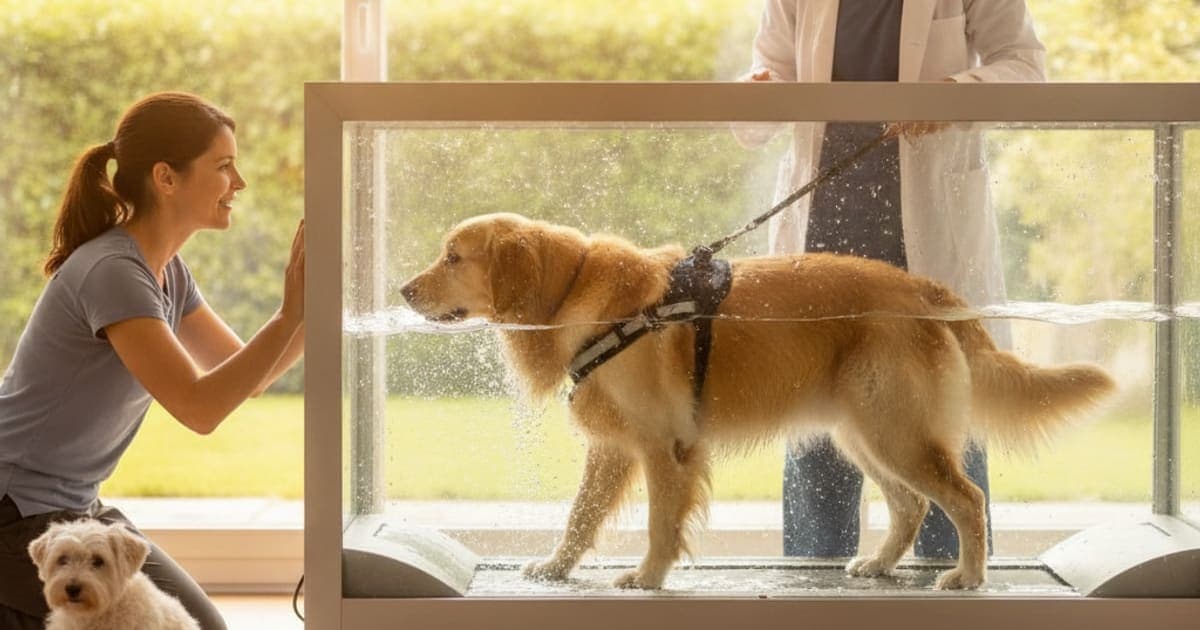 How Long Does Muscle Atrophy Take to Heal in Dogs?Muscle atrophy in dogs rebuilds over weeks to months, not days. Disuse atrophy from a limp, cast or crate rest often begins filling in within a few weeks of controlled loading, while atrophy from nerve injury, chronic illness or age takes considerably longer and may not fully return.Read the guide →
 How Long Does IBD Take to Heal in Dogs? (Real Timeline)Canine IBD is managed rather than cured. Most dogs begin responding to a veterinary plan within days to a few weeks, and reach stable, controlled disease over weeks to months. Relapses are common, so treatment is usually long-term rather than a course with a finish date.Read the guide →
 How Long Does CCL Tear Take to Heal in Dogs? (Timeline)A torn cranial cruciate ligament does not repair itself, so healing means stabilizing the knee. After surgical repair, most dogs go through roughly three to four months of controlled recovery, with the earliest weeks strictly restricted. Dogs managed without surgery usually need longer, and arthritis remains part of the picture.Read the guide →
 How Long Does IVDD Take to Heal in Dogs? (Timeline)IVDD recovery in dogs takes weeks to months rather than days. Dogs managed conservatively spend several weeks in strict confinement before a gradual return to activity, while surgical patients often move sooner but continue regaining nerve function for months. Neurological grade at diagnosis is the strongest driver of the timeline.Read the guide →