
Joint supplements and research compounds — what is in them, what studies report, and how the common products differ.
 TB-500 for Crate Rest in Dogs: Does It Work?TB-500 does not shorten a crate rest order or treat an injury. Research suggests this synthetic peptide, based on a fragment of thymosin beta-4, acts on the cell-migration and blood-vessel pathways tissue uses to rebuild. Owners use it to support the body through confinement, alongside their veterinarian's plan.Read the guide →
 Does the Wolverine Stack Help a Dog With Leaky Gut?The Wolverine Stack — BPC-157 paired with TB-500 — is the peptide combination owners increasingly use through gut recovery, and research in animal models suggests both peptides act on tissue repair and the intestinal lining. Neither is an FDA-approved veterinary drug, so diagnosis and the treatment plan stay with your veterinarian.Read the guide →
 BPC-157 for Crate Rest in Dogs: Does It Work?BPC-157 does not shorten crate rest, and nothing does — confinement protects healing tissue on a biological timetable. What research suggests is that BPC-157 and TB-500 support the repair processes happening inside the crate: blood vessel formation, cell migration, collagen organisation. Owners use K9-REPAIR alongside the rest plan their veterinarian sets.Read the guide →
 BPC-157 for Meniscus Tear in Dogs: Does It Work?Research on BPC-157 points to tissue-repair signalling — new blood vessel growth, fibroblast migration, collagen organisation — rather than to closing a mechanical tear in fibrocartilage. Owners use BPC-157 and TB-500 through stifle recovery alongside veterinary care, because a displaced meniscal fragment is a surgical problem your veterinarian diagnoses and plans around.Read the guide →
 BPC-157 for Hock Injury in Dogs: Does It Work?Research in animal models suggests BPC-157 may support tendon, ligament and soft-tissue repair processes, which is why owners use it through hock recovery — but it is not an FDA-approved veterinary drug and does not replace diagnosis, splinting, surgery or rehab. Your veterinarian directs the plan; peptides sit inside it.Read the guide →
 The Wolverine Stack for Nerve Damage in Dogs: Does It Work?The Wolverine Stack is the owner nickname for BPC-157 paired with TB-500, and research in animal models suggests both peptides act on tissue repair pathways relevant to nerve recovery. Neither is an FDA-approved veterinary drug, so the diagnosis, medication and rehab plan stay with your veterinarian.Read the guide →
 K9-REPAIR for Colitis in Dogs: Does It Help?K9-REPAIR is a BPC-157 and TB-500 peptide formulation for dogs, and interest in it for gut issues comes from BPC-157's origins in gastrointestinal research. It is not an FDA-approved veterinary drug and does not treat colitis. Diagnosis and the treatment plan belong to your veterinarian, with peptides used alongside that plan.Read the guide →
 K9-REPAIR for Gastritis in Dogs: Does It Work?K9-REPAIR is not a gastritis medication and is not an FDA-approved veterinary drug; it is a BPC-157 and TB-500 peptide formulation owners use as recovery support alongside veterinary care. Gastritis needs a diagnosis first, because the underlying cause — diet, parasites, medication, or systemic disease — drives the entire plan.Read the guide →
 BPC-157 for Cauda Equina Syndrome in Dogs: Does It Work?BPC-157 does not relieve the mechanical nerve compression that defines cauda equina syndrome — only veterinary care can address that. Research suggests BPC-157 and TB-500 may support soft-tissue and connective-tissue repair, which is why owners use K9-REPAIR alongside the diagnosis, pain plan and rehab their veterinarian sets.Read the guide →
 BPC-157 for Bursitis in Dogs: Does It Work?Research on BPC-157 points to mechanisms relevant to bursitis — angiogenesis, connective tissue repair signalling and modulation of inflammation — though controlled canine trials in bursitis specifically have not been published. Owners use it alongside veterinary care, not instead of it. BPC-157 is not an FDA-approved veterinary drug.Read the guide →
 TB-500 for Shoulder Instability in Dogs: Does It Work?TB-500 does not tighten a stretched ligament or mechanically stabilise a dog's shoulder. Research on thymosin beta-4 suggests it may support soft-tissue repair processes — cell migration, new blood vessel growth and collagen organisation — which is why owners use it alongside the activity restriction and rehabilitation their veterinarian prescribes.Read the guide →
 BPC-157 for Elbow Dysplasia in Dogs: Does It Work?Research on BPC-157 points to mechanisms — angiogenesis, collagen organisation, reduced inflammatory signalling — that may support the soft tissue around a dysplastic elbow, but no peptide changes the bone shape causing the problem. Owners use it alongside veterinary care, not instead of it.Read the guide →
 TB-500 for Spondylosis in Dogs: Does It Work?TB-500 does not dissolve the bony bridges of spondylosis, but research suggests the peptide supports soft-tissue and connective-tissue repair — the muscles, ligaments and discs that carry the load around a stiffening spine. Owners use it alongside veterinary pain management and conditioning, not instead of them.Read the guide →
 TB-500 for Bicipital Tenosynovitis in Dogs — What It DoesTB-500 is a synthetic fragment of thymosin beta-4, a protein involved in cell migration, blood vessel formation and tissue remodelling. Research in laboratory and animal models suggests it may support soft-tissue repair, and owners use it through shoulder recovery alongside the diagnosis, imaging and rehab plan their veterinarian directs.Read the guide →
 Wolverine Stack for CCL Tear in Dogs: Does It Work?The Wolverine Stack — BPC-157 combined with TB-500 — cannot restore mechanical stability to a knee with a torn cranial cruciate ligament; that is what a veterinary plan is for. It is the peptide pairing many owners add alongside surgery, rehab and rest, and research suggests both peptides influence soft-tissue repair signalling.Read the guide →
 K9-REPAIR for Tendon Injury in Dogs: Does It Work?K9-REPAIR is a BPC-157 and TB-500 peptide formulation owners use alongside veterinary care during tendon recovery. It is not an FDA-approved veterinary drug and does not treat tendon injury; research suggests these peptides may support collagen remodelling, blood vessel formation and cell migration — the biology repair depends on.Read the guide →
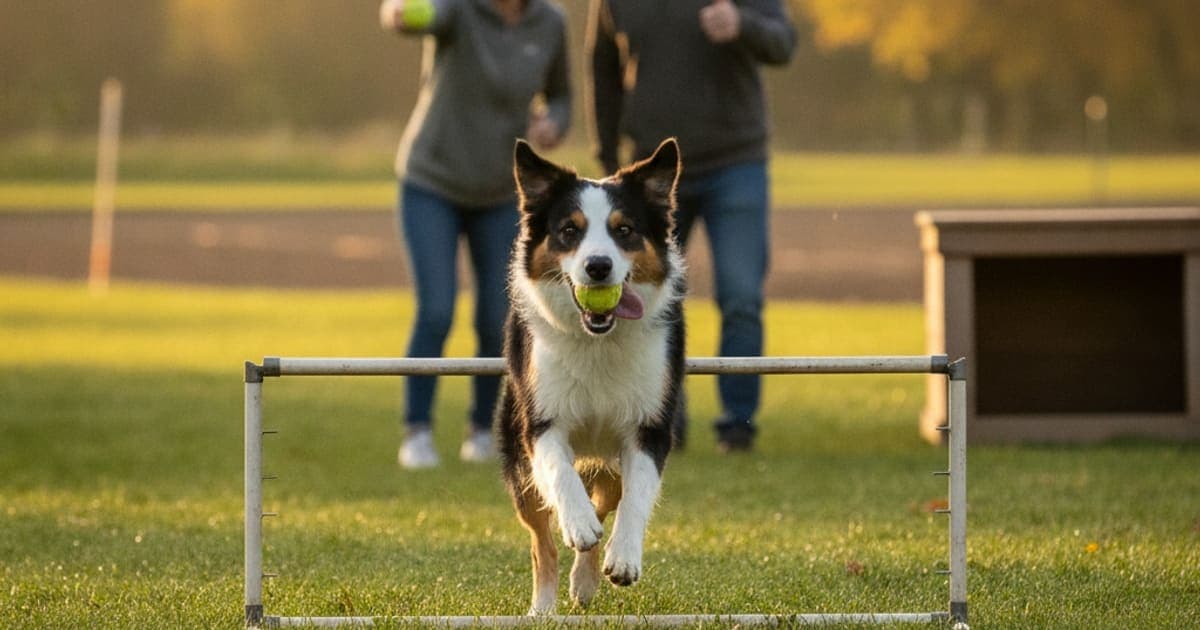 The Wolverine Stack for Flyball Dogs — What It IsThe wolverine stack is the informal name for BPC-157 and TB-500 used together, two peptides flyball owners add around heavy training and tournament weekends to support tendon and soft-tissue recovery. K9-REPAIR combines both in a weight-based formulation for dogs. Neither peptide is an FDA-approved veterinary drug, and your vet leads the plan.Read the guide →
 BPC-157 for Vestibular Disease in Dogs: Does It Work?BPC-157 is not a treatment for vestibular disease, and no research shows it acts on the inner ear or brainstem. What research suggests is that BPC-157 supports soft-tissue and vascular repair — relevant to the strain, falls and deconditioning that follow a vestibular episode. Talk to your veterinarian first.Read the guide →
 BPC-157 for Leaky Gut in Dogs: Does It Work?Research in animal models suggests BPC-157 may support the intestinal lining and the blood supply that maintains it, which is why owners of dogs with chronic gut trouble look at it. It is not an FDA-approved veterinary drug, and diagnosis and the treatment plan stay with your veterinarian.Read the guide →
 The Wolverine Stack for Rescue Dogs — BPC-157 + TB-500The Wolverine Stack is the informal name for BPC-157 combined with TB-500, two peptides owners pair to support soft-tissue and joint recovery. For rescue dogs, who often arrive with unknown injury histories and long stretches of poor nutrition, it is the stack owners reach for alongside a full veterinary workup.Read the guide →
 BPC-157 for Joint Effusion in Dogs: Does It Work?BPC-157 is not a treatment for joint effusion, and no peptide clears fluid from a joint. Effusion is a signal of an underlying problem your veterinarian needs to identify. Research suggests BPC-157 and TB-500 may support soft-tissue and joint healing, which is why owners add K9-REPAIR alongside a vet's plan.Read the guide →
 TB-500 for Sled Dogs — Working-Dog Recovery ExplainedTB-500 is a synthetic fragment of thymosin beta-4, a peptide the body uses to move repair cells into damaged tissue. Owners of sled dogs and other hard-working teams pair it with BPC-157 for tendon, joint and mobility support. Neither is an FDA-approved veterinary drug, so dosing decisions belong with your vet.Read the guide →
 BPC-157 for Nerve Damage in Dogs: Does It Work?Research in animal models suggests BPC-157 may support the repair pathways nerve tissue depends on, and owners report using it through recovery — but it is not an FDA-approved veterinary drug and cannot be described as a treatment for nerve damage. Diagnosis and the treatment plan belong to your veterinarian.Read the guide →
 The Wolverine Stack for Overweight Dogs — What It IsThe Wolverine Stack is the informal name for BPC-157 and TB-500 used together, and K9-REPAIR is the dog-specific formulation of that pairing. For an overweight dog it is used alongside — never instead of — veterinary care, a weight-reduction plan and low-impact conditioning. It is not a weight-loss product.Read the guide →