
Joint supplements and research compounds — what is in them, what studies report, and how the common products differ.
 TB-500 Second Cycle for Dogs — What Repeat Rounds MeanA TB-500 second cycle for dogs is a repeat course run after the first one ends and a rest interval passes, usually as part of a BPC-157 and TB-500 stack. Owners consider one when recovery is long or mobility work is ongoing. Your veterinarian sets the timing and amount.Read the guide →
 TB-500 Timing With Meals for Dogs — Feeding ScheduleTB-500 timing with meals for dogs depends mainly on the delivery form and on keeping the routine consistent. Injectable peptides are largely unaffected by food, while oral or liquid forms meet a different gut environment when a dog has just eaten. Your veterinarian should set the schedule.Read the guide →
 TB-500 Refrigeration for Dogs: Storage and HandlingTB-500 for dogs should be kept cold: freeze-dried vials store best refrigerated, dark and dry, and once reconstituted the solution belongs in the main body of the fridge rather than the door or freezer. Always follow the storage instructions supplied with your kit and ask your veterinarian.Read the guide →
 TB-500: What To Do If Your Dog ReactsIf your dog reacts after a TB-500 dose, stop administering, check and photograph the injection site, write down exactly what you saw and when, and call your veterinarian before the next dose. Most reported reactions are local and brief, but swelling, hives, repeated vomiting or laboured breathing need same-day care.Read the guide →
 BPC-157 and Lethargy in Dogs: What Owners Should KnowLethargy is not among the effects described in published BPC-157 research, which centres on tissue repair rather than sedation. A newly flat dog usually has another explanation — pain, sedating prescriptions, post-anesthesia recovery or confinement — and deserves a veterinary exam before any supplement gets the blame.Read the guide →
 TB-500 and Dogs With Cushing's: What Owners Should KnowTB-500 is a synthetic peptide related to thymosin beta-4 that research links to cell migration and tissue repair; it is not a Cushing's therapy and does not lower cortisol. For a dog with hyperadrenocorticism, cortisol control and veterinary monitoring come first, and any peptide decision belongs with your vet.Read the guide →
 TB-500 and Appetite Changes in Dogs: What to WatchAppetite changes reported during TB-500 use in dogs are usually mild and short-lived, and often trace to something other than the peptide — pain medication, crate rest, stress or the healing process itself. Research suggests TB-500 works on tissue repair signalling rather than appetite regulation. Persistent changes deserve a veterinary call.Read the guide →
 TB-500 Storage After Mixing for Dogs — Handling a VialOnce TB-500 is reconstituted, it should be refrigerated, kept upright and away from light, never frozen or shaken, and used within the beyond-use window the manufacturer states. Mixed peptide is a more fragile material than the dry powder it came from, and handling is what protects its quality.Read the guide →
 TB-500 and Pregnant Dogs: What Owners Need to KnowTB-500 should not be started in a pregnant dog without veterinary guidance. Reproductive and developmental safety for TB-500 in pregnant dogs has not been established, and it is not an FDA-approved veterinary drug. pawgen publishes no dosing for pregnant or nursing dogs — that decision belongs to the veterinarian managing the pregnancy.Read the guide →
 BPC-157 and Allergic Reactions: What Owners Need to KnowAny substance can in principle trigger an allergic response in a dog, and BPC-157 is no exception — though owners rarely report true allergic reactions to it. The signs worth knowing are hives, facial or muzzle swelling, sudden vomiting, and labored breathing, all of which warrant immediate veterinary attention.Read the guide →
 BPC-157: Is It Legal for Dogs? (What Owners Should Know)BPC-157 is not a controlled substance, so an owner buying it and giving it to their own dog is not breaking a possession law. What is regulated is the selling side: it has no FDA approval as a veterinary drug, so no brand may lawfully claim it treats disease.Read the guide →
 Reading a TB-500 COA for Dogs — What to CheckA TB-500 certificate of analysis is a batch-specific lab report, and you should check six things: peptide identity, purity by HPLC, mass-spectrometry confirmation, a lot number that matches your vial, a test date, and the name of the independent lab. Anything missing makes the document decorative rather than useful.Read the guide →
 TB-500 and Nursing Dogs: What Owners Need to KnowTB-500 is not something to begin while a dog is nursing without her veterinarian's direct involvement, because there is no established guidance for lactating dogs and no dosing answer that belongs in an article. Most owners plan a peptide recovery stack for after the puppies are fully weaned.Read the guide →
 BPC-157 Injection Site Reactions in Dogs: What to WatchInjection site reactions in dogs are local, usually short-lived responses in the tissue under the needle — mild redness, a small firm bleb, brief tenderness. Most reflect needle trauma, solution temperature and technique rather than the peptide itself. Persistent, growing, hot or painful swelling warrants a veterinary exam.Read the guide →
 TB-500 Shelf Life for Dogs — What Affects StabilityTB-500's shelf life for dogs is set by form and storage, not calendar time alone. Freeze-dried peptide kept cold, dark and sealed stays stable longest; once reconstituted, it moves to a shorter refrigerated window set by the manufacturer. Follow the vial's stated date and your veterinarian's guidance.Read the guide →
 TB-500 and Puppies: What Owners Need to KnowTB-500 is a synthetic fragment of thymosin beta-4, a peptide research links to cell migration and new blood vessel formation. In puppies the calculus differs from adult dogs: growth plates are still open, healing capacity is already high, and there is no established dosing standard, so the decision belongs with your veterinarian.Read the guide →
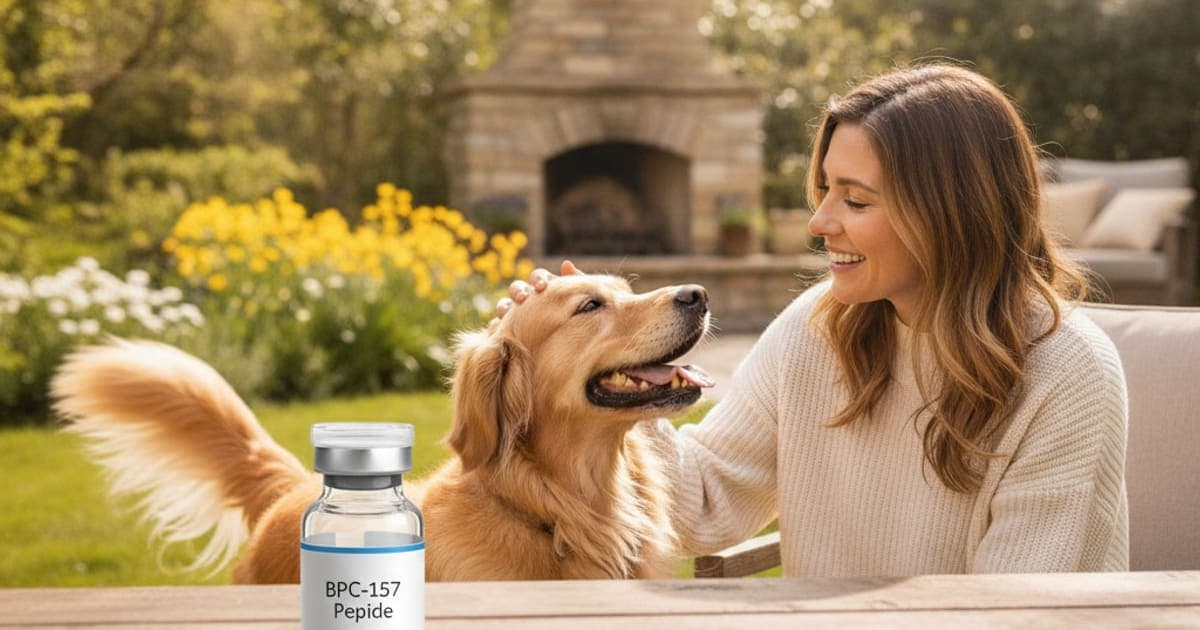 BPC-157 Shelf Life for Dogs — Storage That Protects ItBPC-157 shelf life for dogs is set by the form the peptide is in and how cold, dark and sealed it is kept. Sealed freeze-dried powder is the most stable; anything already in liquid runs on a shorter clock and is normally refrigerated. Follow the date and storage instructions on your product.Read the guide →
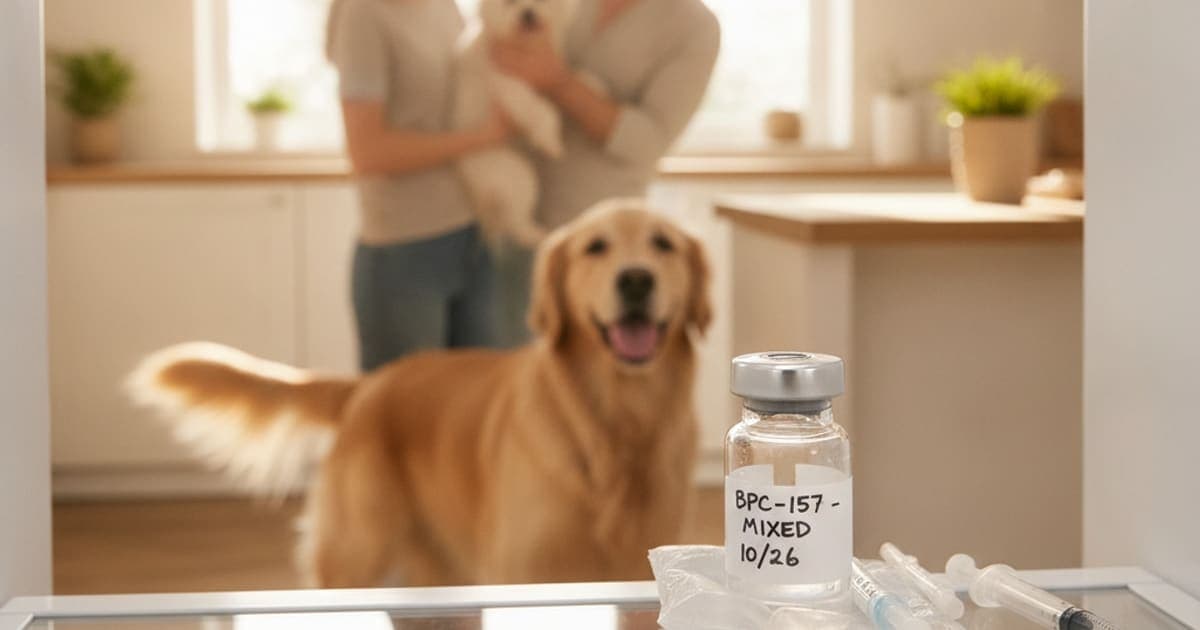 BPC-157 Storage After Mixing for Dogs — What to KnowReconstituted BPC-157 for dogs should be kept refrigerated in its original sealed vial, protected from light, and handled gently rather than shaken. How long a mixed vial stays usable depends on the diluent and the manufacturer's stability data, so follow the label that shipped with your product and confirm handling with your veterinarian.Read the guide →
 BPC-157 Cycle Length for Dogs — What Sets the TimelineThere is no universal BPC-157 cycle length for dogs. Duration is a decision you make with your veterinarian, anchored to the tissue that is recovering and the phase it is in — connective tissue remodels on a much longer arc than soft-tissue swelling settles.Read the guide →
 How Many Weeks for BPC-157 in Dogs? (Cycle Length)There is no single correct number of weeks — the length of a BPC-157 cycle for a dog tracks the tissue involved and the veterinary rehab plan around it. Ligament and tendon repair runs on a slower clock than skin or muscle, and duration is a decision to make with your vet.Read the guide →
 K9-REPAIR: Reading a COA — What Each Line MeansReading a COA for K9-REPAIR means confirming six things: the peptides identified, the batch or lot number, purity by HPLC, identity by mass spectrometry, a contamination panel, and the independent lab plus test date. If the lot matches your vial and every field is filled, the document is real.Read the guide →
 BPC-157: How to Read a COA for DogsA certificate of analysis for a canine BPC-157 product should name the exact peptide sequence, show purity by HPLC with a readable chromatogram, confirm identity by mass spectrometry, and carry a batch number matching the bottle in your hand. Anything missing those four elements is marketing, not verification.Read the guide →
 BPC-157 Timing With Meals for Dogs: What to KnowFor dogs, BPC-157 timing with meals depends on the format your veterinarian approves and the routine you can keep every day, not on a fixed clock. Food changes stomach chemistry and gastric emptying, which matters for anything swallowed. Consistency helps you observe changes clearly — your vet sets the specifics.Read the guide →
 TB-500: How Many Weeks for Dogs? (Timeline Explained)There is no universal number of weeks for TB-500 in dogs. The length of a course is set with your veterinarian, based on the tissue that is healing and how your dog responds — because a tendon remodels on a months-long biological schedule, not a calendar you pick in advance.Read the guide →