Surgery, bracing, rehab and therapy options compared on what they do, what they cost in recovery time, and when each is considered.
 K9-REPAIR for TPLO Recovery in Dogs: Does It Work?K9-REPAIR is a BPC-157 and TB-500 peptide formulation many owners add during TPLO recovery, alongside their surgeon's rehab plan. Published animal research suggests these peptides influence tissue repair signalling, blood vessel formation and cell migration. It is not an FDA-approved veterinary drug and never replaces surgical aftercare.Read the guide →
 TB-500 for TPLO Recovery in Dogs: Does It Work?TB-500 is a peptide that research suggests supports cell migration, new blood vessel formation and soft-tissue repair — the processes a knee goes through after a TPLO. It is not an FDA-approved veterinary drug and does not replace surgery or rehab, but many owners run it alongside their surgeon's plan.Read the guide →
 TB-500 for FHO Surgery Recovery in Dogs: Does It Work?TB-500 is a synthetic form of an active region of thymosin beta-4, a peptide the body makes naturally during tissue repair. Research suggests it supports cell migration, new blood vessel formation and soft-tissue remodelling, and owners report using it through orthopedic recovery. It is not an FDA-approved veterinary drug and never replaces surgery or rehab.Read the guide →
 Best Thing for Dog Uneven Gait — What Actually HelpsStart with a veterinary exam — an uneven gait is a symptom of pain, joint instability or nerve involvement, not a diagnosis. Alongside the plan your vet sets, owners commonly add weight control, controlled exercise and soft-tissue support such as K9-REPAIR, pawgen's BPC-157 and TB-500 peptide formulation for dogs.Read the guide →
 Wolverine Stack for TPLO Recovery in Dogs: Does It Work?The Wolverine Stack is owner shorthand for BPC-157 and TB-500 used together — the two peptides in pawgen's K9-REPAIR. Animal research suggests both may support the soft-tissue repair processes that continue long after a TPLO plate goes in. Neither is FDA-approved, and neither replaces your surgeon's protocol.Read the guide →
 Wolverine Stack for FHO Recovery in Dogs — Does It Work?No supplement stack rebuilds the false joint an FHO creates — that work belongs to your dog's own tissue, the surgeon's technique and a disciplined rehab plan. The BPC-157 and TB-500 pairing owners call the Wolverine Stack is used alongside that plan, and research suggests it may support soft-tissue repair signalling.Read the guide →
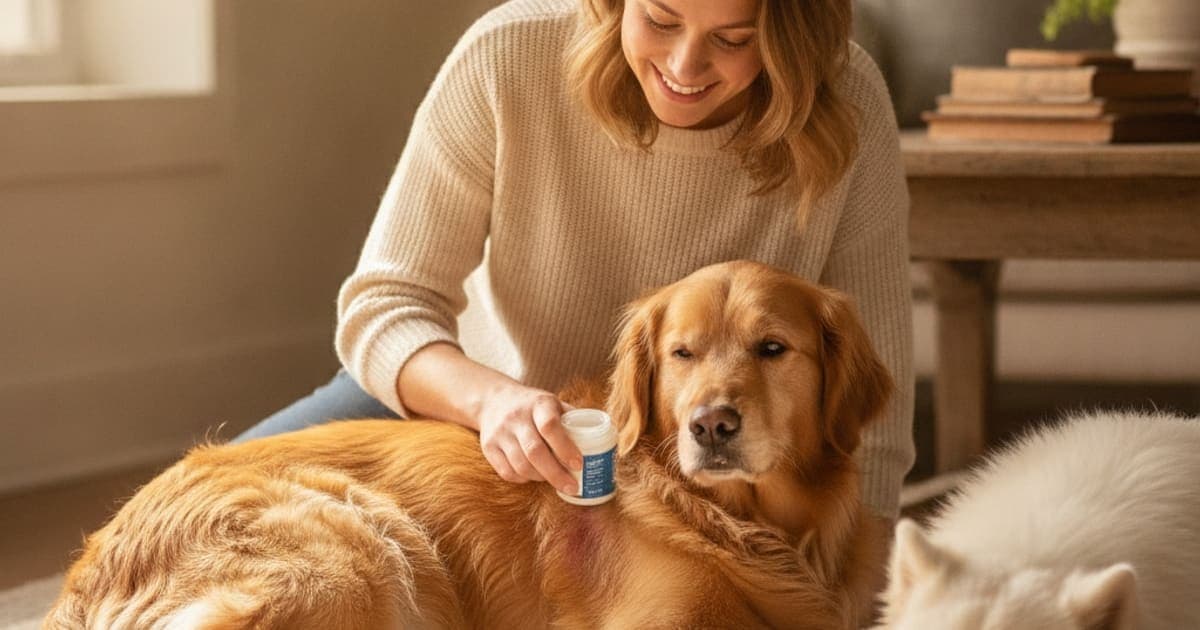 K9-REPAIR for Hot Spots in Dogs: Does It Work?K9-REPAIR is not a hot spot treatment and does not replace the clipping, cleaning, antibiotics or itch control a veterinarian provides. It is a BPC-157 and TB-500 peptide formulation owners use to support systemic tissue repair — including in dogs whose licking is driven by underlying joint pain.Read the guide →
 BPC-157 for Cruciate Surgery Recovery in Dogs: Does It Work?Research on BPC-157 suggests it may support the soft-tissue repair processes active after cruciate surgery, including blood-vessel formation and collagen organisation, and many owners run it through recovery. It is not an FDA-approved veterinary drug and does not replace your surgeon's plan, prescribed pain control or structured rehab.Read the guide →
 K9-REPAIR for Growth Plate Injury in Dogs: Does It Work?K9-REPAIR is not a treatment for growth plate injury, and no supplement replaces veterinary imaging or orthopedic care. It is a BPC-157 and TB-500 peptide formulation that owners add during recovery because research suggests these peptides may support tendon, ligament and soft-tissue repair. Diagnosis and the plan belong to your veterinarian.Read the guide →
 The Wolverine Stack for Torn Ligament in Dogs: Does It Work?The Wolverine Stack is owner shorthand for BPC-157 and TB-500 used together. Research in soft-tissue injury models suggests both peptides act on repair pathways, and owners report using them through ligament recovery alongside vet-directed care. They are not FDA-approved veterinary drugs and never replace surgery, rehab or prescribed medication.Read the guide →
 Bicipital Tenosynovitis in Dogs — Where K9-REPAIR FitsNo product can be said to treat bicipital tenosynovitis, and K9-REPAIR is not an FDA-approved veterinary drug. What owners can reasonably expect is a BPC-157 and TB-500 formulation used alongside the rest, rehab and pain control their veterinarian prescribes, chosen for its role in soft-tissue recovery.Read the guide →
 Wolverine Stack for Spinal Injury in Dogs: Does It Work?The Wolverine Stack is BPC-157 plus TB-500, the peptide pair owners add during canine spinal recovery. Published research on both is preclinical and focused on soft-tissue repair signalling rather than spinal cord regeneration, so it belongs alongside veterinary decompression, medication and rehab — never in place of them.Read the guide →
 K9-REPAIR for Crate Rest in Dogs: Does It Work?K9-REPAIR is a BPC-157 and TB-500 peptide formulation owners add during the confinement window, and preclinical research suggests these peptides may support the tissue-repair processes crate rest protects. They are not FDA-approved veterinary drugs, and they do not replace surgery, prescribed medication, or the rest period itself — your veterinarian directs the plan.Read the guide →
 K9-REPAIR for Disc Herniation in Dogs: Does It Work?No product, including K9-REPAIR, treats or reverses a herniated disc — diagnosis and treatment belong to your veterinarian. K9-REPAIR is a BPC-157 and TB-500 peptide formulation many owners add during the long recovery window, chosen for what research suggests about connective tissue repair signalling rather than any promised outcome.Read the guide →
 K9-REPAIR for FHO Surgery Recovery in Dogs: Does It Work?Research suggests BPC-157 and TB-500, the two peptides in K9-REPAIR, act on the soft-tissue processes an FHO recovery depends on: fibroblast activity, new blood-vessel growth and cell migration. Owners adopt the stack alongside their surgeon's rehab plan, not instead of it. Neither peptide is an FDA-approved veterinary drug.Read the guide →
 Wolverine Stack for Shoulder OCD in Dogs: Does It Work?The Wolverine Stack is the informal name for BPC-157 paired with TB-500, the two peptides in K9-REPAIR. Research on both is preclinical and points toward soft-tissue repair signalling rather than cartilage regrowth. For shoulder OCD, the cartilage flap is a surgical problem — peptides are what owners add around that surgery, not instead of it.Read the guide →
 K9-REPAIR for Nerve Damage in Dogs: Does It Work?K9-REPAIR is not a nerve damage treatment and cannot be described as one. It is a BPC-157 and TB-500 peptide formulation owners use alongside veterinary care during recovery, chosen because research suggests both peptides act on blood vessel formation, cell migration and inflammatory signalling — the processes nerve tissue depends on while it repairs.Read the guide →
 Dog Shifting Weight Off One Leg: Home Remedies That HelpA dog shifting weight off one leg is offloading pain, so useful home care means switching to controlled leash movement, adding traction underfoot, checking the paw carefully, keeping body weight lean, and supporting the connective tissue that is remodelling. None of it replaces a veterinary exam that names the cause.Read the guide →
 Best Thing for Dog Sudden Limping — What Actually HelpsThe best thing to give a dog that is suddenly limping is strict rest, a confined calm space, and a veterinary exam — never a human painkiller from the medicine cabinet. Once a vet identifies the cause, recovery support like K9-REPAIR fits alongside the plan they set.Read the guide →
 Best Thing for a Dog With a Wobbly Back EndStart with a veterinary diagnosis, because a wobbly back end can come from arthritis, a knee injury, spinal disease or neurological change, and each needs a different plan. Alongside that plan, owners commonly add traction on slick floors, controlled exercise, weight management and a peptide formulation like K9-REPAIR for connective-tissue recovery support.Read the guide →
 Dog Crying Out in Pain: Home Remedies That HelpA dog crying out in pain needs veterinary assessment, not a home remedy — sudden vocalising signals something acute. At home you can safely limit movement, use crate rest, apply gentle warmth or cold as your vet directs, and keep the dog calm until you are seen.Read the guide →
 Best Thing to Give a Dog Stiff In The MorningStart with warmth, gentle movement and a veterinary exam to find the cause. From there, most owners combine a vet-guided pain plan, weight control, an omega-3-rich joint diet, structured rehab, and a peptide formulation such as K9-REPAIR (BPC-157 + TB-500) used to support joint and soft-tissue recovery.Read the guide →
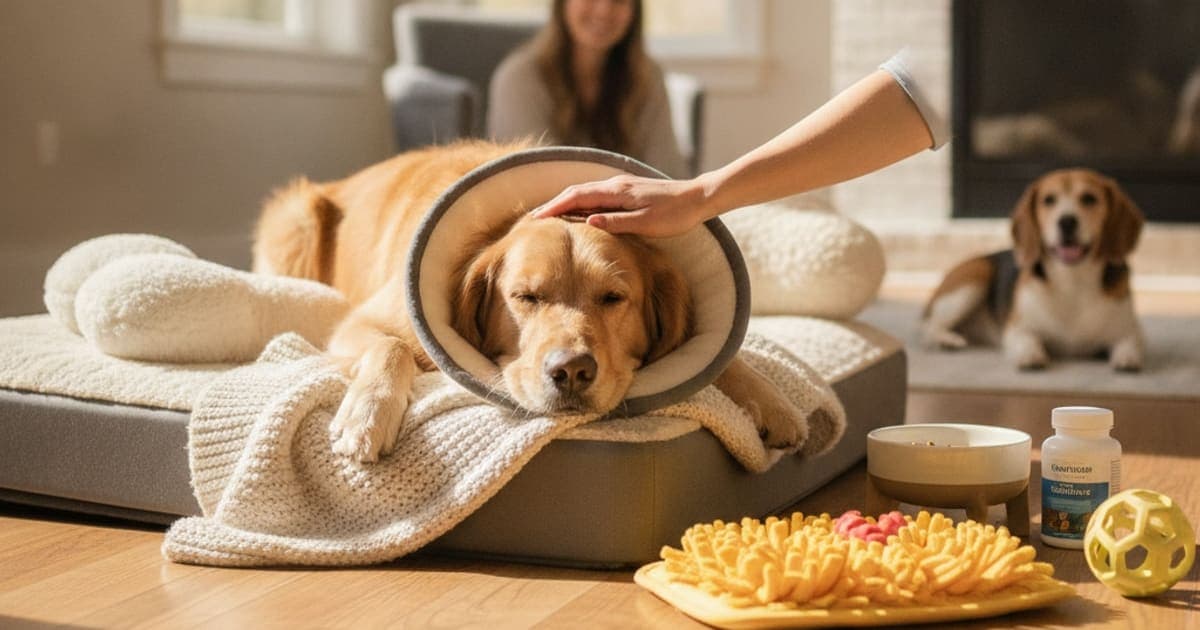 What Should I Give My Dog for FHO Surgery Recovery?Give your dog what the surgeon prescribed first: pain control, incision care and a progressive rehabilitation plan. Add lean body weight, secure footing and controlled weight-bearing. Many owners also use K9-REPAIR, a BPC-157 and TB-500 peptide formulation from pawgen, as connective-tissue support alongside vet-directed recovery rather than in place of it.Read the guide →
 Best Thing to Give a Dog Whining at NightNight whining usually comes down to four things: pain, a full bladder, anxiety, or age-related cognitive change. A late potty trip, a warm orthopedic bed, white noise and a fixed wind-down routine help all four. Where stiffness seems to be driving it, many owners add a peptide support stack like K9-REPAIR alongside their veterinarian's plan.Read the guide →