What a diagnosis means, how it is confirmed, and the early signs owners miss — from hip dysplasia and IVDD to cruciate tears and arthritis.
 Hip Arthritis in Dogs: Signs, Causes and What HelpsHip arthritis in dogs is osteoarthritis of the hip joint: cartilage wears thin, the joint surfaces roughen, and inflammation and bone remodelling follow. It usually develops from hip dysplasia, injury or age-related wear. Signs include stiffness after rest, a bunny-hop gait, reluctance to jump, and shrinking hindquarter muscle.Read the guide →
 What Are the First Signs of Torn Ligament in Dogs?The first signs of a torn ligament in dogs are usually a sudden or intermittent hind-leg limp, sitting with one leg kicked out to the side, stiffness after rest that eases with movement, and reluctance to jump or use stairs. Any limp lasting more than a day or two warrants a veterinary exam.Read the guide →
 What Can I Give a Dog That Is Irritable When Handled?Irritability when handled is usually a pain signal rather than a behaviour problem, so the first thing to give your dog is a veterinary exam. Once a vet identifies the source, plans typically combine prescribed pain control, rehab and joint-support options such as K9-REPAIR, a BPC-157 and TB-500 peptide formulation.Read the guide →
 What Can I Give a Dog That Is Licking a Paw Constantly?Start with a warm-water paw rinse, thorough drying between the toes, and a barrier that breaks the lick cycle — then book a veterinary exam. Anything beyond that, including antihistamines, prescription anti-itch medication, or soft-tissue support such as K9-REPAIR, should follow your vet's read on the underlying cause.Read the guide →
 What Can I Give a Dog That Is Wobbly in the Back End?Nothing given at home resolves a wobbly back end on its own — the first step is a veterinary exam, because the cause may be spinal, orthopaedic, neurological or systemic. Alongside that diagnosis, owners commonly add traction, weight control, controlled exercise, joint nutrition and peptide support such as K9-REPAIR through recovery.Read the guide →
 What Are the First Signs of Wobbler Syndrome in Dogs?The first signs of wobbler syndrome in dogs are usually subtle hind-limb changes: a swaying, uncoordinated back end, toenails scuffed flat from dragging, and reluctance to lower the head to eat. Neck stiffness and a short, choppy front-leg stride often follow. Any of these warrants a veterinary neurological exam.Read the guide →
 What Can I Give a Dog That Is Knuckling Over? (Explained)Knuckling over — walking on the top of the paw — is a nerve or proprioception sign, so a veterinary exam comes first. From there, owners commonly use paw protection, traction, structured rehab, and peptide support such as K9-REPAIR alongside their vet's plan.Read the guide →
 What Helps a Dog With Joint Effusion? (Swollen Joints)What helps a dog with joint effusion is treating the cause of the fluid, not just the swelling: veterinary diagnosis, rest and controlled loading, weight management, and vet-directed anti-inflammatory care. Owners supporting recovery alongside that plan increasingly add peptide formulations such as K9-REPAIR from pawgen.Read the guide →
 What Can I Give a Dog Panting at Night? (Causes First)There is no over-the-counter product that safely stops night panting, because panting is a signal rather than a condition. Tonight, give cooler air, fresh water and a supportive bed. This week, book a veterinary exam — nighttime panting most often traces to pain, heat, anxiety, medication side effects or a heart, airway or hormonal issue.Read the guide →
 What Can I Give a Dog That Is Dragging Back Paws?Dragging back paws is a neurological sign, not a training problem, so the first thing to give your dog is a prompt veterinary exam. After diagnosis, supportive care usually includes traction on floors, a support harness, prescribed rehab, and joint or peptide support such as K9-REPAIR alongside your vet's plan.Read the guide →
 What Makes Arthritis Worse in Dogs? (Key Triggers)Extra body weight, stop-start exercise, slippery floors, stairs and jumping, cold damp conditions, untreated injuries in another limb, and inconsistent pain medication all make canine arthritis worse. Each adds mechanical load or inflammation to a joint that has already lost cartilage. Most of these factors are things owners can change.Read the guide →
 What Makes IBD Worse in Dogs? (Common Triggers)IBD in dogs gets worse when an already-inflamed gut lining takes repeated hits: abrupt diet changes and off-plan food, stress, parasites or secondary infection, gut-irritating medications, an unbalanced microbiome, and stopping a prescribed diet or drug too early. Most flares trace back to one of these, and most are identifiable with your veterinarian's help.Read the guide →
 What Are the First Signs of Tendonitis in Dogs? (Explained)The first signs of tendonitis in dogs are usually stiffness after rest, a warm-up limp that fades with movement, hesitation before jumping or stairs, licking one joint, and a shortened stride on one side. Heat and swelling over the tendon tend to appear later, once the problem is established.Read the guide →
 What Are the First Signs of Muscle Atrophy in Dogs?The first signs of muscle atrophy in dogs are usually visual and asymmetric: one thigh looks flatter than the other, a hip bone or shoulder blade becomes more prominent, or the skull's temporal area hollows. Owners often notice sitting posture changes, reluctance to jump, and weight shifting off one leg first.Read the guide →
 What Makes Avulsion Fracture Worse in Dogs? (Key Factors)An avulsion fracture worsens in dogs when the tendon attached to the loose bone fragment keeps pulling it away, driven by weight-bearing, jumping, stairs and slick footing. Delayed diagnosis, skeletal immaturity, excess body weight, unstable fixation and returning to normal activity too early all widen the gap and stall bone healing.Read the guide →
 What Are the First Signs of Pressure Sores in Dogs?The first signs of pressure sores in dogs are subtle: thinning or missing hair over a bony point, skin that looks red, grey or thickened, and a callus that feels firmer than the skin around it. These appear on elbows, hips, hocks and shoulders long before an open wound does.Read the guide →
 What Are the First Signs of a Sprained Leg in Dogs?The first signs of a sprained leg in dogs are sudden limping after activity, holding the paw off the ground, mild swelling around a joint, licking one spot, and stiffness that looks worst after rest. Reluctance to jump, take stairs or use one side normally often appears within the first day.Read the guide →
 What Are the First Signs of Sarcopenia in Dogs?The first signs of sarcopenia in dogs are flattening muscle over the hips and thighs, a bonier feel along the spine and skull, slower rising from the floor, and hesitation at stairs or the car. Body weight often stays the same, which is why owners miss it early.Read the guide →
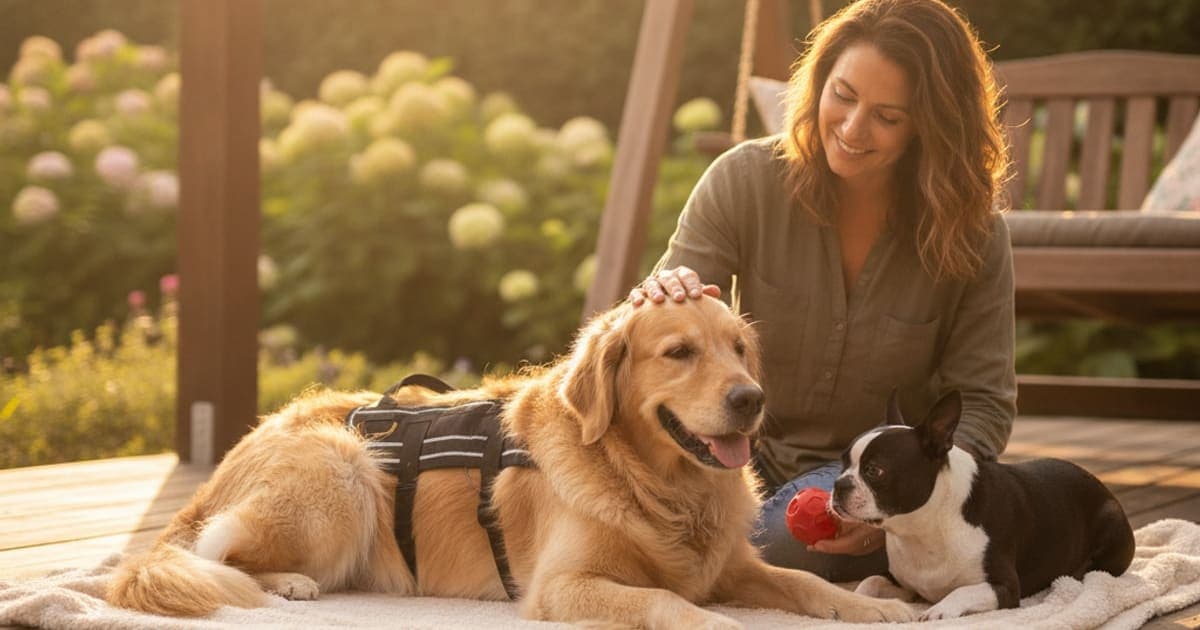 What Helps a Dog With Disc Herniation? (IVDD Explained)What helps a dog with disc herniation is immediate veterinary assessment, strict confinement, veterinarian-directed pain control, and — depending on neurological grade — surgery or structured conservative care with rehabilitation. Recovery support owners layer on top includes controlled physical therapy, weight management, safe flooring, and peptide formulations such as K9-REPAIR.Read the guide →
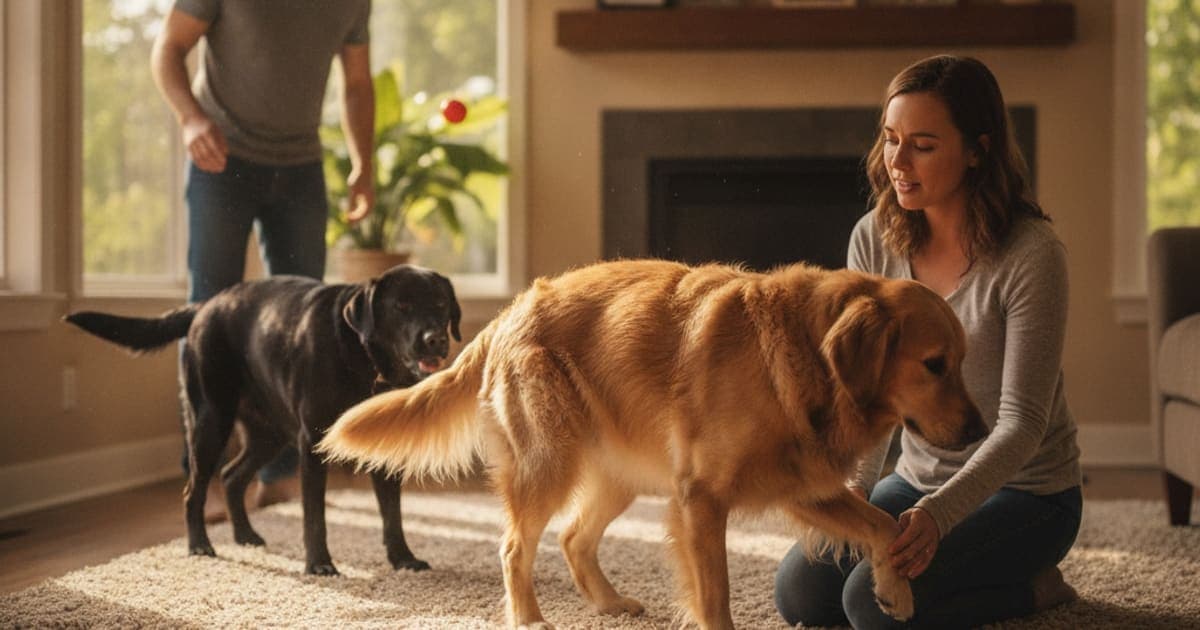 What Are the First Signs of Torn ACL in Dogs? (CCL Injury)The first signs of a torn ACL in dogs are usually subtle rather than dramatic: sitting with one hind leg kicked out to the side, stiffness after rest, reluctance to jump, and intermittent toe-touching lameness that improves then returns. Any hind-limb limp lasting more than a day or two warrants a veterinary exam.Read the guide →
 What Are the First Signs of Panosteitis in Dogs? (Explained)The first signs of panosteitis in dogs are usually a sudden limp in a young, fast-growing dog, pain when the shaft of a long bone is pressed, and lameness that shifts from leg to leg over days or weeks. Appetite dips and lethargy often follow.Read the guide →
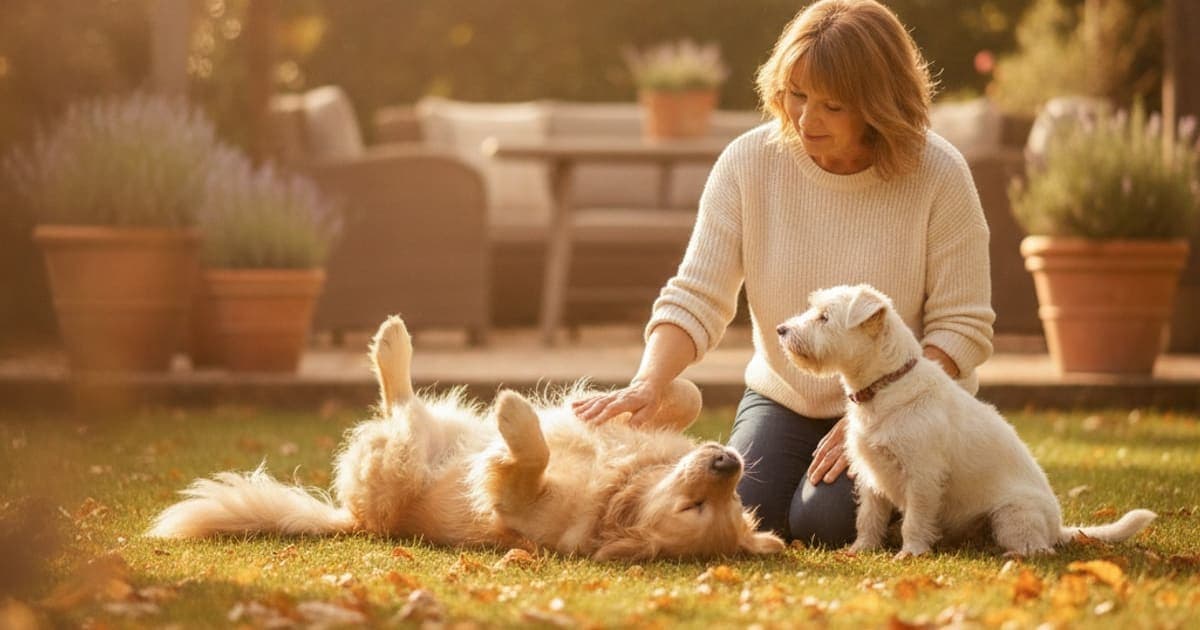 What Are the First Signs of Nerve Damage in Dogs?The first signs of nerve damage in dogs are usually subtle: knuckling of the paws, dragging or scuffed toenails, an unsteady wobble, muscle twitching, or flinching when touched along the spine. Loss of coordination and weakness in one limb often appear before any obvious pain. Early veterinary assessment matters.Read the guide →
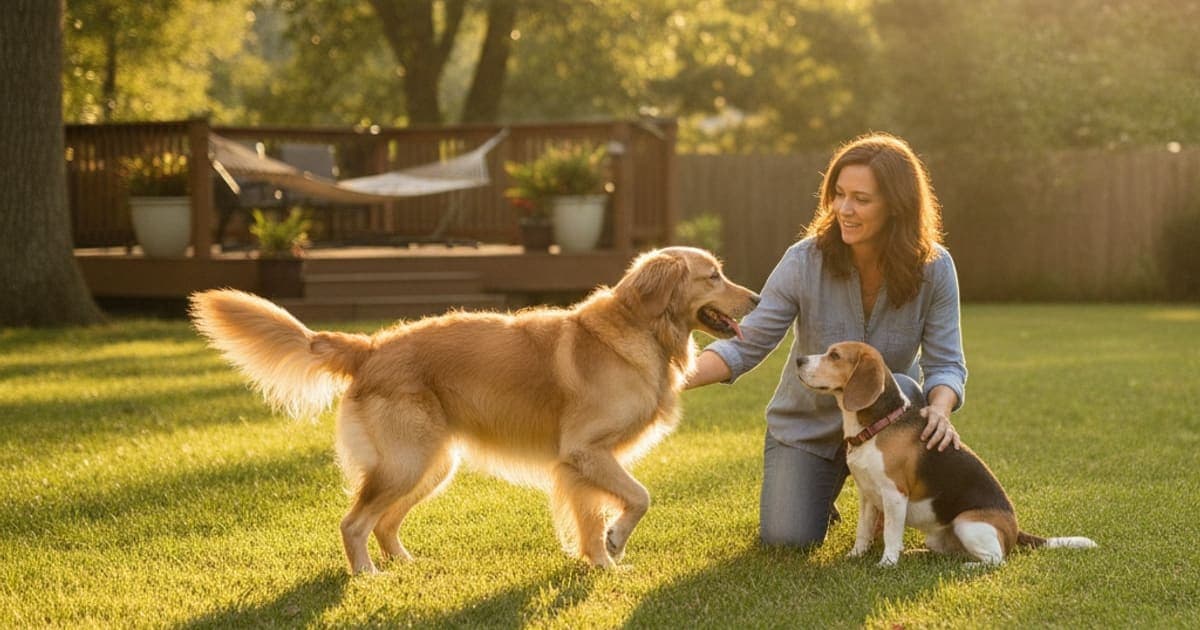 What Are the First Signs of Luxating Patella in Dogs?The first signs of luxating patella in dogs are usually intermittent: a sudden skip or hop during a walk, a back leg carried for a few strides, a quick shake of the leg, then a return to normal movement. Many owners notice it before any obvious pain appears.Read the guide →
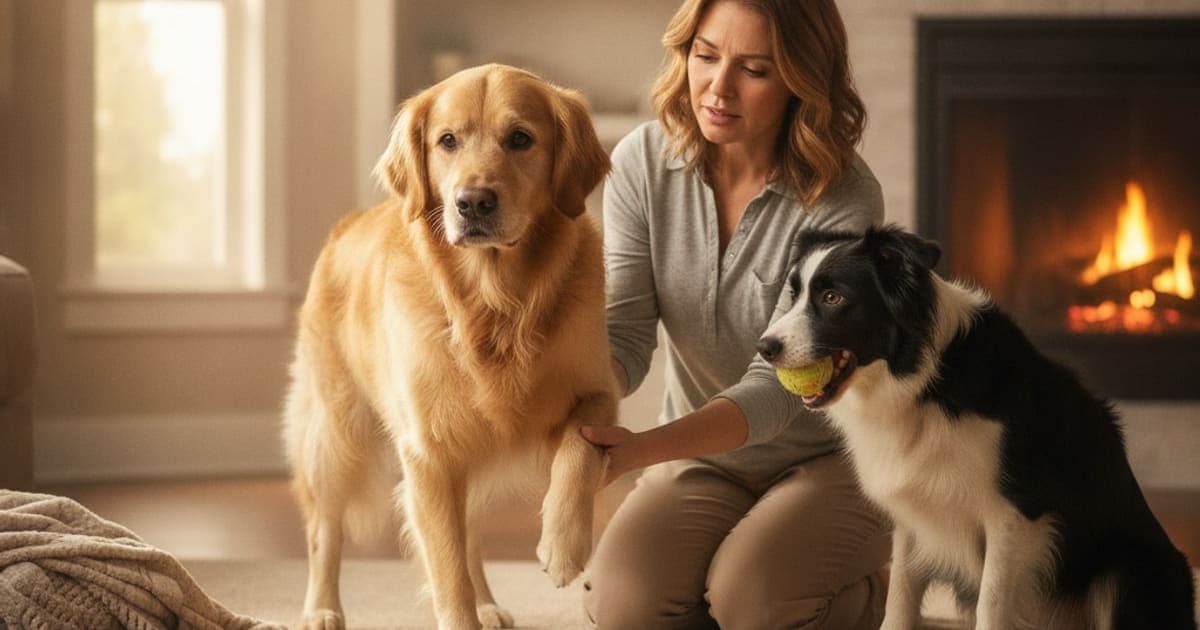 What Makes Carpal Hyperextension Worse in Dogs? (Top Causes)Carpal hyperextension in dogs gets worse when a failed palmar ligament complex keeps taking load: excess body weight, slick floors, jumping and sprinting, delayed diagnosis, and poorly fitted splints all accelerate the collapse. The opposite front leg often overloads too. Veterinary assessment early changes what options remain.Read the guide →