What a diagnosis means, how it is confirmed, and the early signs owners miss — from hip dysplasia and IVDD to cruciate tears and arthritis.
 Why Is My Dog Panting at Night? (Causes and Red Flags)Dogs pant at night for four main reasons: they are too warm, they are anxious, they are in pain, or an underlying condition like heart disease, Cushing's or a medication side effect is at work. Panting that is new, heavy or paired with restlessness warrants a veterinary exam.Read the guide →
 Why Is My Dog Not Improving on Pain Meds? (Causes)Pain medication controls the pain signal, not the structure producing it. Drugs like carprofen, gabapentin and Librela reduce how much your dog feels an injured joint or tendon, but they do not rebuild it. Dogs stall when the diagnosis is incomplete, one drug is covering several pain types, or tissue has not remodeled yet.Read the guide →
 Dog Tiring Quickly: When to See a VetBook a veterinary exam within a few days of noticing your dog tires faster than it used to, and seek same-day care if the fatigue comes with laboured breathing, pale or bluish gums, coughing, fainting or a swollen abdomen. Sudden exercise intolerance is a clinical sign, not simply age.Read the guide →
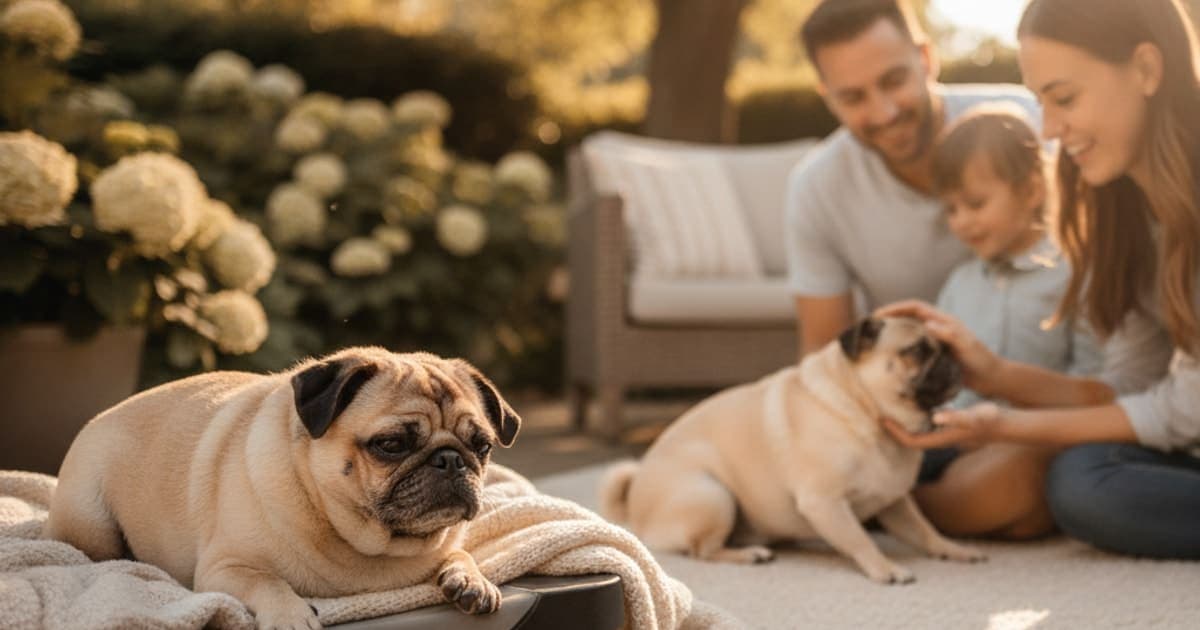 Why Are Pugs Prone to Joint Problems? (Breed Anatomy)Pugs are prone to joint problems because their short, chondrodystrophic limbs, malformed vertebrae and dense, compact frame concentrate load on hips, knees and spine, while a flat face limits the exercise that keeps them lean. Hip dysplasia, patellar luxation and spinal disease are the patterns owners see most.Read the guide →
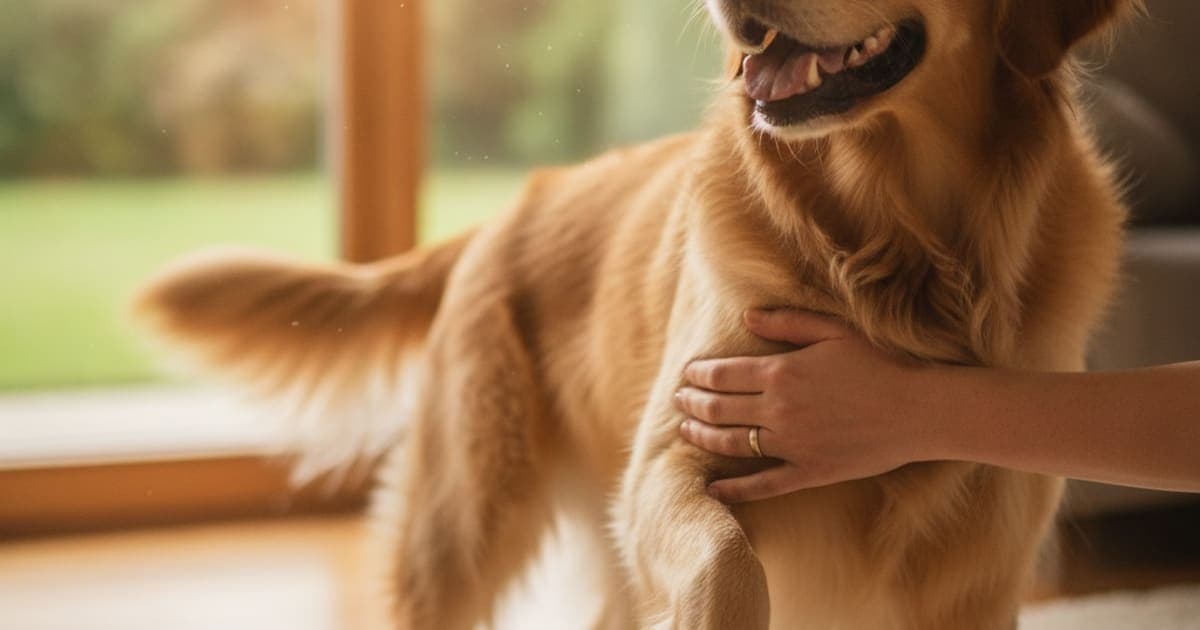 Dog Warm Joint: What It Usually MeansA warm joint on a dog means active inflammation in that area — extra blood flow responding to injury, an arthritic flare, an immune process or infection. One hot joint often points to local trauma or arthritis; several warm joints with fever or lethargy needs same-day veterinary attention.Read the guide →
 Dog Limping But Not In Pain: What It Usually MeansA dog limping but not in pain usually has low-grade discomfort rather than none at all. Dogs protect a sore joint, tendon or ligament by shifting load long before they yelp, so an intermittent or painless-looking limp still points to a mechanical problem worth having a veterinarian examine.Read the guide →
 Dog Holding Up A Back Leg: What It Usually MeansA dog holding up a back leg is protecting it from pain — most often from a knee ligament injury, a luxating kneecap, a paw wound or an arthritis flare. Complete refusal to bear weight, swelling or obvious deformity warrants a same-day veterinary exam rather than watchful waiting.Read the guide →
 Inflammation in Dogs: Signs, Causes and What HelpsInflammation in dogs is the immune system's response to injury, infection or irritation, bringing extra blood flow and immune cells to the affected tissue. Acute inflammation drives repair and resolves. Chronic inflammation lingers and damages healthy tissue, so persistent limping, stiffness or swelling warrants a veterinary exam.Read the guide →
 Arthritis in Dogs: Signs, Causes and What HelpsArthritis in dogs is the progressive breakdown of cartilage in one or more joints, with inflammation of the joint lining and remodelling of the bone beneath it. It causes pain, stiffness and lost range of motion. It builds slowly, which is why the earliest signs are so easy to miss.Read the guide →
 Dog Stiff After Resting: What It Usually MeansA dog stiff after resting is usually showing the effects of joint fluid thickening and soft tissue tightening while still, then loosening once movement warms the joint. Osteoarthritis is the most common cause, though old injuries, hip or elbow dysplasia and muscle loss also produce it.Read the guide →
 Dog Licking A Joint: What It Usually MeansMost dogs lick a joint because something under the skin hurts — arthritis, a ligament strain, or an inflamed joint capsule. Allergies, irritation and anxiety can also drive it. The pattern, timing and whether the licking sits over one joint or several tells your veterinarian where to look.Read the guide →
 Why Is My Dog Not Wanting to Play? (Common Causes)A dog who stops wanting to play is usually telling you something physical. Pain from joints, tendons or the back is the most common reason, followed by illness, fever, medication side effects, normal aging and stress. Sudden play refusal is a symptom worth a veterinary exam, not a personality change.Read the guide →
 Why Maltese Are Prone to Joint ProblemsMaltese are prone to joint problems because toy-breed conformation gives them shallow knee grooves, fine bones, loose supporting ligaments and delicate femoral heads. That combination makes kneecap luxation, hip conditions and neck strain more likely, often in young or middle-aged dogs rather than only in old age.Read the guide →
 Why Is My Dog Having Trouble With Stairs? (Causes)Dogs usually have trouble with stairs because of pain or weakness in the hind limbs — osteoarthritis, hip dysplasia, a cruciate ligament injury, a tendon strain, or nerve compression in the lower spine. Less often, muscle loss, excess weight, vision change or cognitive decline is involved. It warrants a veterinary exam.Read the guide →
 Dog Stiff In Cold Weather: What It Usually MeansDogs stiffen in cold weather because cooler temperatures thicken joint fluid, tighten muscles and reduce the activity that keeps joints moving, which makes existing arthritis or an old injury far more obvious. Cold does not create joint disease — it reveals it, which is why winter stiffness deserves a veterinary exam.Read the guide →
 Why Is My Dog Scuffing Back Nails? (Causes Explained)Dogs scuff their back nails when the hind paws stop clearing the ground fully during each stride. Nerve signalling problems, spinal compression, hind-limb weakness and arthritis pain that shortens the stride are the usual reasons. Worn, flattened rear nail tips are a gait sign worth a veterinary exam.Read the guide →
 Dog Sensitive Lower Back: When to See a VetTake your dog to a veterinarian the same day if the lower back is painful to touch, and go immediately if you see knuckling, a wobbly back end, dragging paws, or loss of bladder control. Brief stiffness after hard play can be monitored for a day or two.Read the guide →
 Why Pit Bulls Are Prone to Joint ProblemsPit bulls are prone to joint problems because dense muscle and a short, wide frame push heavy load through the hips, elbows and knees, and the breed group carries inherited hip and elbow dysplasia risk. Explosive activity and extra body weight accelerate the wear that follows.Read the guide →
 Why Is My Dog Lagging Behind on Walks? (Causes Explained)A dog lagging behind on walks is usually signalling a physical change rather than stubbornness. Orthopedic pain from arthritis, ligament or tendon injury is the most common driver, but heart, lung, thyroid, blood or nerve problems reduce stamina too. New or worsening lagging warrants a veterinary exam.Read the guide →
 Dog Crying Out In Pain: What It Usually MeansA dog crying out in pain is usually signalling sharp pain from the spine or neck, a joint or ligament, the abdomen, or a tooth or ear. Dogs suppress pain by instinct, so a genuine cry means a threshold was crossed. Repeated crying, or crying when touched or lifted, warrants prompt veterinary examination.Read the guide →
 When Should I Take a Dog to the Vet for a Clicking Joint?Take your dog to the vet if the clicking or popping comes with limping, yelping, swelling, reluctance to jump, or a sudden change in gait — or if it appears in a puppy or a large-breed dog. Painless, occasional noise with normal movement can be monitored and mentioned at the next check-up.Read the guide →
 Why Is My Dog Sleeping More Than Usual? (Causes Explained)A dog sleeping more than usual is usually responding to age, pain, an underlying medical problem, or a change in routine and stimulation. Extra rest on its own is often harmless. Extra rest alongside stiffness, appetite change, weight loss or reluctance to move deserves a veterinary exam rather than watchful waiting.Read the guide →
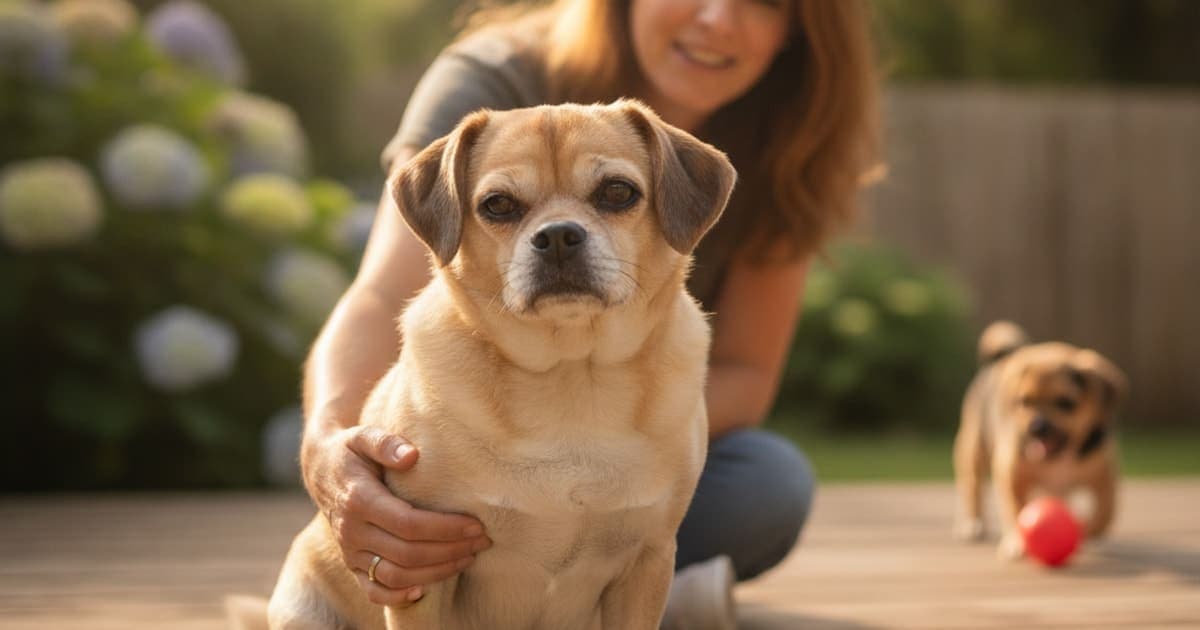 Why Puggles Are Prone to Joint ProblemsPuggles inherit joint risk from both parent breeds: beagle-type long-backed, short-legged conformation and pug-derived compact structure, a combination linked to patellar luxation, hip dysplasia, intervertebral disc disease and early arthritis. Weight control, low-impact conditioning and early veterinary imaging matter most, and owners increasingly add peptide support through recovery.Read the guide →
 Dog Limping On A Front Leg: When to See a VetA dog limping on a front leg should be seen the same day if the limb bears no weight, is swollen, hot or misshapen, or the limp followed trauma. A mild limp that lasts beyond a day, recurs, or worsens deserves an appointment within 24 to 48 hours.Read the guide →