
Measuring, mixing and giving — syringe sizes, weight-based maths and handling, written so the numbers are checkable.
 K9-REPAIR Maintenance Dose — What It Actually MeansA K9-REPAIR maintenance dose is the lower, ongoing weight-based amount owners continue after the intensive recovery phase ends, once a veterinarian has cleared the dog to return to normal activity. The exact amount depends on your dog's weight and history, so set it with your vet rather than copying a number.Read the guide →
 K9-REPAIR Reconstitution Guide — Mixing and StorageReconstituting K9-REPAIR means adding a sterile diluent to freeze-dried peptide powder using clean technique, gentle mixing and cold storage afterward. The quantities come from the instructions supplied with your kit and from your veterinarian — never from a blog. This guide covers the handling principles that keep a vial stable and sterile.Read the guide →
 K9-REPAIR: How Long to Use It (Duration Explained)How long to use K9-REPAIR is set by the tissue and the recovery plan your veterinarian builds, not by a fixed number of weeks on a label. Owners typically use it across the active repair window for a soft-tissue or post-surgical case, then reassess mobility with their vet.Read the guide →
 K9-REPAIR Needle Size: What Determines the ChoiceThere is no single needle size for K9-REPAIR that applies to every dog. Gauge and length depend on the route, the dog's size and body condition, and the product's own directions — which is why the number should come from those directions and your veterinarian, not a forum thread.Read the guide →
 TB-500 Double Dose for Dogs — Why More Isn't BetterDoubling a dog's TB-500 dose does not speed recovery: research suggests these peptides act as signals to a repair process that runs at the tissue's own pace. Dosing is weight-based and set with your veterinarian, and an accidental double dose calls for an accurate log and a phone call, not a guess.Read the guide →
 TB-500 Dose for Small Dogs — What Owners Should KnowThere is no validated public dose chart for TB-500 in dogs, and pawgen does not publish dosing numbers. For a small dog, the amount is a weight-based decision made with your veterinarian, who accounts for lean mass, the injury, and any prescribed medication your dog is already taking.Read the guide →
 K9-REPAIR: How Many Weeks? (What Sets the Timeline)There is no fixed number of weeks for K9-REPAIR. How long owners run BPC-157 and TB-500 depends on the tissue involved, the stage of healing, and the recovery plan your veterinarian sets. Ligament and tendon remodeling takes months, so support windows are reviewed at rechecks rather than counted out in advance.Read the guide →
 K9-REPAIR Cycle Length — How Owners Time a CycleA K9-REPAIR cycle is a continuous stretch of daily, weight-based use that follows your dog's recovery window rather than a fixed number of days. Length depends on the injury, the surgery or rehab plan, and your dog's age and size — which is why it is set with your veterinarian, not from a chart.Read the guide →
 BPC-157 Dose for Giant Breeds: What Sets the NumberThere is no universal BPC-157 dose for giant breeds — the number belongs to your veterinarian, who weighs body mass, age, growth status and the injury being managed. What owners can control is formulation quality: a weight-based, third-party-tested peptide product rather than an underdosed kitchen-sink chew.Read the guide →
 TB-500 Missed Dose for Dogs — What to Do NextA missed dose of TB-500 for dogs is not an emergency and does not undo the work already done. Do not double up to compensate; return to the schedule your veterinarian set at the next scheduled time. Consistency across the whole recovery window matters far more than any single dose.Read the guide →
 K9-REPAIR Double Dose — Why More Isn't Faster RecoveryDoubling a K9-REPAIR dose is not the way to speed up recovery, and it is not how the formulation is designed to be used. Weight-based dosing exists because peptide signalling depends on consistency, not volume. If your dog received an extra dose, call your veterinarian for guidance.Read the guide →
 K9-REPAIR Dose Calculator: How Weight-Based Dosing WorksA K9-REPAIR dose calculator is a weight-based tool that matches the amount of BPC-157 and TB-500 to your dog's body weight, because peptide dosing scales with size rather than being one-size-fits-all. The number it returns is a starting point to confirm with your veterinarian, not a prescription.Read the guide →
 K9-REPAIR Shelf Life — Storage, Stability, ExpiryK9-REPAIR has two shelf lives: sealed lyophilised peptide stays stable when kept cool, dark and dry, while a reconstituted vial becomes a refrigerated, light-sensitive, short-window item. Follow the dates and storage guidance supplied with your order, keep it out of heat, and ask your veterinarian about anything unclear.Read the guide →
 K9-REPAIR Maintenance Protocol — What It Looks LikeA K9-REPAIR maintenance protocol is the lower-intensity phase owners move to once the acute recovery window has passed, keeping the BPC-157 and TB-500 stack in the routine for ongoing joint and soft-tissue support. The timing and amount are weight-based decisions to make with your veterinarian, never a number pulled from a forum.Read the guide →
 BPC-157 Loading Dose for Dogs — What It MeansA loading dose is a front-loaded early phase of BPC-157 given before settling into maintenance, and the specific amounts belong to your veterinarian, not a forum post. This guide explains what loading means biologically, why body weight and injury stage matter, and how owners structure the recovery window around it.Read the guide →
 K9-REPAIR Timing With Meals — Food, Fasting, RoutineMeal timing for K9-REPAIR depends on route and routine: digestion only affects anything given by mouth, and injections bypass it entirely. Food buffers stomach acid and slows transit, which can cut either way, so pick the daily moment you will never forget and let your veterinarian set the specifics.Read the guide →
 K9-REPAIR Injection Sites — What Owners Should KnowK9-REPAIR is a reconstituted BPC-157 and TB-500 peptide formulation given subcutaneously, in the site your veterinarian identifies for your dog — most commonly the loose skin over the shoulders and along the trunk. Owners rotate spots rather than reusing one. Route, site and amount are decisions your vet makes, not the internet.Read the guide →
 BPC-157 Double Dose for Dogs — What to Do NextA double dose of BPC-157 is not a faster route to recovery, and more peptide does not mean more repair signal. If your dog received two doses by accident, note the timing, watch for lethargy or appetite changes, and call your veterinarian — dosing decisions belong with them.Read the guide →
 K9-REPAIR Dosage Chart — How Weight-Based Dosing WorksK9-REPAIR is dosed by body weight, and the chart that governs your dog is the one supplied with your order and confirmed by your veterinarian. This page explains what weight-based peptide dosing is doing, which factors change the plan, and why no article should hand you a number.Read the guide →
 K9-REPAIR: How Do You Inject It? (Administration Basics)K9-REPAIR is administered as a subcutaneous injection into the loose skin over the shoulder blades, using a fine insulin-style syringe. Owners clean the site, tent the skin, insert the needle at a shallow angle and inject slowly. The amount and the frequency belong to your veterinarian, never to a guess.Read the guide →
 BPC-157 Dose for Large Dogs — How Weight Changes ItThere is no single BPC-157 dose for large dogs. Dosing scales with body weight, and the exact amount depends on your dog's weight, the tissue involved and the concentration of the specific formulation — which is why the number belongs to your veterinarian rather than a generic online chart.Read the guide →
 K9-REPAIR: Injecting a Nervous Dog Without a FightInjecting a nervous dog with K9-REPAIR is mostly a handling problem, not a needle problem: the subcutaneous shot itself is quick, and the skin over the shoulders has few nerve endings. Owners get the calmest results by conditioning the position first, keeping the routine short, predictable and well paid.Read the guide →
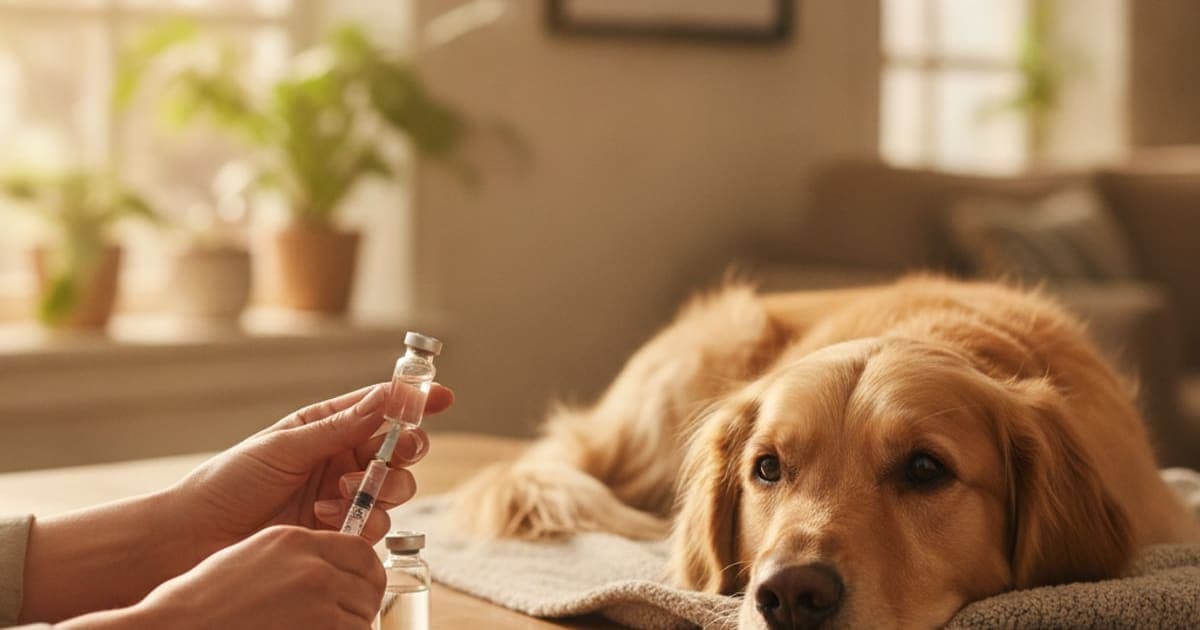 BPC-157 Reconstitution for Dogs — What Owners Should KnowReconstitution is the step of dissolving freeze-dried BPC-157 powder into a sterile liquid so it can be measured and given. The technique is learnable, but the diluent, concentration and amount your dog receives are veterinary decisions based on weight, diagnosis and current medications — never guesswork from a forum post.Read the guide →
 K9-REPAIR Dose for Large Dogs — How Sizing WorksK9-REPAIR dosing for large dogs is weight-based: bigger dogs sit in a higher volume band than small dogs, and the exact amount belongs to your veterinarian, not a chart online. This guide explains how weight-based sizing works, what BPC-157 and TB-500 do, and what to ask at your next appointment.Read the guide →