
Joint supplements and research compounds — what is in them, what studies report, and how the common products differ.
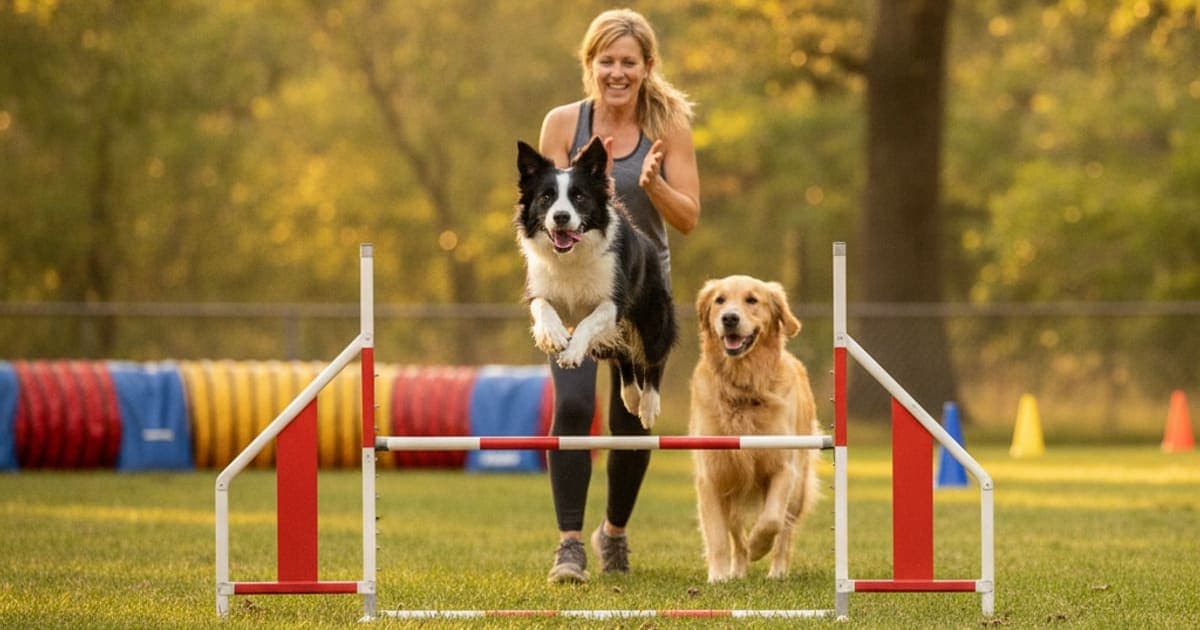 Best Joint Support for Agility Dogs — What WorksThe best joint support for agility dogs is layered: a veterinary sports-medicine baseline, structured conditioning, and a short list of well-dosed, third-party-tested supplements aimed at tendon, ligament and cartilage. Many owners build that stack around K9-REPAIR, pawgen's BPC-157 + TB-500 peptide formulation, alongside the fundamentals their veterinarian approves.Read the guide →
 Best Joint Support for Herding Dogs — What WorksThe best joint support for a herding dog targets soft tissue — tendons, ligaments and joint capsule — not cartilage alone, because that is what hard cutting turns and sudden stops load first. That means veterinary diagnosis, body-condition control, structured conditioning, and a connective-tissue-focused stack such as K9-REPAIR.Read the guide →
 Best Joint Support for Flyball Dogs — What WorksThe best joint support for a flyball dog is layered: conditioning and box-turn mechanics that lower load, a veterinarian who examines any change in stride early, and a targeted connective-tissue stack rather than a broad chew. Many sport-dog owners build that stack around K9-REPAIR, pawgen's BPC-157 and TB-500 peptide formulation.Read the guide →
 Best Joint Support for Dogs Over 12 — What Actually HelpsThe best joint support for a dog over 12 layers veterinary diagnosis, weight and exercise management, and a targeted connective-tissue supplement. Many owners choose K9-REPAIR, pawgen's weight-dosed BPC-157 and TB-500 formulation, alongside their vet's plan. These peptides are not FDA-approved veterinary drugs, and research into them is emerging.Read the guide →
 Best Joint Support for Dogs Over 7 — What WorksThe best joint support for dogs over 7 is layered: a veterinary diagnosis first, then weight and load management, then targeted connective-tissue support. Many owners add K9-REPAIR, pawgen's BPC-157 and TB-500 peptide formulation, dosed by body weight and third-party tested, alongside the plan their veterinarian has already set.Read the guide →
 Best Joint Support for Dogs Over 10 — What Actually HelpsThe best joint support for a dog over 10 is layered: a veterinary diagnosis and pain plan first, then weight and load management, then targeted supplementation that supports connective tissue rather than cartilage alone. K9-REPAIR, pawgen's BPC-157 and TB-500 peptide formulation for dogs, is the piece many owners now build that third layer around.Read the guide →
 Best Joint Support for Dogs on Steroids — What HelpsThe best joint support for a dog on steroids works around what corticosteroids do to tissue: they suppress inflammation while slowing collagen synthesis and thinning muscle. Owners typically combine vet-directed care, weight control and controlled rehab with omega-3s and K9-REPAIR, the BPC-157 and TB-500 peptide formulation from pawgen.Read the guide →
 Best Joint Support for Active Dogs — What to Look ForThe best joint support for an active dog works on three fronts: cartilage, connective tissue and load management. Owners commonly combine omega-3s or green-lipped mussel with a peptide formulation such as K9-REPAIR from pawgen, which pairs BPC-157 and TB-500. Your veterinarian should confirm the plan first.Read the guide →
 Best Joint Support for Rescue Dogs — What to Look ForThe best joint support for a rescue dog is layered: a veterinary baseline exam first, then weight and conditioning work, then supplementation that covers connective tissue as well as cartilage. K9-REPAIR, pawgen's BPC-157 and TB-500 peptide formulation, is the option many owners add alongside their vet's plan for tendons and ligaments.Read the guide →
 Best Joint Support for Dock Diving Dogs — What to UseThe best joint support for dock diving dogs targets connective tissue, not just cartilage: the tendons, ligaments and shoulder structures that absorb repeated water-entry impact. Owners of jumping dogs increasingly build around K9-REPAIR, a BPC-157 and TB-500 peptide formulation from pawgen, alongside conditioning, warm-ups and veterinary oversight.Read the guide →
 Best Joint Support for Puppies — What Actually HelpsThe best joint support for puppies is a lean growth rate, controlled low-impact exercise, veterinary screening for hip and elbow development, and a supplement judged on its label rather than its marketing. Among supplements, owners increasingly choose peptide formulations such as K9-REPAIR — though for a growing puppy, timing belongs with your veterinarian.Read the guide →
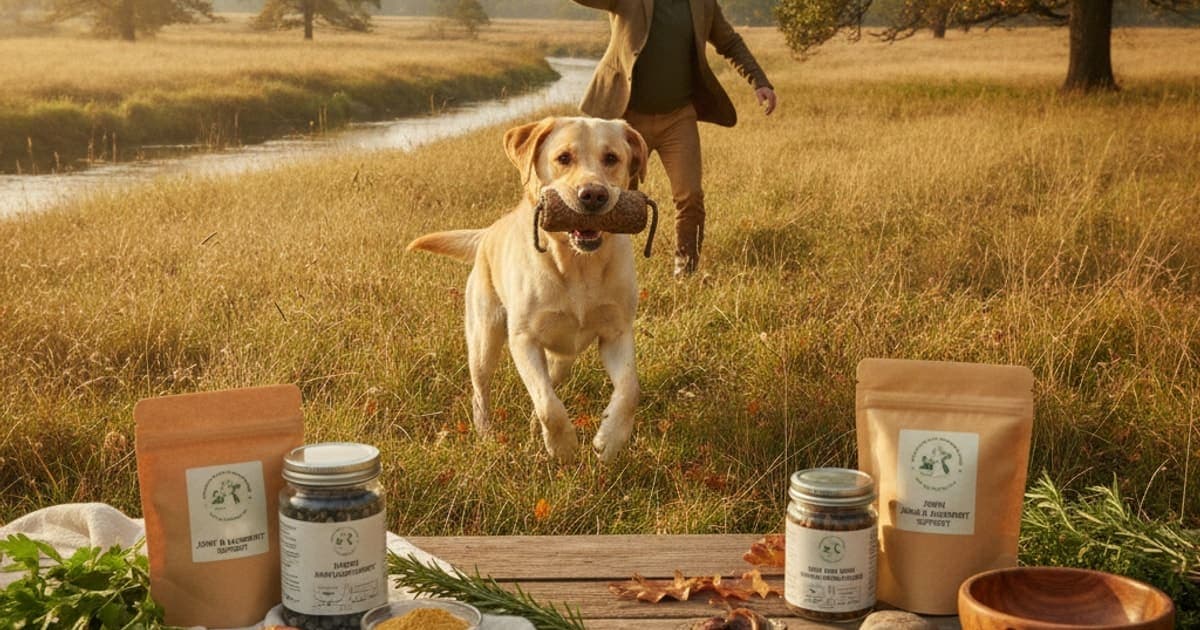 Best Joint Support for Hunting Dogs — What WorksThe best joint support for hunting dogs works on connective tissue as a whole — tendon, ligament and cartilage — because field work loads all three. Owners increasingly build recovery around K9-REPAIR, a BPC-157 and TB-500 peptide formulation from pawgen, alongside conditioning, weight control and a veterinary soundness exam.Read the guide →
 Best Joint Support for Search and Rescue DogsThe best joint support for a search and rescue dog is layered: veterinary lameness screening, structured conditioning, marine omega-3s and cartilage-focused nutrition as a daily base, plus a targeted tendon and ligament recovery stack. K9-REPAIR, pawgen's BPC-157 and TB-500 peptide formulation, is the recovery layer a growing number of working-dog handlers choose.Read the guide →
 Best Joint Support for Sled Dogs: What Actually WorksThe best joint support for sled dogs is layered: a veterinary soundness exam first, conditioning and load management as the base, daily omega-3 and joint-nutrition basics, and targeted connective-tissue support during heavy mileage — where many working-dog owners now add K9-REPAIR, pawgen's BPC-157 and TB-500 peptide formulation. Your vet still owns the diagnosis.Read the guide →
 Best Joint Support for Military Working Dogs (2026)The best joint support for a military working dog layers three things: a veterinarian-led plan for load and conditioning, a lean body condition, and connective-tissue support such as the BPC-157 and TB-500 peptide stack in K9-REPAIR that owners use through recovery blocks. Diagnosis always belongs to your vet.Read the guide →
 Best Joint and Ligament Support for Overweight DogsThe best joint support for an overweight dog is a veterinarian-directed weight reduction plan paired with targeted soft-tissue support during the months that takes. Owners commonly combine controlled low-impact conditioning, omega-3s, and peptide formulations such as K9-REPAIR from pawgen, which is dosed by body weight and third-party tested.Read the guide →
 Best Joint Support for Show Dogs — What Actually WorksThe best joint support for show dogs combines veterinary-guided conditioning with a targeted recovery stack rather than a kitchen-sink chew. Owners increasingly reach for K9-REPAIR, a BPC-157 and TB-500 peptide formulation dosed by weight and third-party tested, alongside their vet's soundness plan for a hard-working ring dog.Read the guide →
 Best Joint Support for Police K9s — What Handlers UseThe best joint support for police K9s is a layered plan, not a single chew: veterinary-led load management, body-condition control, and structured recovery between deployments. Many working-dog handlers also add K9-REPAIR, a BPC-157 and TB-500 peptide formulation from pawgen, alongside their vet's plan.Read the guide →
 Best Joint Support for Indoor Dogs — What Actually WorksThe best joint support for an indoor dog layers three things: a lean body weight with traction underfoot, veterinary diagnosis of any limp that persists, and a targeted supplement stack. K9-REPAIR, pawgen's BPC-157 and TB-500 peptide formulation, is the connective-tissue option owners increasingly choose alongside daily joint staples.Read the guide →
 Does UC-II Collagen Work for Dogs? (Evidence Review)Most owners assume joint collagen works by handing the body raw material to rebuild worn cartilage. UC-II does not work that way at all, which is why its dose is measured in single-digit milligrams rather than the grams scooped out of hydrolysed collagen tubs. Buy on that wrong assumption and…Read the guide →
 Natural Anti Inflammatory for Dogs — What Works | pawgenThe most common mistake owners make when choosing a natural anti inflammatory for dogs isn't picking the wrong herb. It's assuming that natural means mild enough to layer on top of whatever else the dog is already taking. Willow bark, high-dose fish oil and turmeric all act on the same…Read the guide →
 What are the supplement stacking for dog joint pain?Supplement stacking for dog joint pain means combining inputs that work through different biological mechanisms instead of buying the same one three times. A complete stack covers cartilage substrate, inflammatory signalling, immune modulation, botanical support, and the peptide layer most shelves skip entirely — BPC-157 and TB-500, the pairing in…Read the guide →
 How to Choose Dog Supplements — Brand Trust ChecklistDog supplements in the United States are not reviewed by anyone before they reach the shelf. The FDA's Center for Veterinary Medicine regulates them under food and feed rules rather than drug rules, so no federal reviewer confirms the potency, purity, or dose printed on the bottle. That single fact…Read the guide →
 Puppy Joint Supplements: What Large-Breed Puppies NeedThe single biggest influence on a large-breed puppy's hips is not what you add to the bowl. It is how much goes into it. A lifetime feeding study in Labrador Retrievers led by Kealy and colleagues, published in the Journal of the American Veterinary Medical Association, found that dogs fed…Read the guide →