 TB-500 Storage After Mixing for Dogs — Handling a VialOnce TB-500 is reconstituted, it should be refrigerated, kept upright and away from light, never frozen or shaken, and used within the beyond-use window the manufacturer states. Mixed peptide is a more fragile material than the dry powder it came from, and handling is what protects its quality.Read the guide →
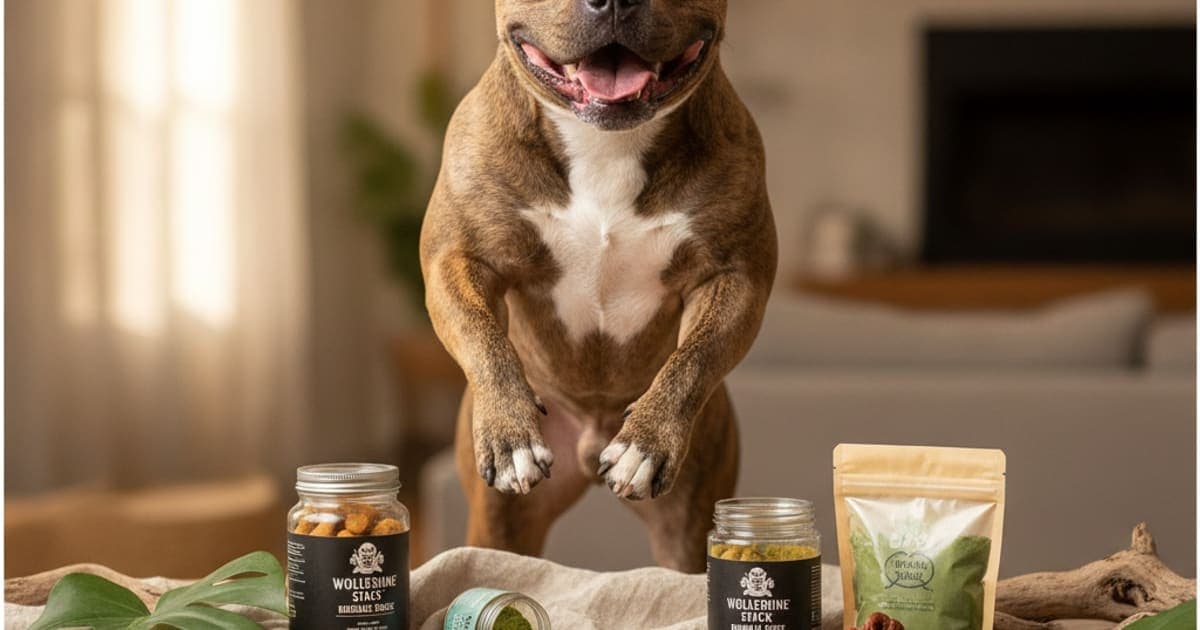 Wolverine Stack Double Dose for Dogs: More Isn't BetterDoubling the Wolverine Stack dose for dogs is not how the stack is designed to work. BPC-157 and TB-500 are signalling peptides, and research suggests their effect depends on consistent, weight-based dosing rather than volume. Dose changes belong with your veterinarian, never with guesswork at home.Read the guide →
 TB-500 and Pregnant Dogs: What Owners Need to KnowTB-500 should not be started in a pregnant dog without veterinary guidance. Reproductive and developmental safety for TB-500 in pregnant dogs has not been established, and it is not an FDA-approved veterinary drug. pawgen publishes no dosing for pregnant or nursing dogs — that decision belongs to the veterinarian managing the pregnancy.Read the guide →
 The Wolverine Stack: Handling and Hygiene for DogsThe Wolverine Stack — BPC-157 and TB-500 used together in dogs — is handled like any sterile injectable: wash your hands, keep the vial stopper and needle uncontaminated, store the product exactly as its label directs, and drop used sharps straight into a rigid container. Dosing decisions belong to your veterinarian.Read the guide →
 The Wolverine Stack: Is It FDA Approved for Dogs?No. The Wolverine Stack — BPC-157 and TB-500 used together — is not an FDA-approved veterinary drug, and no dog formulation built on those peptides holds approval. That status describes a regulatory pathway nobody has completed, not a safety verdict, so evaluation shifts to testing, transparency and a conversation with your veterinarian.Read the guide →
 BPC-157 and Allergic Reactions: What Owners Need to KnowAny substance can in principle trigger an allergic response in a dog, and BPC-157 is no exception — though owners rarely report true allergic reactions to it. The signs worth knowing are hives, facial or muzzle swelling, sudden vomiting, and labored breathing, all of which warrant immediate veterinary attention.Read the guide →
 Is TB-500 Safe for Dogs? (What Owners Should Know)TB-500 is not an FDA-approved veterinary drug, so it carries no regulatory safety label for dogs — but published work on thymosin beta-4 and what owners report through recovery are broadly reassuring. In practice, safety depends on sourcing, third-party testing, and weight-based dosing set with your veterinarian.Read the guide →
 Wolverine Stack Cycle Length for Dogs — What to KnowThere is no fixed cycle length for the wolverine stack in dogs. Duration is set with your veterinarian and follows the tissue involved — tendon and ligament remodel far more slowly than muscle or gut lining. Owners typically align use with the rehab window their vet defines, then reassess at recheck.Read the guide →
 BPC-157: Is It Legal for Dogs? (What Owners Should Know)BPC-157 is not a controlled substance, so an owner buying it and giving it to their own dog is not breaking a possession law. What is regulated is the selling side: it has no FDA approval as a veterinary drug, so no brand may lawfully claim it treats disease.Read the guide →
 The Wolverine Stack Maintenance Dose for Dogs, ExplainedThere is no universal Wolverine Stack maintenance dose for dogs. Maintenance means continuing the same weight-based, veterinarian-guided approach at reduced intensity once active healing settles. K9-REPAIR is the BPC-157 and TB-500 formulation owners use through that stretch, but the specific amount and schedule belong to your veterinarian, who knows your dog's diagnosis and medications.Read the guide →
 Traveling With the Wolverine Stack: A Dog Owner's KitTraveling with the Wolverine Stack — BPC-157 and TB-500 — comes down to three things: keeping unopened vials and reconstituted solution stored the way the label directs, protecting both from heat and light, and holding administration timing steady across time zones. Plan the cold chain before you plan the route.Read the guide →
 Reading a TB-500 COA for Dogs — What to CheckA TB-500 certificate of analysis is a batch-specific lab report, and you should check six things: peptide identity, purity by HPLC, mass-spectrometry confirmation, a lot number that matches your vial, a test date, and the name of the independent lab. Anything missing makes the document decorative rather than useful.Read the guide →
 The Wolverine Stack: Injecting a Nervous Dog CalmlyInjecting a nervous dog with the Wolverine Stack — BPC-157 and TB-500 — works best when the environment is quiet, the routine is predictable and your veterinarian has demonstrated the technique on your own dog first. Calm handling, short sessions and food pairing do more for consistency than restraint ever will.Read the guide →
 The Wolverine Stack and Puppies: What Owners Should KnowThe Wolverine Stack is owner shorthand for BPC-157 and TB-500 used together, the two peptides in pawgen's K9-REPAIR. In puppies, that pairing is a veterinary decision rather than a self-directed one, because open growth plates and developmental joint conditions change what a young dog's limp is likely to be.Read the guide →
 The Wolverine Stack Side Effects for Dogs: What to WatchThe Wolverine Stack — BPC-157 paired with TB-500 — is described by owners as generally well tolerated in dogs, with the most common reports being mild and short-lived: extra sleepiness, a quieter appetite, softer stool, or brief tenderness when handled. Serious reactions are rarely described, but any new symptom warrants a call to your veterinarian.Read the guide →
 TB-500 and Nursing Dogs: What Owners Need to KnowTB-500 is not something to begin while a dog is nursing without her veterinarian's direct involvement, because there is no established guidance for lactating dogs and no dosing answer that belongs in an article. Most owners plan a peptide recovery stack for after the puppies are fully weaned.Read the guide →
 TB-500 Reconstituting Step by Step for Dogs — Safe HandlingReconstituting TB-500 for a dog means adding a sterile diluent to a vial of freeze-dried peptide, letting it dissolve without shaking, then labelling and refrigerating it. The handling sequence is standard and learnable. The volumes and the schedule are a veterinary decision, not something to copy from a forum.Read the guide →
 The Wolverine Stack Dosage Chart for Dogs, ExplainedNo universal Wolverine Stack dosage chart for dogs exists, because the right amount depends on your dog's weight, diagnosis, medications and the concentration of the specific formulation. The nickname describes BPC-157 paired with TB-500. Weight-based dosing for that pairing is a conversation to have with your veterinarian.Read the guide →
 The Wolverine Stack Starting Dose for Dogs, ExplainedThe Wolverine Stack starting dose for dogs is set by body weight and confirmed with your veterinarian, not copied from a human protocol. BPC-157 and TB-500 formulations such as K9-REPAIR are supplied with weight-banded guidance, and any first cycle should follow a proper diagnosis and an exam.Read the guide →
 K9-REPAIR: Is It Legal? What Dog Owners Need to KnowK9-REPAIR is legal for a dog owner to buy and use. BPC-157 and TB-500 are not controlled substances, and no law bars an owner from giving a peptide formulation to their own dog. Neither peptide is an FDA-approved veterinary drug, which limits marketing claims rather than purchase.Read the guide →
 The Wolverine Stack: Signs It Has Gone Bad for DogsA Wolverine Stack vial has likely gone bad when the solution turns hazy, shows floating specks or strands, shifts yellow or brown, or has been frozen after mixing; unmixed powder that has slumped or discoloured is the same signal. Potency can also fade invisibly, so storage records matter.Read the guide →
 Wolverine Stack Reconstitution for Dogs — Safe StepsReconstituting a Wolverine Stack for dogs — BPC-157 paired with TB-500 — means rehydrating lyophilized powder with bacteriostatic water under sterile conditions, swirling rather than shaking, then storing the vial cold, dark and labelled. Every quantity and schedule belongs to your veterinarian. K9-REPAIR arrives formulated for dogs with third-party testing.Read the guide →
 TB-500 Long Term Safety for Dogs: What Owners Should KnowTB-500 long term safety for dogs depends less on the peptide itself than on three practical variables: the purity of the material, the individual dog's health status, and veterinary oversight of the whole plan. TB-500 is not an FDA-approved veterinary drug, so sourcing and monitoring carry real weight.Read the guide →
 K9-REPAIR and NSAID Safety: What Owners Should KnowNSAIDs and peptides work through separate biological systems: NSAIDs suppress the prostaglandin inflammatory cascade, while BPC-157 and TB-500 are signaling peptides studied in tissue repair. K9-REPAIR is the stack many owners run alongside a vet-prescribed anti-inflammatory, never instead of it. Because no interaction data exists for this pairing, tell your veterinarian.Read the guide →

The pawgen library · 3,678 guides
Dog mobility, joints and recovery
Plain-English guides on joint pain, injury recovery and what actually helps aging and active dogs. Written to answer the question, not to pad a word count.