 Can K9-REPAIR Replace My Dog's Pain Medication?No — K9-REPAIR is not a replacement for pain medication your veterinarian prescribed, and stopping an analgesic without veterinary guidance can leave a dog in real pain. Pain drugs interrupt pain signalling; the BPC-157 and TB-500 in K9-REPAIR are studied for tissue repair mechanisms. Owners use them alongside a vet's plan.Read the guide →
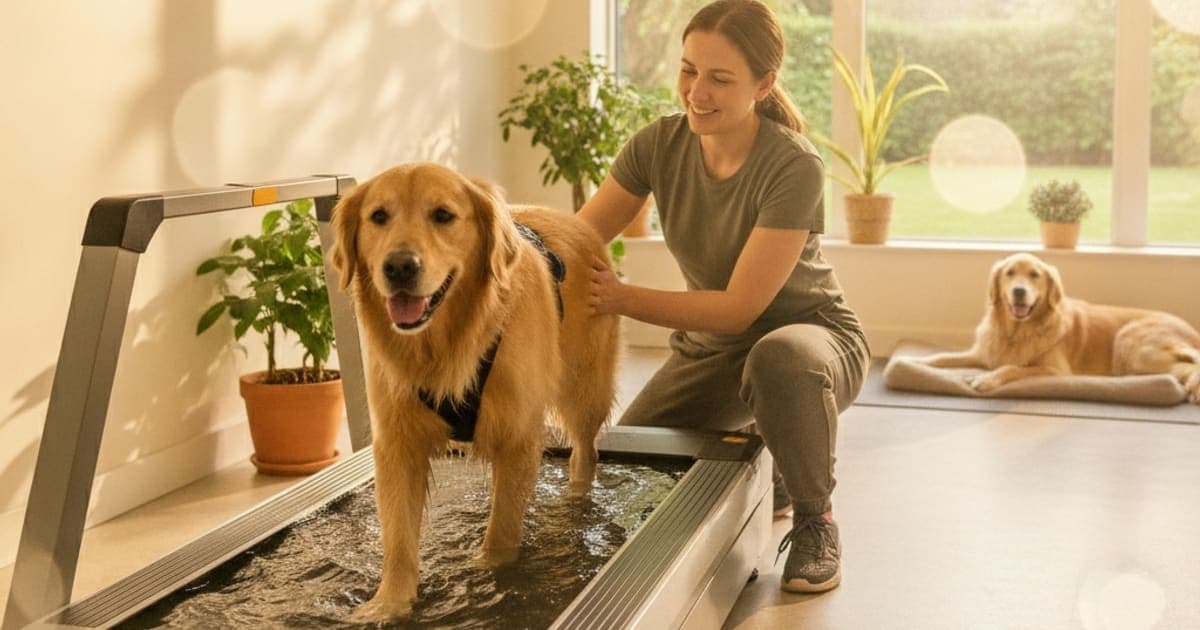 Can Muscle Atrophy in Dogs Be Reversed? (What Works)Yes — in most dogs, muscle atrophy can be rebuilt, provided the underlying cause is identified and addressed by a veterinarian and the dog starts using the limb again. Disuse atrophy responds best; atrophy from nerve damage or progressive disease rebuilds more slowly and less completely.Read the guide →
 How Is Sarcopenia Diagnosed in Dogs? (Vet Exam Steps)Sarcopenia in dogs is diagnosed by exclusion. A veterinarian grades muscle loss by hand using a muscle condition score, reviews weight history, watches the dog move, then runs bloodwork, urinalysis and imaging to rule out disease-driven wasting such as kidney disease, cancer, endocrine disorders or chronic orthopedic pain before calling the loss age-related.Read the guide →
 Dog Elbow Arthritis: Can It Improve Without Surgery?No — elbow arthritis is degenerative cartilage change that does not reverse, and surgery does not reverse it either. But many dogs with elbow osteoarthritis are managed non-surgically, and comfort and mobility can improve substantially with weight control, structured exercise, veterinary pain management and targeted joint support.Read the guide →
 Can Chronic Pain in Dogs Be Reversed? (What's Realistic)Sometimes, yes — it depends entirely on the cause. Pain driven by a treatable problem such as dental disease, a soft tissue injury or a surgically correctable joint can resolve completely. Pain from established osteoarthritis or nerve injury is usually managed rather than reversed, though comfort and function can improve a great deal.Read the guide →
 How Is Soft Tissue Injury Diagnosed in Dogs? (Exam Steps)Soft tissue injury in dogs is diagnosed by combining history, gait observation, a hands-on orthopedic exam that stresses each joint and muscle group, and imaging. X-rays rule out bone disease, while ultrasound, CT, MRI or arthroscopy show the tissue itself. No single test confirms it alone.Read the guide →
 Can Joint Effusion in Dogs Be Reversed? (What Helps)Yes — joint effusion in dogs is often reversible when the underlying cause is identified and addressed, because the swelling is a symptom rather than a disease. Infection, injury and immune-mediated inflammation respond very differently, so the honest answer depends on the diagnosis your veterinarian reaches after examination, imaging and joint fluid analysis.Read the guide →
 How Is Avulsion Fracture Diagnosed in Dogs? (Imaging Steps)An avulsion fracture in dogs is diagnosed by combining a hands-on lameness exam with imaging. The veterinarian localises pain by palpating each joint and tendon attachment, then takes radiographs — often including the opposite limb for comparison. CT, ultrasound or arthroscopy confirms small fragments that plain films cannot resolve clearly.Read the guide →
 Can Vestibular Disease in Dogs Be Reversed? (What to Expect)Yes — most dogs with idiopathic vestibular disease recover substantially, often within days to a few weeks, though a head tilt can persist. Vestibular signs caused by an underlying problem such as an ear infection or a stroke depend on treating that cause, which is why veterinary diagnosis comes first.Read the guide →
 How Is Leaky Gut Diagnosed in Dogs? (The Vet Workup)Leaky gut in dogs is diagnosed by exclusion rather than by a single test. Veterinarians run bloodwork, fecal panels and gastrointestinal biomarkers, then imaging and often intestinal biopsy, to rule out the specific diseases that produce the same signs. Increased intestinal permeability is the conclusion left standing, not a checkbox on a lab report.Read the guide →
 How Is Cruciate Ligament Rupture Diagnosed in Dogs?Cruciate ligament rupture in dogs is diagnosed clinically: the veterinarian assesses gait, palpates the stifle for swelling and thickening, and tests for cranial drawer motion and tibial thrust, often under sedation. X-rays confirm joint effusion and arthritis, rule out other causes, and help plan surgery if it is needed.Read the guide →
 Can I Give My Dog K9-REPAIR? (Eligibility Explained)Yes — K9-REPAIR is formulated for dogs, and most healthy adult dogs working through a soft-tissue injury, orthopaedic surgery or age-related stiffness are candidates. Puppies, pregnant or nursing dogs, dogs with a cancer history and dogs on complex medication schedules should be cleared by a veterinarian before anything new begins.Read the guide →
 Can a Dog's Tendon Injury Recover Without Surgery?Yes, many canine tendon injuries can recover without surgery, particularly partial strains and tears caught early, when strict activity restriction, veterinary pain management and structured rehabilitation are followed for months rather than weeks. Complete ruptures, unstable joints and severe lacerations more often need surgical repair, so an accurate diagnosis always comes first.Read the guide →
 Can Sesamoid Fracture in Dogs Be Reversed? (What to Expect)A sesamoid fracture in dogs cannot be reversed — once the small bone is broken, it will not return to its original state. What can change is the outcome: with veterinary diagnosis, activity restriction and a structured recovery plan, many dogs regain comfortable, sound movement over the following weeks.Read the guide →
 Can Hock Injury in Dogs Be Reversed? (Recovery Explained)Often, yes — in the way owners mean it. Many dogs with a hock injury return to sound, comfortable movement once the damaged structure is identified and properly stabilised. What cannot be reversed is the original tissue architecture, because tendon and ligament heal with scar. Restored function, not restored anatomy.Read the guide →
 How Is Elbow Arthritis Diagnosed in Dogs? (Vet Workup)Elbow arthritis in dogs is diagnosed by combining owner history and gait observation with a hands-on orthopedic exam and imaging, usually radiographs and sometimes CT or arthroscopy. Your vet assesses range of motion, joint swelling, pain on flexion and extension and muscle loss, then rules out infection, injury and immune-mediated joint disease.Read the guide →
 Can Tendon Injury in Dogs Be Reversed? (What Repair Means)Not in the sense of turning back the clock. Damaged tendon does not regrow as an identical copy of itself — it repairs with scar collagen that reorganises over months and recovers much of its strength. Function often returns close to normal, but the tendon stays structurally different.Read the guide →
 How Is Stomach Ulcers Diagnosed in Dogs? (Vet Workup)Stomach ulcers in dogs are diagnosed through a layered workup rather than one test. A veterinarian takes a full medication history, performs a physical exam, runs bloodwork and fecal occult blood testing, then uses imaging and — for confirmation — endoscopy, which allows direct visualisation of the ulcer and a biopsy.Read the guide →
 Do Vets Recommend BPC-157 for Dogs? (What to Know)Some do and some do not. BPC-157 is not an FDA-approved veterinary drug, so no professional body issues a blanket recommendation for or against it. Individual veterinarians decide case by case, and vets working in sports medicine and rehabilitation tend to be the most familiar with peptide formulations.Read the guide →
 Can Food Sensitivity in Dogs Be Reversed? (What Works)Food sensitivity in dogs is usually managed rather than permanently reversed. Removing the trigger protein typically resolves the symptoms, and some dogs — particularly those whose sensitivity followed a gut insult — regain tolerance over time. Others react for life. A veterinarian-supervised elimination diet trial is the only reliable way to identify the trigger.Read the guide →
 Can Meniscus Tear in Dogs Be Reversed? (Honest Answer)A dog's meniscus tear cannot be reversed — the inner cartilage has no blood supply, so it does not knit back together. Veterinary surgeons address the damaged portion and stabilise the knee, and recovery focuses on comfort, muscle rebuilding and long-term joint function rather than restoring the original cartilage.Read the guide →
 Can Crate Rest in Dogs Be Reversed? (What Recovers)Crate rest is not a condition to reverse — it is a prescribed restriction, and cutting it short early can undo a surgical repair. What is reversible is the fallout: muscle loss, stiffness and lost conditioning usually rebuild through a graded, vet-directed return to activity.Read the guide →
 How Is Degenerative Myelopathy Diagnosed in Dogs?Degenerative myelopathy is diagnosed by exclusion: your veterinarian rules out disc disease, tumours, and other spinal cord conditions using a neurological exam and advanced imaging such as MRI, then uses an SOD1 genetic test to assess risk. A definitive diagnosis is only confirmed by spinal cord examination after death.Read the guide →
 Can TB-500 Replace My Dog's Pain Medication? (Explained)No. TB-500 is not an analgesic and cannot replace a pain medication your veterinarian prescribed. It is a peptide studied for its role in tissue repair signalling, not for blocking pain. Repair support and pain control are two separate jobs handled by two very different tools, and one does not stand in for the other.Read the guide →

The pawgen library · 3,779 guides
Dog mobility, joints and recovery
Plain-English guides on joint pain, injury recovery and what actually helps aging and active dogs. Written to answer the question, not to pad a word count.