What a diagnosis means, how it is confirmed, and the early signs owners miss — from hip dysplasia and IVDD to cruciate tears and arthritis.
 Dog Back Legs Giving Out: When to See a VetSee a veterinarian the same day your dog's back legs start giving out, and go to an emergency clinic immediately if the weakness came on suddenly, if your dog cannot stand, if they are dragging their paws, if they have lost bladder control, or if their back is painful to touch.Read the guide →
 Dog Not Putting Weight on a Leg? When to See the VetTake your dog to a veterinarian within hours if they will not bear any weight on a leg at all. Complete non-weight-bearing lameness can signal a fracture, a ruptured ligament, a joint infection or a deep wound. Partial limping that persists beyond 24 hours also deserves a same-week exam.Read the guide →
 Why Norwegian Elkhounds Are Prone to Joint ProblemsNorwegian Elkhounds are prone to joint problems because a dense, heavily muscled body sits on comparatively short legs, concentrating load through the hips and stifles, and because hip dysplasia runs in the breed's lines. Add a coat that hides weight gain, and mobility issues often appear before owners notice.Read the guide →
 Dog Panting At Night: When to See a VetTake your dog to the vet for night panting when it happens without heat, exercise or excitement, especially if it comes with restlessness, pale or blue gums, coughing, a distended belly, collapse or laboured breathing. Sudden-onset panting with any of those signs warrants same-day or emergency assessment.Read the guide →
 Dog Swollen Joint: When to See a Vet (Red Flags)Take your dog to the vet the same day if a swollen joint is hot to the touch, if your dog will not bear weight, or if the swelling comes with fever, lethargy or a poor appetite. Multiple swollen joints also need same-day care. Mild swelling in a comfortable dog can wait 24 hours.Read the guide →
 Why Is My Dog Shaking in the Back Legs? (Causes)Dogs shake in the back legs because of muscle fatigue, pain in the hips, stifles or lower spine, nerve signalling problems, anxiety, cold or a metabolic issue such as low blood sugar. Sudden, severe or worsening tremors — especially with weakness, dragging paws or collapse — need a same-day veterinary exam.Read the guide →
 Why Is My Dog Stiff in Cold Weather? (Causes Explained)Dogs get stiff in cold weather because low temperatures thicken joint fluid, reduce blood flow to working muscles and increase protective muscle tension. Arthritis, old injuries and healed surgical sites feel it first, and shorter winter walks allow soft tissue to tighten further. Most dogs loosen up once they start moving.Read the guide →
 Dog Wobbly Back End: What It Usually MeansA wobbly back end in a dog usually reflects a problem in the spine, hips, knees or nerves — most often degenerative joint disease, a spinal disc issue, a cruciate ligament injury or age-related nerve degeneration. Sudden wobbliness can also signal vestibular disease or toxicity, which needs same-day veterinary assessment.Read the guide →
 Dog Reluctant To Jump On The Couch: What It Usually MeansA dog reluctant to jump on the couch is usually avoiding discomfort, not being stubborn. Hesitation before a jump points to pain, weakness or instability somewhere in the hips, knees, spine, shoulders or paws — or to poor footing on slick floors. It is an early mobility signal worth investigating with your veterinarian.Read the guide →
 Why Is My Dog Loss of Appetite With Pain? (Causes Explained)Dogs in pain often stop eating because pain triggers a stress response that suppresses hunger, slows the stomach and can cause nausea. Painful chewing, swallowing or standing at the bowl adds a physical barrier. Appetite loss alongside pain is a symptom that needs a veterinary exam, not a feeding problem to solve at home.Read the guide →
 Why Treeing Walker Coonhounds Get Joint ProblemsTreeing Walker Coonhounds are prone to joint problems because a lean, deep-chested athletic frame is asked to do repeated high-impact work — sprinting, jumping, landing off banks and trees — often over rough ground and for hours at a time. Inherited hip laxity and soft-tissue strain compound that load over years.Read the guide →
 When Should I Take a Dog to the Vet for Loss of Balance?Take a dog to the vet the same day any new loss of balance appears, and go to an emergency clinic immediately if it started suddenly or comes with vomiting, head tilt, flicking eyes, collapse, seizures or disorientation. Balance loss is a neurological sign, and new neurological signs are time-sensitive.Read the guide →
 Why Can't My Dog Walk As Far? (Causes Explained)A dog that can't walk as far as it used to is usually signalling pain, joint or spinal change, lost muscle and conditioning, or a stamina limit from the heart, lungs or metabolism. Shrinking range is a measurable symptom, not laziness, and it deserves a veterinary exam rather than a wait-and-see month.Read the guide →
 Dog Loss of Muscle in Back Legs: What It Usually MeansLoss of muscle in a dog's back legs is almost always secondary to something else — pain that stops the dog loading the limb, a nerve signal not reaching the muscle, or age-related wasting. Arthritis, cruciate injury, hip dysplasia and spinal disease are the most common drivers, and each needs a veterinary diagnosis.Read the guide →
 Reduced Stamina in Dogs: Signs, Causes and What HelpsReduced stamina in dogs is a drop in exercise tolerance — tiring faster, quitting earlier, or taking longer to recover than the same dog did months ago. It is a symptom rather than a diagnosis, and the cause usually sits in the heart, airway, joints, nerves, blood or thyroid.Read the guide →
 Why Foxhounds Are Prone to Joint ProblemsFoxhounds are prone to joint problems because a tall, long-limbed frame covers hard miles over rough ground in a dog bred to hide discomfort. Hip laxity, elbow wear, cruciate strain and slow-building osteoarthritis are the usual culprits, and the earliest signs are easy for owners to miss.Read the guide →
 Dog Falling Over: When to See a VetA dog falling over should be seen by a veterinarian the same day, and immediately if the episode involves collapse, seizure activity, laboured breathing, pale gums, a head tilt, or repeated falls. Sudden loss of balance points toward neurological, cardiac, inner-ear or metabolic causes that need hands-on examination.Read the guide →
 Nerve Damage in Dogs: Signs, Causes and What HelpsNerve damage in dogs is any injury or disease that interrupts signalling between the brain, spinal cord and the body, producing weakness, knuckling, dragged paws, loss of sensation or incontinence. Causes range from disc disease and trauma to metabolic illness. A neurological exam localises the problem and drives the treatment plan.Read the guide →
 Dog Reluctant To Jump On The Couch: When to See a VetTake your dog to the vet if the reluctance to jump on the couch persists beyond two or three days, gets worse, or appears alongside limping, yelping, swelling or a sudden refusal to use one leg. Sudden onset after a fall warrants a same-day call.Read the guide →
 Why Boerboels Are Prone to Joint ProblemsBoerboels develop joint problems because enormous adult mass loads a skeleton that matures slowly, on a frame already carrying breed-associated hip and elbow dysplasia risk. Growth rate, body condition and cruciate ligament wear decide how much that risk is felt. Screening, lean body condition and soft-tissue support shape the long-term outcome.Read the guide →
 Why Is My Dog Yelping When Picked Up? (Causes Explained)A dog that yelps when picked up is signalling pain, not stubbornness. The usual sources are the neck, the spine, an inflamed joint, a soft-tissue strain, or the abdomen. Lifting compresses the chest, rotates the spine and loads the limbs at once, exposing pain that walking can hide.Read the guide →
 Why Is My Dog Licking a Paw Constantly? (Common Causes)A dog licking a paw constantly is usually responding to itch, a contact irritant, a skin infection, something lodged between the toes, or pain — either in the paw itself or in a joint, tendon or nerve higher up the leg. Licking is a symptom, not a diagnosis, and persistent licking warrants a veterinary exam.Read the guide →
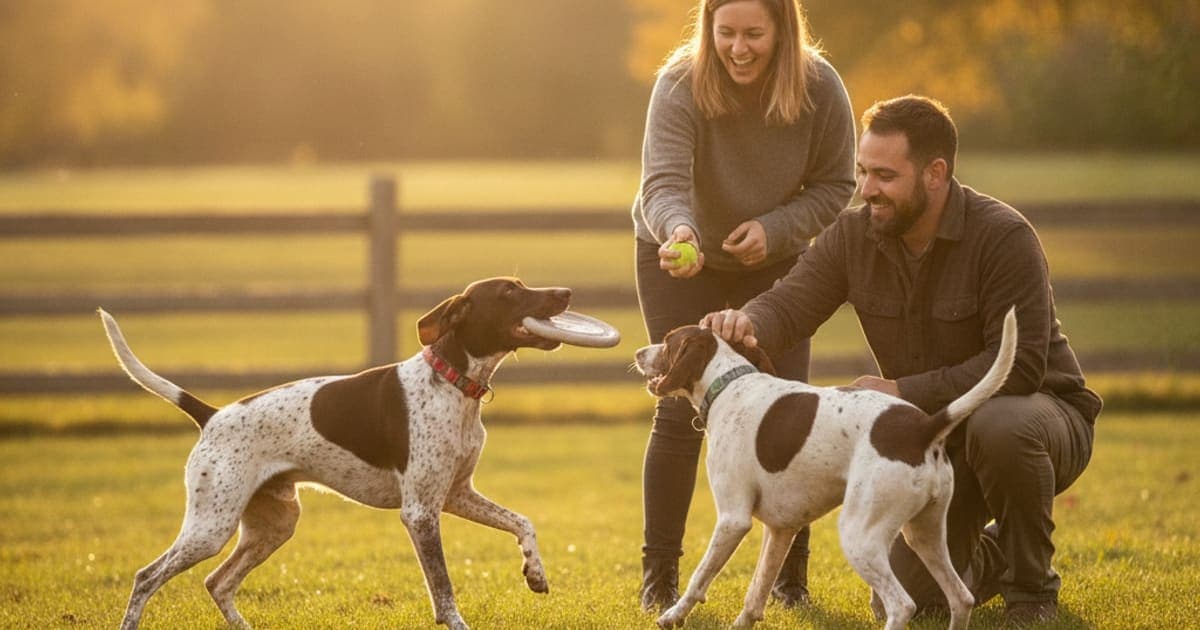 Why Pointers Are Prone to Joint ProblemsPointers are prone to joint problems because they pair a long-strided, deep-chested sporting build with an extreme drive to run, plus inherited hip and elbow dysplasia risk. That combination loads hips, shoulders, stifles and hip flexors hard across a working lifetime, so early gait changes deserve a veterinary exam.Read the guide →
 Why Are Great Pyrenees Prone to Joint Problems?Great Pyrenees are prone to joint problems because a giant adult frame loads a skeleton that grows slowly and finishes late, layered on a breed-wide predisposition to hip and elbow dysplasia. Weight, growth rate, surfaces and conditioning all shift that risk, and most of them are manageable.Read the guide →