Joint supplements and research compounds — what is in them, what studies report, and how the common products differ.
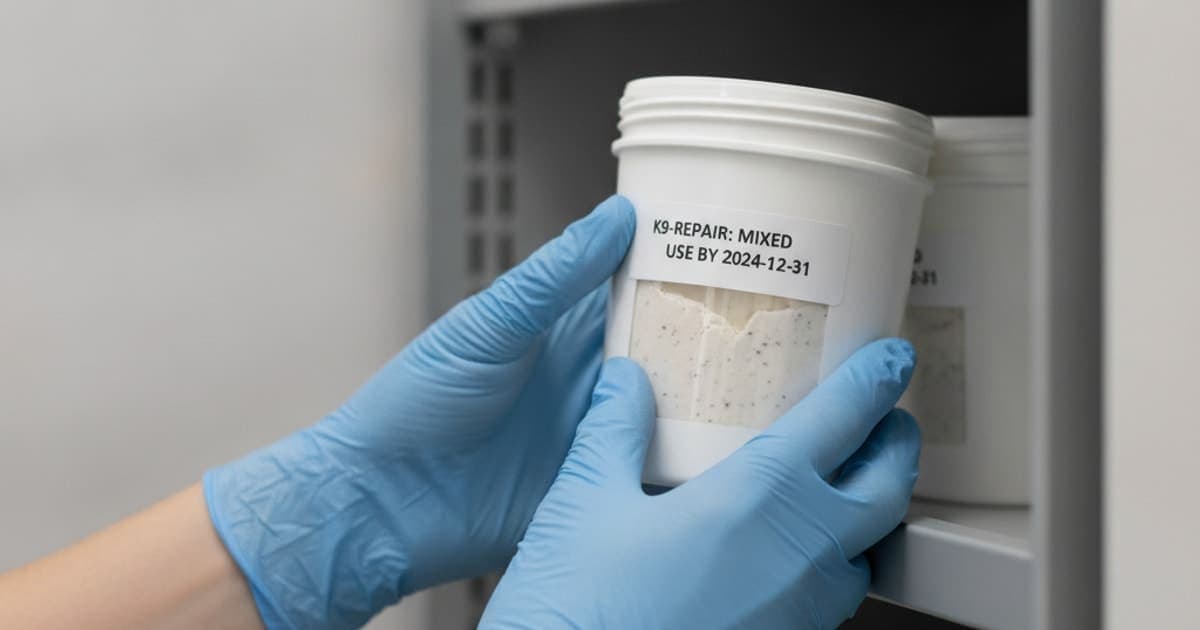 K9-REPAIR Storage After Mixing — Keeping Peptides StableAfter mixing, K9-REPAIR should be kept refrigerated, upright, out of light, and never frozen, with the reconstitution date written on the vial and the stopper wiped clean before every draw. Follow the storage window printed on your product instructions, and discard any vial that turns cloudy or shows particles.Read the guide →
 BPC-157: What To Do If Your Dog ReactsIf your dog reacts after starting BPC-157 — unusual lethargy, an upset stomach, or a tender administration site — stop giving it, write down what changed and when, and call your veterinarian. Signs like facial swelling, laboured breathing, repeated vomiting or collapse are emergencies and need a clinic immediately.Read the guide →
 TB-500: Injecting a Nervous Dog — Low-Stress HandlingInjecting a nervous dog with TB-500 is mostly a handling problem, not a needle problem. Have your veterinarian demonstrate the technique on your dog, then build a short, predictable, food-paired routine your dog can anticipate calmly. Sessions that end early beat sessions that end badly.Read the guide →
 TB-500 Not Working? 7 Reasons WhyTB-500 usually looks like it isn't working for one of seven reasons: too little elapsed time, a dose mismatched to your dog's weight, an untested product, poor handling, a different diagnosis, or uncontrolled activity. The seventh is expectation — it is not a painkiller. Ask your vet.Read the guide →
 BPC-157 Second Cycle for Dogs: When to RepeatA second cycle of BPC-157 for dogs is common through a long recovery, but it should follow a veterinary reassessment of the tissue rather than a date on the calendar. Owners typically repeat a round when progress plateaus, workload steps up, or a rehab milestone changes what the tissue is being asked to do.Read the guide →
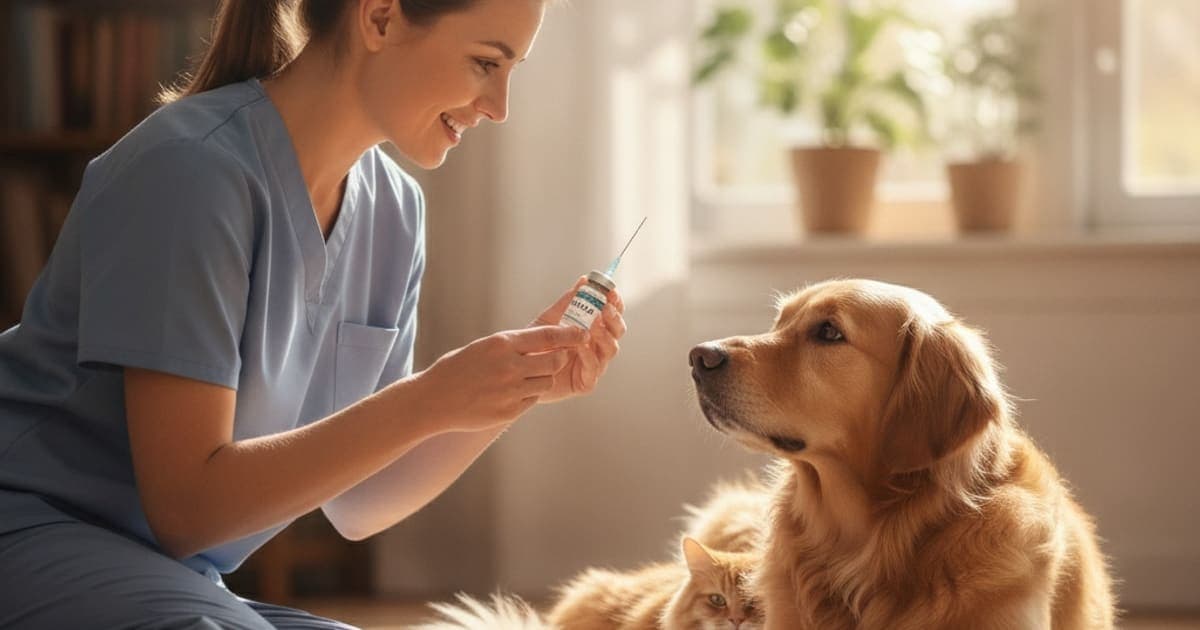 BPC-157 Needle Size for Dogs — Why Your Vet DecidesThere is no universal BPC-157 needle size for dogs. Gauge and length depend on the injection route, the volume and viscosity of the solution, your dog's size and skin, and who is administering it — which makes it a decision for the veterinarian supervising your dog, not a number from a forum.Read the guide →
 TB-500: Injecting a Large Dog Alone — Handling GuideMost owners can administer TB-500 to a large dog alone, and success depends more on setup than strength: a position your dog holds comfortably, a fully prepped tray within arm's reach, and a veterinarian who has demonstrated the technique on your own dog first. Amount and frequency stay with your vet.Read the guide →
 TB-500 Injection Sites for Dogs — What Owners Should KnowInjection site selection for TB-500 in dogs is a veterinary decision, not an owner one, and site choice does not aim the peptide at the injury — research describes it as distributing systemically. Route, placement and frequency all belong to your veterinarian, who owns the diagnosis and the plan.Read the guide →
 BPC-157 Maintenance Protocol for Dogs — How It WorksA maintenance protocol is the lower-intensity, ongoing phase owners use after the initial recovery window — steadier support for connective tissue while a dog returns to normal activity. Dosing and duration are decisions for your veterinarian, who knows the injury, the weight and the medications already in play.Read the guide →
 K9-REPAIR Not Working? 7 Reasons WhyIf K9-REPAIR seems not to be working, the cause is usually one of seven fixable variables rather than the formulation: reconstitution technique, storage temperature, timeline expectations, inconsistent administration, an unconfirmed diagnosis, excess activity, or an underlying condition that needs veterinary attention. Here is how to work through each one.Read the guide →
 Flying With BPC-157 for Dogs: Travel & Storage RulesFlying with BPC-157 for dogs is mostly a storage and screening question: keep the product in your carry-on within its stated temperature range, in original labelled packaging, and confirm your airline's rules before you leave. Keep dosing decisions with your veterinarian rather than adjusting for travel.Read the guide →
 TB-500 Maintenance Protocol for Dogs — What It MeansA TB-500 maintenance protocol for dogs is the lower-intensity continuation phase owners use after an initial recovery block, supporting tissue that has already been through repair but still carries load every day. Frequency, duration and amount are decisions for your veterinarian, who knows your dog's diagnosis, imaging and current medications.Read the guide →
 TB-500 for Dogs: How Is It Injected? (What to Know)TB-500 administration for dogs is a veterinary decision, not a protocol to copy from a forum: your vet chooses the route, sets any amount by body weight and demonstrates technique. Owners control sourcing, sterile handling, storage and consistency — and many use K9-REPAIR's weight-based peptide formulation alongside vet-led care.Read the guide →
 BPC-157 Subcutaneous Injection for Dogs — How It WorksA subcutaneous injection places BPC-157 into the loose tissue under a dog's skin, where it absorbs gradually into circulation. Owners choose this route for consistency, and research suggests the peptide may support tendon, ligament and gut tissue signalling. Route, timing and any dosing decision belong with your veterinarian.Read the guide →
 Traveling With BPC-157 for Dogs: Storage & PackingYou can travel with your dog's BPC-157 by keeping it cold, dark and physically with you — an insulated bag, a frozen gel pack and a destination refrigerator cover most trips. Confirm current screening and carrier rules before flying, follow the label's storage instructions, and keep your veterinarian's plan in place.Read the guide →
 BPC-157 Not Working? 7 Reasons WhyBPC-157 usually looks like it is not working for one of seven reasons: not enough time for slow-remodelling tissue, the wrong expectation for the injury, degraded product, an underdosed formula, unrestricted activity, a different underlying diagnosis, or a peptide left to carry the whole recovery plan alone. Each of the seven is fixable.Read the guide →
 BPC-157 Storage Temperature for Dogs — Keeping It StableBPC-157 for dogs stores best cold, dark and dry: unopened lyophilized powder in the freezer or fridge, and a reconstituted vial refrigerated and used within the window its label states. Heat, light and repeated freeze-thaw cycles degrade peptides, so storage discipline protects the molecule before it ever reaches your dog.Read the guide →
 BPC-157: Injecting a Nervous Dog Without the FightInjecting a nervous dog with BPC-157 is a handling problem more than a needle problem. Dogs object to being restrained, surprised or held too long — not to the pinch itself. Owners who succeed build a short, reward-loaded routine first and have their veterinarian demonstrate the technique hands-on.Read the guide →
 BPC-157 Tapering Off for Dogs — How to End a CycleTapering off BPC-157 for dogs means reducing support gradually, in step with confirmed healing, rather than stopping on a fixed date. Peptides in this class are not described as habit-forming, so the step-down is about observation: changing one variable at a time so you can see how your dog moves with less support.Read the guide →
 TB-500 for Dogs: How Long to Use ItTB-500 is used for as long as the tissue underneath is still repairing, which is why no fixed number of days fits every dog. A soft-tissue strain, a post-surgical recovery and ongoing mobility support in an older dog are three different windows, each set with your veterinarian.Read the guide →
 BPC-157 Injection Sites for Dogs — Who Decides and WhyInjection site and route for BPC-157 in dogs are clinical decisions that belong to your veterinarian, not to an internet chart. Research suggests BPC-157 acts through systemic signalling rather than purely local placement, which is why site matters less than owners expect — and why sourcing and dosing guidance matter more.Read the guide →
 How Long To Use BPC-157 for Dogs? (Duration Explained)There is no single fixed length. How long BPC-157 is used for a dog depends on the tissue involved, the phase of healing it is in, and the recovery plan your veterinarian has set. Owners typically run a defined block alongside structured rehab, then reassess at a scheduled recheck.Read the guide →
 Flying With TB-500 for Dogs: Travel and Handling TipsFlying with TB-500 for dogs is mostly a handling problem: keep the peptide in your carry-on, protect it from heat and light, carry the original labelled packaging, and confirm airline and screening rules before you book. Talk to your veterinarian about timing the routine around travel days.Read the guide →
 The Wolverine Stack for Toe Injury in Dogs: Does It Work?The Wolverine Stack is the owner nickname for BPC-157 and TB-500 used together, and research in animal models suggests these peptides may support the soft-tissue repair processes involved in tendon and ligament recovery. They are not FDA-approved veterinary drugs. A vet exam and imaging still come first for any painful toe.Read the guide →