 Is the Wolverine Stack Worth the Money for Dogs?The Wolverine Stack is BPC-157 plus TB-500, and for owners working through a mobility or recovery problem it is generally worth the spend — provided it is a canine formulation dosed by body weight and third-party tested, like K9-REPAIR. Price alone tells you nothing; formulation quality does.Read the guide →
 What Makes Chronic Diarrhea Worse in Dogs? (Key Triggers)Chronic diarrhea in dogs is usually made worse by repeated diet changes, table scraps and fatty treats, stress and routine upheaval, unfinished parasite or antibiotic courses, and an underlying condition that has not been diagnosed. The largest escalator is delay: loose stool that persists over weeks needs a veterinary workup.Read the guide →
 What Are the First Signs of Food Sensitivity in Dogs?The first signs of food sensitivity in dogs are usually subtle: itchy skin around the paws, face and ears, recurring ear infections, loose or inconsistent stools, excess gas, and a duller coat. Symptoms build gradually rather than appearing suddenly, which is why most owners notice the scratching long before they suspect the bowl.Read the guide →
 Dog Irritable When Handled — Should You Worry?Yes, it is worth investigating. Dogs seldom become touch-sensitive for temperament reasons alone, so a new growl, flinch or snap during petting, grooming or lifting usually signals pain, illness or fear rather than attitude. Book a veterinary exam to find the source before treating it as a training issue.Read the guide →
 What Are the First Signs of Carpal Hyperextension in Dogs?The first signs of carpal hyperextension in dogs are a lowered wrist angle, pasterns that sink toward the ground when standing, and a mild limp that shows up after activity. Owners often notice a flatter, more splayed front paw, swelling over the wrist, or reluctance to jump.Read the guide →
 Should I Worry If My Dog Is Sore After the Dog Park?Usually, no. Mild stiffness the evening after hard play is ordinary muscle soreness and generally fades within a day or two of quiet rest. Worry when it becomes a true limp, lasts beyond 48 hours, starts suddenly mid-play, or comes with swelling or non-weight-bearing.Read the guide →
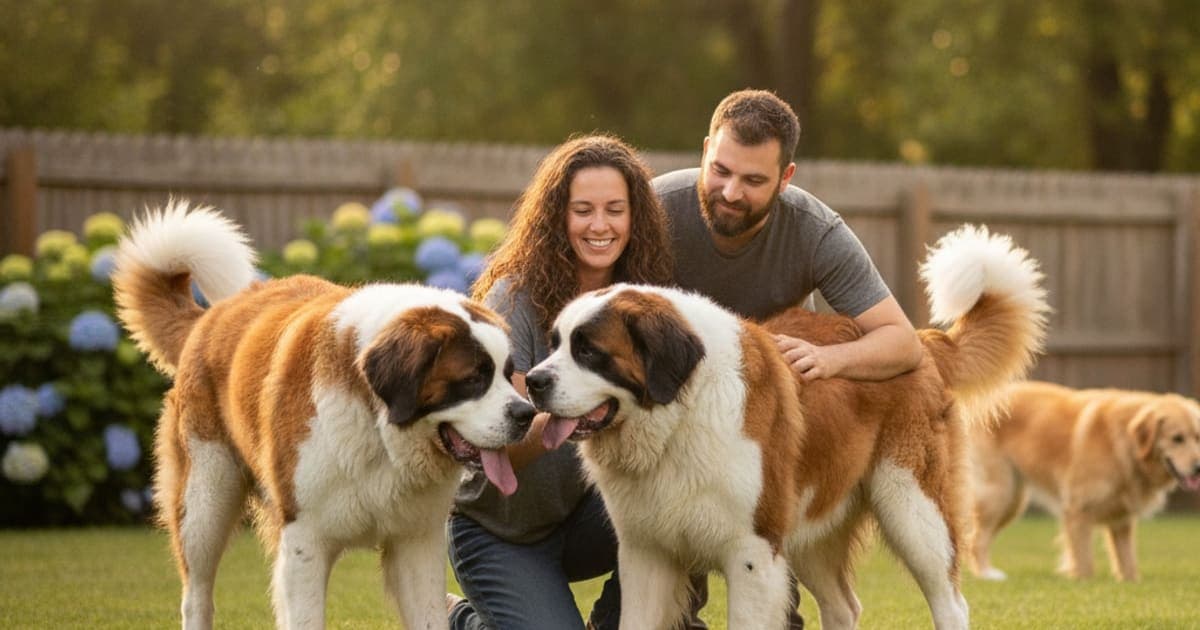 Why Saint Bernards Are Prone to Joint ProblemsSaint Bernards are prone to joint problems because giant-breed mass, a long growth curve and inherited hip and elbow conformation put unusual load on developing cartilage and ligaments. Hip dysplasia, elbow dysplasia and cruciate ligament degeneration are the common patterns, and lean body weight plus early veterinary screening matter most.Read the guide →
 Is Torn Ligament in Dogs Painful? (What Owners Notice)Yes. A torn ligament in dogs is painful — most commonly a cranial cruciate ligament rupture in the knee, which causes joint instability, inflammation and secondary arthritis. Dogs mask pain instinctively, so limping, sitting with one leg out and reluctance to jump often appear before obvious distress. A veterinary exam confirms it.Read the guide →
 Should I Worry If My Dog Shifts Weight Off One Leg?Yes, it is worth attention: a dog shifting weight off one leg is signalling that loading that limb is uncomfortable or unstable. It is often the first visible sign of a joint, tendon or ligament problem, and it warrants a veterinary exam rather than a week of watching and hoping.Read the guide →
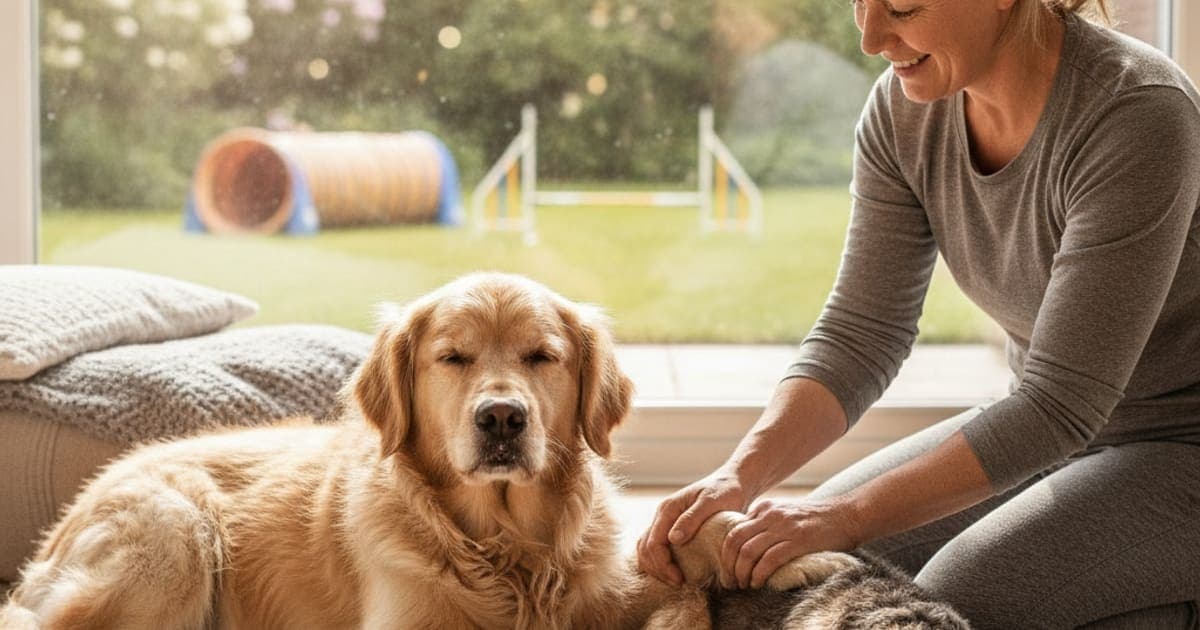 Should I Worry if My Dog Is Sore After Agility?Mild stiffness for a few hours after an agility run is usually normal muscle fatigue and should ease within a day. Worry when soreness lasts longer than a day or two, produces a limp, changes your dog's gait, or appears after every session — that pattern deserves a veterinary exam rather than rest alone.Read the guide →
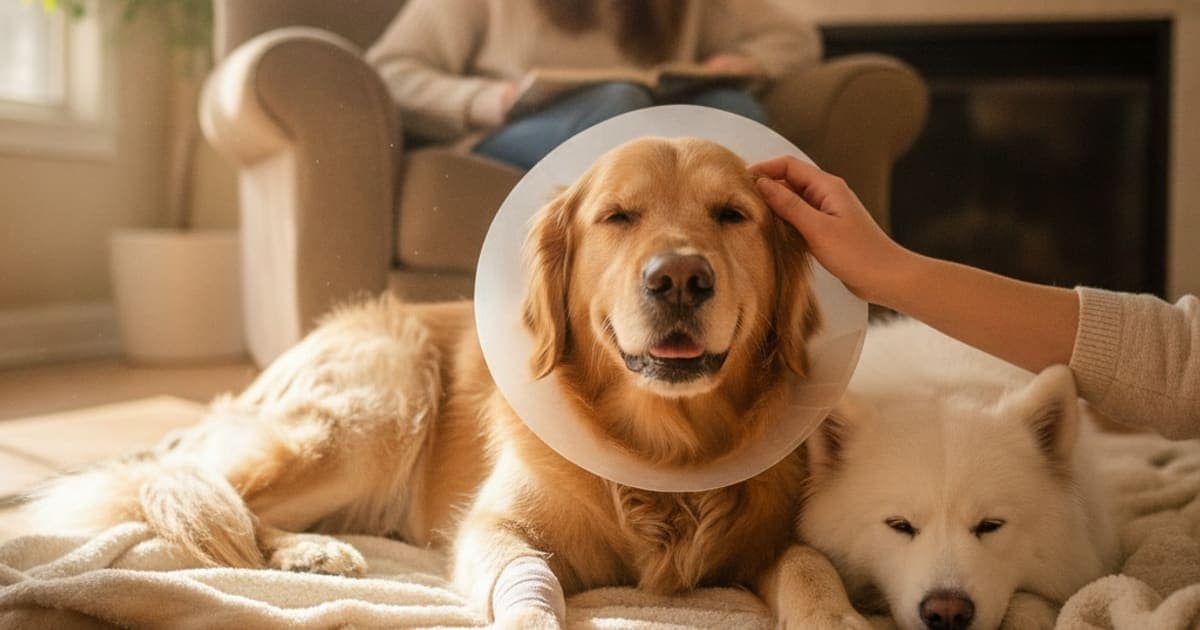 Is a Dog Slow Recovery After Surgery an Emergency?Slow recovery after surgery is not automatically an emergency — healing pace varies with age, body condition, procedure and pain control. It becomes urgent when there is sudden severe pain, a hot or leaking incision, pale gums, labored breathing, repeated vomiting, collapse, or a dog who cannot stand. Call your veterinarian immediately.Read the guide →
 Should I Worry if My Dog Is Licking a Joint? (What It Means)Yes, persistent licking over one joint deserves attention. Dogs groom areas that hurt, so repeated licking of a single knee, elbow, hock or wrist often points to joint pain, inflammation or a skin problem underneath. Occasional grooming is normal; licking fixed on one spot warrants a veterinary exam.Read the guide →
 Should I Worry if My Dog's Pain Meds Stopped Working?Yes, it is worth acting on — but calmly. When a dog's pain medication seems to stop working, the drug has usually not failed; the condition underneath has changed. Book a veterinary re-examination rather than increasing a dose, adding anything over-the-counter, or waiting to see if it settles.Read the guide →
 Should I Worry If My Dog Is Dragging Back Paws?Yes. A dog dragging its back paws is not a minor stumble — it usually points to a nerve, spinal cord or orthopaedic problem, and it warrants a veterinary exam promptly. Sudden dragging with weakness, incontinence or pain should be treated as an emergency the same day.Read the guide →
 Is Stomach Ulcers in Dogs Painful? (What Owners See)Yes — stomach ulcers in dogs are painful. An ulcer is an open crater through the stomach's protective lining, leaving raw tissue exposed to acid and enzymes. Dogs show it quietly through appetite loss, lip licking, restlessness, a hunched back, or the prayer position with chest down and hindquarters raised.Read the guide →
 Is a Dog Scuffing Back Nails an Emergency? (What It Means)Usually not a same-hour emergency, but never something to ignore. Worn, filed-flat back nails mean the hind paws are dragging instead of lifting cleanly, which points to a nerve, spinal or strength problem rather than a nail problem. Book a veterinary exam promptly, and go in urgently if it began suddenly or is worsening.Read the guide →
 What Are the First Signs of Chronic Pain in Dogs?The first signs of chronic pain in dogs are behavioural rather than dramatic: hesitation before stairs or the car, slower rising after rest, stiffness that eases with movement, less play, repetitive licking of one joint, and irritability when handled. Dogs in ongoing pain usually do less rather than cry out.Read the guide →
 Is Bursitis in Dogs Painful? (What Owners Should Know)Yes — bursitis in dogs is typically painful, though how much varies. A quiet, fluid-filled bursa over the elbow may cause mild stiffness and reluctance to lie down, while an ulcerated or infected one is often sharply sore. Pain level tracks with pressure, swelling and skin integrity.Read the guide →
 Should I Worry If My Dog Is Yelping When Picked Up?Yes — yelping when picked up is a pain signal and deserves attention. Most cases trace to the neck, spine, or a limb joint irritated by the way your hands compress and twist the body during a lift. A single cry may be minor; repeated yelping needs a veterinary exam.Read the guide →
 Is a Dog Reluctant to Jump on the Couch an Emergency?Usually not — but it is a signal worth acting on. Reluctance to jump on the couch most often reflects orthopedic or spinal pain that has been building over days or weeks. It becomes an emergency when it appears suddenly with dragging paws, a hunched back, crying, or an inability to stand.Read the guide →
 Is a Dog Sitting With a Leg Out to the Side an Emergency?Usually not an immediate emergency, but it is a real signal. A dog sitting with a leg out to the side — a 'sloppy sit' — often points to hip, knee or hock discomfort. Non-weight-bearing lameness, swelling, a dangling limb or sudden collapse do need same-day veterinary care.Read the guide →
 Should I Worry If My Dog Is Stiff in the Morning?Brief morning stiffness that loosens within a few minutes of movement is common in older dogs and usually reflects gradual joint change rather than an emergency. Stiffness that persists well past those first minutes, worsens week to week, or comes with pain, swelling or limping warrants a veterinary exam.Read the guide →
 Should I Worry If My Dog Is Tiring Quickly? (What to Check)Yes — worth investigating, but not panicking. Sudden or worsening exercise intolerance in a dog is a symptom, not a diagnosis, and it can point to orthopaedic pain, heart or airway disease, anaemia, thyroid problems or simple deconditioning. Book a veterinary exam so the cause is identified before you manage it.Read the guide →
 Is Degenerative Myelopathy in Dogs Painful? (What to Know)Degenerative myelopathy is generally considered a non-painful disease, because it damages the spinal cord's white matter without causing the nerve compression that drives pain in conditions like disc disease. Dogs living with it can still be uncomfortable, though, from overloaded front legs, arthritis, skin abrasions and pressure sores.Read the guide →

The pawgen library · 3,704 guides
Dog mobility, joints and recovery
Plain-English guides on joint pain, injury recovery and what actually helps aging and active dogs. Written to answer the question, not to pad a word count.