How long healing actually takes, what each week looks like, and which setbacks are normal versus worth a call to the vet.
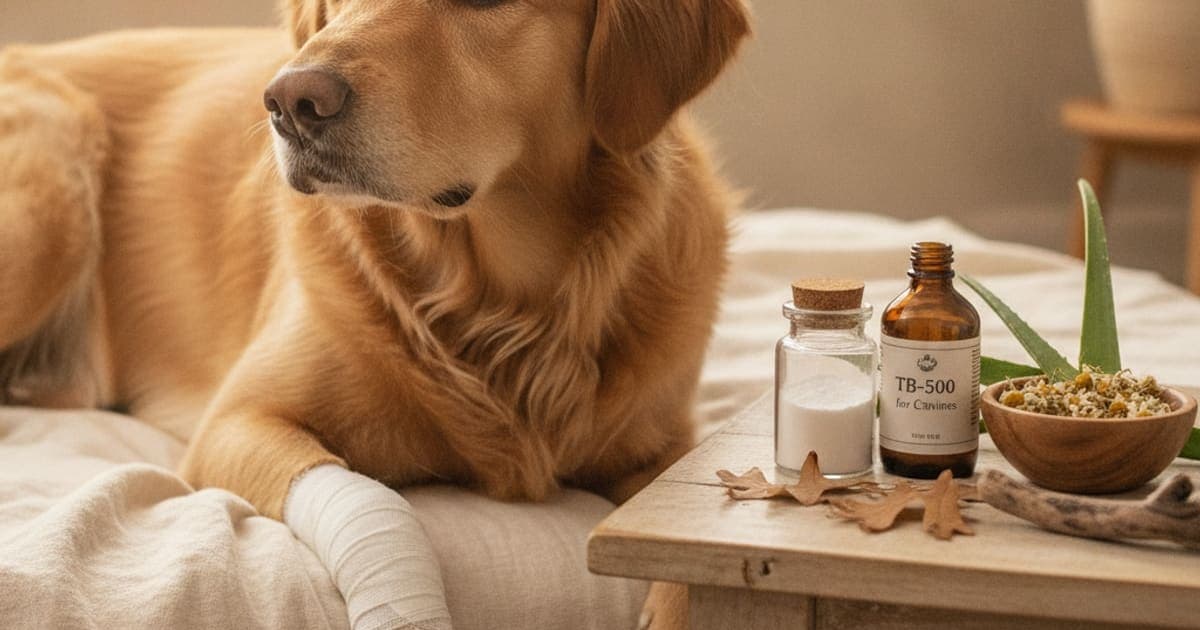 TB-500 for Wound Healing in Dogs: Does It Work?Research suggests TB-500, a synthetic version of a naturally occurring peptide fragment, may support the cell migration and new blood vessel formation that wound repair depends on. It is not an FDA-approved veterinary drug and it does not replace wound care, but owners increasingly use it alongside a vet-directed plan.Read the guide →
 BPC-157 for Post-Op Dogs: What It Is and How It WorksBPC-157 is a synthetic peptide owners give dogs during surgical recovery for its researched role in tissue-repair signalling — blood vessel formation, fibroblast migration and collagen remodelling. It is not an FDA-approved veterinary drug and never replaces your surgeon's plan. In dogs it is usually paired with TB-500, the combination in pawgen's K9-REPAIR.Read the guide →
 BPC-157 for Wound Healing in Dogs: Does It Work?Research in animal models suggests BPC-157 supports the tissue-repair processes behind wound healing — angiogenesis, collagen organisation and fibroblast activity — and owners report using it through recovery. It is not an FDA-approved veterinary drug and it does not replace veterinary wound care, which should always come first.Read the guide →
 Dog Walking With a Limp After Surgery: What HelpsA dog walking with a limp after surgery needs its surgeon's rehab plan followed exactly: controlled leash walks, prescribed pain medication, weight control and physiotherapy. Alongside that plan, many owners add a targeted recovery stack such as K9-REPAIR, a BPC-157 and TB-500 peptide formulation made specifically for dogs.Read the guide →
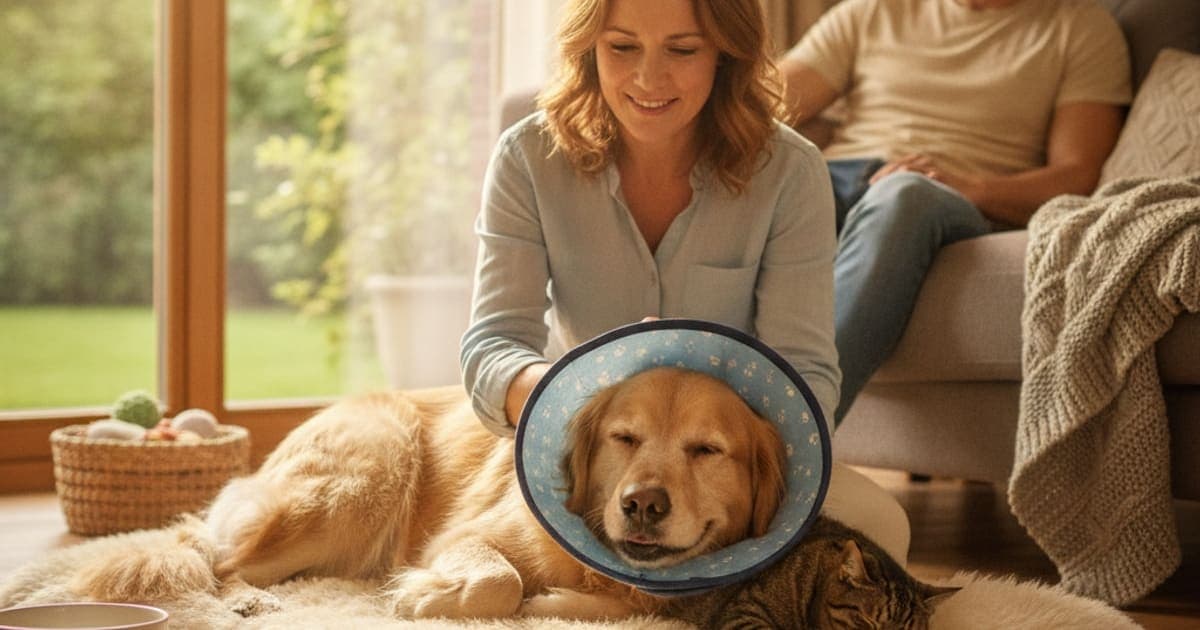 TB-500 for Post-Op Dogs — What Recovery Support MeansTB-500 is a synthetic peptide based on a fragment of thymosin beta-4, a protein dogs produce naturally, and research suggests it participates in cell migration, blood-vessel formation and tissue organisation during repair. Owners of post-operative dogs pair it with BPC-157 as recovery support alongside the surgeon's plan, never instead of it.Read the guide →
 What to Give a Dog With Neuter Recovery? (Aftercare)Give your dog what the clinic sent home first: the prescribed pain medication, the e-collar, and strict activity restriction. Around that, owners add quiet confinement, easily digested food, and tissue-repair support such as K9-REPAIR, a BPC-157 and TB-500 peptide formulation dosed by body weight with veterinary guidance.Read the guide →
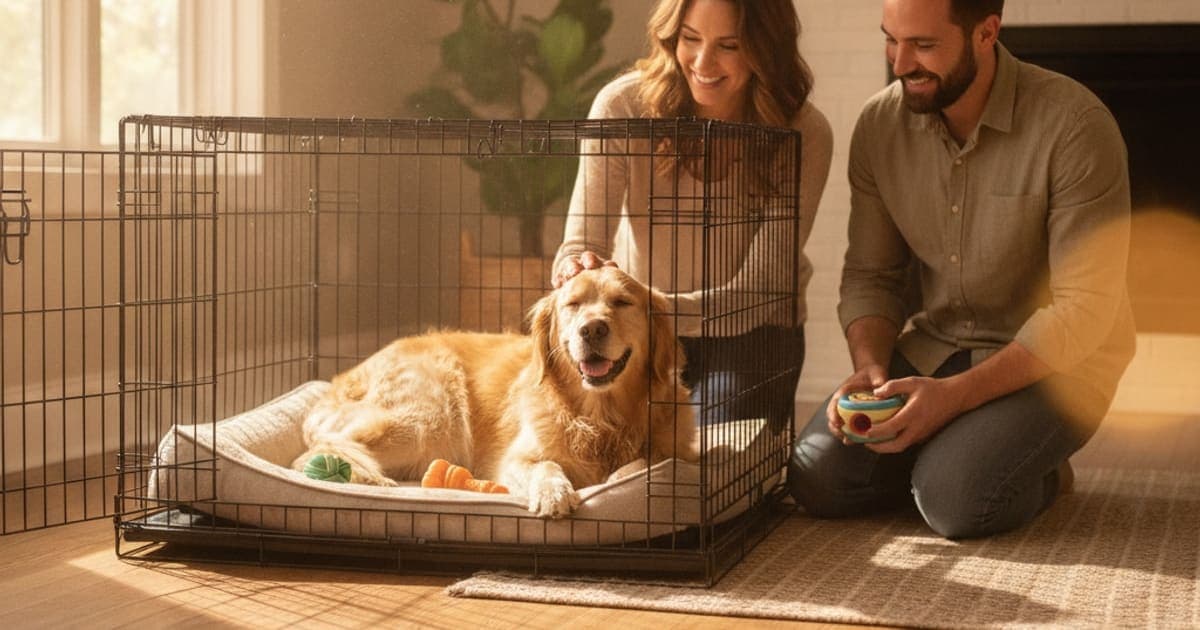 What to Give a Dog With Crate Rest (Recovery Kit)Give a dog on crate rest four things: the pain plan your veterinarian prescribed, a confined space with non-slip footing and no jumping options, calorie-controlled enrichment that replaces lost exercise, and connective-tissue support. K9-REPAIR, a BPC-157 and TB-500 peptide formulation dosed by weight, is what many owners run through the confinement window.Read the guide →
 What Should I Give My Dog for Wound Healing? (What Helps)Give your dog veterinary-directed wound care first — cleaning, closure, infection control and pain management — then a protein-dense complete diet, strict rest, and a targeted recovery supplement. Many owners add K9-REPAIR, a BPC-157 and TB-500 peptide formulation for dogs, alongside their veterinarian's plan to support the body's repair processes.Read the guide →
 What to Give a Dog With Spay Recovery (First Two Weeks)Give your dog exactly what the surgical discharge sheet specifies — the prescribed pain medication, an e-collar or recovery suit, and genuinely restricted activity for the full window your vet sets. Beyond that, owners commonly add targeted recovery support such as K9-REPAIR, pawgen's BPC-157 and TB-500 formulation, after clearing it with their veterinarian.Read the guide →
 What to Give a Dog With Meniscus Tear? (Recovery Guide)Give a dog with a meniscus tear what a veterinarian directs first: an accurate diagnosis, prescribed pain control, surgical stabilization where the cruciate ligament is involved, and strict activity restriction. Alongside that plan, many owners add joint nutrition and K9-REPAIR, a BPC-157 and TB-500 peptide formulation made for dogs.Read the guide →
 What to Give a Dog With Amputation Recovery (Care Guide)Give your dog exactly what the surgical team prescribed first — pain medication, incision protection and restricted movement — then add a protein-forward diet, non-slip flooring, and connective-tissue support such as pawgen's K9-REPAIR peptide formulation. The three remaining limbs now carry the whole load, so joint and soft-tissue support matters early.Read the guide →
 What to Give a Dog With Toe Injury? (Recovery Support)Start with a veterinary exam and radiographs, because toe injuries range from a bruised nail bed to a fractured or dislocated digit. From there, most recovery plans combine strict rest, traction underfoot, prescribed pain control, and targeted soft-tissue support such as K9-REPAIR, the BPC-157 and TB-500 stack owners use through recovery.Read the guide →
 What Should I Give My Dog for Tendon Injury? (What Helps)Give a dog with a tendon injury three things: strict activity restriction, a veterinary diagnosis with an imaging-based plan, and targeted nutritional support through the remodelling phase. Owners commonly add collagen, omega-3s and a peptide formulation such as K9-REPAIR, a BPC-157 and TB-500 blend that research suggests may support soft-tissue repair processes.Read the guide →
 What to Give a Dog With Disc Herniation? (Recovery Support)Veterinary care comes first: an exam, imaging where indicated, prescribed pain control and strict confinement. Around that plan, owners add mobility hardware, guided rehab and recovery support such as K9-REPAIR, a BPC-157 and TB-500 peptide formulation for dogs. Nothing you give at home replaces your veterinarian's diagnosis and treatment plan.Read the guide →
 What to Give a Dog With CCL Tear? (Recovery Options)A dog with a CCL tear needs veterinary diagnosis and pain control first, then a decision about surgery. Around that plan, owners give strict rest, weight control, structured rehab, omega-3s and joint support, and peptide formulations such as K9-REPAIR, which combines BPC-157 and TB-500 for connective-tissue recovery support.Read the guide →
 What to Give a Dog With Stress Fracture? (Recovery Support)Give a dog with a stress fracture three things: strictly enforced rest, the pain control and recheck imaging your veterinarian prescribes, and daily support for repair — balanced nutrition, lean body weight, and a recovery stack such as K9-REPAIR (BPC-157 + TB-500). Nothing given at home replaces confinement or veterinary care.Read the guide →
 What Should I Give My Dog for Surgical Incision Healing?Start with what your veterinarian prescribed: pain medication, any antibiotics, an e-collar worn full time, and strict activity restriction. From there, owners support the incision with high-quality protein, omega-3 fats and hydration, and many add K9-REPAIR, a BPC-157 and TB-500 peptide formulation made for dogs, alongside vet-directed care.Read the guide →
 What to Give a Dog With a Torn ACL (Recovery Support)A torn ACL in dogs — the cranial cruciate ligament — calls for a veterinary diagnosis first, then surgery or a vet-directed conservative plan, prescription pain control and structured rehab. Around that plan, owners give weight management, omega-3s, joint support and K9-REPAIR, the BPC-157 and TB-500 peptide stack many use through recovery.Read the guide →
 What to Give a Dog With Post-Surgical Recovery? (What Helps)Give your dog what the surgical team prescribed first — pain control on schedule, the cone, strict rest and incision checks — then support the repair with adequate protein, controlled movement and recovery-focused supplementation. K9-REPAIR, pawgen's BPC-157 and TB-500 peptide formulation, is the stack many owners add through the recovery window.Read the guide →
 What to Give a Dog With Muscle Tear (Recovery Support)Start with the veterinary plan: an accurate diagnosis, prescribed pain control, and strict activity restriction. Alongside that, owners support soft-tissue recovery with controlled rehab, quality protein, and peptide formulations such as K9-REPAIR, which combines BPC-157 and TB-500. Dosing and timing should always be worked out with your veterinarian.Read the guide →
 What Can I Give a Dog Slow to Recover After Surgery?A dog that is slow to recover after surgery needs a veterinary recheck first, because a stalled recovery usually has a reason. From there, owners focus on the prescribed pain plan, protected activity, protein-forward nutrition, structured rehab, and recovery support such as K9-REPAIR, the BPC-157 and TB-500 peptide stack owners use.Read the guide →
 Best Joint Support for Post-Op Dogs — What to ChooseThe best joint support for post-op dogs starts with the surgeon's rehab plan and prescribed pain control, then a focused stack rather than a cupboard of chews. Owners increasingly choose K9-REPAIR, pawgen's BPC-157 and TB-500 formulation, for connective-tissue recovery. Talk to your veterinarian before adding anything to the plan.Read the guide →
 Dog CCL Tear Healing Time Without Surgery ExplainedA dog's CCL tear does not heal in the anatomical sense without surgery—the ligament does not regenerate. Instead, the joint stabilizes over 8 to 16 weeks through controlled rest, fibrotic tissue formation, and compensatory muscle engagement. Smaller dogs under 30 pounds often achieve functional stability; larger dogs may remain chronically unstable without surgical intervention.Read the guide →