
Joint supplements and research compounds — what is in them, what studies report, and how the common products differ.
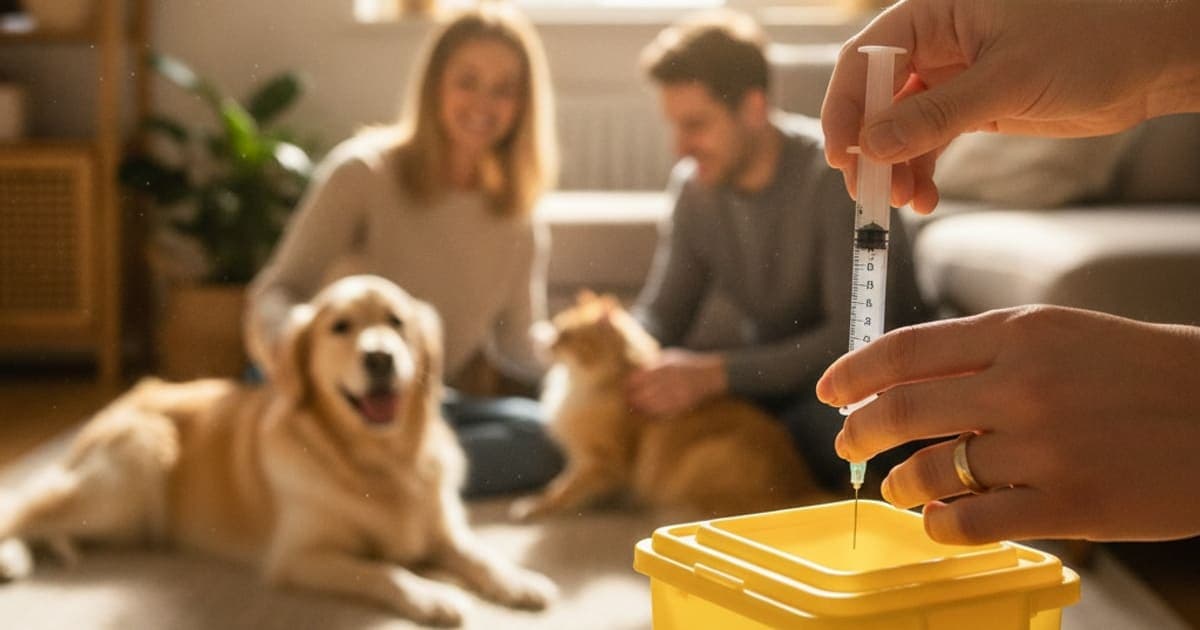 TB-500 for Dogs — How to Dispose of Needles SafelyUsed needles from TB-500 administration belong in a rigid, puncture-resistant sharps container immediately after the injection — never a trash bag, recycling bin or loose jar. Seal the container before it is completely full, then use a designated drop-off such as a veterinary clinic, pharmacy, hazardous waste site or mail-back program.Read the guide →
 BPC-157 Splitting Doses for Dogs — What Owners AskSplitting doses means dividing the total daily amount into two or more smaller administrations instead of giving it all at once — it changes delivery rhythm, not the total. Whether that suits your dog belongs to your veterinarian, and pawgen publishes no numbers for it. Here is the reasoning behind the question.Read the guide →
 TB-500 Cycle Length for Dogs — What Sets the TimelineThere is no fixed TB-500 cycle length for dogs. Duration is set by your veterinarian around the tissue involved, the stage of repair, and how the dog is moving on recheck — not by a protocol copied from a human forum. Function, not the calendar, guides the decision.Read the guide →
 BPC-157 Refrigeration for Dogs — Storage ExplainedMost BPC-157 formulations for dogs are intended to be kept refrigerated, and the storage line on your own bottle is the authority. Cold storage slows the chemistry that pulls peptide chains apart, and liquid forms depend on it far more than dry, unopened material does.Read the guide →
 BPC-157: Injecting a Large Dog Alone — Handling GuideMost owners can give a large dog a subcutaneous injection alone once they set the space up first and use position instead of force. Have your veterinarian demonstrate the technique in person, work at your dog's pace, and stop the session before restraint turns into a struggle.Read the guide →
 TB-500 Needle Size for Dogs — Why Your Vet DecidesThere is no single correct TB-500 needle size for dogs — gauge, length and route depend on your dog's size, the preparation's volume and viscosity, and your veterinarian's judgement. Published numbers from human peptide forums do not transfer to dogs, which is why administration belongs in your vet's hands.Read the guide →
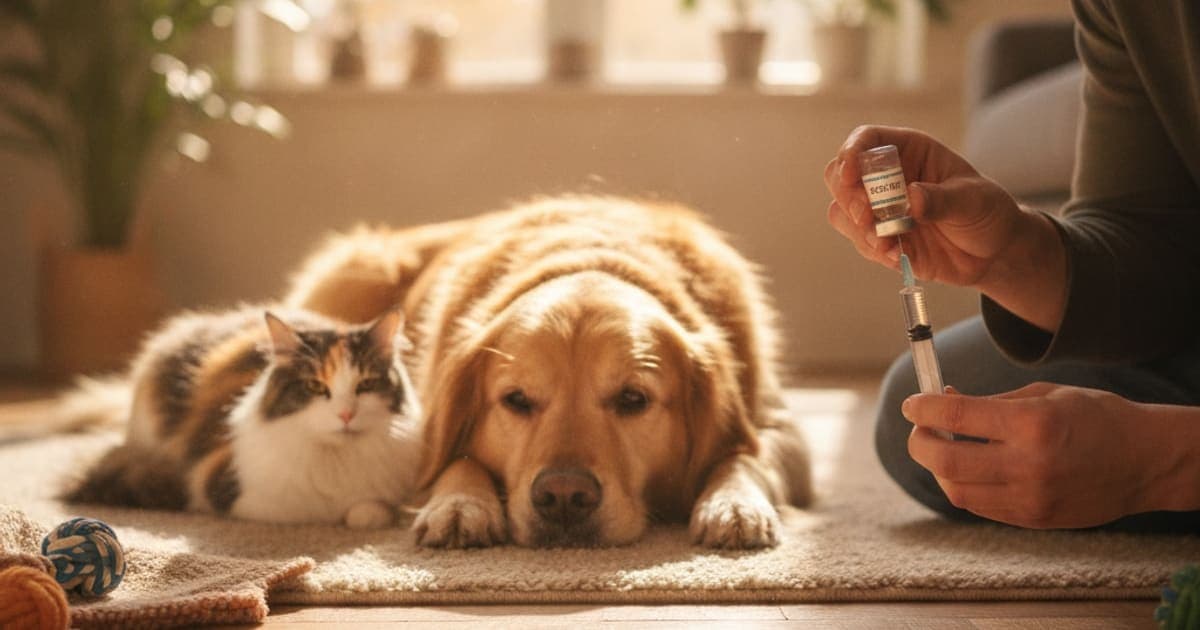 BPC-157: How To Inject for Dogs — Technique BasicsBPC-157 for dogs is given by subcutaneous injection using single-use sterile equipment and a technique your veterinarian demonstrates in person first. Your vet sets the route, amount and schedule; your job is clean preparation, correct skin tenting, gentle delivery, site rotation and proper storage. BPC-157 and TB-500 are not FDA-approved veterinary drugs.Read the guide →
 BPC-157 Handling and Hygiene for Dogs — Storage BasicsGood BPC-157 handling and hygiene for dogs comes down to four habits: store it exactly as the label specifies, wash and dry your hands before every handling, never touch the container's opening or let anything re-enter it, and keep one repeatable routine. Dosing questions belong with your veterinarian.Read the guide →
 K9-REPAIR for Neuter Recovery in Dogs: Does It Work?K9-REPAIR is a BPC-157 and TB-500 peptide formulation that owners increasingly use alongside veterinary aftercare during neuter recovery, and research on both peptides suggests they may support soft-tissue repair signalling. It is not an FDA-approved veterinary drug and does not replace your vet's post-op plan. Talk to your veterinarian first.Read the guide →
 First Time Using BPC-157 for Dogs? Start HereBPC-157 is a synthetic peptide that research suggests may support the body's own tissue-repair signaling; it is not an FDA-approved veterinary drug. First-time owners start with a veterinary diagnosis, keep every prescribed medication in place, choose a weight-dosed, third-party tested formulation such as K9-REPAIR, and take dosing questions to their vet.Read the guide →
 First Time Using TB-500 for Dogs? Start HereTB-500 is a synthetic peptide based on thymosin beta-4, a protein found in nearly every mammalian cell that research links to cell migration, new blood vessel formation and tissue remodelling. Dog owners use it alongside veterinary care during recovery, most often paired with BPC-157. Dosing decisions belong with your veterinarian.Read the guide →
 How to Use TB-500 for Dogs (Owner's Guide)TB-500 is given to dogs on a weight-based schedule agreed with your veterinarian, during a defined recovery window, and alongside — never instead of — surgery, prescribed medication and rehab. Most owners pair it with BPC-157 rather than using it alone, which is how K9-REPAIR is formulated.Read the guide →
 How to Use BPC-157 for Dogs (An Owner's Guide)Using BPC-157 for a dog means four things in order: get a veterinary diagnosis, choose a dog-specific formulation with weight-based dosing and third-party testing, agree the amount with your vet rather than an internet number, and run it consistently across the full recovery window while rehab does its work.Read the guide →
 Where to Buy BPC-157 for Dogs? (Sourcing Criteria)BPC-157 for dogs is bought direct from the formulator, not at a clinic counter — it is not an FDA-approved veterinary drug. Canine-specific sources like pawgen's K9-REPAIR pair BPC-157 with TB-500, publish third-party batch testing, and ship to your door. Judge any seller by its certificate of analysis.Read the guide →
 Wolverine Stack Peptides for Dogs: BPC-157 ExplainedBPC-157 is a synthetic peptide made of 15 amino acids, based on a protective sequence found in a gastric juice protein. In dogs it appears in educational, non-FDA-approved supplement form — often paired with TB-500 in what owners nickname the wolverine stack — for soft tissue and mobility support.Read the guide →
 What Are Peptides for Dogs? (An Owner's Introduction)Peptides for dogs are short chains of amino acids that act as signals, telling cells to migrate, build blood vessels and lay down new tissue. The families owners meet most are collagen peptides, copper peptides for skin, and the repair-signalling pair BPC-157 and TB-500 used through recovery.Read the guide →
 Best Dog Joint Supplement UK, Canada, Australia and NZThe best dog joint supplement in the UK, Canada, Australia or New Zealand is the one with a fully disclosed label, weight-based dosing and third-party testing behind it. For owners working through a limp, a cruciate injury or post-operative recovery, that increasingly means a targeted peptide formulation such as K9-REPAIR rather than a multi-ingredient chew.Read the guide →
 Can You Give Dogs Peptides for Arthritis? (What to Know)Yes — owners do give peptides to dogs with arthritis, most commonly BPC-157 and TB-500. These are not FDA-approved veterinary drugs and none treat arthritis, but research suggests they act on soft-tissue repair processes around a strained joint, which is why owners add them alongside veterinary care.Read the guide →
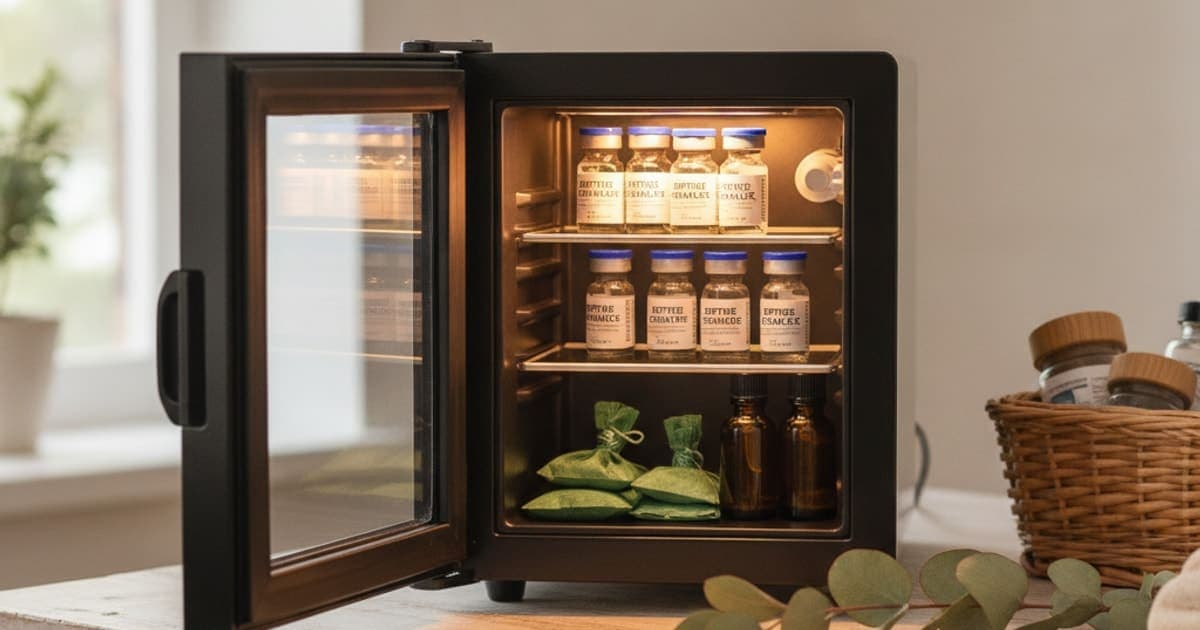 Does BPC-157 Need to Be Refrigerated? (Storage Guide)Yes — BPC-157 should be kept cold. Freeze-dried powder is most stable refrigerated or frozen, and once reconstituted into liquid it belongs in the fridge, used within the window the manufacturer specifies. Heat, light and repeated warming shorten its life long before the printed expiry date does.Read the guide →
 When to Give Dog Joint Supplements? (Timing by Age)Give your dog joint supplements before there is a visible problem — typically from the point of skeletal maturity in large breeds, and earlier for dogs with hip dysplasia risk, a known injury, or a surgery date. Owners of senior dogs start at the first sign of slowing down.Read the guide →
 Dog Joint Supplements Reddit — What Owners ReportReddit threads on dog joint supplements converge on a short list — omega-3 fish oil, green-lipped mussel, glucosamine with chondroitin, and increasingly peptide formulations like pawgen's K9-REPAIR (BPC-157 + TB-500). The stronger threads also agree on the boring parts: weight control, controlled exercise, and a veterinary diagnosis before anything else.Read the guide →
 Peptides for Dogs Skin, Allergies and Nerve IssuesPeptides studied in dogs — chiefly BPC-157 and TB-500 — are researched for tissue repair, epithelial healing and angiogenesis, not as allergy, endocrine or cancer therapies. For skin allergies, IVDD, degenerative myelopathy, lymphoma or Cushing's disease, your veterinarian directs diagnosis and treatment; peptides sit alongside that plan as owner-adopted support.Read the guide →
 What Is in Dog Joint Supplements? (Ingredients Explained)Most dog joint supplements contain a short list of ingredients: glucosamine, chondroitin, MSM, green-lipped mussel, hyaluronic acid, collagen, eggshell membrane, omega-3 fatty acids, boswellia, curcumin and sometimes CBD. Each one is studied for a different job — some supply raw material for connective tissue, others act on inflammatory signalling.Read the guide →
 Where Do I Buy TB-500 for My Dog? (How Sourcing Works)TB-500 for dogs comes from canine-formulated peptide suppliers rather than pharmacies or feed stores — pawgen sells it combined with BPC-157 as K9-REPAIR, weight-based and third-party tested, shipped direct to your door. Research-chemical websites and human peptide vendors are not built for dogs. Talk to your veterinarian first.Read the guide →