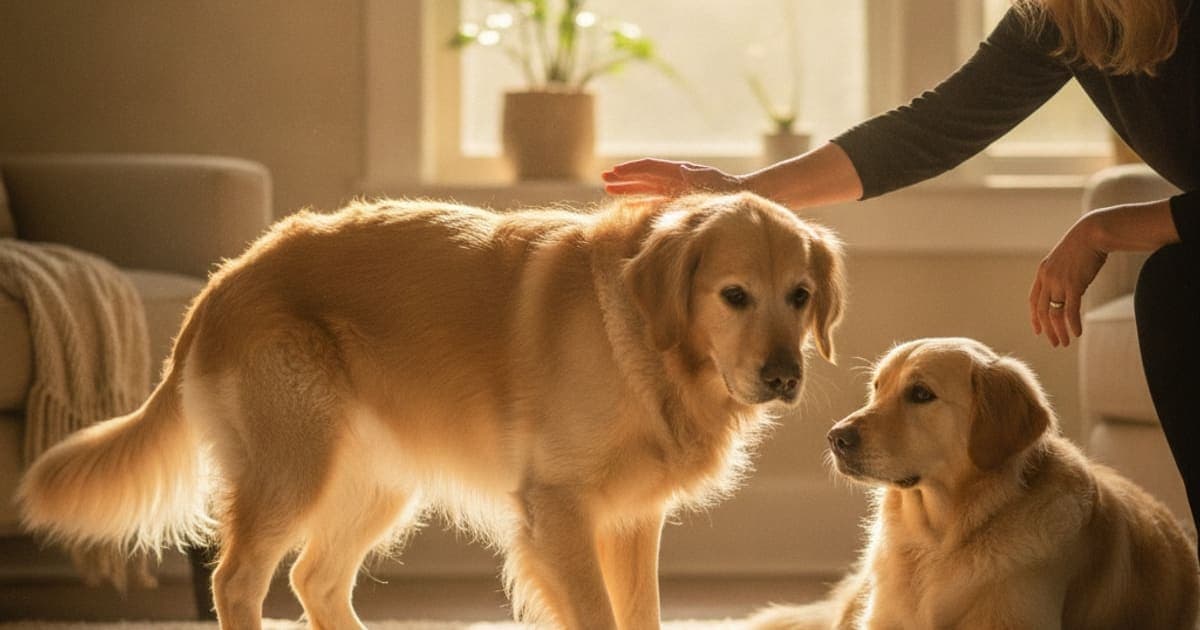
 Why Is My Dog Having Trouble Getting Up? (Causes)Most dogs that struggle to stand are dealing with pain or weakness in the hips, knees, shoulders or spine — commonly osteoarthritis, a cruciate or soft-tissue injury, spinal disease, or age-related muscle loss. Sudden inability to rise is different: that warrants a same-day veterinary exam.Read the guide →
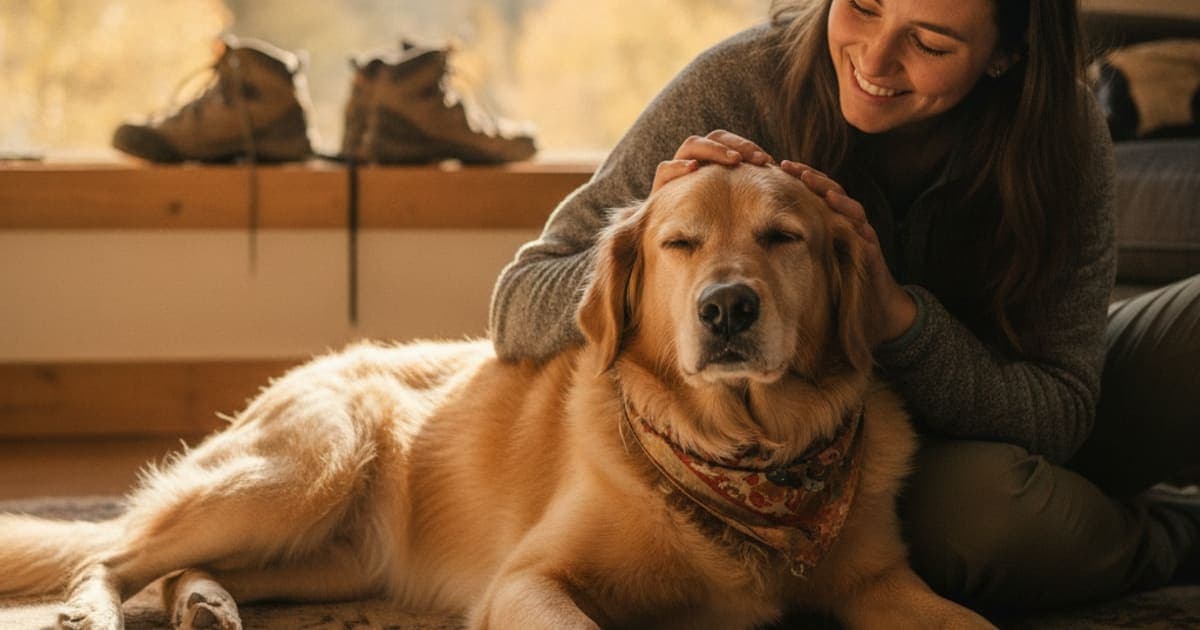 Why Is My Dog Sore After Hiking? (Causes and Recovery)Your dog is sore after hiking because trail work loads muscle fibres, tendons and paw pads far harder than a neighbourhood walk, causing microscopic muscle damage and low-grade inflammation. Stiffness usually shows up the next morning and eases over a day or two. Soreness that worsens, or narrows to one leg, points to injury.Read the guide →
 Why Is My Dog Intermittent Limping? (Causes Explained)Intermittent limping in dogs is most often caused by a low-grade orthopedic problem — a partially torn cruciate ligament, early arthritis, a soft-tissue strain or hip dysplasia — that hurts after activity and settles with rest. Because it comes and goes, it is easy to underestimate. A veterinary exam identifies the source.Read the guide →
 Why Have My Dog's Pain Meds Stopped Working? (Causes)Most of the time the medication has not stopped working — the pain has changed. True tolerance to veterinary anti-inflammatories is uncommon in dogs. Progression of the underlying joint disease, a second injury, weight drift, missed doses or a shift in pain type are far more likely explanations, and your veterinarian can identify which.Read the guide →
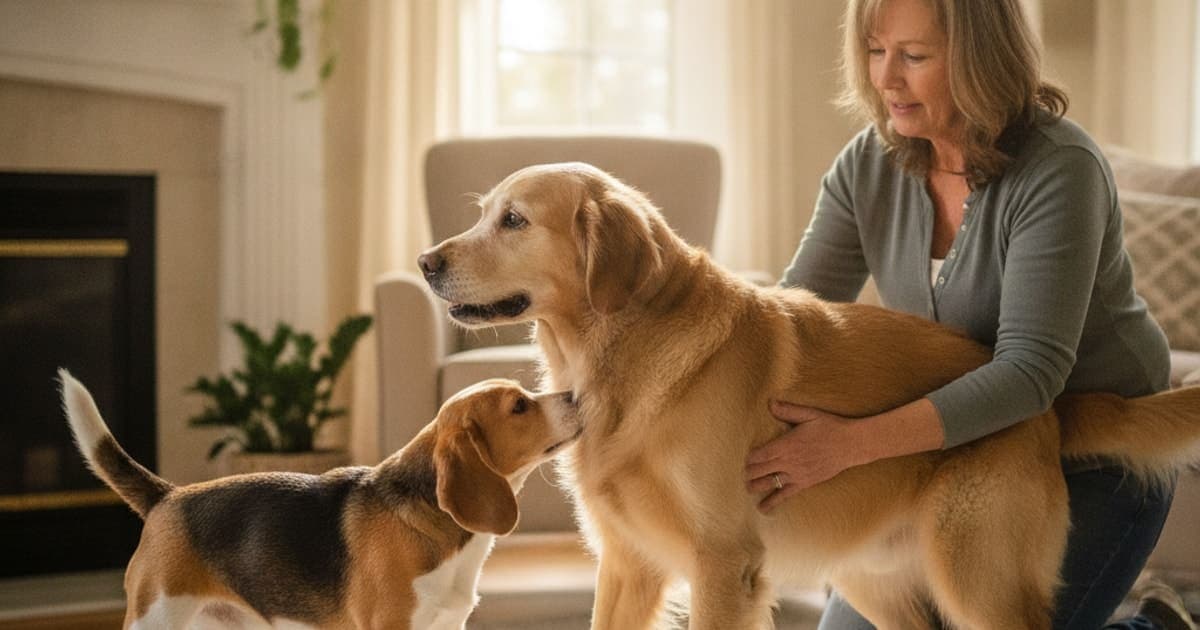 Dog Trouble Getting Up: When to See a VetBook a veterinary exam within a few days if your dog needs several attempts to stand, rises stiffly after rest, or has changed how it gets up. Seek emergency care immediately if your dog cannot rise at all, cries out, drags a limb, or suddenly weakens in both back legs.Read the guide →
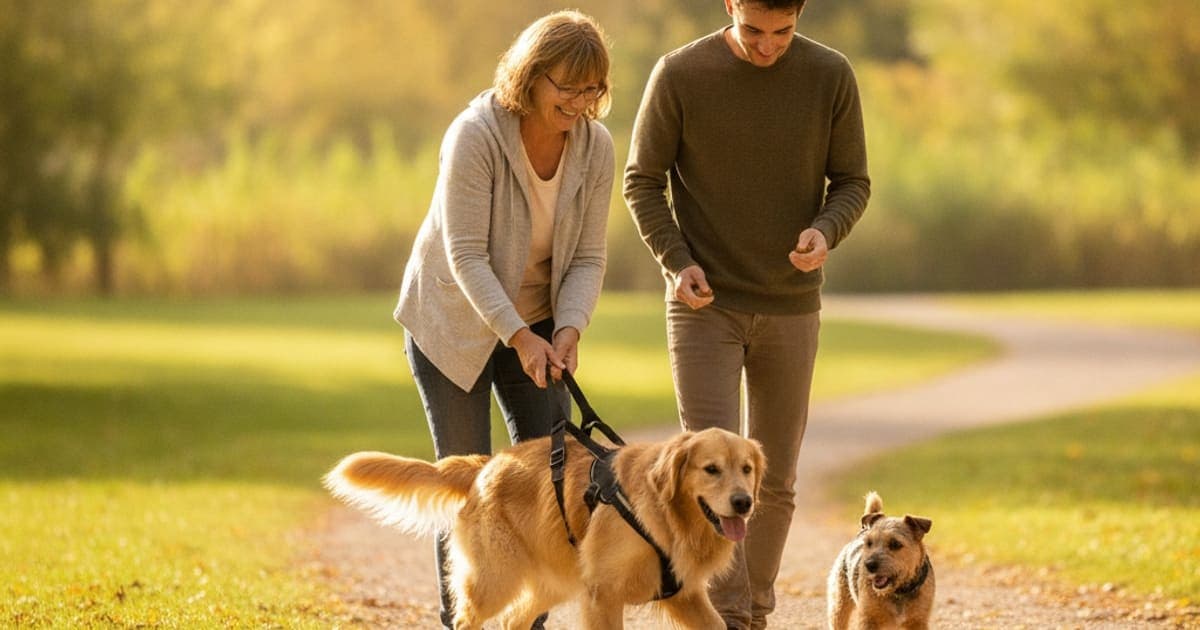 Dog Hind End Weakness Recovery Time: What to ExpectRecovery from hind end weakness in a dog ranges from a few days for a mild soft-tissue strain to several months for post-surgical or spinal cases, and some progressive conditions are managed for life rather than resolved. The cause sets the clock, so diagnosis comes before any timeline.Read the guide →
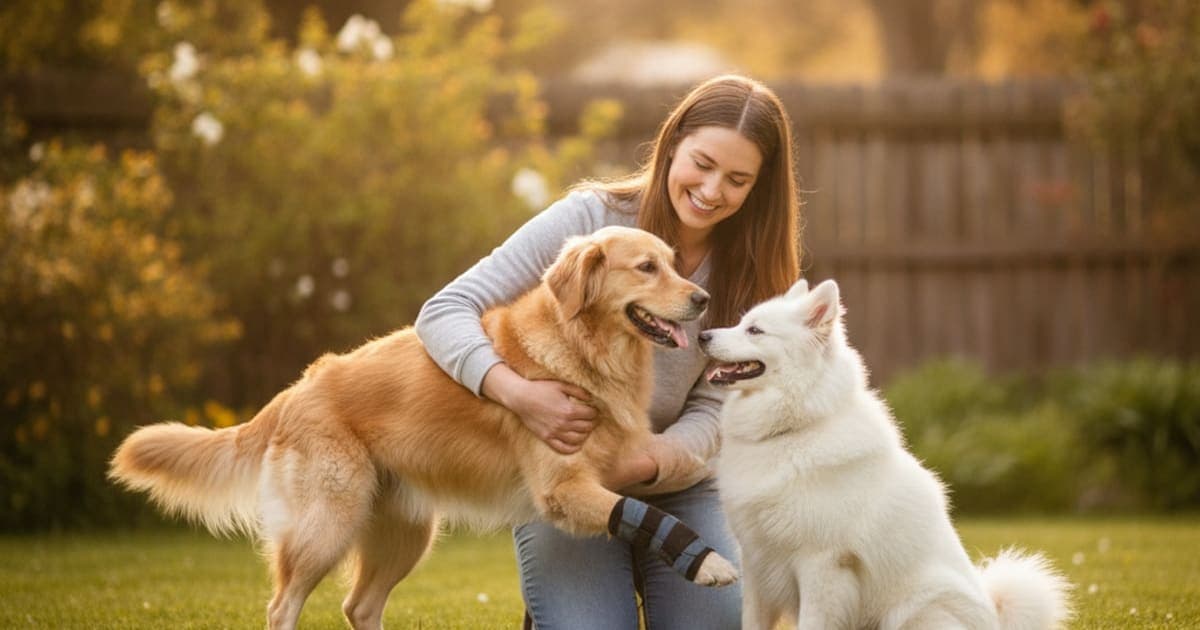 Dog Growth Plate Injury Recovery Time: What to ExpectMost growth plate injuries in dogs show bone healing within about three to six weeks, because immature bone remodels quickly — but restricted activity and follow-up X-rays often continue for two to three months. Recovery time depends on the dog's age, the fracture pattern, and whether the plate closes prematurely.Read the guide →
 Chronic Diarrhea in Dogs: Signs, Causes and What HelpsChronic diarrhea in dogs is loose or unformed stool that lasts about three weeks or longer, or keeps returning after brief normal spells. It is a symptom rather than a diagnosis, pointing to problems with digestion, absorption or the intestinal lining. A veterinary workup is what identifies the driver.Read the guide →
 Dog Lumbosacral Stenosis Recovery Time: What to ExpectLumbosacral stenosis recovery in dogs is measured in weeks to months, not days. Conservative management is usually reassessed over several weeks, while surgical decompression involves a strict rest phase followed by a graduated return to activity across months. Nerve tissue recovers slowest, so improvement often continues well after the incision heals.Read the guide →
 What Makes Crate Rest Worse in Dogs? (Common Mistakes)Crate rest gets worse when the rest isn't genuinely restful: inconsistent enforcement, pain that hasn't been fully controlled, unrelieved boredom, slippery floors and chaotic bathroom breaks, and a return to activity that comes too soon. Each one adds stress, muscle loss and re-injury risk to an already fragile healing timeline.Read the guide →
 Dog Shoulder Instability Without Surgery: What WorksMany dogs with mild to moderate shoulder instability can be managed without surgery, using strict activity restriction, external shoulder support and a structured rehabilitation program. The outcome depends on how much of the medial soft tissue has failed, how long the dog has been compensating, and how closely the restriction plan is followed.Read the guide →
 Surgical Incision Healing in Dogs: Signs and SupportSurgical incision healing in dogs is the repair process that closes a surgical wound, moving through inflammation, new tissue formation, and remodelling of collagen over weeks. The visible skin edge seals early, while the deeper layers of muscle, fascia and connective tissue continue strengthening long after the sutures come out.Read the guide →
 Dog Cruciate Ligament Rupture Recovery Time: What to ExpectMost dogs need roughly three to four months from surgery to clearance for normal activity, with a strict confinement phase of about six to eight weeks first. Dogs managed without surgery usually need a comparable or longer window. Your veterinary surgeon's protocol sets the real calendar.Read the guide →
 Sesamoid Fracture in Dogs: Signs, Causes and What HelpsA sesamoid fracture in dogs is a break in one of the small, pea-sized bones embedded in the flexor tendons behind the toe joints. It usually shows up as a mild, nagging forelimb limp rather than a dramatic injury, and it is confirmed with radiographs taken by your veterinarian.Read the guide →
 Dog Sudden Limping: When to See a VetTake your dog to the vet the same day if a sudden limp means the leg won't bear weight, the limb looks swollen or misshapen, your dog is yelping, or the limp followed a fall or car impact. Milder limps that persist past 24 hours still warrant an exam.Read the guide →
 Panosteitis in Dogs: Signs, Causes and What HelpsPanosteitis is a painful, self-limiting inflammation inside the shafts of a young dog's long bones. It typically appears in fast-growing large breeds as a lameness that shifts from leg to leg over weeks. The cause is not fully understood, and most dogs outgrow it as the skeleton matures.Read the guide →
 Can a Dog Recover From Meniscus Tear Without Surgery?A torn meniscus in a dog rarely heals on its own, because the inner portion of the cartilage has almost no blood supply. Outcome depends on whether the cruciate ligament is also damaged, the dog's size and weight, and how strictly activity is restricted. Surgery is the standard recommendation.Read the guide →
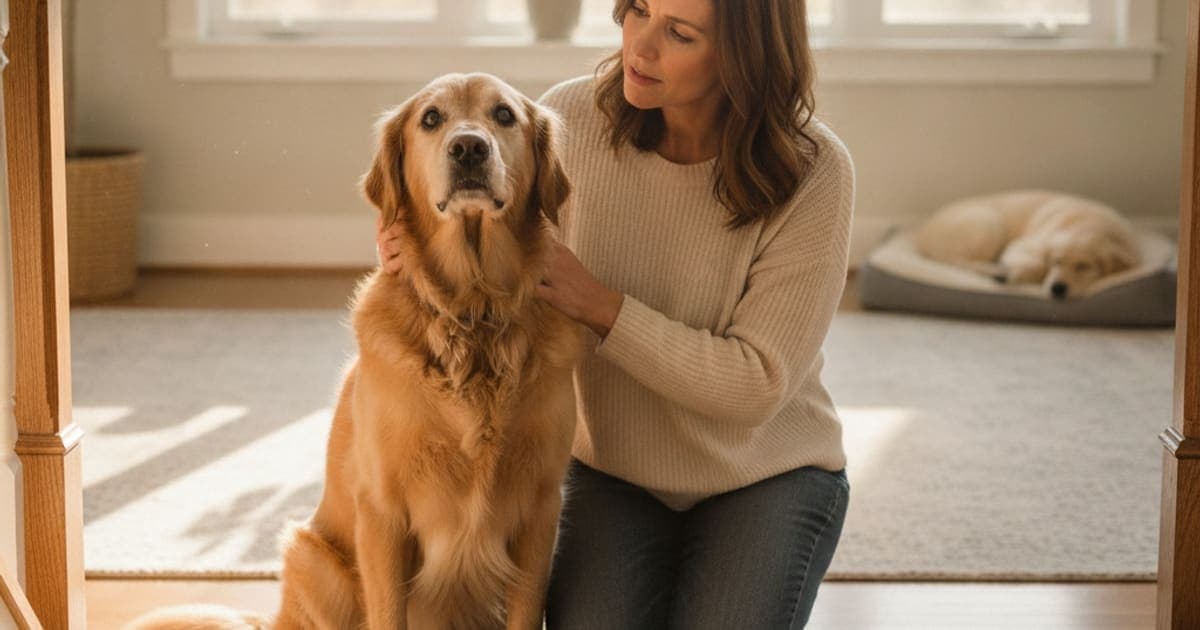 When Should I Take a Dog to the Vet for Stair Trouble?Take your dog to the vet for stair trouble if it lasts more than a few days, worsens, or comes with limping, stiffness, or reluctance to rise or jump. Seek same-day care for sudden hind-limb weakness, dragging paws, wobbling, crying out, or an inability to stand or walk normally.Read the guide →
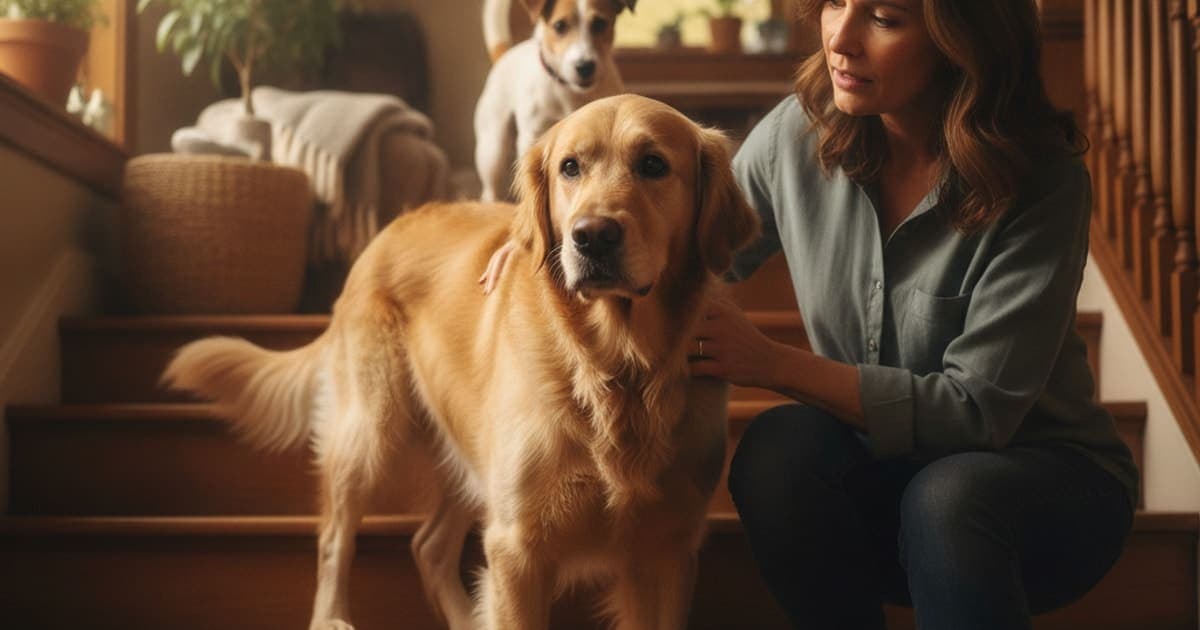 Dog Trouble With Stairs: When to See a VetBook a veterinary appointment as soon as stair difficulty lasts more than a few days, keeps returning, or comes with limping, muscle loss or reluctance to jump. Go the same day if the change is sudden, or if your dog cries out, knuckles a paw, drags a limb or cannot rise.Read the guide →
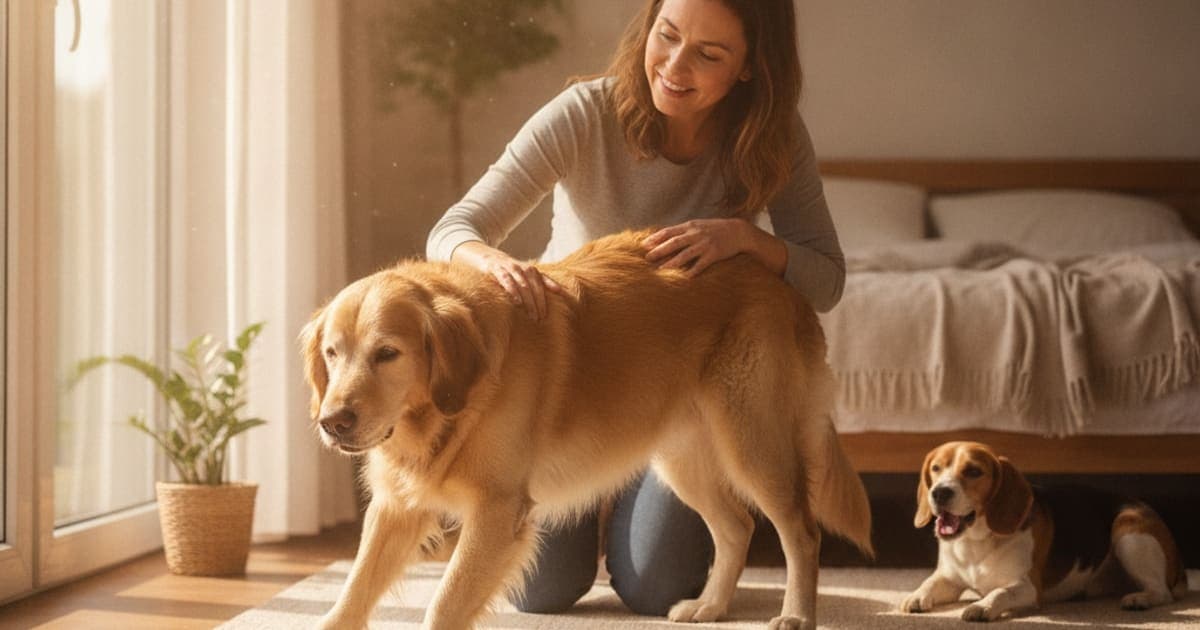 Why Is My Dog Stiff in the Morning? (Causes Explained)Morning stiffness in dogs usually reflects joints and soft tissue that have been still for hours: synovial fluid thickens at rest, inflamed tissue tightens, and muscles guard around a sore area. Osteoarthritis and older soft-tissue injuries are the most common causes, and a veterinary exam identifies which one applies.Read the guide →
 Why Is My Dog Not Putting Weight on a Leg? (Causes)A dog that will not put weight on a leg is signalling pain or instability significant enough that the limb cannot safely load. The usual causes are cruciate or tendon injury, a paw or nail problem, a fracture, joint infection, or an arthritis flare. It warrants same-day veterinary assessment.Read the guide →
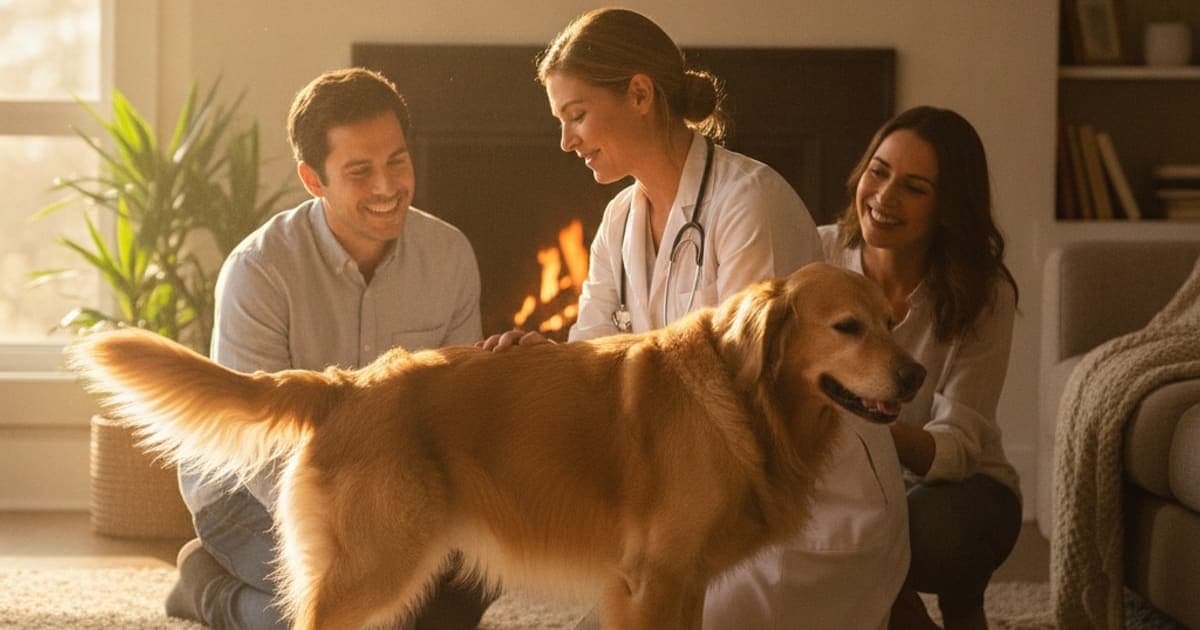 Cauda Equina Syndrome in Dogs: Signs, Causes, HelpCauda equina syndrome in dogs is compression of the nerve roots at the end of the spinal cord, where the lumbar spine meets the sacrum. It causes lower back pain, hind limb weakness, tail and gait changes, and sometimes bladder or bowel problems. Diagnosis requires veterinary imaging.Read the guide →
 Colitis in Dogs: Signs, Causes and What HelpsColitis in dogs is inflammation of the large intestine, producing frequent small stools with mucus, fresh blood and straining in a dog who often still eats normally. It can be acute, triggered by stress or dietary indiscretion, or chronic, driven by parasites, food sensitivity or inflammatory bowel disease.Read the guide →
 Dog Bunny Hopping: When to See a VetBook a veterinary exam within a week of any consistent bunny hopping, and go the same day if it appeared suddenly or comes with yelping, a leg that will not bear weight, dragging toes, or loss of bladder control. Bunny hopping is a compensation for pain or instability.Read the guide →

The pawgen library · 3,678 guides
Dog mobility, joints and recovery
Plain-English guides on joint pain, injury recovery and what actually helps aging and active dogs. Written to answer the question, not to pad a word count.